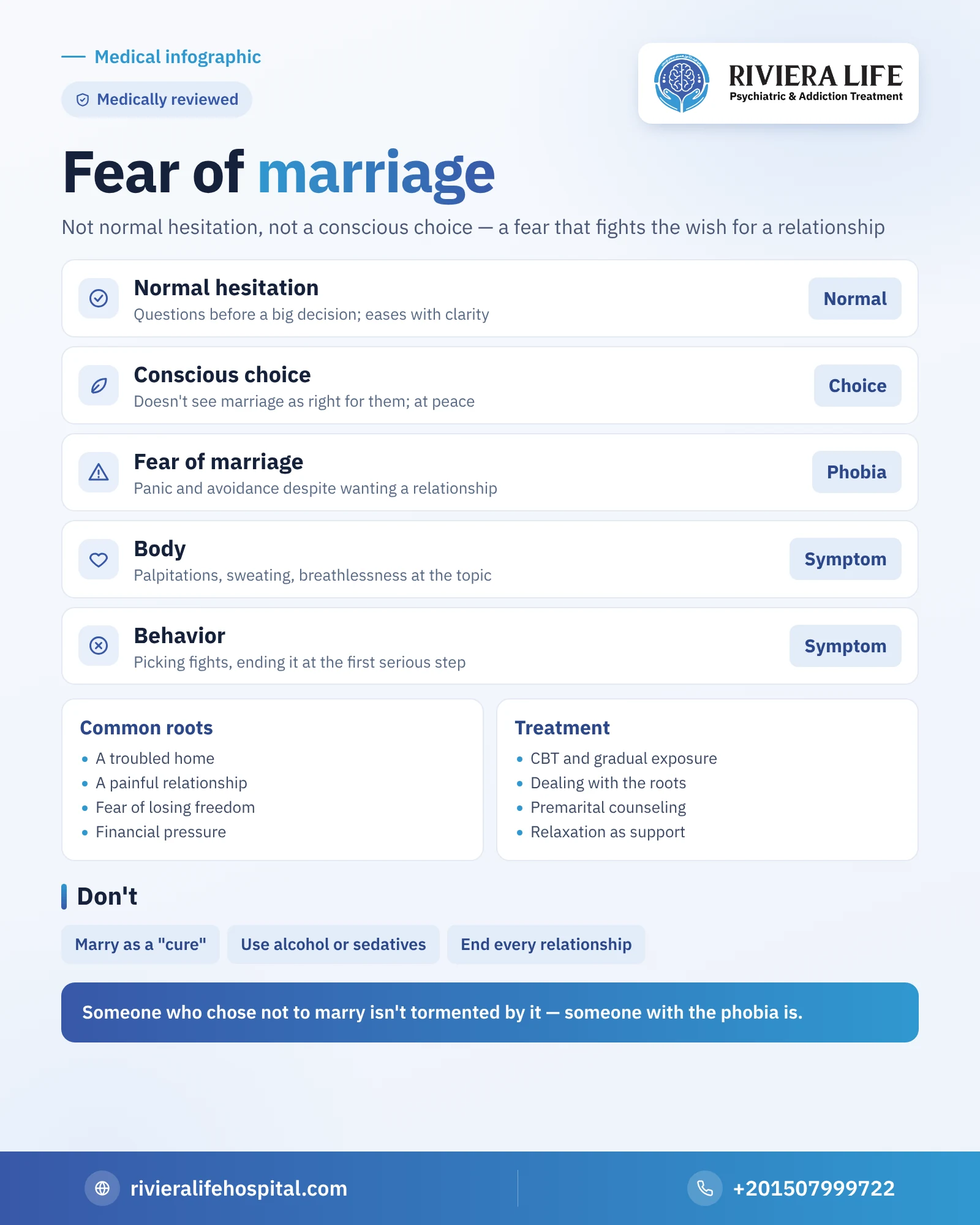
Fear of marriage (gamophobia) is an intense fear of the idea of formal commitment and marriage, reaching the level of panic or decisive avoidance, which the person themselves recognizes as bigger than any logical reason. It isn’t the normal hesitation before a fateful decision, nor the conscious choice not to marry. The person may truly want commitment but their body refuses: palpitations and shortness of breath when engagement or a wedding hall is mentioned. This article presents the difference between the three states, the causes of the fear, what appears in young men and women before marriage, treatment methods, and how the family can act without pressure. Diagnosis is the job of a psychiatrist or psychologist.
What is fear of marriage?
This name isn’t a separate diagnosis in the medical manuals, but the condition is understood as a type of specific phobia or anxiety in which the trigger is marriage or permanent commitment. The fear remains constant, recurs with the same trigger, lasts for months and disrupts life decisions. Our page on types of phobia explains how specific phobia is classified and how it differs from other types.
Three states that look alike on the surface
| State | What it looks like | The dominant feeling |
|---|---|---|
| Normal hesitation | Questions and tension before a big decision, which fade with clearer knowledge of the partner and circumstances | Moderate anxiety with willingness |
| A conscious choice | Someone who doesn’t see marriage as suitable for their life and values and is at peace with their decision | Reassurance |
| Fear of marriage | Exaggerated fear and avoidance even while wanting the relationship | Panic or terror and inner conflict |
The most important difference is comfort. Someone who chose not to marry isn’t tormented by their decision, while someone with the phobia is tormented because they want something and run from it.
How do the symptoms appear?
- Physically: palpitations, sweating, shortness of breath, dizziness and nausea when marriage is discussed or when attending other people’s weddings.
- Psychologically: thoughts such as “I’ll lose myself” or “what happened to my parents will happen to me”, and anxiety before family occasions.
- Behaviorally: picking fights whenever commitment approaches, ending the relationship at the first sign of seriousness, dodging family questions, and postponing the engagement with ever-new reasons.
- During engagement: bouts of anxiety before the marriage contract or wedding that may reach a full panic attack.
Where does this fear come from?
Usually more than one factor comes together:
- Growing up in a troubled home: a child who witnessed constant fighting, divorce or violence grows up with the idea that marriage means pain.
- A painful romantic experience: previous betrayal or abandonment makes a new commitment seem dangerous. You will find an explanation of the effect of these experiences in our article on emotional trauma.
- Fear of losing freedom or self: the idea that marriage swallows the individual, especially in someone used to relying on themselves.
- Fear of failure: “What if I choose wrong and can’t go back?”, which intensifies in environments that see divorce as a stigma.
- Financial and social pressures: the costs of the apartment, dowry and furnishings and the family’s expectations may turn into terror of being unable.
- Avoidant attachment patterns: someone who learned early that closeness means disappointment may tolerate friendship but withdraw from permanent closeness.
- A predisposition to anxiety: someone with a genetic or temperamental tendency to anxiety finds it harder to tolerate the unknown that marriage carries.
The condition may overlap with avoidant personality when withdrawal is a general pattern in all relationships, not marriage alone.
Is it fear of marriage or fear of this partner?
A question that should be asked honestly. Sometimes the anxiety is a legitimate warning about a relationship involving insult, control or incompatibility on life’s essentials. In that case listening to your feeling is wisdom, not a phobia. The distinguishing mark of the phobia is that the fear recurs with every partner and every step of commitment, even with someone who treats you well. If the anxiety is linked to a specific person, it is better to examine the relationship itself, perhaps with the help of a relationship counselor or therapist.
The difference between fear of marriage and depression before it
Some people about to marry feel sadness, crying, loss of desire and insomnia, not from fear of marriage itself but because depression appeared at this stressful time. If the symptoms are closer to this description, read premarital depression, which deals with the condition from this specific angle.
How is it treated?
- Cognitive behavioral therapy: it examines catastrophic thoughts such as “all marriage is a prison”, and trains facing the fear gradually, by talking about marriage, then imagining situations, then realistic steps step by step. You will find the basis in our article on cognitive behavioral therapy.
- Dealing with the roots: if the fear stems from trauma or a painful family relationship, the therapist works on this origin in separate sessions.
- Premarital counseling: joint sessions for the engaged couple to clarify expectations and fears and learn dialogue.
- Medicine: it isn’t the main treatment for phobia, but with severe anxiety or accompanying depression the doctor may decide on suitable treatment. No medicine is started, changed or stopped except with the doctor.
- Relaxation and breathing techniques: they ease the body’s symptoms in the moment of anxiety, and complement treatment rather than replace it.
What not to do
- Don’t marry as a “cure” for the fear; marriage isn’t a psychological treatment, and may double the crisis.
- Don’t drink alcohol or take sedatives before occasions to calm down; this gives temporary relief and opens the door to dependence.
- Don’t escape the discussion by ending the relationship every time the decision draws near.
- Don’t consider the fear a flaw in manhood or womanhood; it is a treatable condition.
Advice for parents and the partner
Pressure with phrases such as “everyone else has married” or “you’ll end up alone” increases the terror. It is more useful for the parents to listen calmly, ask what actually frightens them, and offer to go with them to a psychological consultation without forcing them. The partner needs patience and clear limits: they can support without bearing responsibility for fixing the other. If it goes on long without progress, turning to a therapist for the prospective couple is more useful than waiting.
Questions that help you understand yourself
This isn’t a diagnostic tool, but a way into calm reflection before you see a specialist:
- Do I wish for a life partner, or don’t I really wish for that?
- Does the fear appear with every person or with one person in particular?
- Does panic happen even when I imagine marriage in the distant future?
- Did the fear start after a particular event in my family or in a previous relationship?
- Have I started avoiding weddings and occasions so I won’t be asked?
If the answers point to desire and fear together, this is the conflict the specialist treats. It may help to keep a short notebook in which you write down when the anxiety intensifies and the thought that preceded it, so the therapist has a clear picture instead of general impressions.
Fear of intimacy after marriage
For some people the fear isn’t about marriage as a ceremony or commitment, but about what follows it: physical closeness, living together, or exposing weakness in front of another person. These fears can also be talked about and treated, and need a patient specialist and a safe environment. If a painful past lies behind them, don’t bear the silence alone; psychotherapy is designed for this moment.
When should you ask for help?
Ask for a psychological assessment if the fear leads to repeated panic, to ending good relationships again and again, to chronic family tension, or if you are struck by persistent sadness, insomnia and loss of appetite. Early intervention helps because fear becomes entrenched the longer avoidance lasts.
How can Riviera Life help you?
At Riviera Life a consultant psychiatrist examines the roots of the fear and distinguishes between phobia, anxiety, depression and the effect of trauma, then recommends gradual psychotherapy. The first consultation is free and keeps complete confidentiality, and the family can be involved in the support program if you wish.
More from our phobia guide
Questions many people ask
No; hesitation and tension before a big decision are normal and ease as the picture becomes clear. A phobia is an exaggerated fear that recurs and leads to panic or persistent avoidance.
Several factors usually come together, including witnessing a painful family marriage or divorce, a hurtful romantic experience, fear of losing freedom or failing, financial pressures, and a tendency to anxiety.
No, marriage isn't a psychological treatment and may double the crisis. Treatment is with cognitive behavioral therapy, gradual exposure and dealing with the roots.
Yes, and it may be a legitimate warning about an unhealthy relationship. If the fear recurs with every partner it is closer to a phobia, and a specialist helps tell the difference.
By listening without pressure or comparison, asking what actually frightens them, and offering to go with them to a psychological consultation without forcing them.