There are many types of depression; it isn’t a single disorder. Doctors classify depressive disorders according to two internationally adopted manuals: the American Diagnostic and Statistical Manual in its fifth edition (DSM-5) and the International Classification of Diseases in its eleventh revision (ICD-11). The most important types are major depression, persistent depression, perinatal depression, seasonal depression, and depression caused by a substance or illness, and then levels of severity and additional features complete the picture. Here we explain each type in simple language, and why it matters to identify it before choosing treatment.
How do doctors classify depression?
Classification answers four questions: what form does the disorder take? Is it a single episode, recurrent episodes or a chronic condition? How severe is it? And does it have special features such as severe anxiety, psychotic symptoms, or a link to a season or childbirth? The American manual gathers these conditions in a separate chapter called “Depressive Disorders”, while the international classification places them within “Mood Disorders”. The difference between the two manuals is more in details and names than in substance.
Major depressive disorder
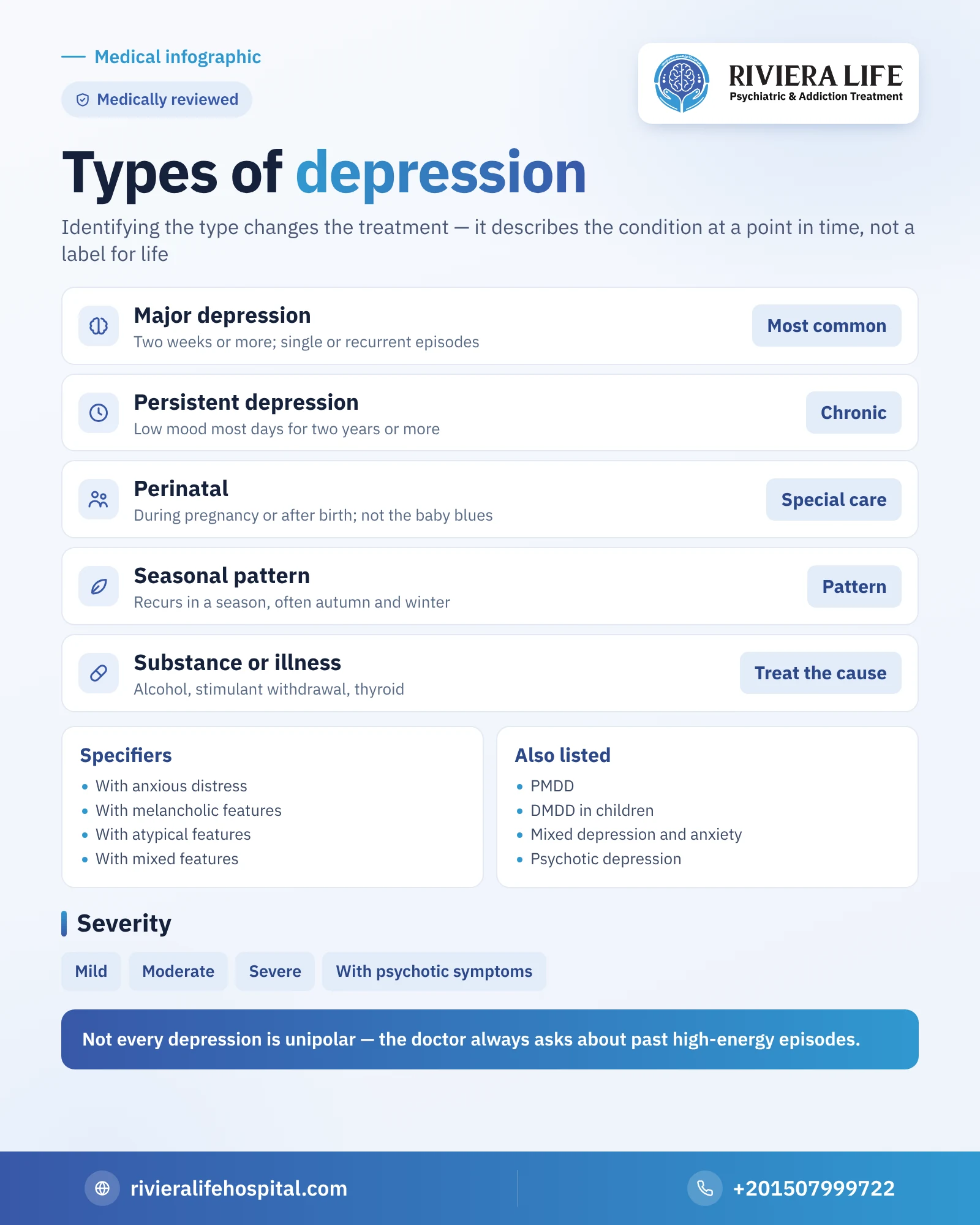
This is the most common type, and what most people mean when they say “depression”. It is diagnosed when there is low mood or loss of pleasure, with other symptoms in sleep, energy, concentration, appetite and sense of worth, for at least two weeks. It may happen once in a lifetime, which the international classification calls a “single episode depressive disorder”, or recur as episodes separated by periods of recovery, becoming a “recurrent depressive disorder”. This distinction matters, because recurring episodes make a longer preventive treatment more likely to be needed.
The doctor also describes the course of the current episode: is it still at its peak, has it partially improved, or has the patient reached full remission? This description isn’t an administrative detail; it determines whether the current treatment needs adjusting, or whether the time has come to move to the prevention stage.
Persistent or chronic depression (dysthymia)
It is usually milder than major depression, but longer-lasting. The person lives with low mood on most days for at least two years in adults, or a year in children and teenagers, until they and those around them think this is “their personality”. They work, marry and do their duties, but without real joy. A major depressive episode may come on top of it, which some doctors call “double depression”. This type responds to treatment despite its long duration.
Perinatal depression
It describes a depressive episode that starts during pregnancy or in the weeks after childbirth, and many doctors extend the period of attention to the first year after birth. It differs from the common “baby blues”, a mood swing and mild crying that appears in the first days and goes away within about two weeks without treatment. Perinatal depression is deeper and longer, may prevent the mother from enjoying her baby or caring for herself, and needs treatment that takes pregnancy and breastfeeding into account.
Depression with a seasonal pattern
Depressive episodes that recur in a particular season of the year, usually autumn and winter as days shorten, and improve in spring. Long sleep, increased appetite, craving for carbohydrates and lethargy dominate. It is more widespread in countries far from the equator, but it isn’t impossible in our region. Among its treatment options, alongside the usual treatments, is light therapy under medical supervision.
It isn’t enough for a person to feel low in winter to be diagnosed with this pattern; doctors require episodes to recur in the same season for roughly two consecutive years, and for there to be no other clear explanation, such as work pressure that recurs at the same time every year.
Premenstrual dysphoric disorder
The American manual places it among the depressive disorders, and it is much more severe than the usual tension before a period. In the week before menstruation the woman develops clear mood symptoms, such as intense sadness, irritability, anxiety and emotional swings, that affect her work and relationships, then ease a few days after the period starts. Diagnosis needs symptoms to be recorded over at least two cycles.
Depression caused by a substance, medicine or illness
Sometimes depression is a direct result of another cause. Using alcohol or withdrawing from stimulants such as captagon may cause clear depressive symptoms, as may some medicines and illnesses such as an underactive thyroid. The American manual calls these conditions “substance/medication-induced depressive disorder” or “depressive disorder due to another medical condition”. Treating the original cause here is an indispensable part of treatment.
Types specific to children and mixed types
The American manual added a diagnosis for children called “disruptive mood dysregulation disorder”, describing a child who is irritable most of the time with severe, frequent temper outbursts out of proportion to the situation. The international classification includes “mixed depressive and anxiety disorder”, when symptoms of both come together without either being enough for a diagnosis on its own. Both diagnoses are made by a specialist after careful assessment. The aim of diagnosing a child in particular is to avoid labeling them a “stubborn” or “rude” child, while they are suffering from a mood disorder that needs support and family treatment.
Levels of severity: mild, moderate and severe
After identifying the type, the doctor determines the severity. At the mild level the symptoms are relatively few and the person can work with difficulty. At the moderate level the symptoms increase and a clear part of life is disrupted. At the severe level the patient is unable to do most of their tasks. The international classification also specifies whether a moderate or severe episode is accompanied by psychotic symptoms, such as delusions of guilt, poverty or illness, or hearing voices. This level in particular needs special treatment and often a hospital stay.
Additional features that change the plan
The doctor adds “specifiers” to the diagnosis that describe the character of the episode, the most important being:
- With anxious distress: tension, restlessness and fear that something bad will happen.
- With melancholic features: almost complete loss of pleasure, worse mood in the morning, and waking very early.
- With atypical features: mood improves temporarily with good news, with excess sleep and eating and great sensitivity to rejection.
- With mixed features: some signs of excess activity appearing amid depression, a signal that calls for caution.
- With catatonia: extreme slowness, rigidity or mutism, an urgent medical condition.
Not every depression is unipolar
A depressive episode in bipolar disorder may look exactly like major depression, the only difference being previous episodes of mania or hypomania. Here lies the danger of confusion: giving an antidepressant alone to a patient with bipolar disorder may push them into a manic episode. That is why the doctor always asks about the full mood history and about relatives.
Common names that aren’t official diagnoses
Names such as “smiling depression”, “existential depression” and “emotional depression” circulate online. These are descriptions of real experiences, but they aren’t types in the medical manuals. Major or persistent depression, or an adjustment disorder to a difficult circumstance, may lie behind them, and the doctor determines which. Another example is what is known as premarital depression.
Why does identifying the type matter?
Because treatment changes with it: depression with psychotic symptoms needs additional medicines, perinatal depression needs options safe for pregnancy and breastfeeding, substance-induced depression starts with withdrawing the substance, recurrent depression needs longer prevention, and persistent depression needs more patience in psychotherapy. Identifying the type isn’t a stigma that stays with the patient, but a description of the condition at a certain time that may change with improvement. At Riviera Life everything starts with an assessment by a consultant psychiatrist to determine the type and severity, then the plan explained in our article on depression treatment is built.
More from our depression guide
- Depression: the complete guide
- Depression symptoms and signs
- Causes of depression and risk factors
- Depression treatment and steps to recovery
- Postpartum depression: symptoms, the difference from the baby blues and safe treatment
- Seasonal depression: the winter and summer patterns and light therapy
- Psychotic depression: symptoms, delusions of guilt and illness, and the treatment plan
- Teen depression: the signs, how parents talk and treatment options
- Personality disorders and depression: why they occur together and how they are treated together
- Menopause and mental health: mood swings or depression? And what helps
- Sadness for no reason: hidden causes and when it is a sign that needs a doctor
Questions many people ask
The best known is major depressive disorder, then persistent depression or dysthymia, followed by perinatal depression, seasonal depression, and depression caused by a substance or illness.
Major depression comes in more severe episodes that may recur, while persistent depression is usually milder but lasts two years or more in adults, and the two may occur together.
No, it is a popular description of a person who hides their symptoms behind a normal appearance. Major or persistent depression may lie behind it, which the doctor determines after assessment.
The baby blues are a mild mood swing that goes away within about two weeks without treatment, while postpartum depression is deeper and longer and needs assessment and treatment.
Because a depressive episode in bipolar disorder resembles ordinary depression, its treatment is different, and giving an antidepressant alone may trigger a manic episode.
The common name usually refers to premenstrual dysphoric disorder, which is officially listed among the depressive disorders. Its severe mood symptoms appear in the week before the period and ease afterwards, and the doctor confirms the diagnosis by recording symptoms over at least two cycles.