Antidepressant withdrawal symptoms, or what doctors call “discontinuation syndrome”, are a group of symptoms that may appear within days of stopping the medicine suddenly or lowering it quickly: dizziness, a feeling of fleeting electric shocks in the head, flu-like symptoms, irritability, and disturbed sleep and dreams. They are usually mild to moderate and go away within one to two weeks, but they may last longer in some people. And they are clearer with medicines that stay a short time in the body, such as paroxetine and venlafaxine. These symptoms do not mean addiction, nor do they necessarily mean the depression has returned, and the solution is not sudden stopping but a tapering plan set by the doctor.
What is antidepressant discontinuation syndrome?
Imagine a person who took an antidepressant for eight months and improved, then decided it was “enough” and stopped it in a single day. Two days later they began to feel dizzy every time they turned their head, then short electric stings inside their head, and became irritable for no reason. They thought the depression had returned or that they had become “addicted” to the medicine, when in fact they were going through discontinuation syndrome. It is estimated that a large proportion of those who stop antidepressants suddenly notice at least one symptom, and the severity differs greatly from one person to another.
Why do withdrawal symptoms happen?
With regular use, the brain adapts to the presence of the medicine, so the sensitivity of serotonin receptors and others changes to match the new level. If the medicine disappears suddenly, the brain remains set to a state that no longer exists, so a temporary imbalance occurs until it readjusts itself. It is like stepping down a stair you weren’t expecting. And the faster the medicine leaves the body, the more violent this transition, which we explain in detail in the article How long psychiatric medications take to leave the body.
Common symptoms
Physical symptoms
- Fatigue, muscle aches, headache and sweating, that is, a feeling like the start of flu.
- Nausea, and sometimes vomiting or diarrhea.
Balance and sensory symptoms
- Dizziness or a feeling of unsteadiness, which increases with moving the head or eyes.
- “Brain zaps”: very short electric stings in the head, which may extend to the arms.
- Numbness or tingling, or a strange perception of sounds and lights.
Sleep and mood symptoms
- Insomnia, or very vivid dreams and nightmares.
- Irritability, quick temper and anxiety, and sudden crying spells.
- Mood swings or a feeling of numbness.
How long do antidepressant withdrawal symptoms last, and when do they start?
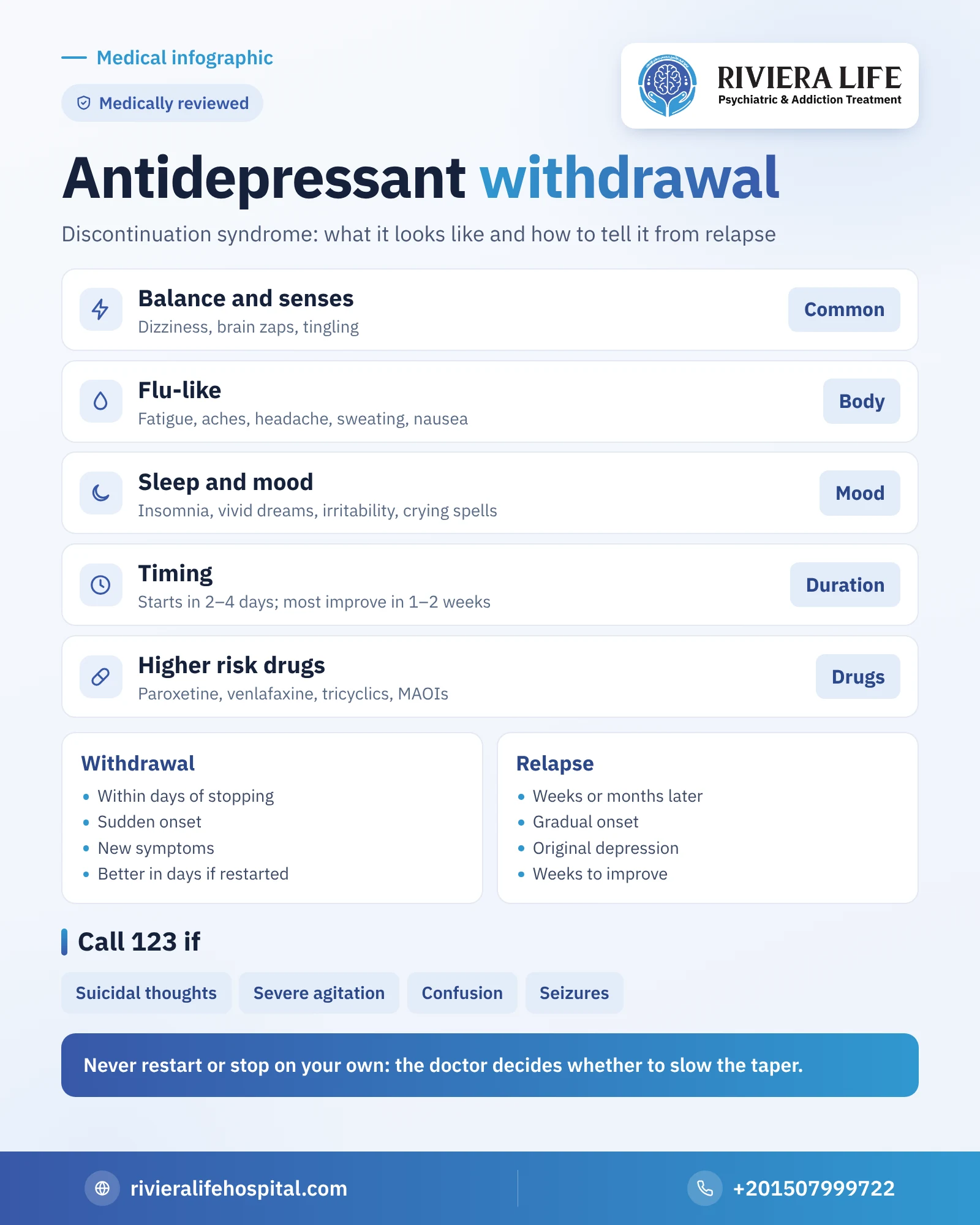
Symptoms usually start within two to four days of the last dose or of lowering it, and sometimes sooner with short-lived medicines. Most people improve within roughly one to two weeks, but a proportion of patients have symptoms that last weeks, and they may last months in a few of them, especially after long use. With fluoxetine, symptoms start later and are usually milder, because it leaves the body very slowly and so almost tapers itself.
Which antidepressants cause withdrawal most?
- Paroxetine: one of the SSRI medicines most associated with discontinuation symptoms, because of its short stay and the nature of its effect.
- Venlafaxine: very short-lived, and symptoms may appear even when a dose is delayed by hours.
- Tricyclics: such as Anafranil, which may also cause stomach symptoms, sweating and insomnia when stopped suddenly.
- Monoamine oxidase inhibitors: their discontinuation symptoms may be severe, which is why they need close supervision.
- Usually the least: fluoxetine, because of its long stay in the body.
Medicines such as sertraline and escitalopram fall in a middle zone, but they may also cause clear symptoms if stopped suddenly.
Factors that raise the likelihood and severity of symptoms
- A long period of use, especially more than a few months.
- Higher doses.
- Stopping suddenly instead of gradually.
- A previous experience with severe discontinuation symptoms.
- Repeatedly forgetting doses, which makes some patients live through “mini-withdrawals” without knowing the reason.
Withdrawal or relapse? How do you tell them apart?
| Point of comparison | Discontinuation symptoms | Return of depression |
|---|---|---|
| Timing | Within days of stopping or lowering the dose | Usually after weeks or months |
| Onset | Sudden | Gradual |
| Nature of the symptoms | New symptoms: dizziness, electric shocks and flu-like symptoms | The same original depression symptoms: sadness and loss of interest |
| Course | Usually ease within a few weeks | Continue and may increase |
| Restarting the medicine | Usually improve within a few days | Improvement needs weeks |
This table is for understanding only; the actual distinction needs a doctor, because the two conditions may overlap. And you will find the signs of the illness returning in the article Depression symptoms.
Do withdrawal symptoms mean I have become addicted to the medicine?
No. Discontinuation symptoms are a sign of the body’s adaptation, not of addiction. There is no craving for the medicine, no seeking of a high, and no increase in the amount. And the difference is great between them and sedative withdrawal, which may be dangerous and need special supervision, as the article Rivotril withdrawal symptoms explains. We explained this wider difference between medicine families in the article Are psychiatric medications addictive?
How is safe stopping done?
Safe stopping is a shared decision between you and your doctor, and it starts with a question: has the time really come? Stopping early, right after improving, is one of the main causes of relapse. And when the doctor decides the time is right, they set a gradual tapering plan that usually extends over weeks, and may extend over months after long use. The doctor may slow the plan if troublesome symptoms appear, or pause at some stage until they calm, and sometimes replace the short-lived medicine with a longer-lived one before stopping it. We will not give any tapering figures here, because what suits one patient may harm another.
What do you do if the symptoms appear?
- Contact your doctor and don’t wait until the symptoms intensify.
- Don’t restart the medicine at an amount of your own choosing, and don’t try a friend’s medicine, as the doctor is the one who decides whether to go back to a previous dose or slow the plan.
- Avoid driving if the dizziness is noticeable.
- Stay away from alcohol and unprescribed sedatives, as they make the picture worse.
- Look after regular sleep, fluids and light food.
- Tell those around you what is happening, so they understand the temporary irritability and don’t misinterpret it.
Special situations: forgetting, running out and pregnancy
Not every stop is a deliberate decision. Sometimes the box runs out during a holiday, or the patient travels and forgets their medicine, or stops the doses because of financial strain or the medicine not being available in pharmacies. In all these cases the same symptoms may appear, so it is better to plan ahead: ask for the new prescription days before the box runs out, carry your medicine in your hand luggage when travelling, and if you can’t find your medicine, ask your doctor about a suitable alternative instead of stopping.
As for a woman who discovers she is pregnant while taking an antidepressant, sudden stopping may expose her to discontinuation symptoms and a relapse of depression together at a sensitive time, and it is better for her to call her doctor the same day so they can decide the most suitable plan for her and the baby.
When do you need urgent help?
Most discontinuation symptoms are unpleasant but not dangerous. But there are signs that cannot wait, and if suicidal thoughts appear, also call the mental health hotline on 16328.
Call the ambulance on 123 immediately if there appears
During or after stopping an antidepressant, or you can call the mental health hotline on 16328:
- Thoughts of self-harm or suicide
- Severe agitation or unusual impulsiveness
- Clear confusion or clouding of consciousness
- Seizures
- Excessive activity with little sleep without tiredness, and racing thoughts
How can Riviera Life help you?
If you want to stop an antidepressant, or have started stopping and have symptoms you don’t know whether they are withdrawal or relapse, book your free first consultation with a psychiatry consultant at Riviera Life. We assess how ready you are to stop, set a tapering plan that suits your medicine and your history, and follow you step by step in complete confidentiality.
More from the psychiatric medications guide
- Depression: the comprehensive guide
- Antidepressants: types, how they work and side effects
- Paroxetine: uses and side effects
- How long psychiatric medications take to leave the body
- Parkinol withdrawal symptoms: the timeline, cholinergic rebound and when to worry
- Venlafaxine (Efexor): uses, blood pressure and strong discontinuation symptoms
Questions many people ask
They are a fleeting sensation like an electric sting in the head, which may increase with moving the eyes. They are unpleasant but usually not dangerous, and they ease with time or by slowing the taper.
For most people they go away within a few weeks, but a few may have longer symptoms, especially after long use or fast stopping, and here the doctor adjusts the plan.
They may happen in a milder form, especially in the final stages of tapering. Slowing the plan with the doctor solves it in most cases.
With short-lived medicines such as venlafaxine and paroxetine, a delay may be enough for dizziness or discomfort to appear, so sticking to a fixed time helps.
Some doctors may switch a short-lived medicine to fluoxetine before stopping because it leaves the body slowly, but this is a medical decision that suits only some patients.