Menopause and mental health is a subject surrounded by ready-made judgments, and the common Arabic phrase for it, which literally means “the age of despair”, is itself unfair and medically inaccurate: life doesn’t end with the cessation of periods, and the correct expression is “menopause”, with the stage before it called “perimenopause”. In these years the mental state of many women changes: irritability, anxiety, sadness, insomnia and forgetfulness. Some of this is temporary fluctuation linked to hormones, and some is real depression that needs treatment. Here we explain how to tell them apart, what helps, and when to seek help.
What happens in the body?
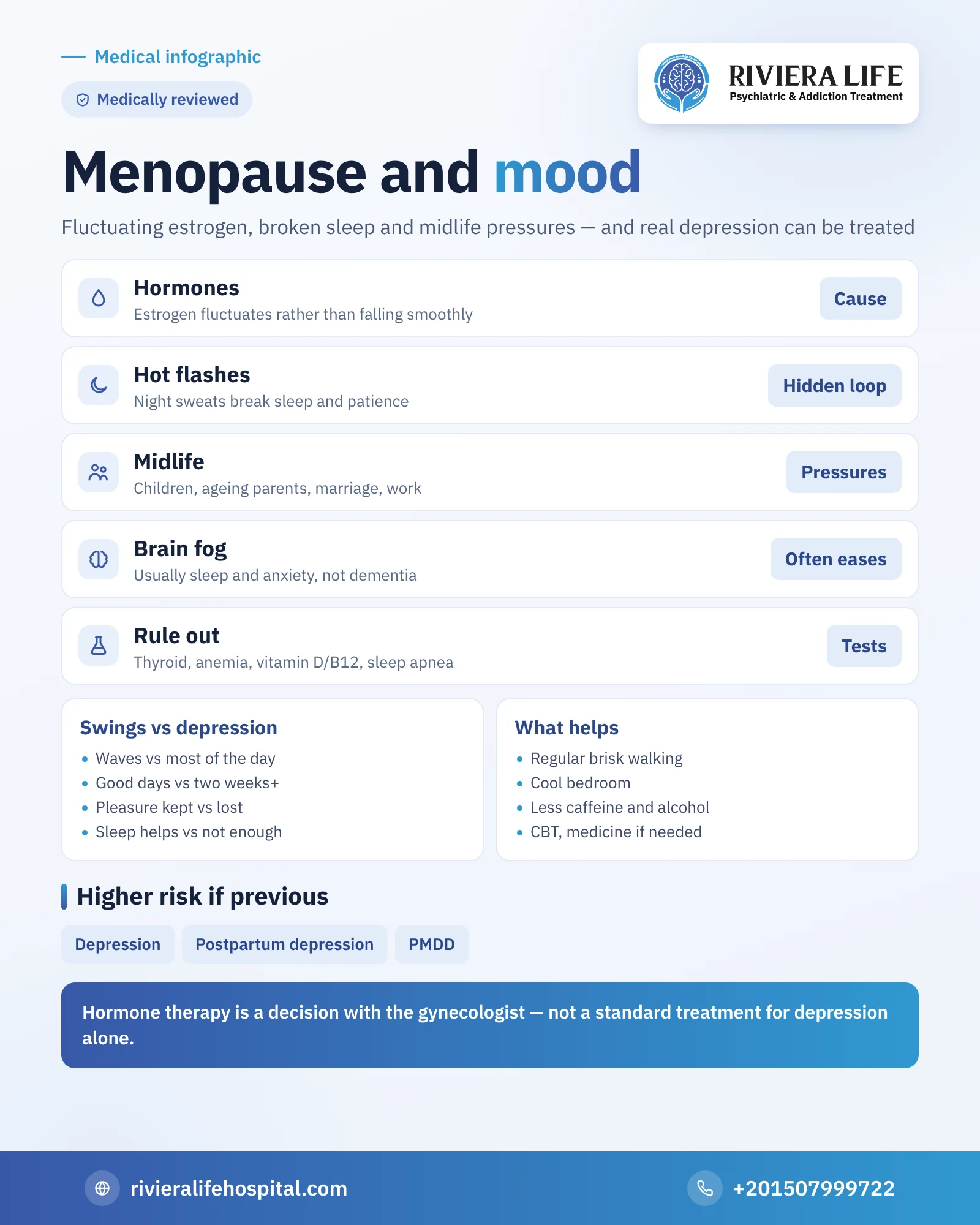
Menopause officially occurs when twelve consecutive months pass without a period, and this is usually around fifty, with wide variation from one woman to another. The stage that precedes it, called perimenopause, may begin several years earlier. In this stage estrogen doesn’t fall smoothly, but fluctuates up and down, and this fluctuation is what is linked in many women to mood swings more than the fall itself. Estrogen interacts with the serotonin, sleep and stress systems in the brain, so it is no surprise that the general feeling is affected.
Psychological symptoms in this stage
- Irritability, agitation and quick anger that weren’t part of your nature.
- Anxiety and inner tension, and sometimes bouts of palpitations you think are heart disease.
- Sadness or crying for no clear reason, and quick mood swings.
- Forgetfulness, mental fog and difficulty concentrating.
- Insomnia and waking repeatedly at night.
- Declining self-confidence and desire, and a feeling that something is changing that you can’t control.
Hot flashes and sleep: the hidden loop
Hot flashes and night sweats don’t only cause physical discomfort; they interrupt sleep. A woman who sleeps in a broken way for weeks and months becomes less able to tolerate pressure, quicker to anger, and more prone to sadness. In this way part of the mood disturbance may result from sleep rather than directly from hormones. That is why treating hot flashes and improving sleep often helps mood. For more on sleep problems see sleep disorders.
Temporary swings or depression?
Hormone-related swings come in waves: difficult days with good days in between, and they usually improve with regulating sleep and easing pressure. Depression, on the other hand, persists most of the day and most days for two weeks or more, and is accompanied by loss of pleasure, a feeling of guilt or worthlessness, a change in appetite and thoughts of death. The likelihood of depression in this stage increases in those who have previously had depression, postpartum depression or premenstrual dysphoric disorder, and in those going through great pressure or severe lack of sleep. You will find the full list of symptoms in depression symptoms, and on the hidden pictures in women depression symptoms in women.
It isn’t hormones alone
In midlife many factors coincide with the hormonal change: children growing up and leaving home or entering a difficult adolescence, parents aging and needing care, changes in the marital relationship, work pressures, and perhaps the loss of a loved one. A woman may begin to review her life and ask herself about her role. These are all legitimate reasons for sadness, but they don’t mean depression is a “natural circumstance” that doesn’t need treatment. That is why it helps to look at both sides: the hormonal and the life side.
Forgetfulness and brain fog: is it the start of an illness?
Many women in this stage complain that they forget names and appointments and lose the thread of conversation, so fear of dementia creeps in. In most cases this fog is linked to lack of sleep, anxiety and stress and hormonal fluctuation, and it usually eases with time and improved sleep. But if it is accompanied by getting lost in familiar places, a sharp change in behavior or worsening weakness, seeing a doctor is a must. And merely doubting your memory deserves to be asked about, not kept quiet.
Tests the doctor rules out
Many symptoms of this stage may resemble thyroid disorder, anemia, vitamin D or B12 deficiency, sleep apnea and diabetes. That is why the doctor sometimes requests simple tests before attributing the symptoms to menopause. And reassuring news: many of these causes are easy to treat.
What helps?
Daily life options
Regular movement, such as brisk walking, eases mood symptoms and improves sleep. A cool, well-ventilated bedroom and light clothes reduce the effect of hot flashes. Reduce caffeine in the evening and alcohol, as both increase hot flashes and interrupt sleep. It also helps to tell those around you what is happening; many family conflicts in this stage calm down when the husband and children understand that it isn’t “stubbornness”.
Psychotherapy
Cognitive behavioral therapy has proven useful in anxiety and depression, and also helps in dealing with insomnia and some physical symptoms of hot flashes. Many women need only a few sessions to regain a sense of control.
Medicines and hormone therapy
Doctors assess each case individually. Antidepressants may be used when there is depression or severe anxiety, and some of them also ease hot flashes in some cases. Hormone therapy is a shared decision between the woman and the gynecologist, weighing its benefits for physical symptoms against its risks according to age and medical history, and it isn’t considered a standard treatment for depression alone. Don’t start or stop any medicine except under the doctor’s supervision, and it is best for the gynecologist and the psychiatrist to know what you are taking. You will find the general framework for treating depression in depression treatment.
Seek urgent help immediately if any of these appear
Call the ambulance on 123 or go to the nearest emergency department, and you can ask for guidance from the mental health hotline 16328.
- Thoughts of death, self-harm or that you are a burden on others
- Severe chest pain, shortness of breath or fainting with palpitations — don’t consider it anxiety before it is examined
- Severe confusion or strange thoughts or voices
- Inability to sleep or eat for several days with despair
When the changes turn into a feeling of loss
Some women are saddened less by the hormones than by what they mean in their minds: the end of fertility, declining beauty, or fear that their value will diminish in the eyes of the husband and society. These feelings are understandable, and they grow when a woman hears phrases like “your role is over” or “the age of despair”. An honest conversation with oneself or with a therapist rearranges the meaning: this is a new stage with its burdens and opportunities, and it doesn’t diminish her value.
When should you seek help?
See a doctor if sadness or anxiety continues for two weeks or more, affects your work, home and relationships, if you no longer sleep because of hot flashes and thoughts, if you feel you are no longer yourself, or if thoughts of death appear. You can start with the gynecologist or the psychiatrist; what matters is that you start. The article when do you need a psychiatrist? explains what to expect at the first visit.
How do the husband and family support her?
The first thing a woman needs in this stage is for those around her to believe her. Don’t tell her “these are the symptoms of your age” to close the conversation, and don’t always attribute her anger to “hormones” so that she loses her right to be heard. Offer to share the burdens, be patient with her mood without tolerating abuse, and accompany her to the doctor. And if she is the one reading this article, know that seeking treatment in this stage doesn’t mean weakness, and that many women come out of it calmer and steadier.
How does Riviera Life help you?
The psychiatry consultants at Riviera Life in Sheikh Zayed listen to your full story in complete confidentiality, distinguish between the swings of this stage and depression or anxiety that needs treatment, and coordinate with the gynecologist when needed. The first consultation is free on +201507999722.
More from the depression guide
- Depression: the comprehensive guide
- Depression symptoms in women
- Excessive irritability in women
- Postpartum depression
Questions many people ask
It doesn't cause it on its own, but the years before menopause raise its likelihood in some women, especially those who have previously had depression, premenstrual dysphoric disorder or postpartum depression.
Mood swings come in waves with good days in between, while depression persists most of the day for two weeks or more with loss of pleasure, feelings of guilt and a change in appetite.
Yes, because they interrupt sleep, and chronic lack of sleep increases irritability, sadness and anxiety. That is why treating hot flashes and improving sleep helps.
It is a decision a woman makes with her doctor to treat menopause symptoms, and it isn't considered a standard treatment for depression alone; other psychological or medication treatments may be needed.
If sadness or anxiety lasts two weeks or more, affects your life, or severe insomnia or thoughts of death appear, don't wait.