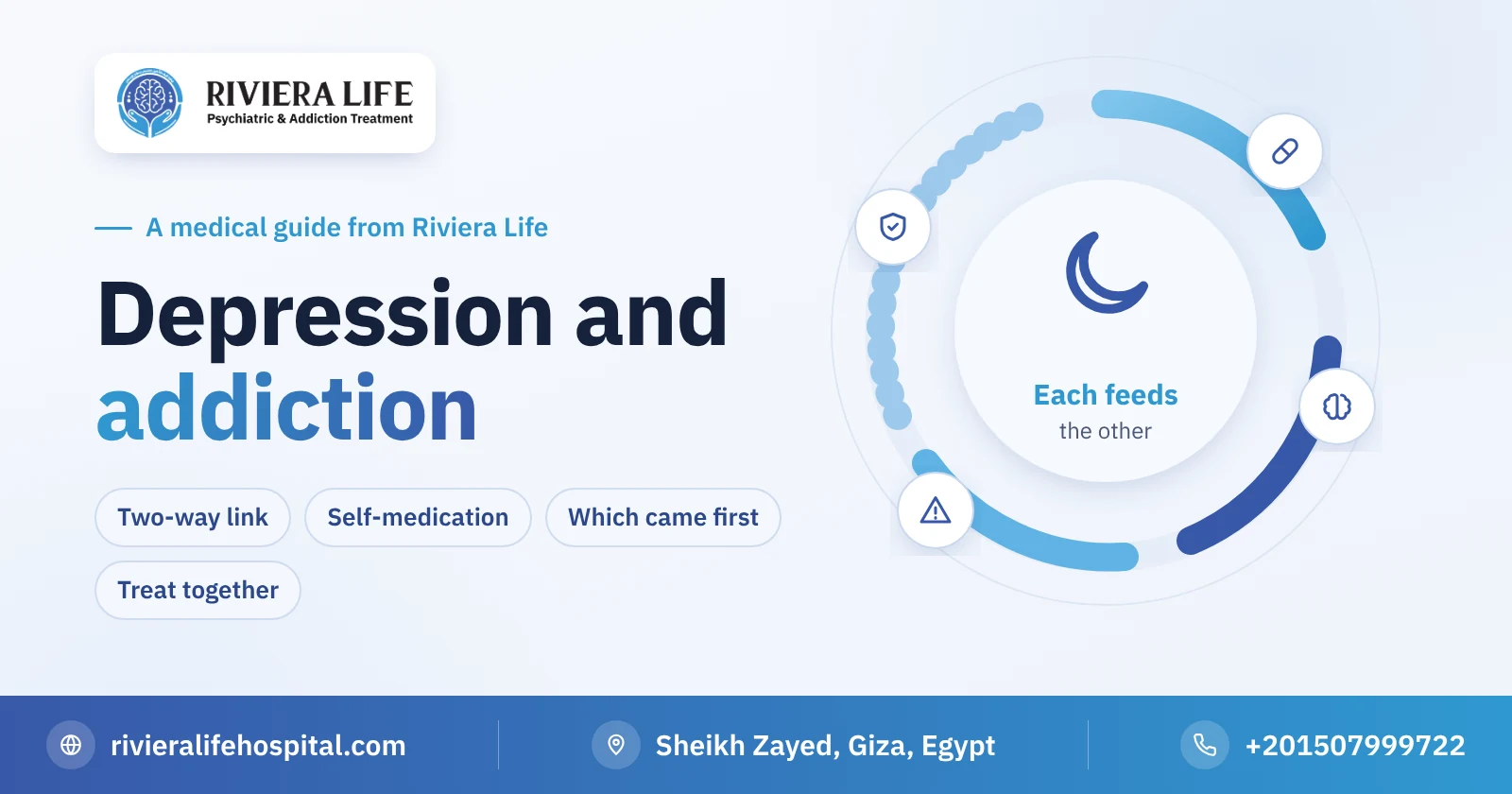
Depression and addiction often occur together, and the relationship between them runs both ways: a depressed person may turn to a substance that numbs their pain, and use itself may create a depression that didn’t exist. The hardest thing is that the symptoms of the two overlap, so neither the patient nor the family knows which is the origin. Doctors distinguish between substance-induced depression, which usually improves after stopping, and independent depression, which needs its own treatment. The risk of suicide rises when they occur together, which is why integrated treatment for both is the safe path.
A two-way relationship
Imagine a young man who lost his job and stopped sleeping, so he tried hash to calm down. He felt relief for days, then needed a larger amount, then could no longer sleep without it, and the distress returned heavier than before. And imagine on the other hand a man who never knew depression, used stimulants for months and then stopped, falling into a severe mood crash that made him think his life was over. Both stories are common, and in both each disorder feeds on the other. Research indicates that people with a depressive disorder are more prone to substance use disorders than the general population, and the reverse is true, with shared factors between them in heredity, brain chemistry, stress and early trauma.
Self-medication: why does a depressed person turn to a substance?
Most depressed people aren’t looking for “pleasure”, but for the pain to stop: an hour without thinking, a night’s sleep, or energy to go to work. So some choose a sedating substance to silence anxiety and insomnia, and others choose a stimulant to drive away lethargy. The problem is that relief is temporary, the brain adapts quickly and needs more, and withdrawal between doses brings symptoms that resemble depression itself, so it seems to the patient that the substance is the only thing that helps them. And so the circle closes. The article on dopamine and addiction explains how use reshapes the brain’s reward system.
Substance-induced depression or independent depression?
This is the question on which the doctor builds the whole plan. The difference between the two types doesn’t show in the severity of the symptoms, but in their timing and story:
| Point of comparison | Substance-induced depression | Independent depression |
|---|---|---|
| When did it start? | During use or withdrawal | Before use began or in long periods of stopping |
| After stopping | Usually improves gradually within weeks | Continues or becomes clearer |
| Previous history | No depressive episodes before use | Previous episodes or a strong family history |
| Main treatment | Safe withdrawal of the substance then follow-up | Psychological and medical treatment for depression along with addiction treatment |
That is why the doctor reassesses mood after a period of stopping, usually a few weeks, before settling the diagnosis. But they don’t wait if the symptoms are severe or suicidal thoughts appear, as safety comes first. The article on types of depression explains where this diagnosis sits among the other types.
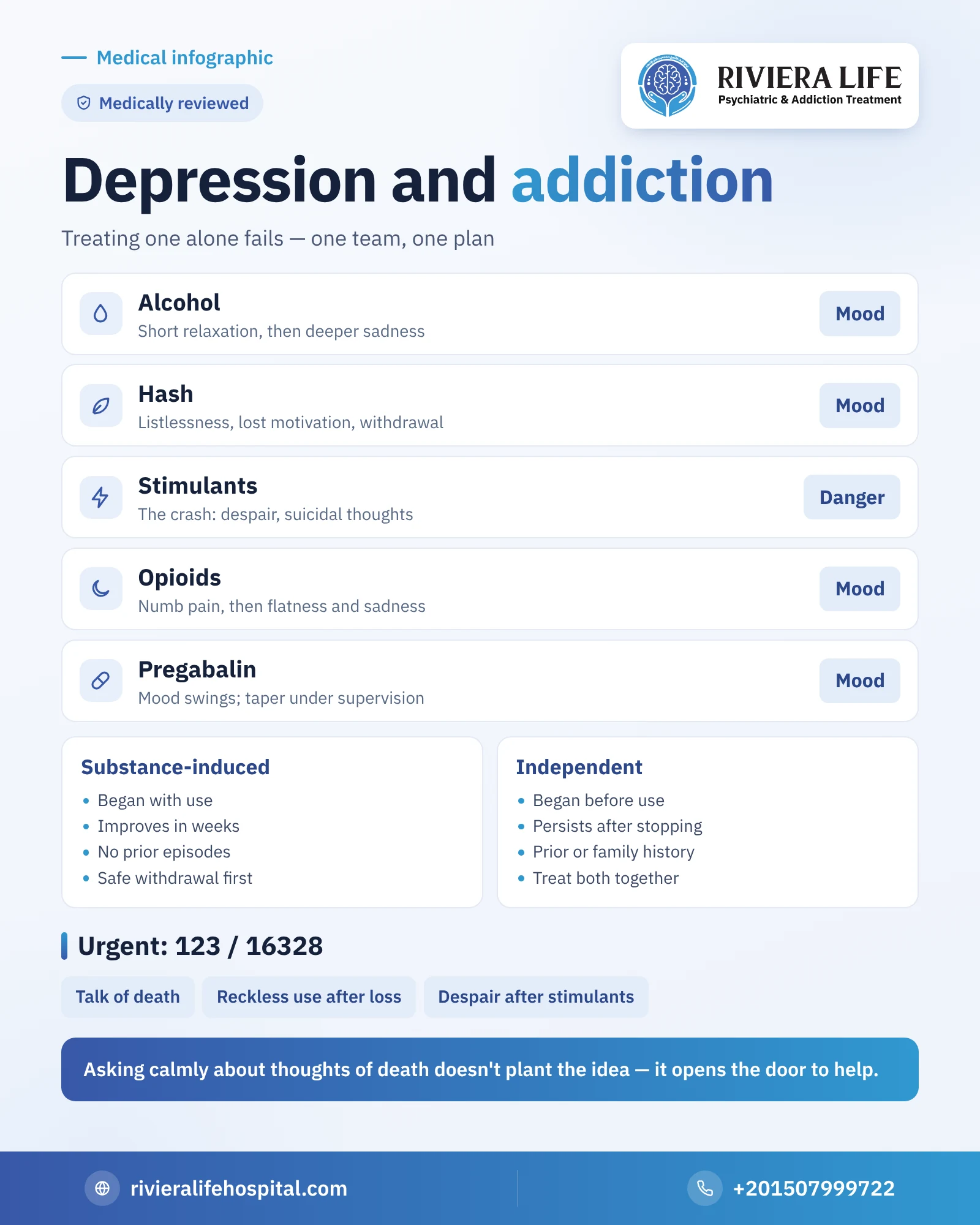
How does each substance affect mood?
Alcohol
A substance that depresses the nervous system, giving brief relaxation then deepening sadness and spoiling sleep. It is one of the substances most linked to depression and to impulsive behavior while drunk. The details are in the alcohol guide.
Hash
It may ease tension at first, but regular use is linked in many to lethargy, loss of motivation and social withdrawal, a picture that is hard to distinguish from depression. Irritability, insomnia and distress appear in its withdrawal.
Stimulants and the post-use crash
Captagon, ice and cocaine raise mood and energy artificially, then the “crash” comes after stopping: long sleep, exhaustion, complete loss of pleasure, and sometimes acute hopelessness and suicidal thoughts in the first days. Low mood may continue for weeks.
Opioids and tramadol
They numb physical and psychological pain together, which is the secret of their appeal to a depressed person. With continuation, emotional blunting appears, then withdrawal comes with anxiety, insomnia and deep sadness.
Pregabalin
Some young people in Egypt turn to it looking for calm and a high, and its use is often mixed with tramadol. With dependence on it mood swings may appear, and stopping it suddenly is accompanied by anxiety, insomnia and disturbance, which is why it is withdrawn gradually under medical supervision. The details are in the pregabalin guide.
The risk of suicide when depression and addiction combine
Each alone raises the risk of suicide, and together they raise it more. The substance weakens the ability to control impulses, withdrawal deepens hopelessness, and accumulated losses in work, family and money increase the feeling that there is no way out. The most dangerous periods: the first days after stopping stimulants, periods of heavy intoxication, and right after a relapse when the patient is flooded with a sense of failure. Asking the person calmly and clearly about thoughts of death doesn’t plant the idea in their head, but opens the door to help.
Seek urgent help immediately if you see
Call an ambulance on 123 or go to the nearest emergency department, don't leave the person alone, and remove the substances and medicines available at home.
- Talk of death, wanting to disappear or being a burden on everyone
- Excessive, reckless use after a loss, a trauma or a relapse
- Saying goodbye to family or suddenly getting rid of treasured belongings
- Acute hopelessness in the first days after stopping stimulants
- Loss of consciousness or difficulty breathing after mixing sedating substances
You can also contact the hotline of the General Secretariat of Mental Health and Addiction Treatment on 16328 or 0220816831.
Signs that it is more than “a bad mood after using”
- Sadness or loss of pleasure that continues despite weeks having passed since stopping.
- A previous history of depression before use even began.
- Repeated relapses that always come after periods of sadness or insomnia.
- A family history of depression, suicide or addiction.
- Using alone in a closed room with the intention of “forgetting”, not staying up with friends.
Any of these signs means the patient needs a specialist psychological assessment, not just withdrawal of the substance.
Why does treating one of them alone fail?
If the addiction is treated and the depression left, the patient comes out of the withdrawal period to face the same sadness that pushed them to use, so they go back to it. And if the depression is treated in a clinic that doesn’t ask about use, the patient may not respond to the medicine because the substance disrupts its effect, and some medicines may increase the risk if mixed with it. That is why specialists recommend what is called “dual diagnosis”: one team that sees the whole picture and treats both disorders in one plan.
Integrated treatment: what does it mean in practice?
- Safe withdrawal of the substance: under medical supervision, with monitoring of mood and suicidal thoughts throughout withdrawal.
- Reassessment: weeks after stopping, to determine whether the depression is independent.
- Psychotherapy that combines the two: such as cognitive behavioral therapy, which deals with negative thoughts and triggers for use together, and motivational interviewing.
- Carefully chosen medicines: antidepressants when needed, avoiding addictive medicines as far as possible, all by the doctor’s decision.
- Relapse prevention: a written plan for signs of returning depression and signs of the urge to use, with regular follow-up after discharge.
The dual diagnosis program at Riviera Life explains the stages of the program, levels of care and its length in detail.
How does Riviera Life treat depression and addiction together?
- One team: consultants in psychiatry and addiction follow the same patient in one plan.
- Safe withdrawal: round-the-clock medical supervision throughout withdrawal and close monitoring of mood.
- Diagnosis after stopping: reassessing depression when the effects of the substance have calmed.
- The family as a partner: a family program that teaches parents the danger signs and ways to support.
- Follow-up: care after discharge that reduces the risk of relapse in both disorders.
- Complete confidentiality and experience: fourteen years of work, and a facility licensed by the Ministry of Health.
The first consultation is free, and you can get in touch around the clock on +201507999722; we are based in Sheikh Zayed, Giza.
More from the depression guide
- Depression: the complete guide
- The causes of depression and risk factors
- Depression treatment and the steps to recovery
- The dual diagnosis program
- Depression in men: the hidden mask of anger, work and substances
Questions many people ask
Both directions are possible; a depressed person may turn to a substance to ease their pain, and use and withdrawal may cause a depression that didn't exist. The doctor determines the origin from the timing and story of the symptoms.
If it is caused by the substance, it usually improves within weeks of stopping. If it continues despite stopping, it is most likely an independent depression that needs specific treatment.
Mixing psychiatric medicines with substances may reduce their effect or increase their risk, so the doctor decides the timing and type after knowing frankly what substance is used.
This article explains the relationship between depression and addiction and how to recognize it, while the dual diagnosis program describes the stages of treatment and levels of care inside the hospital.
When there is talk of death or self-harm, acute hopelessness after stopping stimulants, or reckless use after a big loss. Then call the ambulance on 123 or go to the nearest emergency department immediately.