Recurring nightmares are frightening or painful dreams that usually end with waking up in fright, with a pounding heart and a clear memory of their details, and they return on many nights until the person starts putting off sleep for fear of them. A passing nightmare after a horror film or a tense day is normal. But when they recur for weeks and start invading the day with exhaustion and anxiety, they deserve to be understood and treated. This article explains when nightmares are ordinary, their link to trauma and post-traumatic stress disorder, what triggers them among medicines and substances, and the treatments that have proven useful.
What is a nightmare and what distinguishes it from a bad dream?
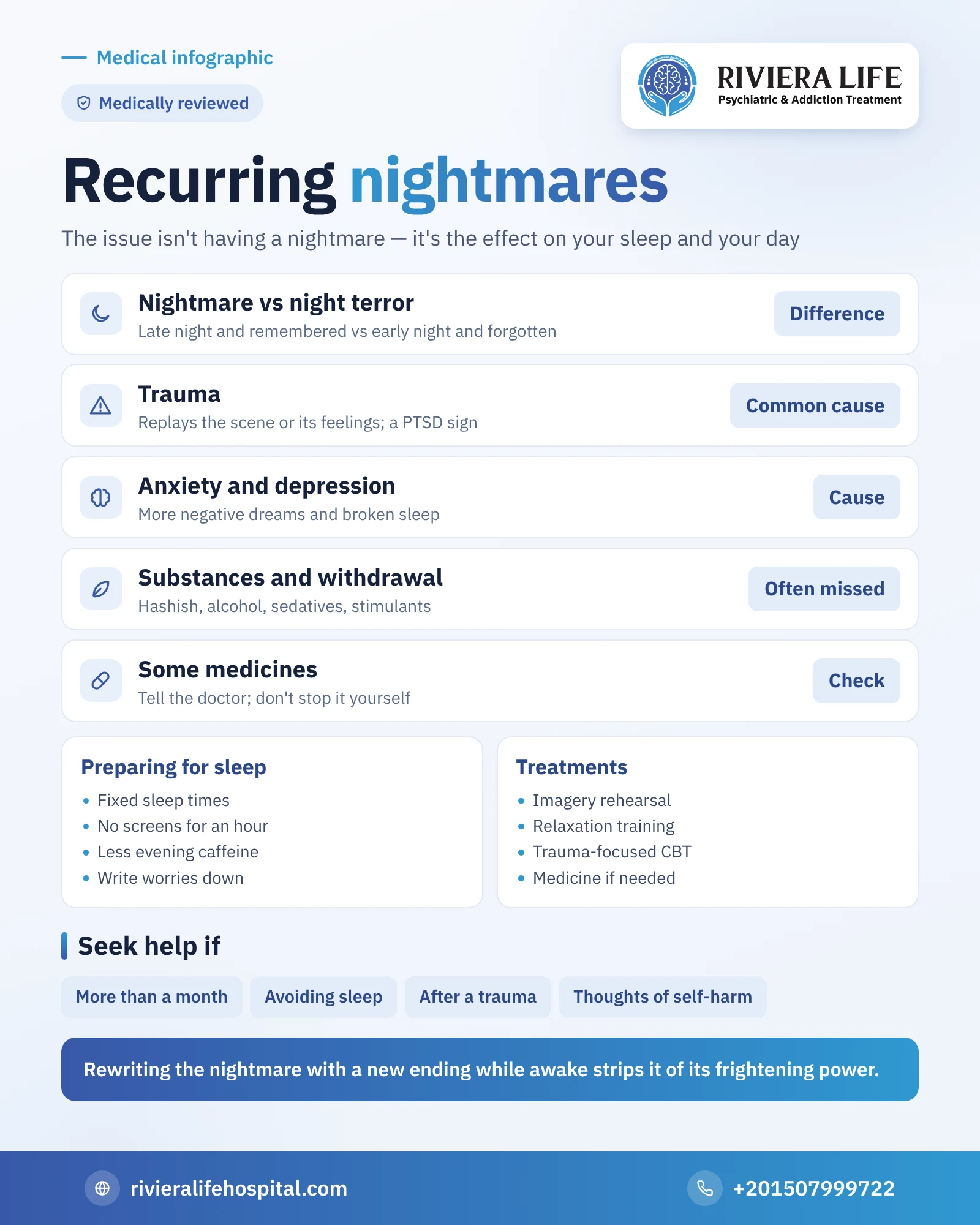
A nightmare is a dream that provokes intense fear, anxiety, sadness or anger, and wakes the sleeper so he remembers it clearly. It usually happens in the second half of the night and close to morning, because periods of vivid dreaming lengthen in those hours. This distinguishes it from a “night terror”, which happens in the first third of the night and isn’t remembered. We have explained this difference within sleep disorders.
Doctors speak of “nightmare disorder” when frightening dreams recur, cause clear distress or disruption to sleep and the day, and aren’t fully explained by another illness or a substance. So the criterion isn’t the presence of the nightmare, but its effect.
How common are they? And when are they normal?
Nightmares are common in children, especially between three and twelve, and decrease with age but don’t disappear. Many adults have them occasionally at times of stress, illness or fever, or after a change in sleep. All this is within the normal. The problem is when they exceed once or twice a week for weeks, recur with the same theme, push you to avoid sleep, or are accompanied by daytime symptoms.
Nightmares and trauma: when sleep replays what hasn’t been treated
One of the most common causes of recurring nightmares is a traumatic experience: an accident, violence, a sudden loss, a disaster, or painful experiences in childhood. In trauma-linked nightmares, the dream may replay almost the same scene, or replay its feelings in symbolic form, and the person wakes sweating and terrified. These nightmares are among the known signs in PTSD symptoms, and they may continue for months and years after the danger has passed.
Not everyone who has nightmares after trauma has post-traumatic stress disorder, as they may be a temporary response. But if they extend beyond a month and are accompanied by intrusive memories, avoidance and constant tension, a psychiatric assessment is necessary. For more on normal reactions and what helps, read psychological trauma.
Other causes of recurring nightmares
- Anxiety and depression: they increase negative dreams and broken sleep, and early waking with dark thoughts is common with depression.
- Lack of sleep and irregular sleep: deprivation followed by catching up doubles vivid dreams on the following nights.
- Sleep disorders: sleep apnea and others may be linked to disturbing dreams and repeated waking.
- Some medicines: some medical leaflets mention nightmares as a side effect of some blood pressure medicines, some antidepressants and other medicines. If you notice nightmares linked to starting a medicine, tell your doctor and don’t stop it yourself.
- Food before sleep and stimulants: a heavy late meal or caffeine in the evening may make sleep light.
- Personal predisposition: some people are more sensitive and creative in imagination, and remember their dreams more.
Nightmares, drugs and withdrawal
Nightmares are often linked to substances, and this is a point people overlook:
- Stopping hashish: after long use, many have vivid, disturbing dreams and insomnia in the first weeks. See hashish withdrawal symptoms.
- Alcohol: it breaks deep sleep and increases disturbing dreams in the second half of the night, and its withdrawal may be accompanied by nightmares, insomnia and hallucinations, a withdrawal that may be dangerous and need medical supervision. See alcohol withdrawal symptoms.
- Sedatives and sleeping pills: stopping them suddenly may cause insomnia and severe nightmares. See benzodiazepine withdrawal, and no change to the medicine is made except with the doctor.
- Stimulants: they deprive of sleep for days, then rebound sleep comes with vivid dreams.
In all these cases dreams gradually return to normal after recovery, but the first weeks may be hard, and it is important that the person doesn’t return to the substance just to escape the nightmares.
Does a nightmare have a hidden meaning?
Many ask: is a nightmare a message or an omen? Research doesn’t support a magical interpretation, and the dream usually processes the day’s feelings and memories in the language of images. But the theme of the nightmare may point you to what is really preoccupying you: a fear of falling in someone who feels a loss of control, or being chased in someone avoiding facing something. Take it as an indicator of your state, not a verdict on your future. And if the nightmare tells of a real event that happened to you, it is usually a memory that hasn’t been processed yet, which is a matter for psychotherapy.
How is the assessment done?
The doctor asks about the nature of the nightmares, their frequency and theme, whether they relate to an event, about sleep, medicines, substances and alcohol, and about mood, anxiety and trauma symptoms. He may request a sleep study if a breathing or movement disorder is suspected. What matters is that you tell what you remember without feeling ashamed, as most people hide their nightmares for fear of their being dismissed.
What really helps?
Steps to prepare for sleep
- A fixed time for sleeping and waking, and a quiet, dark and relatively cool room.
- Staying away from screens and disturbing news an hour before sleep.
- Reducing caffeine and heavy meals in the evening.
- Writing down what worries you on paper before sleep to empty it from your head.
- Waking from a nightmare: turn on the light, move your feet, remind yourself where you are and today’s date, and breathe slowly before going back to sleep.
Psychotherapies
Psychological methods have proven effective in recurring nightmares, the best known being “imagery rehearsal therapy”, in which the patient recalls the nightmare while awake in a session with a therapist, then rewrites it with a different ending and imagines it several times, so it loses its frightening power. Alongside it are relaxation exercises and sleep regulation. With trauma, trauma-focused cognitive behavioral therapies are used, and you can read more in PTSD treatment.
Medicines
The psychiatrist may prescribe a helping medicine in some cases, especially when post-traumatic stress disorder, anxiety or depression is present, and he determines its type and duration. There is no magic medicine for nightmares, and sedatives and sleeping pills aren’t used as a long-term solution because they may lead to dependence and rebound insomnia. To learn about the harms of depending on sleeping pills, read sleeping pill addiction.
Children’s nightmares: what do parents do?
A child who wakes up crying needs a hug and calm reassurance, not a long talk about the dream in the middle of the night. Then it can be talked about in the morning in simple language, while avoiding violent scenes before sleep and establishing a calming routine. If the nightmares continue for weeks, or are linked to a painful event in the child’s life such as bullying or loss, consult a specialist. You can see mental illness in children to learn the signs by age.
When should you seek psychological help?
Seek help if the nightmares have continued for more than a month, keep you from sleeping, come after trauma, or are accompanied by sadness, anxiety or thoughts of self-harm. If thoughts of harming yourself come to you, call an ambulance on 123 or the mental health line on 16328, and talk to someone you trust immediately. You aren’t alone, and these dreams are treatable.
How can Riviera Life help you?
Riviera Life’s psychiatry consultants assess nightmares linked to trauma, anxiety or substances, and set an integrated treatment plan that includes psychotherapy and follow-up. The first consultation is free and confidential on +201507999722.
More from our insomnia guide
- Insomnia: the complete guide
- Sleep disorders: their types and signs
- PTSD symptoms
- Melatonin and sleep
Questions many people ask
When they recur for weeks and push you to avoid sleep or cause daytime exhaustion and anxiety, or when they come after trauma.
A nightmare wakes you and you remember it clearly, usually late in the night, while a night terror happens early in the night and usually isn't remembered.
They may be one of its signs, but they aren't enough for diagnosis on their own. The doctor assesses them along with intrusive memories, avoidance and constant tension.
Yes, vivid dreams and insomnia are common in the first weeks after stopping, and no medicine is changed without the doctor.
Imagery rehearsal therapy along with sleep regulation and relaxation, and trauma-focused therapies when post-traumatic stress disorder is present.