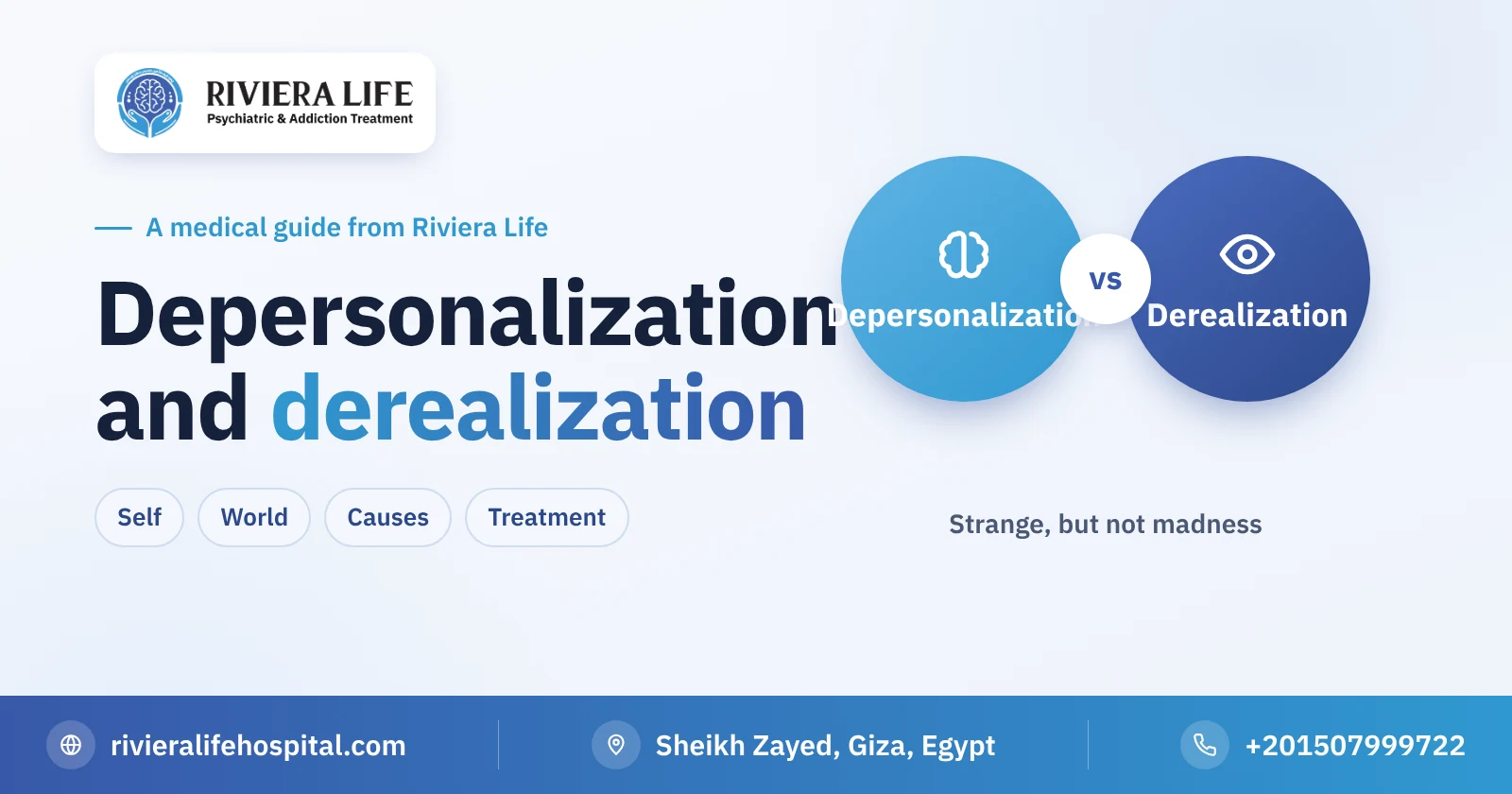
Depersonalization-derealization disorder is a condition in which a person feels detached from himself or from the world around him, as if he is watching his life from outside, or as if things and people are behind glass, fog or a scene in a film. The feeling is very frightening but doesn’t mean madness, as the person always realizes that what he is going through is a strange sensation and not the truth. It happens briefly to many people at moments of exhaustion or fear, and is only considered a disorder if it recurs or persists and disrupts life. In this article we explain the difference between depersonalization and derealization, the causes of the condition, including hashish, and the steps of treatment.
What is depersonalization-derealization disorder?
The disorder falls within the dissociative disorders, which are changes in the sense of self, memory, perception and surroundings. The condition is diagnosed when episodes of detachment recur or persist, the person is aware of the reality of the situation during them, and they cause clear distress or disrupt work, study and relationships, and aren’t explained by the effect of a substance or another illness. Studies indicate that a large proportion of people go through a brief episode at least once in their lives, while the disorder itself is much less common.
Depersonalization and derealization: what is the difference?
| Aspect | Depersonalization | Derealization |
|---|---|---|
| Where the detachment is | From the self, body and emotions | From the surrounding world and people |
| How the person describes it | “I’m watching myself from outside” and “my body isn’t mine” | “Things aren’t real” and “everything is behind fog or glass” |
| Emotions | Emotional numbness, as if feelings are cut off | A sense that places and faces are strange or flat |
| Time and memory | A sense that thoughts and actions happen automatically | A disturbed sense of time or distance |
The two types come together in many cases, and the presence of either one is enough for the diagnosis.
How do sufferers describe what they feel?
- Feeling like a “robot”, or acting without real participation.
- Seeing oneself or hearing one’s voice as if it came from someone else.
- A body that seems bigger or smaller, distant or numb.
- Numbed emotions, even towards those closest to them.
- A world that seems flat with faded colors, or excessively sharp, or like a painting.
- A mental emptiness and difficulty concentrating and remembering.
- A fear that they are losing their minds or that there is a disease in the brain, and this fear increases the symptoms.
Is it madness?
No. The distinguishing sign is that the person keeps his grasp of reality, so he says “I feel as if things aren’t real” and doesn’t say “things really aren’t real”. In psychosis, by contrast, the person loses this ability to distinguish, and believes delusions or hears and sees what isn’t there. For the difference between the two experiences you can read causes of hallucinations.
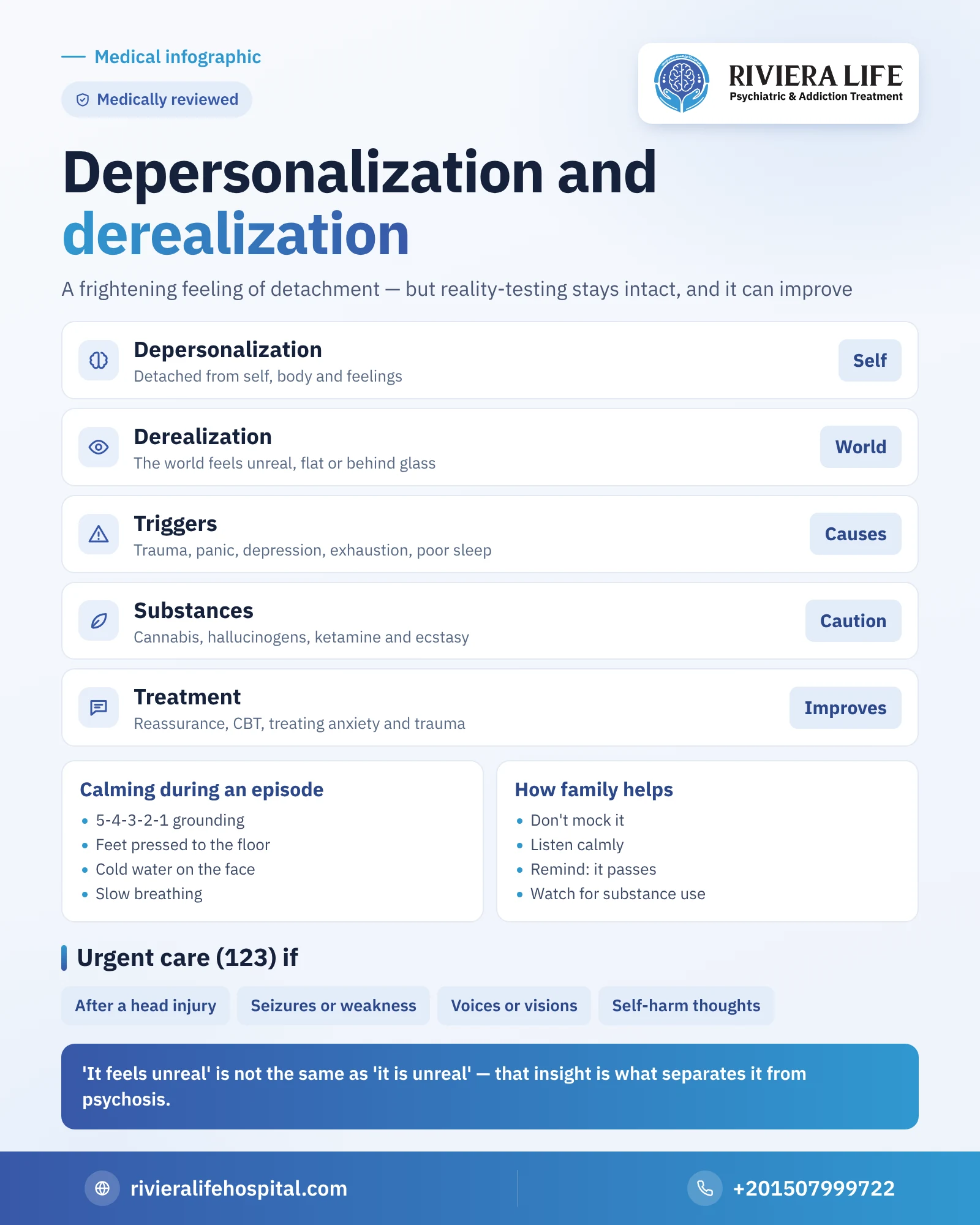
Why does it happen?
Detachment is seen as a defense mechanism of the brain: in severe fear or long stress, the brain “switches off” part of feeling to protect the person from overwhelming emotion. Multiple factors are involved:
- Trauma: emotional abuse or neglect in childhood are among the backgrounds most linked to the disorder, as are accidents, disasters and the loss of loved ones. Read about psychological trauma.
- Anxiety and panic attacks: detachment often appears during or after a panic attack, and may persist.
- Depression: in some cases it is accompanied by numbness and detachment.
- Exhaustion and lack of sleep: they pave the way for brief episodes.
- Drugs and substances: some of them trigger the symptoms, as described below.
- Neurological diseases: epilepsy, especially of the temporal lobe, some types of migraine and head injuries may cause similar symptoms, which is why they must be ruled out.
Hashish and depersonalization: a relationship that deserves attention
Many young people say the symptoms began after smoking hashish or bango on a particular night, and then the feeling never returned to normal. Reports indicate that cannabis, hallucinogens, ketamine and ecstasy are among the substances linked to triggering episodes of detachment, and the symptoms may persist after the substance’s effect wears off in some people, especially with a predisposition to anxiety or trauma.
- Symptoms appearing during use or hours afterwards don’t necessarily mean a separate disorder, as it may be intoxication with the substance.
- If the symptoms continue for weeks after stopping completely, the matter deserves a psychiatric assessment.
- Using the substance again to relieve the numbness or fear makes the cycle worse and raises the risk of addiction.
You will find details in the harms of marijuana and in our cannabis guide. If you are using and afraid of stopping alone, seek medical help, and don’t decide on your own to use a medicine or sedative to get rid of the feeling.
Seek urgent medical assessment if you see
Most episodes of detachment aren't dangerous, but there are signs that call for the emergency department. Call an ambulance on 123 or the mental health line on 16328.
- A sudden onset after a head injury or with a new severe headache
- Loss of consciousness, seizures, weakness in a limb or disturbed speech
- Hearing voices or seeing things that aren’t there with severe fear and confusion
- Thoughts of self-harm or a wish to die
How is it diagnosed?
Diagnosis relies on a careful psychiatric interview, and scales designed for dissociative symptoms may be used. The doctor requests a physical examination and tests when needed to rule out the thyroid, low blood sugar and the effect of medicines and substances, and may recommend an EEG or a scan if he suspects a neurological cause. Before all that he confirms that the grasp of reality is intact, and that the symptoms aren’t part of another disorder such as schizophrenia or post-traumatic stress disorder.
Treatment: what actually helps?
- Reassurance and education: understanding that the condition is known, not dangerous and can improve eases the fear of it, and with that the symptoms decrease.
- Psychotherapy: includes cognitive behavioral therapy, which modifies frightening thoughts about the symptoms, and therapies that deal with trauma if present. Read about cognitive behavioral therapy.
- Treating accompanying conditions: anxiety, depression, panic and post-traumatic stress disorder, and their improvement often eases the detachment.
- Quitting causative substances: with medical follow-up when needed.
- Medicines: there is no medicine approved specifically for this disorder. The doctor may prescribe a medicine to treat accompanying anxiety or depression, and response varies. No medicine is started or stopped without the doctor.
How long does an episode last? And does it go away?
The duration varies greatly: a brief episode lasts minutes or hours, and it may recur at intervals or remain almost continuous for weeks and months in some people. Improvement is possible, as the symptoms may decrease by learning calming skills and treating anxiety and trauma, and they sometimes recede with time even without treatment. But long postponement exhausts the person and increases anxiety about the condition, so don’t wait years before asking the doctor.
Calming exercises during an episode
These are supportive exercises, not an alternative treatment:
- Grounding with the senses: name five things you see, four you touch, three you hear, two you smell and one you taste.
- Feeling the body: press your feet into the floor, hold a glass of cold water, or wash your face with cold water.
- Slow breathing: a short inhale and a longer, calm exhale for several minutes.
- Self-talk: repeat a phrase such as “This is a temporary feeling and it will pass”.
- Reducing triggers: enough sleep and less caffeine and stress.
How can the family help?
Don’t mock the feeling or say “it’s all in your head”, as the suffering is real. Listen calmly, remind the person that what he feels passes, help him reach a psychiatrist, and watch that he doesn’t turn to substances or sedatives to relieve the feeling.
How can Riviera Life help you?
Riviera Life’s psychiatry and addiction consultants assess your condition, distinguish between a dissociative disorder, the effect of substances and other disorders, and set an appropriate treatment plan, and where there is substance use we provide round-the-clock medical supervision, in complete confidentiality. The first consultation is free, and you can call +201507999722.
More from our anxiety and trauma guide
- Anxiety: a complete guide
- Panic attacks: how to tell them apart from a heart attack
- Psychological trauma: normal reactions and what helps
- Post-traumatic stress disorder: a complete guide
Questions many people ask
No. The person keeps his grasp of reality and knows that what he feels is a strange sensation and not the truth, unlike psychosis, in which the person loses this distinction.
Hashish and cannabis may trigger symptoms of depersonalization in some people, and they may persist after the substance's effect wears off. If symptoms continue for weeks after stopping, seek a psychiatric assessment.
The basis is reassurance, psychotherapy and treating accompanying anxiety, depression and trauma, along with quitting the causative substances. There is no medicine approved specifically, and the medication decision is the doctor's.
It may last minutes or hours, and may recur or persist for weeks and months in some people. Many improve with treatment and by learning calming skills.
Try grounding with the senses, pressing your feet into the floor, washing your face with cold water and slow breathing. These are supportive exercises and don't replace a doctor's assessment if the condition recurs.