Stockholm syndrome is a description of a psychological state in which a person becomes attached to someone who hurts or controls them, so they defend them, justify their actions, and may refuse help from those trying to rescue them. The term began with the hostages of a bank robbery in Sweden, but today it is used more to describe what specialists call “trauma bonding” in abusive relationships: a wife subjected to violence who defends her husband, or a mother who protects her addicted son despite his threats to her. Stockholm syndrome isn’t an official medical diagnosis, but it describes a real psychological survival mechanism. In this article we explain the origin of the term, how a trauma bond forms, its signs, how to help someone caught in it, and the road to recovery.
The origin of the name: six days in a bank
In August 1973 an armed man stormed a bank in Norrmalmstorg square in the Swedish capital Stockholm, held four employees hostage, and was joined by an accomplice. The crisis lasted about six days inside the bank vault. The surprising thing was that the hostages, after their release, showed sympathy for their captors and more fear of the police than of them, and some refused to testify against them.
A Swedish psychiatrist and criminologist who was working with the police gave this phenomenon the name “Stockholm syndrome”, and the term spread worldwide. Despite its fame, it isn’t in the official diagnostic manuals, and researchers disagree about how accurate it is, but the idea it points to, attachment to the abuser as a means of survival, is well known in trauma psychology.
Why do people become attached to those who hurt them?
It isn’t weakness or foolishness. When a person is under a threat they can’t escape, the mind looks for any way to survive. Sometimes the best way is to please the source of danger, get close to them, read their mood, and see a human side in them. A small gesture of kindness from the abuser, such as allowing food or apologizing after a beating, seems in this situation like great generosity.
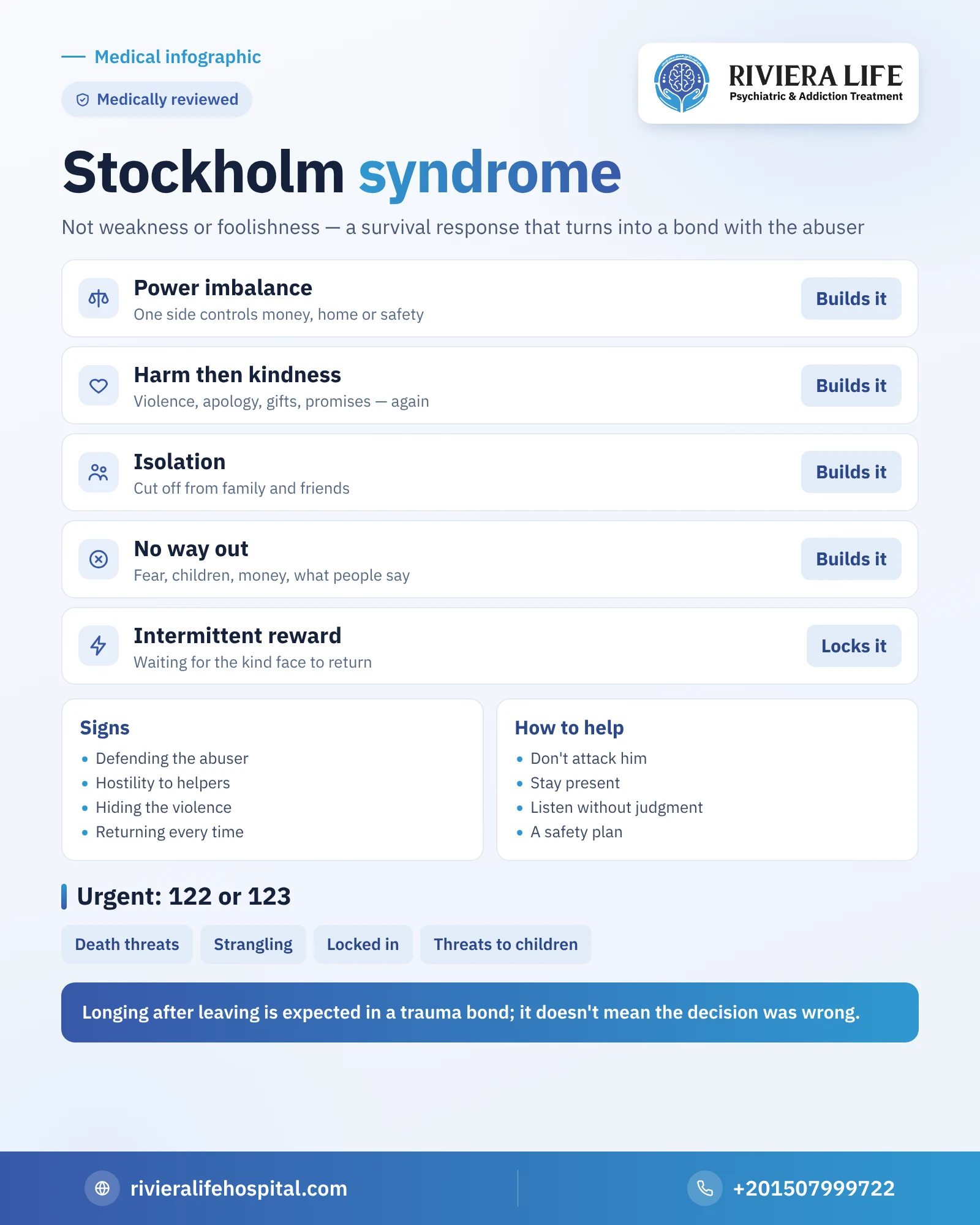
A trauma bond usually forms when four elements come together:
- Power imbalance: one side holds control over money, housing or safety.
- Alternating harm and kindness: violence followed by apology, gifts and promises, then new violence.
- Isolation: keeping the victim away from their family and friends, so the abuser becomes their only source of attention.
- A sense of being unable to escape: because of fear, the children, money or what people will say.
This alternation between cruelty and tenderness resembles an “intermittent reward”, one of the strongest things that create attachment in the brain, because the person keeps waiting for the kind face to return.
Trauma bonding in abusive marriages
This is the most common form. The wife who is beaten and insulted, then says: “He’s good at heart, but he’s under pressure”, or “I’m the one who provoked him”, or “He won’t find anyone who understands him but me”. She goes back after every time she leaves, gets angry with anyone who criticizes him, and hides the bruises. The same happens with men in relationships where the wife controls them psychologically and financially.
Trauma bonding differs from the intense emotional attachment explained in the article on love addiction; its core here is fear, control and violence, not just emotional need.
Trauma bonding in addicts’ families
In many homes in Egypt we see a picture that doesn’t carry the Stockholm name but resembles it: a mother whose addicted son steals her money and threatens her, and she keeps giving to him, hides it from the father and the neighbors, and gets angry if anyone suggests admitting him for treatment. Or a wife who endures the violence of a husband who uses ice or hash, and justifies it: “The drugs are the reason, not him”.
Here real love mixes with fear, guilt and shame. A familiar cycle repeats: crisis and violence, then regret and promises to stop, then quiet days, then relapse. Every quiet period renews hope and postpones the decision. If your family is living this cycle, the guide on how to deal with an addicted husband and the plan for helping an addict and persuading them to get treatment offer practical steps.
Signs of Stockholm syndrome and trauma bonding
- Defending the abuser and justifying their actions, and blaming oneself instead of them.
- Strong positive feelings towards them despite repeated harm, and focusing on their “good moments”.
- Anger or hostility towards family, friends or agencies trying to help.
- Hiding or minimizing the violence in front of others.
- Returning to the relationship after every attempt to get away.
- Constant preoccupation with the abuser’s mood and trying to avoid angering them.
- Difficulty imagining life without them, despite admitting they cause harm.
How do you help someone caught in a trauma bond?
The hardest thing families face is that the victim herself may refuse help and defend the abuser. Direct pressure usually backfires. What helps more:
- Don’t attack the abuser in front of her: sharp criticism pushes her to defend him and move away from you.
- Stay present: isolation is the abuser’s strongest weapon, and your continued presence breaks it.
- Listen without judgment: ask about her feelings, not about why she stays.
- Remind her of her worth and abilities: a trauma bond eats away self-confidence.
- Respect her decision while keeping the door open: “I’m here whenever you need me, and my home is open to you”.
- Help her with a safety plan: a charged phone, copies of important papers, emergency money, and a place to go.
When is the danger urgent?
Safety matters more than any discussion about the relationship. If you or someone you know is in immediate danger:
Seek urgent help immediately if you see
Call the police emergency line on 122 or the ambulance on 123, and get to a safe place first.
- Threats to kill, or with a weapon or sharp object
- Escalating physical violence, strangling or blows to the head
- Being locked in the house or denied food, medicine or the phone
- Threats to harm or take the children
- Violence under the influence of drugs or alcohol with agitation or intense suspicion
- Thoughts of self-harm or ending life in the victim
Women can contact the National Council for Women’s complaints office on 15115, and the hotline of the General Secretariat of Mental Health and Addiction Treatment can be reached on 16328.
Recovery after leaving the relationship
Leaving the relationship isn’t the end of the road. Many feel longing for the abuser afterwards, or guilt, or emptiness, and are surprised at themselves. This is normal in a trauma bond, and doesn’t mean the decision was wrong. Symptoms of post-traumatic stress disorder may appear, such as nightmares, flashbacks and panic, or depression and anxiety.
Trauma-focused psychotherapy helps in understanding what happened without self-blame, regaining trust and healthy boundaries, and building safe relationships. Methods used include trauma-focused cognitive behavioral therapy and eye movement desensitization and reprocessing. Children who witnessed the violence also need special care.
Can the relationship change?
Sometimes, when the violence is linked to addiction or a mental illness, and the abuser accepts real treatment and follow-up. But promises alone aren’t enough, and the victim’s safety shouldn’t be the price of waiting for change. The best decision is made with a specialist’s help, and after ensuring safety first.
How can Riviera Life help you?
At Riviera Life we work with both sides when addiction is at the heart of the problem: treating the addict under round-the-clock medical supervision, and a family program that helps it break the cycle of harm and justification. Our consultant psychiatrists also offer treatment for the effects of trauma to those who lived in an abusive relationship, in complete confidentiality. The first consultation is free.
Read also
- Post-traumatic stress disorder
- How to deal with an addicted husband
- Love addiction
- The family rehabilitation program for addiction treatment
Questions many people ask
It isn't a diagnosis in the official medical manuals, but a description of a psychological survival response under threat and control. It may be accompanied by disorders that need treatment, such as PTSD or depression.
Stockholm syndrome was originally described in hostages who became attached to their captors, while trauma bonding is the broader term used today for attachment to the abuser in harmful marital and family relationships.
For intertwined reasons including fear, financial dependence, the children and what people say, as well as the trauma bond created by alternating violence and apology. Blame doesn't help her; continued support and a safety plan do.
She may live a picture close to it, defending her son and hiding his threats and theft out of love, fear and guilt. Family programs help her set safe boundaries and push the son towards treatment.
It varies from person to person depending on the length of the relationship, the severity of the harm and the support available. Trauma-focused psychotherapy speeds recovery, and temporary longing for the abuser is an expected part that doesn't mean failure.