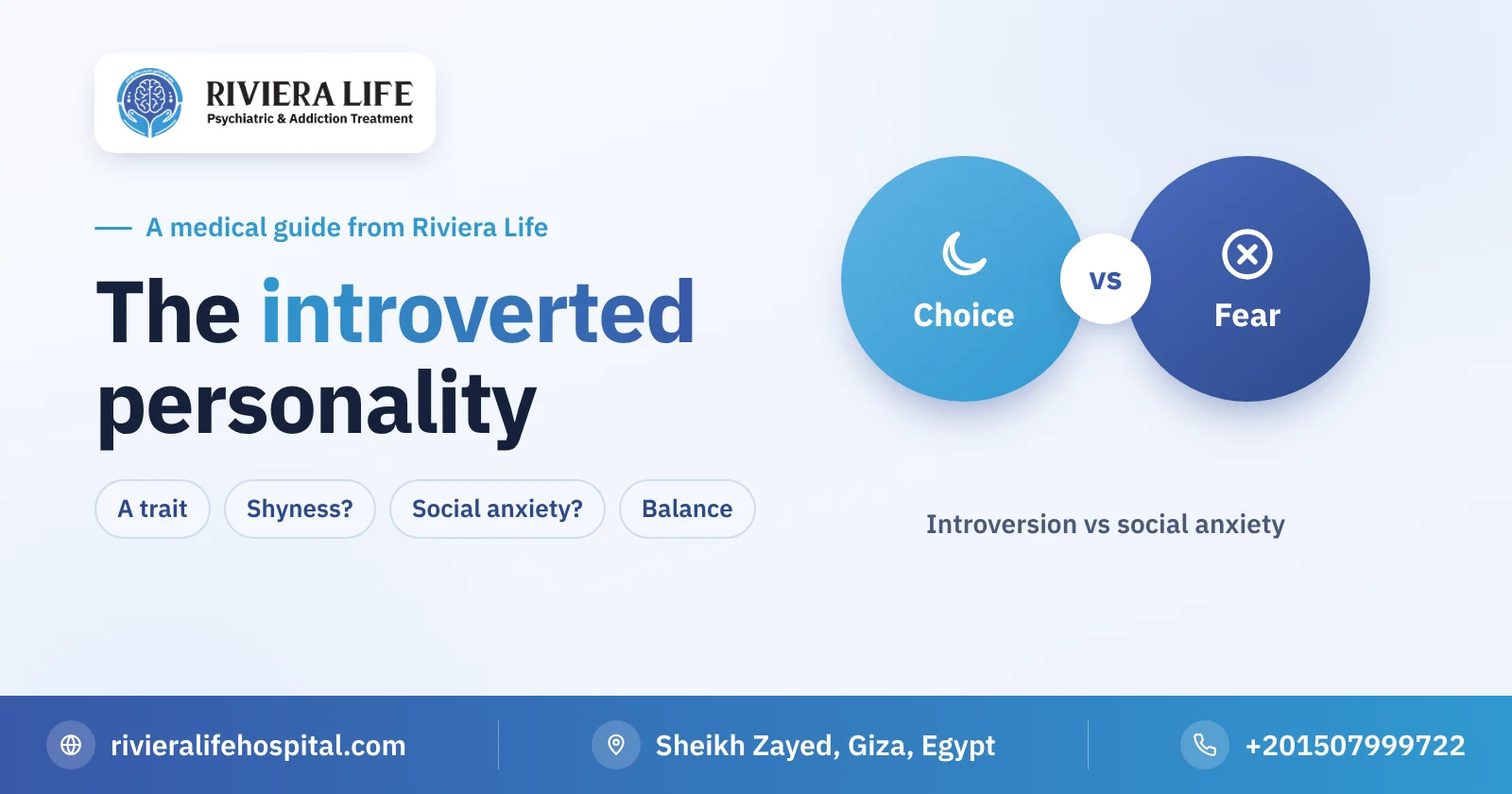
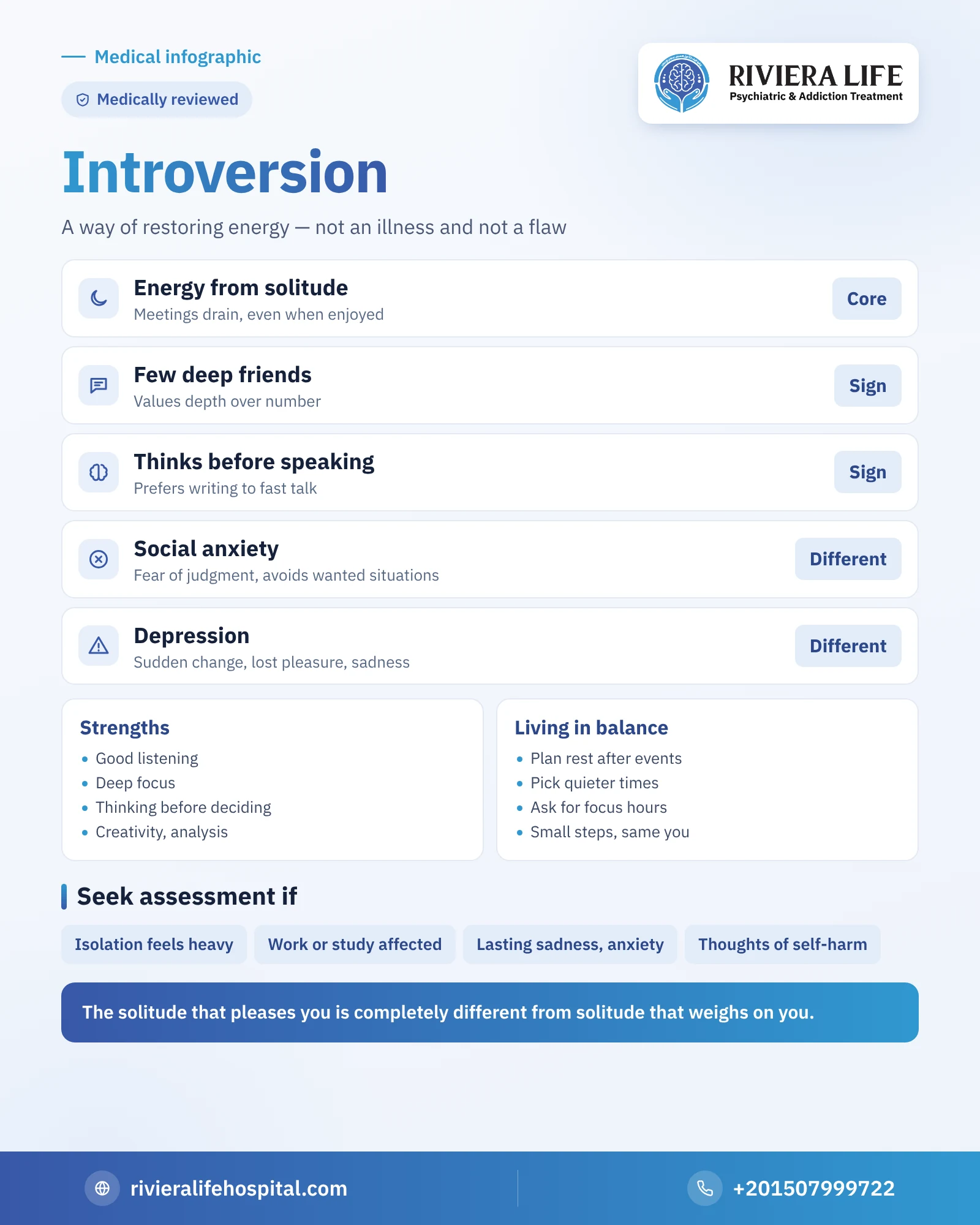
The introverted personality is a trait in the way a person renews their energy, not an illness or a flaw. The introvert regains their energy when alone with themselves, while the extrovert draws it from people. But confusion is common between it and shyness, social anxiety, depression and schizoid personality, and the difference between them determines whether you need understanding and space or a medical assessment. In this article we explain what introversion really is, how to distinguish it from similar disorders, and when it turns into painful isolation that deserves help.
What is the introverted personality?
Introversion is a spectrum, not a closed box. People lie at different distances between introversion and extroversion, and many are in the middle. And the introvert isn’t necessarily silent or unfriendly; they may be a skilled speaker in a presentation in front of a hundred people, but need hours of quiet after it. The difference here is in energy, as many meetings drain them even if they enjoy them.
This trait is measured with descriptive questions and the doctor doesn’t make a diagnosis with it, because it isn’t a disorder in the first place. It is usually part of the temperament that appears from childhood, and is also shaped by environment and experiences.
Signs many introverts share
- Prefers meeting one or two people to a large gathering.
- Needs time alone after long occasions to regain their clarity.
- Thinks before speaking, and sometimes prefers writing to fast conversation.
- Enjoys reading, drawing or work that requires long concentration.
- Has a small circle of close friends, and values depth over number.
- Is bothered by small talk, but becomes lively in conversation about a topic that interests them.
- Quietly notices details and others’ feelings.
Not all quiet is introversion
Silence may be distress, sadness or fear. The difference is in the inner feeling: the introvert is comfortable in their solitude, while the person in pain feels emptiness, anxiety or a need for people combined with an inability to get close.
Introversion, shyness and social anxiety
These are the most repeated questions. Introversion is a preference, shyness is a feeling of discomfort around strangers that may pass with familiarity, while social anxiety is a disorder with an intense fear of negative judgment that disrupts study, work and relationships. The table shows the differences:
| Aspect | Introversion | Social anxiety |
|---|---|---|
| The motive | Enjoying quiet and restoring energy | Fear of embarrassment or negative judgment |
| The feeling | Comfort in solitude and exhaustion from crowds | Severe anxiety before and after the situation |
| The body | Ordinary tiredness | Palpitations, trembling, blushing and sweating |
| Avoidance | A free choice that can be adjusted | Escaping situations they wish they could face |
| The effect | Doesn’t disrupt their life | Disrupts study, work or relationships |
Introversion and social anxiety may come together in one person, which makes the matter more complicated. For more on the signs and diagnosis read social anxiety symptoms, and on the disorder itself the social anxiety guide.
Introversion and schizoid personality
The introvert loves people and values their few relationships, but needs space. Schizoid personality disorder, however, is a fixed pattern of indifference to relationships, emotional coldness and little interest in praise or criticism, from early adulthood and unrelated to the situation. We explained this in schizoid personality. There is also avoidant personality, in which the person wants closeness but fear of rejection prevents them.
When is withdrawal not introversion?
If your habit changed suddenly, so you were sociable then started avoiding everyone, or withdrawal became accompanied by sadness, loss of pleasure, tiredness, disturbed sleep and negative thoughts about yourself, this isn’t introversion but may be depression. Depression makes a person move away from activities they used to love, while the introvert still enjoys what they love. Withdrawal may also be linked to anxiety, trauma or substance use, or to loneliness, which we cover in loneliness and social isolation. It is worth noting that some different forms of social communication in autism spectrum disorder look like introversion from the outside, and specialist assessment distinguishes between them.
Where does introversion come from?
There is no single cause. Studies point to a role for heredity and innate temperament, as some children show from the first months greater sensitivity to stimuli and less need for interaction. Upbringing and experiences add their effect: a quiet home, frequent moves between schools, or previous experiences of mockery may reinforce the tendency to withdraw. This doesn’t mean introversion results from trauma or a defect, as most introverts haven’t been through anything of the kind.
The introvert’s strengths
- Good listening, the foundation of solid relationships.
- Deep focus in work that needs precision and research.
- Thinking before deciding, so impulsiveness is less.
- Creativity, writing and analysis, because solitude is a good space for thinking.
- Few deep relationships, which are what protect them from real loneliness.
How does the introvert live in balance?
- Plan rest time after many occasions instead of considering it weakness.
- Choose less crowded meeting times, and don’t force yourself to every invitation.
- At work ask for quiet focus hours, and prepare your points before meetings.
- Keep steady channels of contact with two or three friends even on busy days.
- Try small steps of communication, such as asking a colleague or sharing one opinion in a meeting, without trying to change your personality.
- Watch your state: solitude that pleases you is completely different from solitude that weighs on you.
Common wrong ideas
- “The introvert hates people”: they usually love them but prefer smaller doses.
- “They must be treated”: the trait doesn’t need treatment; what needs treatment is anxiety or depression if they appear.
- “Not suited to leadership”: many successful leaders are quiet and listen well before deciding.
- “They become sociable by force”: force increases exhaustion, and voluntary gradual steps are more useful.
Introversion at work and in marriage
At work the introvert may be misunderstood and thought uncooperative because they don’t talk much in meetings. The solution is to send their ideas in writing, and to tell their manager their preferred way of working. In marriage tension appears when one partner wants evenings out and visits, and the other wants a quiet home. Agreeing on a schedule that balances going out and staying in prevents the difference in temperament turning into an accusation of coldness or neglect, and it helps for the introvert to say frankly that their need for quiet doesn’t mean less love.
The introverted child: how do parents deal with them?
A quiet child doesn’t need “treatment”, but an environment that respects their rhythm. Don’t describe them in front of people as shy or withdrawn, and don’t push them forcefully into hugs and pleasantries. Give them time to adapt to new places, encourage one or two friendships, and train them to give their opinion in small steps. And pay attention if they show intense fear of school, refusal to go, or repeated physical complaints before social situations, as this deserves showing them to a child psychologist.
When do you ask for specialist assessment?
Ask for the opinion of a psychiatrist or therapist if you feel the isolation has become heavier than you can bear, or your study or work has been affected, or continuing sadness and anxiety accompany it, or thoughts of self-harm appear. In this case call the mental health line 16328 or an ambulance on 123. In cases of accompanying social anxiety or depression, cognitive behavioral therapy gives good results, and the doctor alone decides whether there is a need for medicine.
How does Riviera Life help you?
The consultant psychiatrists at Riviera Life assess whether what you are living is normal introversion or anxiety or depression that needs treatment, in complete confidentiality. The first consultation is free, and you can call on +201507999722.
More from the social anxiety and personality guide
- Social anxiety: a complete guide
- Schizoid personality: the difference from introverted and avoidant
- Avoidant personality: the difference between it and social anxiety
- Loneliness and social isolation
Questions many people ask
No, introversion is a normal personality trait related to how energy is restored, not a disorder. It only needs assessment if it is accompanied by psychological pain or disruption of life.
The introvert prefers quiet and is comfortable in it, while the person with social anxiety fears people's judgment and avoids situations despite wanting them. The first is a choice and the second is a fear that disrupts life.
Certainly, many introverts live contented lives with a few deep relationships and work that suits their nature. Happiness is linked to satisfaction with your life, not the number of friends.
If it comes with sadness, loss of pleasure, tiredness, changes in sleep and appetite, and a sudden change from your previous habit, ask for a psychiatrist's assessment. The introvert still enjoys what they love.
There is no need to change it, but social skills can be learned in small steps that suit your nature. The goal is balance, not turning into another person.