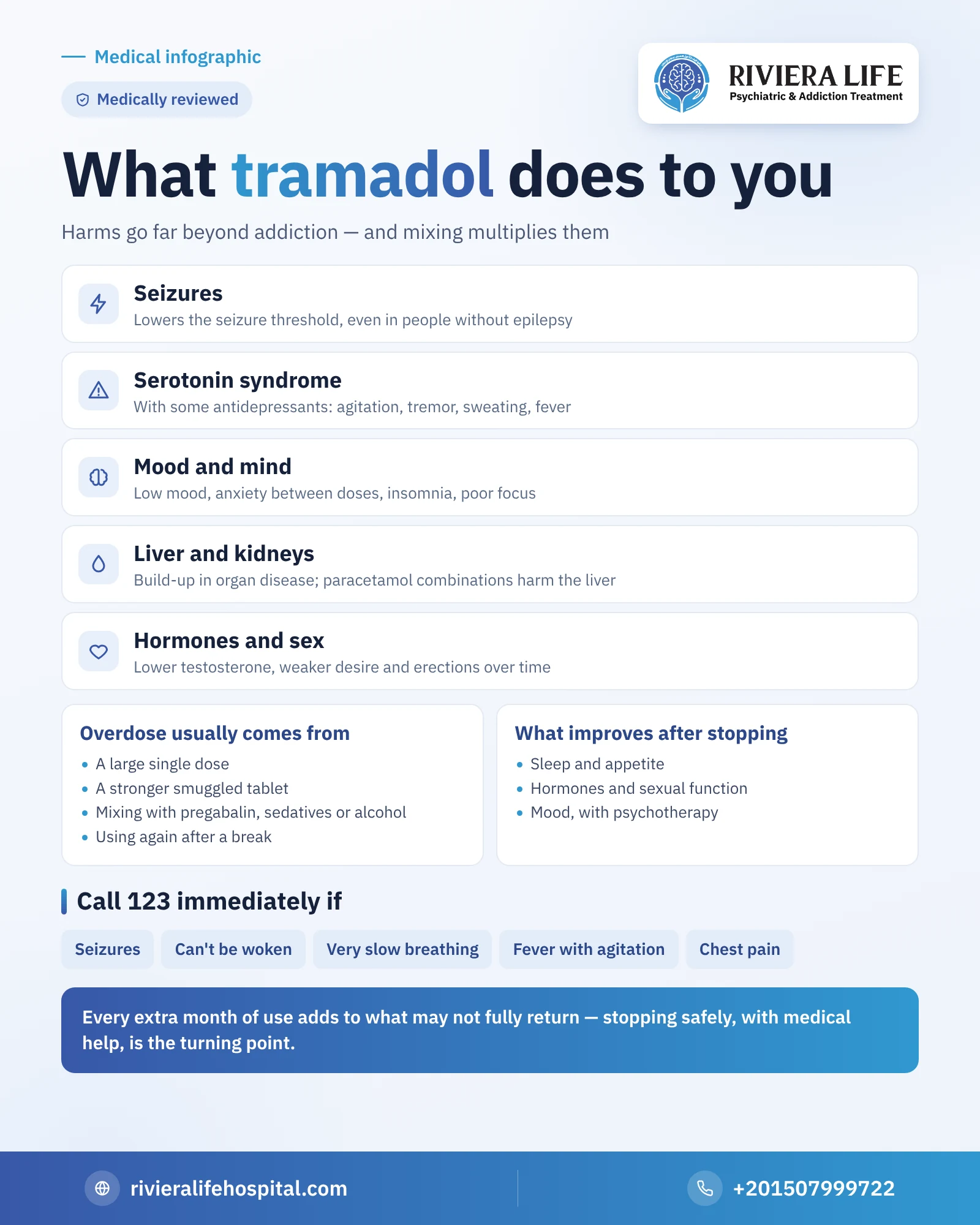
The harmful effects of tramadol are not limited to addiction. The drug can cause seizures even in people who have never had epilepsy, it can lead to serotonin syndrome when mixed with certain medications, and it strongly suppresses breathing when combined with pregabalin, sedatives or alcohol. With long-term use its effects extend to mood, hormones, sex life, the liver and kidneys — and to work, money and family. This article goes through these harms organ by organ, explains how overdose happens and what makes it more dangerous, and what can improve after stopping.
Short-term side effects
Even with a few days of use, unpleasant side effects can appear, and they increase with the dose:
- Nausea, dizziness and headache — among the most common complaints.
- Constipation, dry mouth and sweating.
- Drowsiness — or, in some people, the opposite: tension and insomnia.
- Slower reactions and poorer concentration, which makes driving or operating machinery a real danger.
Many long-distance drivers and night-shift workers take tramadol to fight fatigue without realizing that the drug itself may slow their responses at the very moment they need their fastest reaction.
Seizures: the most dangerous thing tramadol does to the brain
Tramadol lowers the brain’s seizure threshold, making nerve cells more prone to the irregular electrical activity that causes fits. Seizures have been recorded even at therapeutic doses, but the risk rises clearly in these situations:
- Large doses, especially smuggled tablets of unknown strength.
- A history of epilepsy or a head injury.
- Taking it with certain antidepressants or antipsychotics.
- Withdrawing from alcohol or sedatives at the same time.
A seizure is not just a few frightening minutes; it can involve a fall and a head injury, a bitten tongue, or inhaling vomit. Repeated seizures may need neurological follow-up even after stopping.
Serotonin syndrome
Because tramadol raises serotonin levels in the brain, combining it with other drugs that also raise serotonin — such as many antidepressants and some migraine medications — can cause a dangerous build-up. The syndrome usually appears within hours of combining them or increasing the dose. Its signs include agitation and confusion, tremor and involuntary muscle twitching, heavy sweating, diarrhea, a fast heartbeat and a raised temperature that can be severe. Mild cases improve once the cause is stopped; severe cases need emergency care. That is why any doctor prescribing a psychiatric medication must know that the patient is taking tramadol.
Tramadol’s effects on mental health
At first tramadol gives a temporary feeling of ease or energy, but chronic use reverses the picture. Many users complain of low mood and apathy that only lift with the pill, of anxiety and irritability between doses, and of broken sleep. Concentration and short-term memory may decline, and the person becomes less patient and more reactive. In people already prone to depression or anxiety, tramadol may mask the symptoms for a while and then leave them deeper than before. The reasons some people are more vulnerable to this cycle are explained in our article on the causes of tramadol addiction.
The liver and kidneys
Tramadol passes through the liver, where it is converted into its metabolites, and is then excreted by the kidneys. In people with liver or kidney disease the drug builds up in the body, raising the risk of poisoning and seizures even at ordinary doses. Things get more complicated with tablets that combine tramadol and paracetamol: someone who takes a lot of them chasing tramadol’s effect is also taking a large amount of paracetamol, one of the best-known causes of acute liver damage. Alcohol adds a third burden on the same liver.
The heart and breathing
Tramadol can cause a faster heartbeat and higher blood pressure, especially at large doses or as part of serotonin syndrome. Breathing suppression — the classic opioid danger — is less pronounced with tramadol alone than with morphine or heroin, but it multiplies when tramadol is combined with other depressants. This is why the tramadol-and-pregabalin mix that is common in Egypt is not a “mood adjustment”, as some believe, but a recipe for suppressed breathing and deep drowsiness.
Hormones and sex life
Some men turn to tramadol to delay ejaculation, which is one of the main reasons it spread so widely in Egypt. But chronic opioid use is linked to lower testosterone, and with it weaker desire and erections, general fatigue, and possibly effects on fertility. In women, periods may become irregular and desire may fall. In other words, the initial “improvement” is usually followed by a sharper decline, which in many cases improves after stopping and treatment.
Other, less well-known harms
- Low blood sugar: cases of hypoglycemia have been reported with tramadol, and the risk is higher in people with diabetes and older adults.
- Low blood sodium: a rare effect, but it can cause confusion and fatigue, especially in older people.
- The digestive system: chronic constipation that can progress to obstruction, loss of appetite and weight loss.
- The skin: itching and persistent sweating.
Overdose: how does it happen, and why does mixing multiply it?
Overdose usually happens in one of three ways: a large amount at once, a smuggled tablet that is stronger than expected, or an ordinary dose taken with another substance that multiplies its effect. Tramadol poisoning combines two faces: an opioid face, with deep drowsiness and slow breathing, and a neurological face, with seizures, agitation and a racing heart. Doctors sometimes have to manage both at once. Anyone who goes back to using after a break is more at risk, because their tolerance has fallen.
Call an ambulance immediately (123 in Egypt) if you see
Don't wait for the person to come round on their own, and keep the blister pack or box to show the medical team.
- Seizures or an epileptic fit
- Deep drowsiness or no response when called
- Very slow or irregular breathing, or bluish lips
- Agitation, confusion and tremor with sweating and a high temperature
- A very fast heartbeat or chest pain
The harm tramadol does to daily life
Beyond the organs, tramadol leaves its mark on everyday life: road accidents and work injuries caused by slowed reactions or a sudden seizure; growing spending on pills, especially when black-market prices rise; tension at home from mood swings and lying about amounts; and legal risks, because possessing tramadol without a prescription in Egypt can expose a person to prosecution. Years later, someone may discover that the pill that helped them “get the work done” has become the reason they lost it.
Pregnancy and breastfeeding
Regular use of tramadol during pregnancy can cause withdrawal symptoms in the newborn after birth, and the drug also passes into breast milk. So it should neither be stopped suddenly nor continued without joint follow-up by an obstetrician and an addiction specialist, who can set a plan that protects both mother and baby.
Do tramadol’s harms go away after stopping?
Many of them do improve: sleep and appetite gradually return, hormones and sex drive normalize for most people within weeks to months, and mood stabilizes with psychotherapy. Damage resulting from a previous seizure, an injury or an accident may need longer follow-up. The constant rule is that every extra month of use adds to what may not fully return. For practical steps toward stopping safely, see our article on tramadol addiction treatment, and for what happens in the first days after stopping, see tramadol withdrawal symptoms.
More from our tramadol guide
- Tramadol: the complete guide
- Tramadol addiction symptoms
- Pregabalin vs tramadol
- The strongest alternatives to tramadol
- How drugs affect the menstrual cycle: delays, missed periods and when to see a doctor
- Tapentadol: how it works, how it differs from tramadol, its risks and addiction
Questions many people ask
It does not cause epilepsy as a permanent disease, but it can trigger seizures even in people who have never had one. The risk rises with large doses and when it is combined with certain psychiatric medications.
People with liver or kidney disease clear it slowly, so it builds up and the risk of poisoning rises. Tablets that combine it with paracetamol can also damage the liver directly when taken in large amounts.
It may delay ejaculation temporarily, but chronic use is linked to lower testosterone and weaker desire and erections. This usually improves after stopping and treatment.
The combination can lead to serotonin syndrome, with agitation, tremor, sweating and fever, and it also raises the risk of seizures. They should only be combined on a doctor's decision and with monitoring.
Yes — especially when it is mixed with pregabalin, sedatives or alcohol, or with high-strength smuggled tablets. Seizures and depressed breathing are signs to call an ambulance immediately (123 in Egypt).