Tramadol withdrawal symptoms usually begin about 12 to 24 hours after the last dose of immediate-release tablets, peak between the second and fourth day, then ease gradually over a week to ten days in most cases. Insomnia, anxiety and strong cravings, however, can continue for weeks afterwards. Tramadol also differs from other opioids in that some people who stop it go through atypical symptoms such as panic attacks, numbness and paranoia. This article maps out what happens over time, explains the factors that make withdrawal longer, and the signs that things are getting out of control.
Why does withdrawal happen at all?
With daily use, the brain adjusts its chemistry to work with tramadol present. It produces less of its own natural pain-relieving substances, and the serotonin and noradrenaline systems adapt to the high levels the pill imposes. When the drug stops, the nervous system suddenly finds itself without the support it is used to and goes into overdrive: sweating, a racing heart, anxiety and pain everywhere. Withdrawal, then, is not a weakness of character; it is a nervous system trying to regain its balance.
When do tramadol withdrawal symptoms start?
Timing depends first on the type of tablet. With immediate-release tablets the first signs usually appear within half a day to a full day. With extended-release tablets symptoms usually come later, because the drug stays in the blood longer. With smuggled tablets of unknown strength it is hard to predict at all, since they may contain far more than the user thinks. If you want to understand how long the drug stays in the body and shows up on tests, the details are in our article on how long tramadol stays in your system.
Tramadol withdrawal stages, day by day
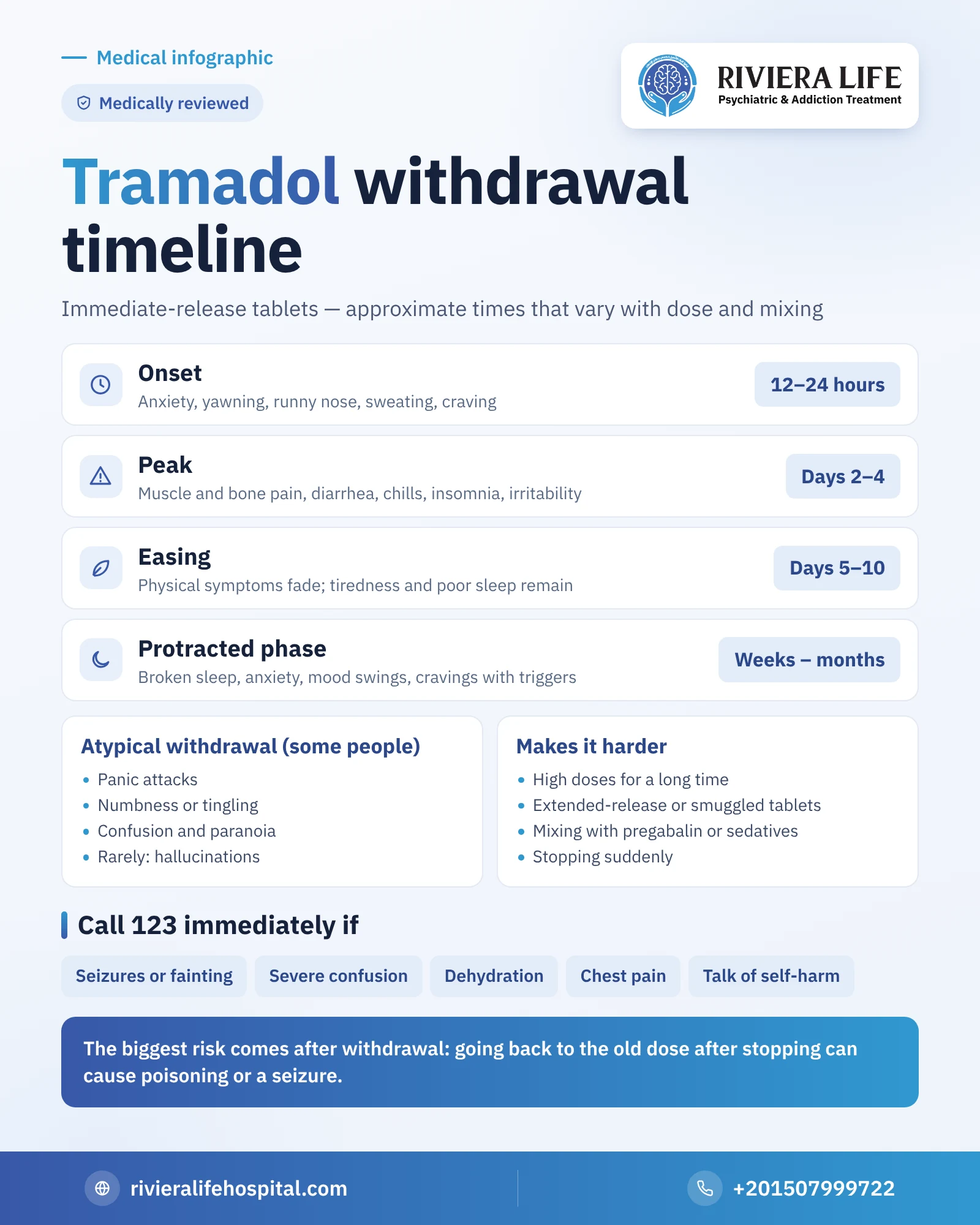
| Stage | Approximate timing | What usually happens |
|---|---|---|
| Onset | First 12 to 24 hours | Anxiety, yawning, runny nose, sweating and craving for a pill |
| Peak | Days 2 to 4 | Muscle and bone pain, diarrhea and nausea, chills, insomnia, severe irritability |
| Easing | Days 5 to 10 | Physical symptoms gradually fade; tiredness and disturbed sleep remain |
| Protracted phase | Weeks, sometimes months | Broken sleep, anxiety, mood swings, cravings that intensify with triggers |
These figures are approximate and may be shorter or longer depending on the dose, how long the drug was used and any other substances involved.
The usual physical symptoms
These symptoms resemble withdrawal from other opioids, and many people describe them as “a bad flu with pain in every bone”:
- Pain in the muscles, joints and back, and sometimes leg pain that makes sitting still impossible.
- Heavy sweating and chills alternating with feeling hot.
- A runny nose, watery eyes and frequent yawning.
- Diarrhea, cramps and nausea, sometimes with vomiting.
- Restless legs and difficulty staying still.
- Goosebumps and hair standing on end.
- A fast heartbeat and a slight rise in blood pressure.
Atypical withdrawal: what sets tramadol apart
Because of tramadol’s effect on serotonin and noradrenaline, some people who stop it experience symptoms that do not usually occur with other opioids. Medical references note that these affect a proportion of patients, not everyone:
- Severe panic attacks and intense anxiety with no clear cause.
- Numbness, tingling or pins and needles in the limbs.
- Confusion, difficulty concentrating and a sense of unreality.
- Paranoia and suspicion of people around them.
- Less often: auditory or visual hallucinations.
These symptoms frighten families a great deal and can be mistaken for “sudden madness”. Knowing about them in advance helps everyone respond calmly and seek medical help instead of panicking.
Psychological and protracted symptoms
Once the physical storm is over, a calmer but longer phase begins. The person recovering complains of broken sleep, low mood, anxiety and a feeling that life is dull and flavorless. Cravings may come in sudden waves, especially in situations that were tied to the pill: the start of a long work shift, an argument at home, or meeting an old colleague. This phase is the one most closely linked to relapse, because the person feels they are “done” with withdrawal while their brain is still regaining its balance. Depression that appears during this time needs serious follow-up, and any talk of losing the will to live calls for urgent medical advice.
Factors that make withdrawal more severe or longer
- A high daily dose and a long period of use.
- Extended-release tablets, or smuggled tablets of unknown strength.
- Mixing tramadol with pregabalin, sedatives or alcohol.
- Anxiety or depression that existed before the drug use.
- Stopping suddenly instead of an organized taper.
- Previous failed withdrawal attempts, as each attempt can become harder than the last.
In Egypt in particular, many patients arrive with several of these factors at once: tablets of unknown origin, pregabalin in the evening to sleep, and years of daily use. Here withdrawal is not from a single substance but from a whole pattern, and it needs medical planning of what is withdrawn first and how fast.
Is tramadol withdrawal dangerous?
On its own, tramadol withdrawal is exhausting rather than deadly in most cases. But some situations genuinely raise the risk: severe dehydration from vomiting and diarrhea — especially in older people and those with heart or kidney disease — severe depression, and mixing with substances whose withdrawal causes seizures, such as pregabalin, sedatives and alcohol. The biggest danger comes after withdrawal rather than during it: someone who returns to their old dose after a few days off may suffer poisoning or a seizure, because their tolerance has dropped.
Call an ambulance immediately (123 in Egypt) if you see
Especially if tramadol was mixed with pregabalin, sedatives or alcohol, or if the person went back to using after stopping.
- Seizures or loss of consciousness
- Severe confusion, or hallucinations with agitation that won’t settle
- Persistent vomiting or diarrhea with signs of dehydration and inability to drink
- Chest pain or a very fast heartbeat
- Talk of self-harm or ending their life
Why do withdrawal attempts at home fail?
The story repeats itself: a firm decision on Thursday evening, a bearable first day, and then day three arrives with unbearable pain, insomnia and anxiety, and a single pill seems like a sensible solution “just to get some sleep”. The reason is that the peak arrives after the initial enthusiasm has faded, with nothing to ease the symptoms. Some people add sleeping pills or pregabalin on their own to calm themselves down, and slide into a new dependence. That is why withdrawal is best done within a medical plan, as explained in our article on tramadol addiction treatment.
How is withdrawal managed medically?
The medical team starts by assessing the real dose and any other substances, then chooses between an organized gradual taper and withdrawal under direct observation. Medications are used to ease sweating, tremor, diarrhea, pain and insomnia, with monitoring of fluids and vital signs. In severe cases the doctor may decide to use medications for opioid use disorder to stabilize the patient. Atypical symptoms such as panic and paranoia need close psychiatric follow-up until they settle.
How can the family help during these days?
Having the family there makes a real difference, as long as it is support rather than guard duty. Provide fluids, light food and a quiet place to sleep, and avoid heated arguments and settling old scores during these particular days. Don’t give any medicine from the home cabinet without advice, and don’t accept the “just one pill” argument. Write down the symptoms and their timing to show the doctor. If withdrawal is taking place in hospital, joining the family sessions prepares you for the protracted phase after discharge. To learn about damage tramadol may have left in the body that needs follow-up, see our article on the harmful effects of tramadol.
At Riviera Life, withdrawal takes place under round-the-clock medical supervision, with a team that knows tramadol’s atypical symptoms and manages mixed-use cases with a structured plan.
Depression after quitting tramadol: when is it temporary, and when does it need treatment?
Many people are surprised when their mood collapses after the physical pain of withdrawal is over. Tramadol acts on noradrenaline and serotonin as well as opioid receptors, and when it is withdrawn suddenly the brain needs time to recalibrate these systems. The result is heavy sadness, loss of pleasure, slow thinking and insomnia, which can last for weeks.
This low tends to improve gradually with regular sleep, physical activity and family support, but it should not be left alone in these situations:
- Sadness and loss of interest that continue for more than two weeks without improvement.
- Thoughts of hopelessness, self-harm or that life is not worth living.
- Being unable to eat, sleep or manage daily tasks.
- Depression that existed before the drug use and that tramadol was masking.
Any talk of ending one’s life calls for urgent help, and the person should not be left alone. Depression and addiction are treated together within one plan, as explained in depression and addiction: how they are linked and treated together, and you can read about the symptoms of depression to tell temporary sadness from an illness that needs a doctor.
More from our tramadol guide
- Tramadol: the complete guide
- Tramadol addiction symptoms
- Tramadol addiction treatment
- How long tramadol stays in your system
Questions many people ask
Acute physical symptoms usually last about a week to ten days, while insomnia, anxiety and cravings can linger for weeks or longer depending on the case.
A group of symptoms seen in some people who stop tramadol, caused by its effect on serotonin and noradrenaline — such as panic attacks, numbness, confusion, paranoia and, rarely, hallucinations.
Seizures are more closely linked to tramadol use and overdose, but the risk rises during withdrawal if tramadol is mixed with pregabalin, sedatives or alcohol — which is why these cases need medical supervision.
Symptoms usually appear later because the drug stays in the blood longer, and the withdrawal period may also last longer than with immediate-release tablets.
Many people describe days two to four as the hardest because they are the peak. Most home attempts fail during this window, which is why medical supervision helps people get through it.