Tramadol addiction is treatable, and results are good when treatment follows a clear medical plan: a full assessment, then a gradual, supervised withdrawal from the drug, then psychotherapy that addresses why the pill became necessary, and finally follow-up that prevents relapse. The most common mistake families make is treating it as a “bad habit” that a few days of abstinence at home will fix. In reality tramadol is an opioid that causes physical dependence, and it adds the risk of seizures and mood swings — especially when it is mixed with pregabalin or other substances. This article explains each stage, the medications used, how long treatment takes, and how to choose the right place for the situation.
When does someone using tramadol need medical treatment?
Not everyone who has taken tramadol on prescription needs an addiction program, but some signs show that things have gone beyond medical use: raising the dose on one’s own, getting tablets from outside the pharmacy, being unable to start the day without it, or trying to stop and going back two days later because of anxiety, insomnia and body aches. A detailed list of these signs is in our article on tramadol addiction symptoms. One or two of them are enough reason to ask for a medical assessment; early intervention is far shorter and easier than treating dependence that has lasted for years.
Stages of tramadol addiction treatment
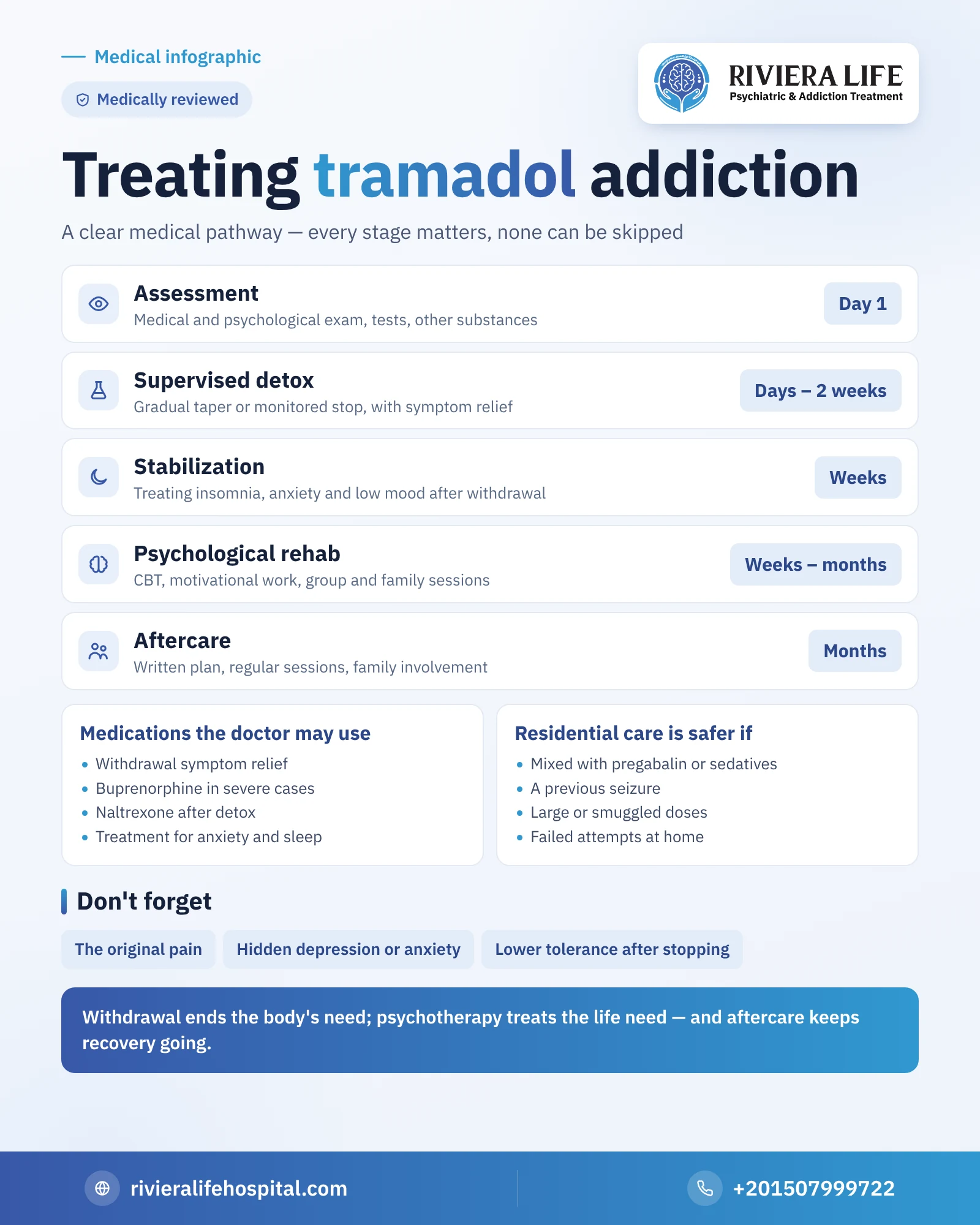
Details vary from patient to patient, but a good program moves through a sequence of steps, none of which can be skipped:
- Assessment: a medical and psychological examination with tests to establish the real dose, any other substances and existing illnesses.
- Withdrawal: an organized taper or a supervised stop, with medications that ease the symptoms.
- Stabilization: treating the insomnia, anxiety and depression that surface after acute withdrawal.
- Psychological rehabilitation: individual and group sessions that build skills for handling stress and cravings.
- Follow-up: a written plan after discharge, regular sessions and family involvement.
The first assessment: questions that shape the plan
Assessment can look like a routine step, but with tramadol in particular it changes the whole plan. The doctor needs to know:
- Has the patient ever had a seizure — even once — while using or after stopping?
- Are they taking antidepressants or other psychiatric medications that may interact with tramadol?
- Do they mix it with pregabalin, sedatives, alcohol, hashish or Strox?
- Where do the tablets come from — a pharmacy, or smuggled tablets of unknown strength?
- Did tramadol start because of real pain that is still there?
Honest answers here are not a confession the patient will be judged for; they are information that protects them from complications that could have been foreseen. That is why specialist teams make sure the interview takes place in a safe, confidential setting.
Tramadol withdrawal: gradual taper or stopping at once?
This is entirely a medical decision. In many cases the doctor prefers an organized, gradual reduction rather than a sudden stop, or replaces tramadol with a longer-acting medication that is then withdrawn slowly, because this keeps symptoms milder and reduces swings. In other cases a monitored stop inside the hospital is the better option. What is never advisable is for patients to write their own home tapering schedule — such schedules usually collapse on the third or fourth day. To see what happens in the body day by day during this period, read our article on tramadol withdrawal symptoms.
Medications used in tramadol addiction treatment
There is no single “injection” that ends addiction, but there are groups of medications the doctor chooses from according to the case:
Medications that ease withdrawal symptoms
Some medications calm the overactivity in the nervous system that causes sweating, tremor and a racing heart; others treat diarrhea and cramps; and non-opioid painkillers help with muscle aches, together with attention to fluids and sleep. The goal is to help the patient get through the first days without pain pushing them back to the drug.
Buprenorphine and methadone in severe cases
When dependence is severe or long-standing, or relapses keep happening, the doctor may turn to the established medications for opioid use disorder, such as buprenorphine, to stabilize the patient before tapering it gradually or continuing it for a period under supervision. This option is not used for every patient; the doctor decides after the assessment.
Naltrexone once the body is clear
Naltrexone blocks opioid receptors, so the person does not feel tramadol’s effect if they go back to it. It suits some patients who have fully completed withdrawal and are strongly motivated, and it is only started once the body is confirmed to be free of opioids.
Treating anxiety, depression and insomnia
Many people who use tramadol were, without realizing it, using it to calm an underlying anxiety or depression. Once it is withdrawn, these problems come to the surface, and the patient needs suitable psychological and medication treatment, chosen by the doctor with any possible interactions in mind.
When tramadol is mixed with other substances
In Egypt, cases rarely involve tramadol alone. More often it comes with pregabalin, hashish, alcohol or a sedative. This changes the withdrawal plan completely, because stopping pregabalin, sedatives or alcohol suddenly can itself cause seizures, so two risks pile up at once. The substances are therefore withdrawn in an order and at a pace set by the doctor, and residential care is often the safest choice in these cases. For a comparison of the two substances most often mixed together, see our article on pregabalin vs tramadol.
Psychological and behavioral therapy
Withdrawal ends the body’s need; psychotherapy treats the life need. Commonly used approaches include:
- Cognitive behavioral therapy: uncovers the thoughts that tie the pill to being able to work, sleep or face people, and builds practical alternatives.
- Motivational interviewing: strengthens the patient’s own motivation to change, so treatment feels like a step they choose rather than a punishment imposed on them.
- Group therapy: the patient meets others who have been through the same experience, which eases feelings of isolation and shame.
- Family sessions: rebalance roles at home and teach relatives how to support without suffocating control.
What about the pain that started it all?
Some patients started tramadol because of real back pain, joint pain or an injury, and that pain is still there. Ignoring it makes relapse almost certain. A good plan therefore includes an assessment of the pain itself, non-opioid pain relief options and physiotherapy when needed. General options are covered in our article on the strongest alternatives to tramadol by type of pain.
How long does tramadol addiction treatment take?
Acute withdrawal usually takes from a few days to about two weeks, and can last longer with extended-release tablets or mixed use. An intensive program often runs from several weeks to a few months, followed by outpatient follow-up for further months. The real duration is set by the assessment, and more important than the number of days is that treatment is not interrupted between stages.
Residential treatment or outpatient follow-up?
Residential care suits people who use large amounts or tablets of unknown origin, those who mix tramadol with pregabalin or sedatives, anyone who has had a seizure before, and those whose attempts at home have failed. Outpatient follow-up suits early, stable cases with family support, or the stage that follows residential care.
Preventing relapse after discharge
The first weeks after treatment are the hardest, especially for someone returning to the same workplace where tramadol was easy to get. It helps to have a written plan: who to call when a craving hits, how to handle a colleague who offers a tablet, and what daily routine protects sleep and energy. It is also important to know that tolerance has dropped after stopping, so going back to the old dose can cause poisoning or a seizure. Understanding what led to using in the first place helps anticipate high-risk moments, as explained in our article on the causes of tramadol addiction.
Choosing a hospital for tramadol addiction treatment
The right hospital for tramadol addiction is one that provides what a tramadol patient specifically needs: medical supervision that can handle the risk of seizures, experience with cases mixed with pregabalin and sedatives, and psychotherapy that addresses what drives the pill. Ask before you decide:
- Are there doctors monitoring the patient day and night who can act immediately if a seizure happens during withdrawal?
- Does the team assess any other substances and set a safe order for withdrawing each one?
- Are consultant psychiatrists and addiction specialists on staff, not just supervisors?
- Does the program treat the anxiety, depression and insomnia that appear after stopping?
- Is there a plan for the original pain, if any, rather than ignoring it?
- Does the program include the family and clear follow-up after discharge?
And don’t be misled by anyone who guarantees a specific recovery rate or promises to end addiction in a few days.
Why Riviera Life for tramadol addiction treatment?
These criteria are what Riviera Life provides, in detail:
- Officially licensed: licensed by the Ministry of Health for psychiatry and addiction treatment.
- Accumulated experience: fourteen years of addiction treatment that have helped thousands of patients recover.
- Experienced consultants: your case is assessed by our consultants in psychiatry and addiction medicine, who then design the tramadol withdrawal plan that suits you.
- Uninterrupted monitoring: medical care available 24 hours a day throughout withdrawal to contain any complication.
- Experience with mixed use: structured withdrawal plans for people who combine tramadol with pregabalin or other substances.
- Complete confidentiality: everything about the patient and their family stays private throughout treatment.
- Family and aftercare: a dedicated family program and care after discharge that lowers the risk of relapse.
If you want to start tramadol treatment, the first consultation is free; call +201507999722 at any time, or visit us in Sheikh Zayed, Giza.
More from our tramadol guide
- Tramadol: the complete guide
- Tramadol withdrawal symptoms and stages
- The harmful effects of tramadol on the body and brain
- How long tramadol stays in your system
- Tramadol addiction medications: from withdrawal to relapse prevention
- How to deal with a tramadol addict: a family guide from denial to withdrawal
Questions many people ask
Early, stable cases may be followed up as outpatients under a doctor's supervision, but home withdrawal without a medical plan often fails, and it becomes dangerous if tramadol is mixed with pregabalin or sedatives, or if the person has had a seizure before.
No single medication removes cravings for everyone. In severe cases the doctor may use buprenorphine, or naltrexone once withdrawal is over, alongside psychotherapy that deals with what drives the craving.
Acute withdrawal usually lasts from a few days to about two weeks, but insomnia, anxiety and cravings can linger for weeks afterwards — which is why treatment does not end when detox ends.
In outpatient care, most people can usually keep working. In residential care they return gradually once stable, with a plan that protects them from a workplace where tramadol was easy to get.
Look for round-the-clock medical supervision, consultant psychiatrists and addiction specialists, experience with mixed use such as tramadol and pregabalin, and a family program with clear aftercare. Riviera Life in Sheikh Zayed is licensed by the Ministry of Health and has 14 years of experience in addiction treatment.