The short answer
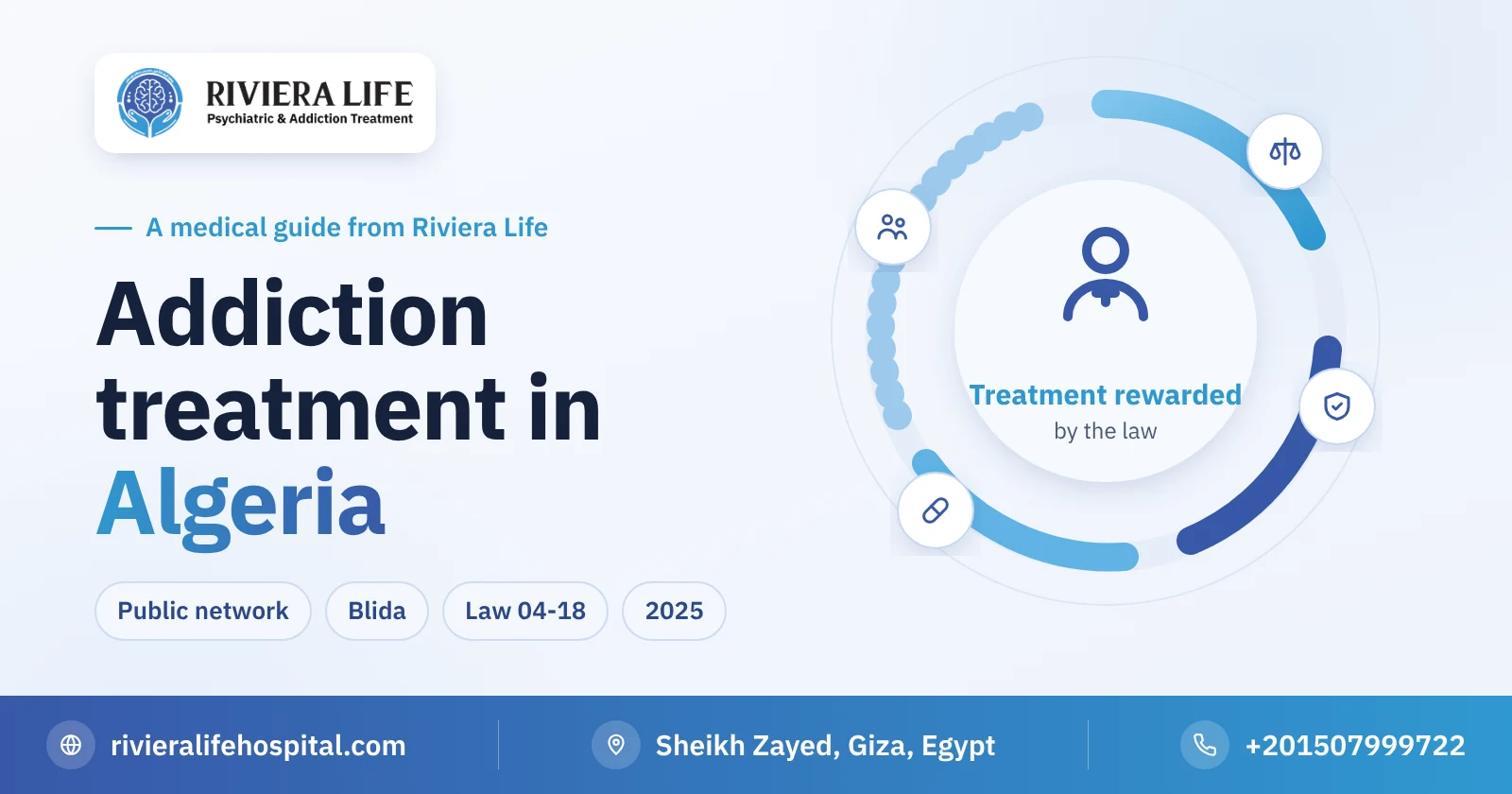
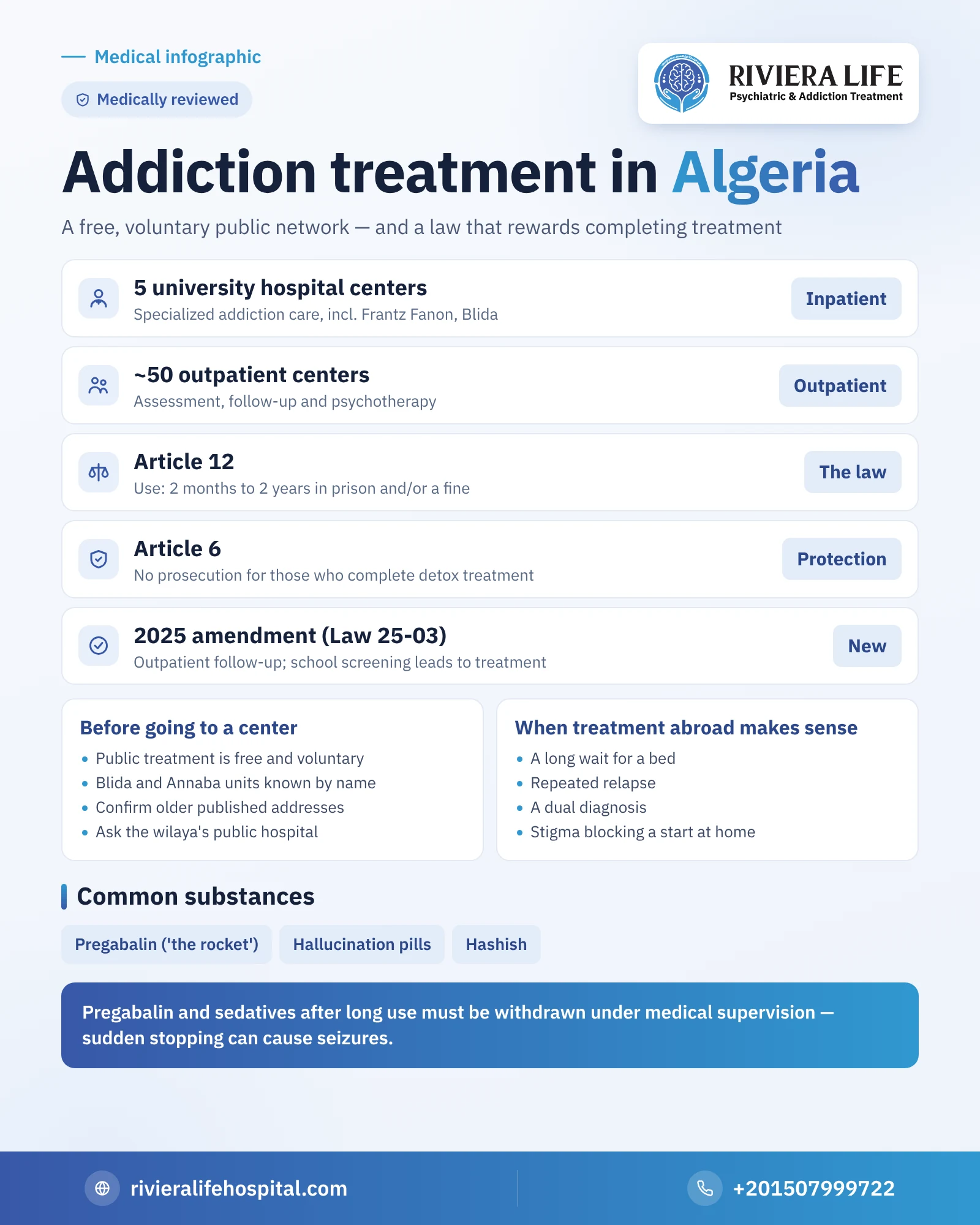
Addiction treatment in Algeria is available through a public network that, according to the Ministry of Health in 2026, includes five university hospital centers specialized in addiction treatment and about fifty outpatient treatment centers; one of its oldest units is the Addiction Prevention and Treatment Unit at Frantz Fanon Hospital in Blida. Law 04-18, as amended by Law 25-03 of 2025, punishes use with two months to two years in prison or a fine, but it brings no public action against anyone who underwent detoxification treatment and completed it. Some families consider treatment outside Algeria when relapses recur or the wait is long.
- The public network5 university centers and 50 outpatient centers
- The law04-18 as amended by Law 25-03 of 2025
- Treatment protectsNo prosecution for those who complete detox treatment
Many families reach the point of asking for treatment after trying everything at home: locking their son in his room, sending him to relatives far from his friends, or waiting for promises to stop that don’t last a week. In Algeria, particular substances recur in these stories, such as hallucination pills, pregabalin and hashish. This guide brings together what is available for treatment inside Algeria, what the law says to those who ask for treatment, and in which cases travelling for treatment becomes a reasonable decision. The aim is for the family to reach a clear decision about drug addiction treatment in Algeria or abroad, instead of losing months to trial and error.
Addiction treatment centers in Algeria
In June 2026 the Minister of Health announced that the national network includes five university hospital centers specialized in addiction treatment, in addition to fifty outpatient treatment centers. This network can be understood on two levels:
- Intermediate and outpatient centers: the starting point for assessment, follow-up and psychotherapy, suitable for stable cases.
- Specialized hospital units: for detox and cases that need an inpatient stay; one of the oldest is the Addiction Prevention and Treatment Unit at Frantz Fanon Hospital in Blida.
Private psychiatric clinics are also available for starting with an assessment. The fixed rule is that withdrawal from alcohol, sedatives and pregabalin after long use needs medical supervision, because stopping suddenly can cause seizures.
What should the family know before going to a center?
According to the World Health Organization in December 2024, treatment in this public network is free and voluntary. Among the units known by name, besides Blida, is the addiction unit at the Abou Bakr Er-Razi Specialized Hospital in Annaba, and there are intermediate outpatient treatment centers in the capital and Constantine, but their published addresses are relatively old, so check them before going. The ministry doesn’t publish a complete list of the fifty centers’ names, so the quickest way to find the nearest is to ask at the wilaya’s public hospital or a local health doctor.
There is still no free national telephone line dedicated to addiction treatment; the green line announced by the Ministry of Education in November 2025 is for prevention and reporting within schools, not for requesting treatment.
What does the law say to those who ask for treatment?
The matter is governed by Law No. 04-18 of 2004 on the prevention of narcotic drugs and psychotropic substances, amended by Law No. 25-03 issued in July 2025. What matters most to families:
- Article 12 punishes use, or possession for personal use, with two months to two years in prison and a fine, or one of the two penalties.
- Article 6 provides that no public action is brought against anyone who complied with the medical detoxification treatment prescribed for them and followed it to the end, nor against anyone who proves they began treatment or medical follow-up after the events.
- The investigating judge or the juvenile judge may order detoxification treatment based on a medical report, and the court may exempt from punishment if it is complied with.
- The 2025 amendment added the possibility of medical follow-up outside hospital, and screening of pupils in schools with a guardian’s consent, provided a positive result leads to treatment, not to prosecution.
The bottom line is that Algerian law rewards commitment to treatment, and starting early protects the patient both legally and medically. Consulting a lawyer remains essential if there is an ongoing case.
The substances that recur in cases coming from Algeria
Particular substances recur in Algerian news, most notably pregabalin, which some young people call “the rocket”, hallucination pills from the sedative family, and hashish. Each has a different plan: pregabalin and sedatives are withdrawn gradually under supervision, while hashish needs longer psychotherapy for anxiety and insomnia. Read pregabalin addiction treatment, and the colloquial names and their meanings in drug street names in the Maghreb.
When is treatment outside Algeria a sensible option?
- When the wait for a bed in a specialized unit is long and the case can’t be postponed.
- When relapse recurs and the patient needs to get away from their surroundings for a while.
- When there is a co-occurring mental disorder that needs a dual diagnosis program.
- When fear of stigma is an obstacle that prevents starting inside the country.
Drug addiction treatment in Egypt for patients from Algeria
The distance between Algeria and Egypt makes good preparation half of the treatment. The family starts with a confidential call in which the doctor assesses the case and estimates the length of the program, so they know before travelling how long they will be away and who will accompany the patient. They prepare the medical reports and the list of medicines, and arrange travel procedures through official channels. Before discharge, a follow-up plan is written that continues remotely, and it can be coordinated with a doctor in Algeria. The full journey is in our guide to addiction treatment in Egypt for Arab patients.
How can Riviera Life help you?
Riviera Life often deals with cases that mix pregabalin, sedatives and hashish, cases that need a gradual, carefully planned withdrawal. With Algerian families, it starts with a confidential remote assessment, then a program combining withdrawal, rehabilitation and family involvement, and online follow-up after returning. The first consultation is free and confidential on +201507999722.
Read also
- Addiction treatment in Tunisia
- Addiction treatment in Morocco
- Drug street names in the Maghreb
- Online addiction treatment
Questions many people ask
Through a public network that, according to the Ministry of Health, includes five specialized university hospital centers and about fifty outpatient treatment centers, among them the addiction treatment unit at Frantz Fanon Hospital in Blida.
Article 6 of Law 04-18 provides that no public action is brought against anyone who complied with the detoxification treatment prescribed for them and completed it.