The short answer
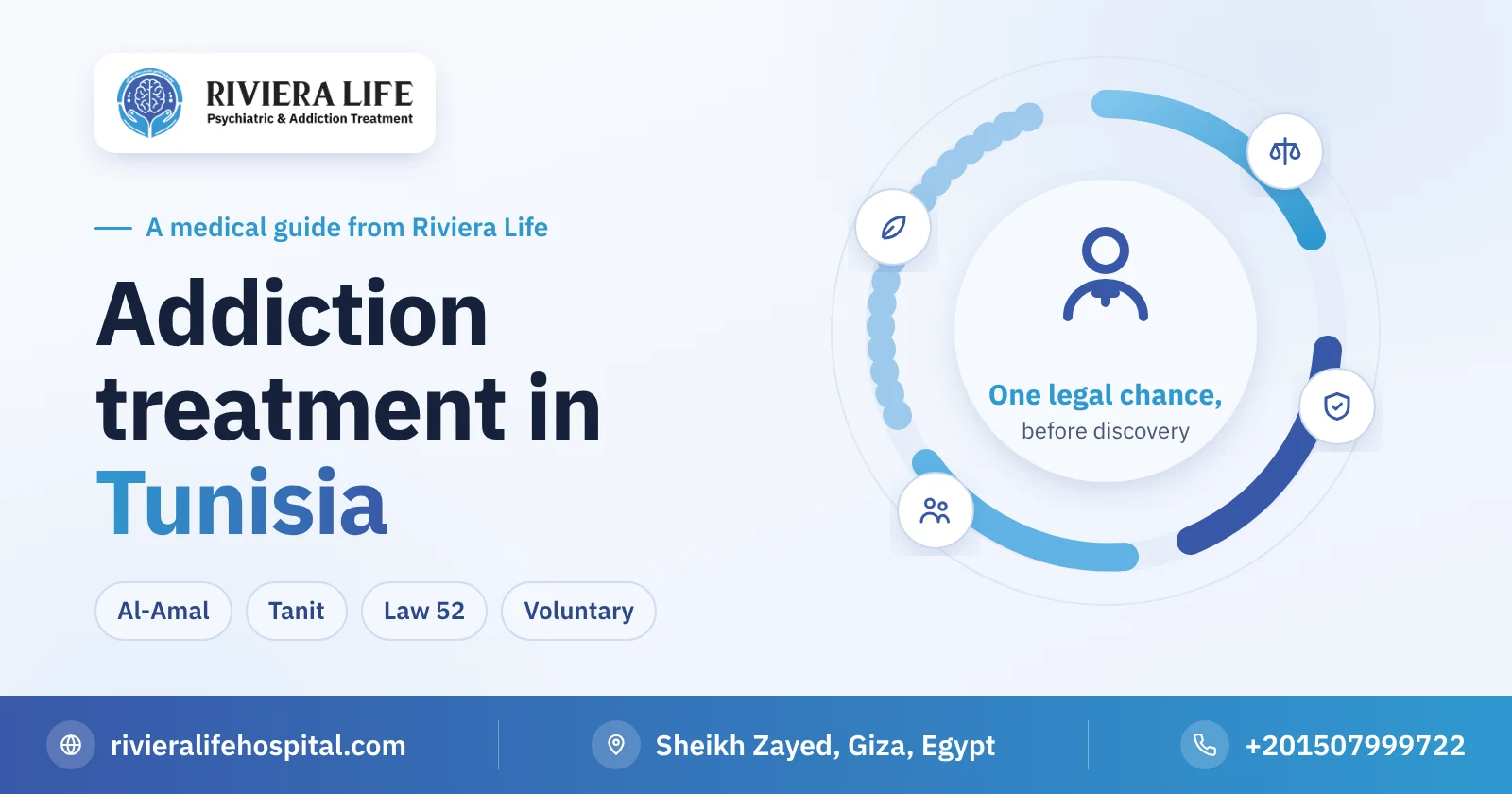
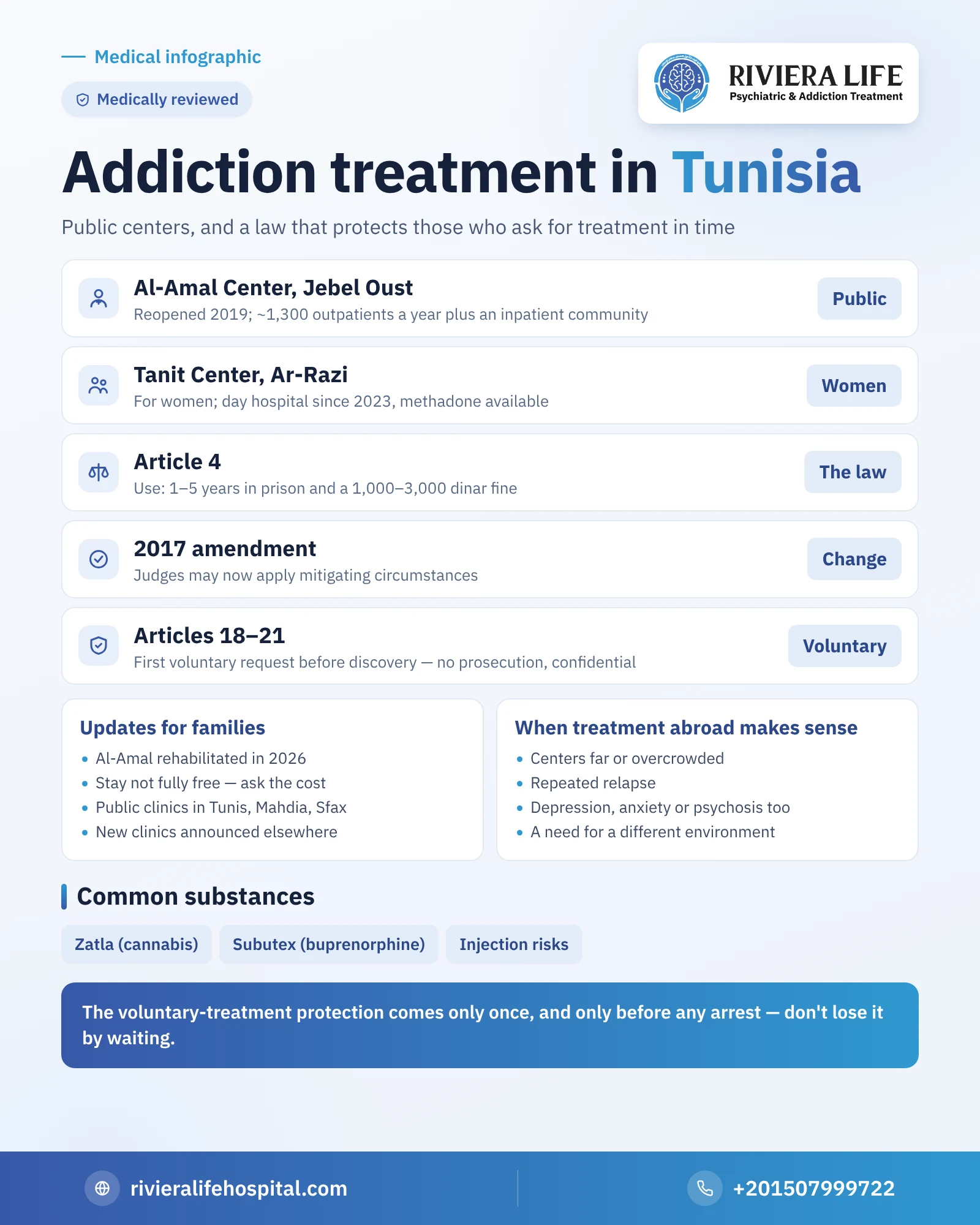
Addiction treatment in Tunisia is available through public institutions under the Ministry of Health, most notably the Al-Amal Addiction Treatment Center in Jebel Oust in the governorate of Zaghouan, which reopened in 2019 and receives about 1,300 outpatients a year alongside an inpatient therapeutic community, and the Tanit center for women at Ar-Razi Hospital in Manouba. Law No. 52 of 1992 punishes use with one to five years in prison and a fine, but it brings no public action against anyone who comes forward for treatment for the first time, on their own or through their spouse, parents, children or doctor, before the acts are discovered.
- Public providersAl-Amal Center in Jebel Oust and the Tanit Center
- UseOne to five years in prison and a fine
- Voluntary treatmentFor the first time, before the acts are discovered
Law 52 is one of the laws Tunisians talk about most, because its penalty for “zatla” was applied without mitigating circumstances until the 2017 amendment. But what many people miss is that the same law includes a door to treatment that protects those who knock on it at the right time. This guide brings together the available providers, what the law says, and how a family can decide between treatment in Tunisia and treatment abroad. Drug addiction treatment in Tunisia is available through well-known government providers, and the hardest step is often asking.
Where is addiction treated in Tunisia?
The Al-Amal Addiction Treatment Center in Jebel Oust
It opened in 1998, closed after 2011, and the Ministry of Health reopened it in March 2019. It receives about 1,300 patients in its outpatient clinics each year, as well as more than seventy in its inpatient therapeutic community.
The Tanit Center at Ar-Razi Hospital
A unit dedicated to treating addiction in women, an important step because many women avoid mixed settings. Our article on addiction in women covers the particular needs of these cases.
The Sfax center closed in 2017, and plans to reopen it have been announced. That is why pressure on the existing centers remains high, and some families turn to private psychiatric clinics for assessment and follow-up.
Updates that matter to families in 2025 and 2026
- The Al-Amal Center was rehabilitated in 2026, and staying there isn’t entirely free: it was charged at a daily rate not covered by the health insurance fund, so ask about the current cost before booking.
- The Tanit Center has operated as a day hospital within Ar-Razi Hospital in Manouba since March 2023, and provides methadone treatment.
- Public addiction consultations are available at Ar-Razi Hospital, the emergency department at Montfleury in the capital, and hospitals in Mahdia and Sfax, as well as weekly clinics in the governorate of Ben Arous at Hammam-Lif and Fouchana.
- New clinics have been announced in governorates such as Monastir, Gafsa and Jendouba, but not all of their openings have been confirmed yet.
There is no dedicated national telephone line for addiction, so most families start with the nearest outpatient consultation.
Law No. 52 and voluntary treatment
- Article 4: punishes with one to five years in prison and a fine of one thousand to three thousand dinars anyone who uses, or possesses for personal use.
- The 2017 amendment: allowed the judge to apply mitigating circumstances in use offenses, after they had been prohibited.
- Article 18: a person with addiction may apply once, before the acts are discovered, with a written request accompanied by a medical certificate to the competent committee to be placed under a treatment regime; the request may be made by the spouse, parents, children or doctor.
- Article 20: no public action is brought against someone who makes this request for the first time, and it resumes if they break off treatment without approval.
- Article 21: everything relating to the health of the voluntary applicant is considered a professional secret.
This means the most important legal opportunity comes only once, and before any arrest, so the family shouldn’t let it slip by waiting.
The substances most present in Tunisia
Zatla, the Tunisian name for cannabis, is the best known. The misuse of buprenorphine, known by the brand name Subutex, is also present; it is often crushed and injected, adding the risk of infection. Each needs a different plan: the details of the first are in hashish addiction treatment, and the harms of injecting in the harms of injecting drugs. The meanings of colloquial names are in drug street names in the Maghreb.
When is treatment outside Tunisia a sensible option?
- When the available centers are far away or overcrowded and the case can’t wait.
- When relapse recurs and the patient needs a different environment.
- When use is accompanied by depression, anxiety or psychosis that needs simultaneous treatment.
Drug addiction treatment in Egypt for patients from Tunisia
Anyone who chooses treatment in Egypt starts with a confidential, no-obligation call, explaining the patient’s situation and learning what they need and the approximate length of the program. Then the family arranges travel, one family member attends the first assessment, and before discharge both sides agree dates for remote follow-up after returning to Tunisia. To compare options between countries, see our guide to addiction treatment for Arab patients.
How can Riviera Life help you?
Riviera Life offers Tunisian families a confidential remote assessment, and programs for treating cannabis and opioid addiction and the complications of injecting, along with treatment of accompanying depression and anxiety, then regular follow-up after returning home. The first consultation is free and confidential on +201507999722.
Read also
- Addiction treatment in Algeria
- Addiction treatment in Libya
- Buprenorphine: use and misuse
- Online addiction treatment
Questions many people ask
Among the most prominent public institutions are the Al-Amal Addiction Treatment Center in Jebel Oust, Zaghouan, and the Tanit center for women at Ar-Razi Hospital in Manouba.
No public action is brought against someone who comes forward for the first time, on their own or through their spouse, parents, children or doctor, asking for treatment before the acts are discovered, under Article 20 of Law No. 52.