The short answer
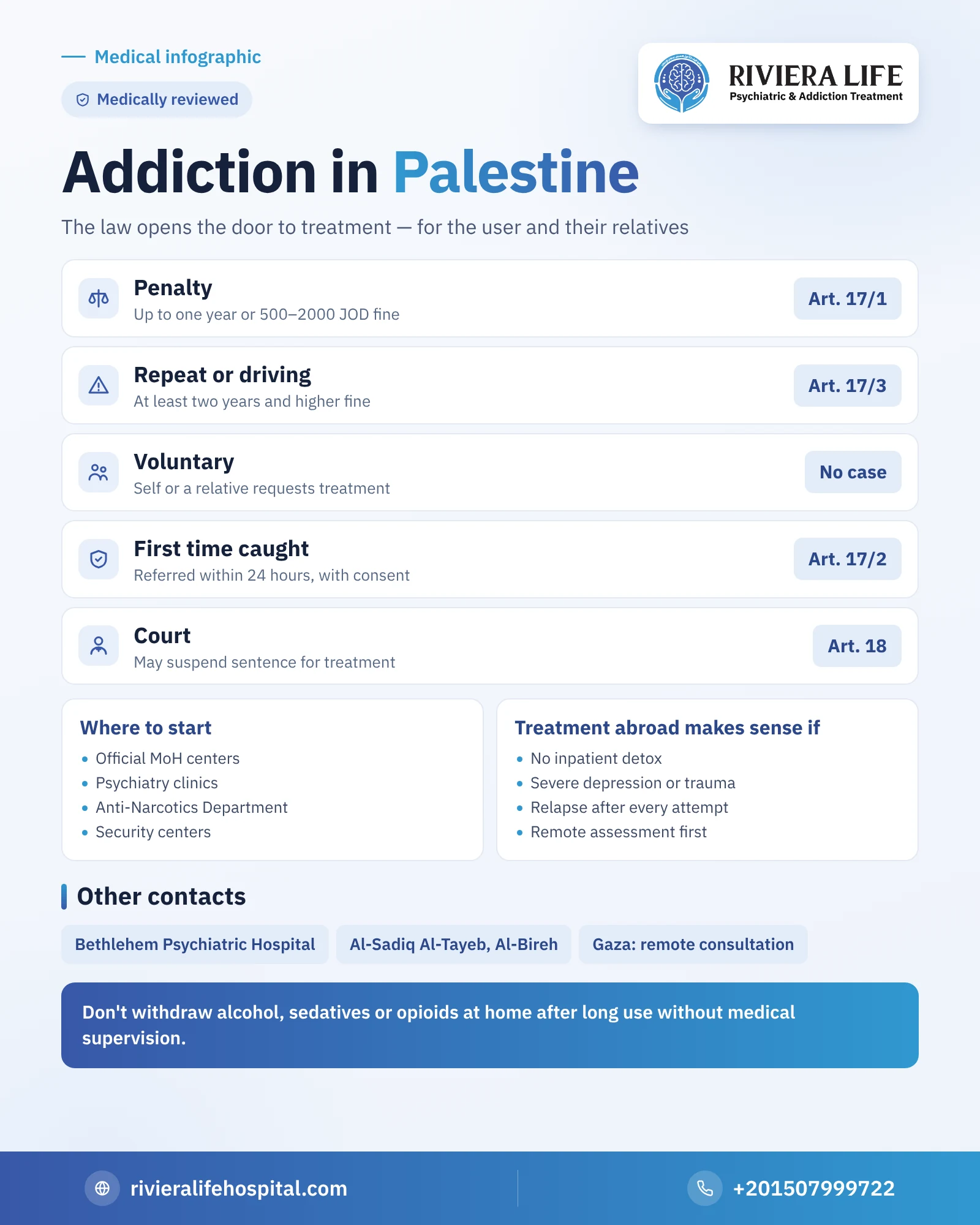
Drug control in Palestine is regulated by Decree-Law No. 18 of 2015, which punishes use with imprisonment for a period not exceeding one year or a fine of 500 to 2,000 Jordanian dinars or both penalties, and the penalty is harsher on repetition. Most importantly, no public prosecution is brought against the user if they come forward on their own or through one of their relatives to the official specialized centers, the Anti-Narcotics Department or any security center requesting treatment, and someone caught using for the first time is referred to treatment with their consent. Inpatient treatment services remain limited, so the family usually starts with official centers and psychiatry.
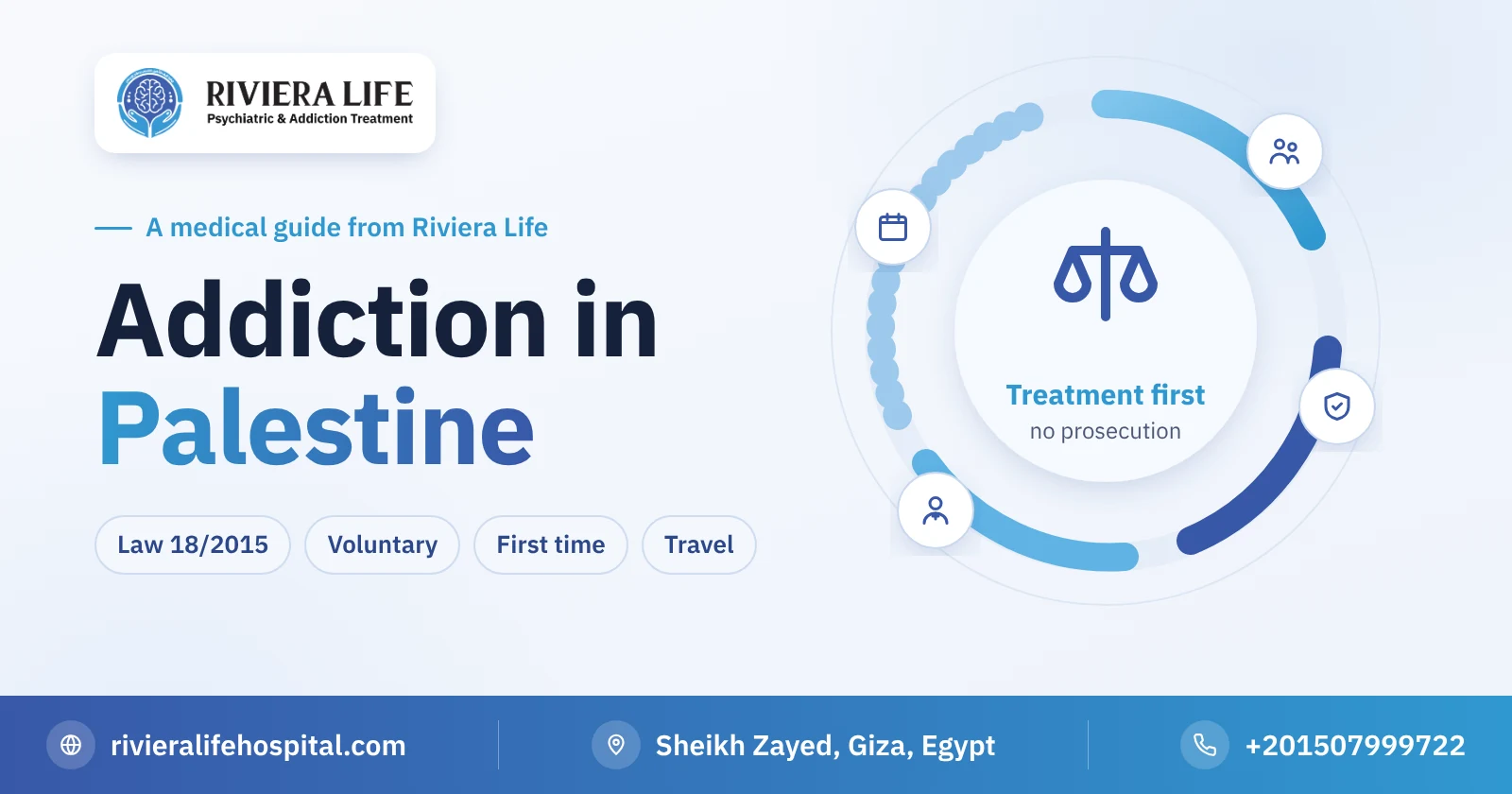
- The lawDecree-Law 18 of 2015
- Voluntary treatmentOn their own or through one of their relatives
- The first timeReferral to treatment with the user’s consent
Palestinian law is among the Arab laws most open to treatment; it doesn’t only protect those who come forward themselves, but opens the door to their relatives, and gives someone caught for the first time the chance of treatment with their consent. Nevertheless, specialized services remain limited, and families face difficulties with movement and access. This guide gathers what the law says, how the family starts, and when traveling for treatment deserves to be raised.
What does Decree-Law No. 18 of 2015 say?
- Article 17, paragraph 1: the user is punished with imprisonment for a period not exceeding one year, and a fine of not less than five hundred Jordanian dinars and not more than two thousand dinars, or one of these two penalties.
- Article 17, paragraph 3: the penalty rises to imprisonment of at least two years and a higher fine on repetition, or when driving under the influence of drugs.
- Article 17, paragraph 2: no public prosecution is brought against anyone who uses drugs if they come forward on their own or through one of their relatives to the specialized treatment centers of any official body, to the Anti-Narcotics Department, or to any security center, requesting their treatment.
- The same paragraph includes someone caught using for the first time, provided they are referred to treatment within 24 hours after notifying the Public Prosecution, and with the user’s consent.
- Article 18: the court may suspend the execution of the sentence to subject the convicted person to treatment in a specialized clinic or a psychosocial clinic.
This means the family can take the initiative to request treatment itself, and not wait for the son to be convinced on his own.
Where does the family start?
- The official specialized centers of the Ministry of Health: a national center for addiction treatment and rehabilitation of addicts was established in Bethlehem, whose construction was completed in 2019 with a capacity of 52 beds, and it was later used during the coronavirus pandemic, so it is advisable to check its current status through the Ministry of Health.
- Psychiatry in government and private hospitals and clinics for assessment and follow-up.
- The Anti-Narcotics Department or security centers, which are bodies the law accepts approaching with a request for treatment without a case being brought.
And withdrawal from alcohol, sedatives or opioids shouldn’t be done at home after long use without medical supervision.
Other bodies that can be contacted
- Bethlehem Psychiatric Hospital: a government hospital that reopened the men’s ward for acute cases in December 2025, and can assess psychological conditions accompanying use.
- Al-Sadiq Al-Tayeb Society in Al-Bireh: works in prevention, counseling, family programs and home visits.
- Gaza: the only psychiatric hospital in the Strip was destroyed in November 2023, and no inpatient service for psychiatry or addiction is currently available, and remote consultation is the closest practical option.
What determines the treatment plan?
- The type of substance: stimulants such as captagon and shabu need psychological follow-up for depression and psychosis, and sedatives and opioids need medical withdrawal. Read captagon addiction treatment.
- The presence of psychological trauma or accompanying depression, which is common in environments living under continuous pressure, and needs a dual diagnosis.
- The family’s ability to support and follow up after discharge.
When does treatment outside Palestine make sense?
- When residence for detox or a regular rehabilitation program isn’t available.
- When addiction is accompanied by depression, severe anxiety or the effects of psychological trauma.
- When the patient relapses after every attempt despite their family’s support.
If you decide on treatment in Egypt
Because travel may be complicated, a remote consultation helps the family make sure the step is necessary before starting its procedures. The doctor assesses the case and determines the approximate duration, and if travel is decided the family arranges it through official channels, and the patient continues regular remote sessions after returning. You will find the full steps in addiction treatment in Egypt for Arab patients.
How does Riviera Life help you?
Riviera Life offers Palestinian families a confidential remote assessment that takes into account the pressures and traumas many young people live through, and programs for withdrawal, rehabilitation and dual diagnosis for those who choose Egypt, with follow-up after returning. The first consultation is free and confidential on +201507999722.
Read also
- Addiction treatment in Jordan
- Addiction treatment in Syria
- Addiction treatment in Lebanon
- Addiction treatment in Egypt for Arab patients
Questions many people ask
No public prosecution is brought against the user if they come forward on their own or through one of their relatives to official centers, the Anti-Narcotics Department or any security center requesting treatment, according to Article 17 of Decree-Law 18 of 2015.
The law allows them to be referred to treatment within 24 hours after notifying the Public Prosecution, with the user's consent, without a case being brought.