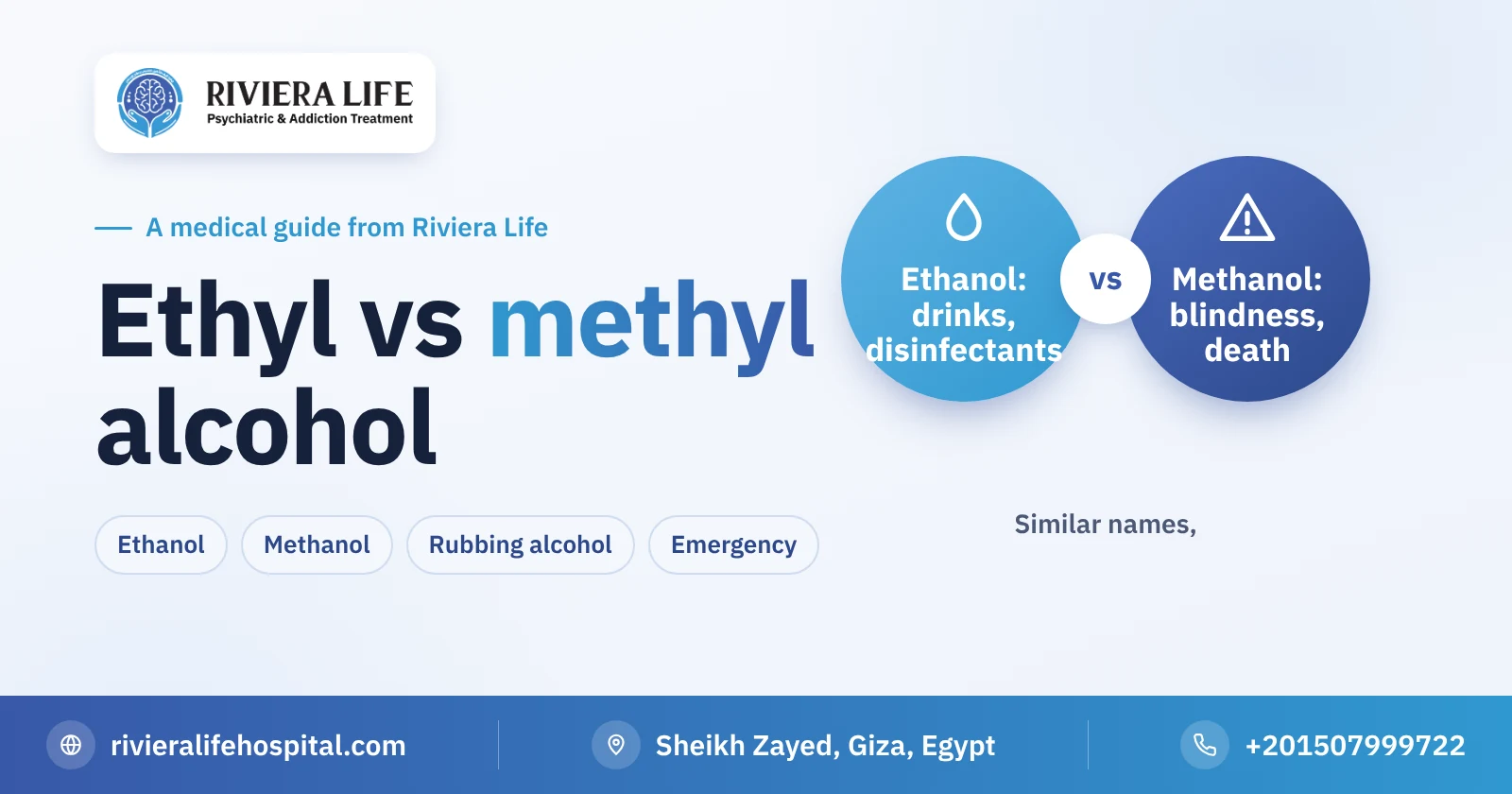
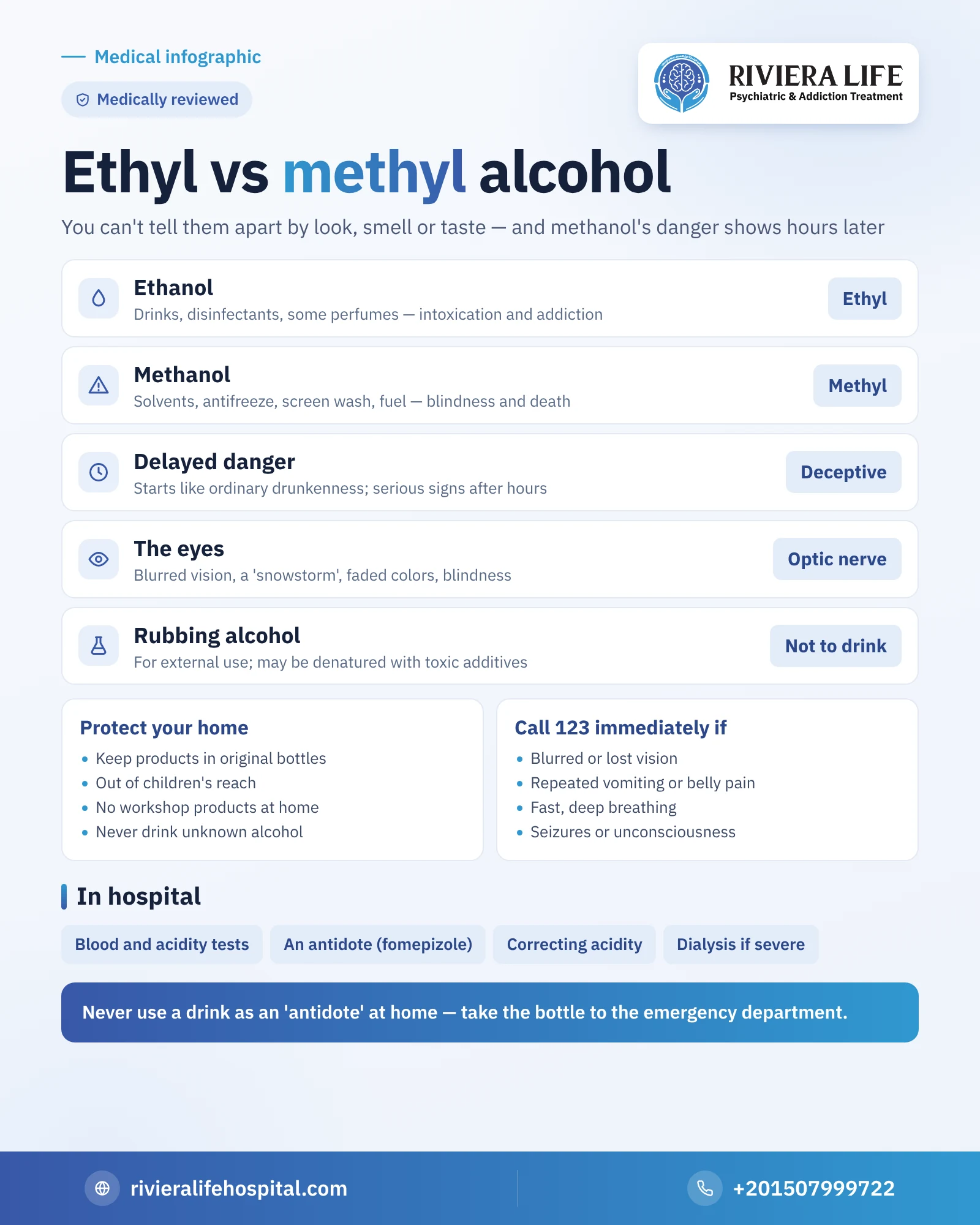
The difference between ethyl and methyl alcohol is the difference between a drink that intoxicates and a substance that may blind or kill, despite the similarity of their names. Ethyl alcohol (ethanol) is what is found in alcoholic drinks and many disinfectants, and causes intoxication, addiction and the well-known harms. Methyl alcohol (methanol) is an industrial solvent used in antifreeze, window-cleaning fluids and some types of fuel,
and it is toxic to the nerves, the eyes and the brain; a small amount is enough to cause blindness or death. Worse still, you can’t tell them apart by appearance, smell or taste. Here we explain why methanol poisoning looks like ordinary drunkenness at first, what “rubbing alcohol” means, and what to do if you suspect poisoning.
What is the difference between ethyl and methyl alcohol?
In chemistry, alcohol is a large family, and each member behaves differently inside the body. Ethanol is the one the liver processes and converts into relatively less harmful substances, although it causes many problems we covered in our article on the harmful effects of alcohol. Methanol itself is less intoxicating than ethanol, but the liver converts it into highly toxic compounds, most importantly formic acid. That is why the real danger doesn’t appear in the first minutes, but hours later as these compounds accumulate in the blood and nerves.
Where is each one found?
| Comparison | Ethanol | Methanol |
|---|---|---|
| Common use | Alcoholic drinks, disinfectants, some perfumes | Industrial solvents, antifreeze, window-cleaning fluids, fuel |
| Main danger | Intoxication, addiction, liver damage and alcohol poisoning | Blindness, blood acidity, brain damage and death |
| Onset of symptoms | Within a short time | May be delayed hours, up to about a day |
| Can it be identified? | Can’t be judged by appearance or taste | Can’t be judged by appearance or taste |
Why does methanol poisoning deceive you at first?
In the first hours the symptoms may look like ordinary drunkenness: dizziness, slurred speech, nausea and headache. Then the person may calm down and sleep, so those around think they are fine. After that, perhaps after about half a day or more, the serious symptoms begin: abdominal pain and vomiting, fast, deep breathing, blurred vision that patients describe as fog or a “snowstorm”, faded colors and loss of sight, then confusion, seizures and coma. The later treatment comes, the smaller the chance of saving sight and the brain. Our article on the symptoms of intoxication compares ordinary drunkenness with alcohol poisoning.
What happens inside the body?
When methanol enters the body, liver enzymes break it down into formaldehyde and then into formic acid. This acid disrupts energy production in cells, causing severe acidity in the blood, damaging the cells of the optic nerve that need a lot of energy, and affecting specific areas of the brain, leading to permanent movement or mental problems. This explanation is why treatment relies on preventing these compounds from forming and removing them from the body, which is done only inside a hospital.
What about “rubbing alcohol”?
What is sold in pharmacies as “medical alcohol” or “spirit” is usually high-concentration ethanol or sometimes another alcohol such as isopropanol, sold for external disinfection, not for drinking. Some products have substances added that make them taste repulsive or deliberately poison them to prevent drinking; these are called denatured or modified alcohol, and methanol may be among these additives.
That is why drinking rubbing alcohol, hand sanitizer, cologne or any household product as a substitute for drinks is a real risk, even if it has happened that “so-and-so drank it and nothing happened”. One of the causes of repeated poisoning worldwide is that addicts, teenagers or children swallow these products.
Drinks of unknown origin
Mass methanol poisoning incidents happen around the world when adulterated or unregulated alcoholic drinks are sold. The drinker doesn’t know what is in the bottle, and neither smell nor color helps. The danger here isn’t limited to regular drinkers, but includes those who drink once on an occasion. There is no reliable home method of testing a drink. It is safest not to drink a drink of unknown origin at all.
A dangerous myth: “drink another alcohol to cancel the effect”
In some circles there is a belief that someone who has drunk methanol can be saved by drinking an alcoholic drink. It is true that doctors in some hospitals use medical ethanol within a carefully dosed treatment protocol under monitoring and blood tests, and that there is a special antidote called fomepizole. But this isn’t done at home, with a drink or by individual decision, and a home attempt may double the poisoning and sedation. Only one thing is needed: take the person to hospital immediately.
Call an ambulance on 123 immediately if
Someone has drunk an unknown drink, rubbing alcohol, a cleaner or sanitizer and shows any of the following, or even if they seem fine.
- Blurred, foggy or lost vision, or severe sensitivity to light
- Repeated vomiting or severe abdominal pain
- Fast, deep breathing or shortness of breath
- Severe headache, dizziness, confusion or unusual sleepiness
- Seizures or loss of consciousness
Don’t wait for symptoms to appear if you know someone has drunk a suspect substance, as early treatment is what saves sight. Take the bottle with you to the hospital to help the doctors, and don’t try to force the person to vomit.
How do you protect your home?
- Keep cleaners, solvents and sanitizers in their original labeled containers, and don’t transfer them into water or drink bottles.
- Keep them out of children’s reach in a high, closed place, as a few sips may be enough to poison a small child.
- Don’t use car-cleaning or workshop products for household purposes.
- Teach teenagers that any drink of unknown origin may be deadly even if it looks familiar.
- Keep the ambulance number 123 at hand, and take the container with you to the emergency department if poisoning is suspected.
Treatment in hospital
Doctors carry out a rapid assessment including blood tests, acidity and kidney function, give the antidote that stops the liver converting methanol into its toxic compounds, correct the acidity, and may use dialysis to remove methanol and its products from the blood in severe cases. The patient needs monitoring of sight and the nervous system. The person isn’t left without follow-up even if they show signs of improvement, because the delayed stage is the most dangerous. All of this is done under the supervision of emergency and toxicology doctors, not through home advice.
If someone in the family has an alcohol addiction
The most dangerous scenario is when someone dependent on alcohol can’t get their usual drink and turns to cheap or household substitutes. If you notice bottles of cleaners or sanitizers going down for no reason at home, or smell alcohol from an unusual source, talk to the doctor and don’t wait for an incident. If they stop drinking suddenly, they may suffer dangerous withdrawal symptoms, which our article on alcohol withdrawal symptoms explains. Our article on how to deal with an alcoholic helps the family take safe steps, and our article on alcohol addiction treatment explains the stages of recovery.
At Riviera Life, licensed by the Ministry of Health with fourteen years of experience, consultants in psychiatry and addiction follow alcohol cases under round-the-clock medical supervision, in complete confidentiality and with a family program. The first consultation is free on +201507999722 in Sheikh Zayed, Giza. Acute poisoning, however, belongs in the emergency department immediately.
More from our alcohol guide
- Alcohol: the complete guide
- The symptoms of intoxication and alcohol poisoning
- The harmful effects of alcohol on body and mind
- Alcohol withdrawal symptoms
Questions many people ask
Ethyl is the alcohol of drinks and disinfectants, while methyl is a highly toxic industrial solvent that causes blindness and death in small amounts.
No. They can't be judged by appearance, smell or taste, which is why any drink of unknown origin remains a risk.
Because the body slowly converts it into toxic compounds such as formic acid, so the serious symptoms appear after hours that may reach about a day.
No. It is for external disinfection, it may be another alcohol or contain toxic additives, and drinking it is dangerous even if no immediate symptoms appear.
No. Treatment happens in hospital with medicines and protocols under monitoring, and a home attempt may double the danger. Call an ambulance on 123 immediately.