The short answer
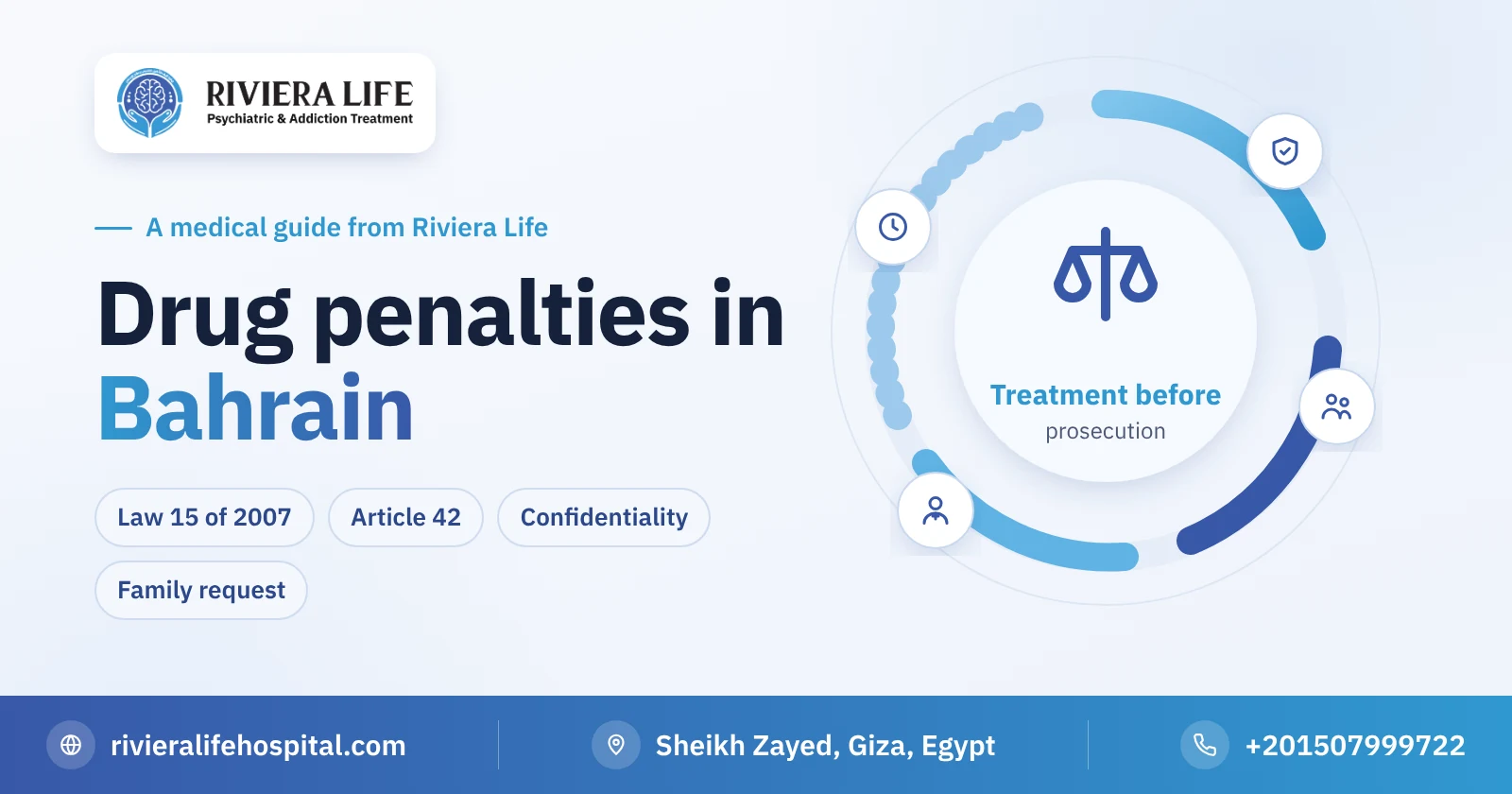
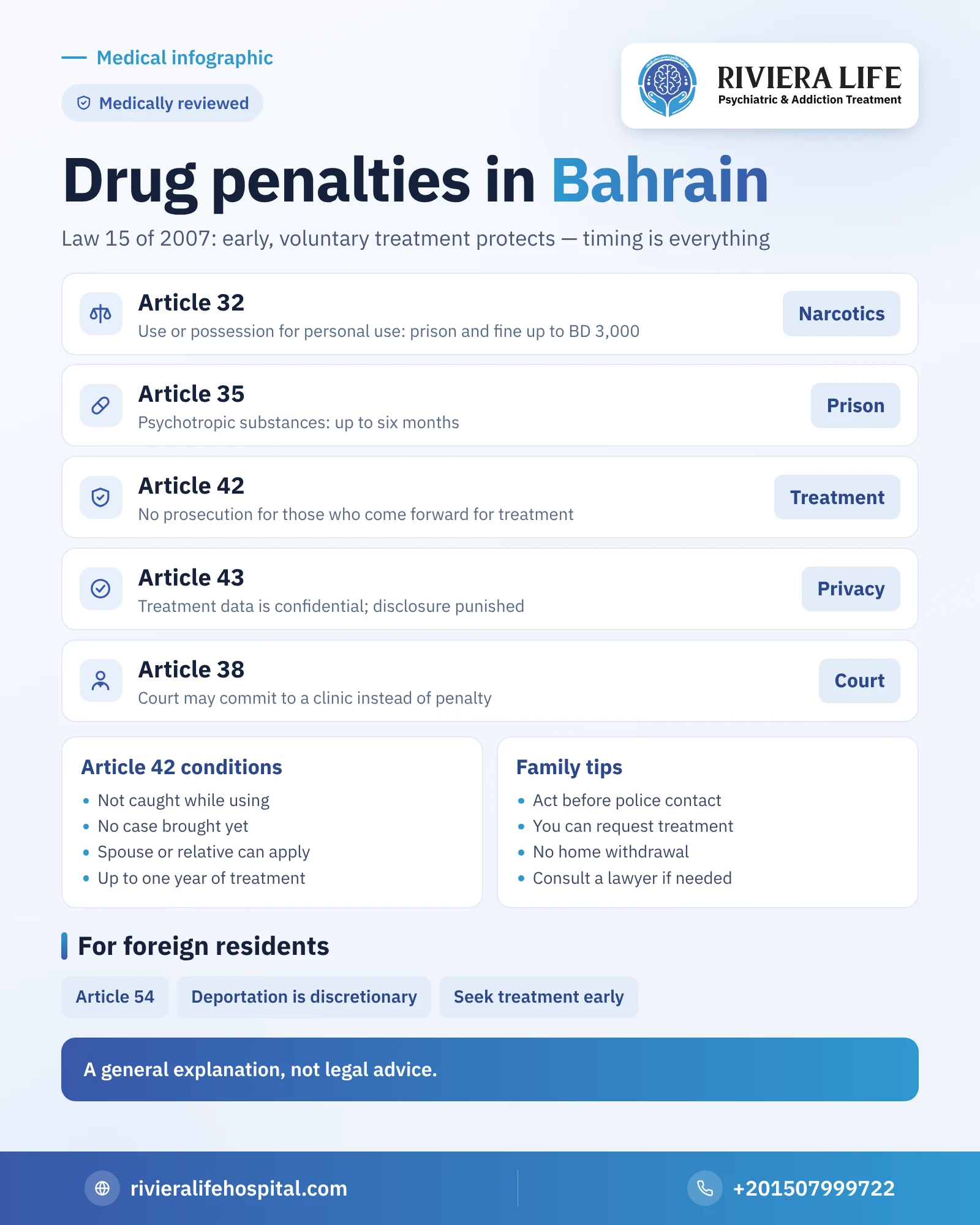
Drug cases in Bahrain are governed by Law No. 15 of 2007 on narcotics and psychotropic substances. Possession or use of narcotics for personal use is punished with imprisonment and a fine not exceeding three thousand dinars. Article 42 provides that no criminal proceedings are brought against a user who comes forward to the Supervision and Care Committee requesting treatment, or whose spouse or a relative up to the fourth degree submits the request, unless they have been caught using or proceedings have been brought against them. Article 38 allows the court to commit an addict to a clinic instead of the penalty, and Article 43 makes treatment data confidential, with anyone who discloses it punished.
- The lawNo. 15 of 2007
- UsePrison and a fine up to BD 3,000
- Voluntary treatmentArticle 42, before being caught
Many families in Bahrain hesitate before seeking treatment for a son or husband for fear that it will turn into a case. Bahraini law is clear and fair on this point: whoever requests treatment before being caught isn’t prosecuted, and their family has the right to request treatment for them. This article explains the basic articles in simple language, and is a general explanation, not legal advice.
The applicable law
Law No. 15 of 2007 on narcotics and psychotropic substances, issued in August 2007, is the one published on the website of the Legislation and Legal Opinion Commission. The law distinguishes between possession for the purpose of use, and importing and trafficking, for which far heavier penalties are set.
The penalty for use and possession for personal use
- Narcotics: Article 32 punishes whoever possesses or uses narcotic substances for personal use with imprisonment and a fine not exceeding three thousand dinars.
- Psychotropic substances: imprisonment not exceeding six months under Article 35.
- Precursors: imprisonment not exceeding four months under Article 37.
Article 42: treatment without criminal proceedings
The article provides that no criminal proceedings are brought against a narcotics user who comes forward to the Supervision and Care Committee for treatment, and the same applies if the request is submitted by their spouse or a relative up to the fourth degree. The person is placed under observation for a period not exceeding one month, then committed for treatment for a period not exceeding six months, and the whole treatment period may not exceed one year.
The article sets two important conditions: that the person hasn’t been caught while using, and that criminal proceedings haven’t been brought against them. That is why timing makes all the difference: an early request protects, and a request after being caught doesn’t fall under this article.
Article 43: treatment confidentiality
The article treats all data and information that come to the knowledge of those working in the treatment of addicts as confidential, and punishes whoever discloses them under the Penal Code. This reassures families who fear the news spreading in the workplace or the community.
Committal instead of penalty after being caught
Article 38 allows the court to order that a person whose addiction is proven be committed to a clinic instead of the penalties prescribed for use, and Article 39 sets the committal period between three months and a year. This means treatment remains on the table even after being caught, but by court decision, not the family’s choice.
Foreign residents
Article 54 allows the court to order the permanent deportation of a foreigner from the Kingdom as an additional measure for someone previously convicted under this law, and this is discretionary, assessed by the court, not mandatory in every case. The safest route for a resident is to seek treatment early, before any prosecution.
Practical tips for the family
- Start before any encounter with the police happens; Article 42 doesn’t cover those who have been caught.
- As a spouse or relative, you have the right to request treatment, so don’t wait for the patient to be convinced alone.
- Don’t start home withdrawal from alcohol or sedatives, as withdrawal may be dangerous.
- Consult a lawyer if there is a previous case or a special residency situation.
To learn about treatment providers in the Kingdom and the steps to begin, read addiction treatment in Bahrain.
How can Riviera Life help you?
After understanding the legal situation, the medical question remains: what does the patient really need? Here Riviera Life helps with a confidential remote assessment for Bahraini families, and an integrated treatment program for those who choose treatment in Egypt, with follow-up after returning. The first consultation is free and confidential on +201507999722.
Read also
- Addiction treatment in Bahrain: the available providers
- Drug penalties in the UAE and voluntary treatment
- Drug penalties in Saudi Arabia and treatment without prosecution
- Kuwait’s drug law
- How do I help someone addicted to drugs?
Questions many people ask
Article 32 punishes possession or use for personal use with imprisonment and a fine not exceeding three thousand dinars.
Article 42 doesn't cover someone caught using or against whom criminal proceedings have been brought, so coming forward early is what protects.