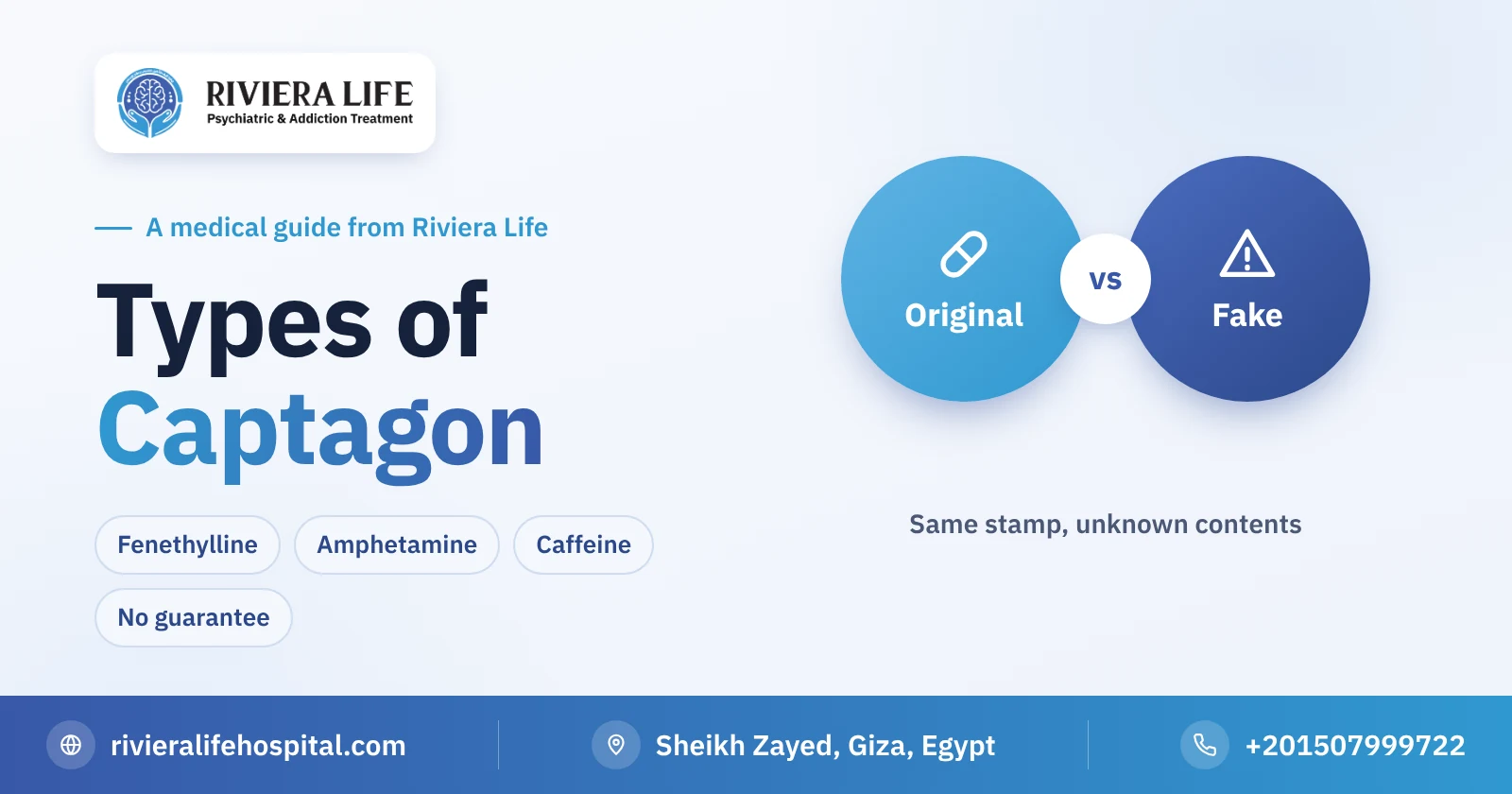
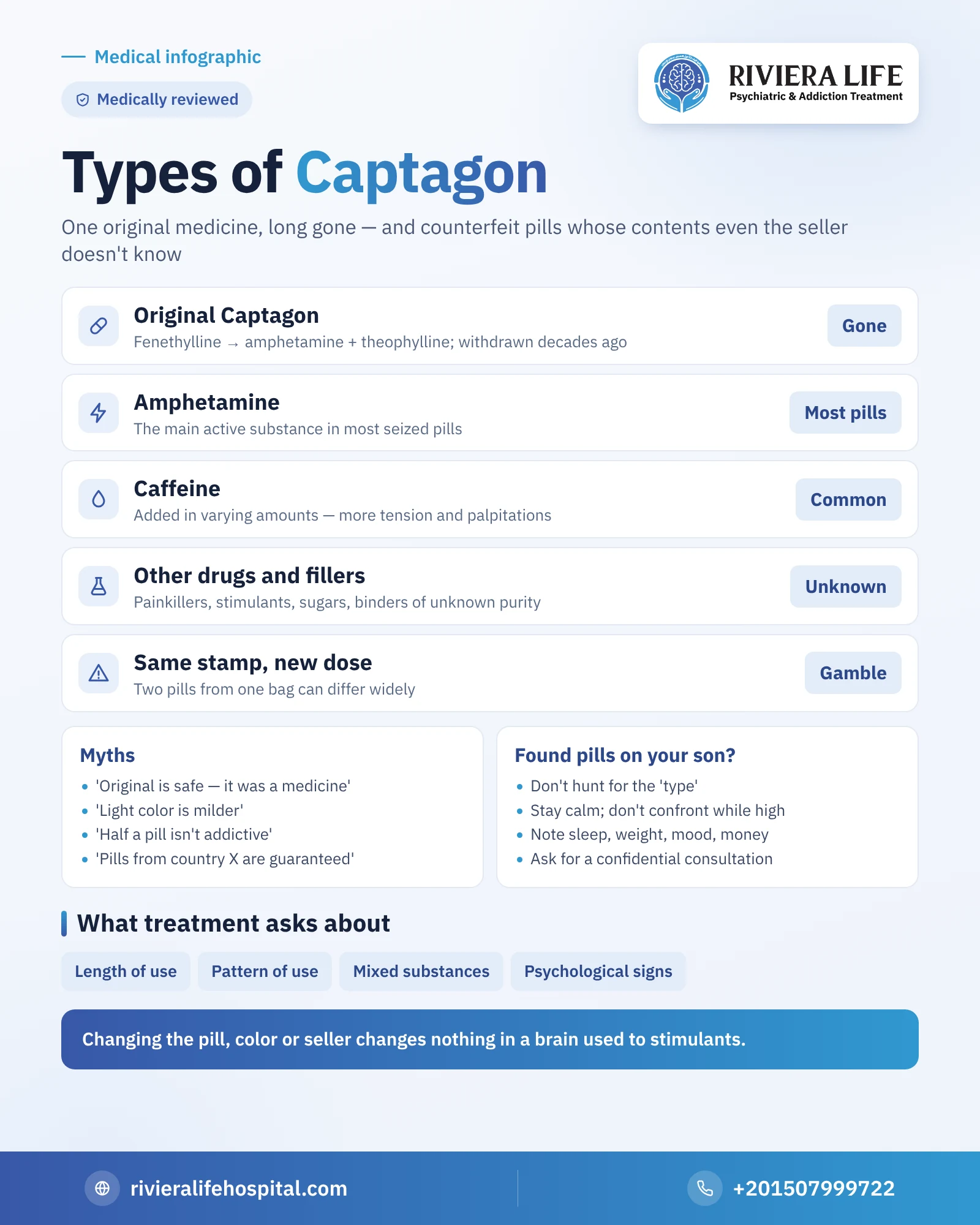
When people talk about types of Captagon pills, they usually mean differences in color, stamp, or the country the pill is said to come from. But the medical truth is simpler and more dangerous: there was one original “Captagon”, a medicine containing fenethylline whose production stopped decades ago, and there are counterfeit pills carrying the name and logo, most of which contain amphetamine with caffeine and other substances. What the street calls “types” isn’t a scientific classification, but marketing names that hide contents not even the seller knows. In this article we explain the difference between the original and the fakes, why there are so many names, and why relying on the “type” is a gamble with your health.
Does Captagon really have types?
Pharmacologically, no. Real medicines are classified by their active substance and its concentration, which are written on the pack and subject to regulation. The Captagon in circulation has no known factory, no leaflet and no fixed concentration. So the word “type” in this context means only two things: an outward appearance that differs, and a story the seller tells about its strength or origin. Nothing connects this appearance to what is actually inside the pill.
The original Captagon: the fenethylline medicine
The brand name “Captagon” appeared in the 1960s for a medicine whose active substance was fenethylline. What distinguishes this substance is that after swallowing, the body breaks it down into two substances: amphetamine, a powerful stimulant, and theophylline, which is chemically close to caffeine. The medicine was used in some countries to treat hyperactivity in children, narcolepsy, and sometimes cases of depression.
Over the years it became clear that the medicine was misused and caused dependence, so fenethylline was placed under international control in the 1980s, and its medical use gradually stopped. Today doctors almost nowhere prescribe Captagon, and there is no legal medicinal pack of it in pharmacies.
Today’s counterfeit pills: what do analyses reveal?
European and international bodies have analyzed thousands of tablets seized in the Middle East in recent years, and the result repeats itself: most don’t contain fenethylline at all. The ingredients that appear most often are:
- Amphetamine: the main active substance in most pills, responsible for sleeplessness, energy and dependence.
- Caffeine: added in varying amounts, increasing tension and palpitations and giving a sense that the pill is strong.
- Other medicinal substances: painkillers, stimulants or unexpected substances have sometimes been found in varying proportions.
- Fillers: sugars, starches and binders to give the tablet its shape and weight, of unknown source or purity.
And some recent reports point to methamphetamine appearing in the same regional markets where Captagon is widespread — a stronger and more dangerous stimulant. In other words, the tablet a person buys as “Captagon” may not be what they think at all.
Where did the idea of types come from?
The illicit market needs something to distinguish its goods, just like any trade. So pills are given names linked to their color, the design stamped on them, or a country they are claimed to have been made in, and some are said to be “stronger”, “cleaner” or “original”. These descriptions pass between users as if they were facts, but they rest on no analysis. And the secret factory itself may change the formula from one batch to the next according to the materials it has, without changing the stamp.
Names in circulation by shape and marking
The best-known name in Egypt and the region is “Abu Hilalain” (“two crescents”), after the stamp that looks like two facing crescents — an imitation of the old medicine’s logo. Names linked to color, such as “the white” or “the yellow”, are also heard, along with others linked to use, such as “staying-up pills” and “study pills”, and local names change from country to country and year to year. Knowing the name helps a family understand what they hear from their son or his friends, but it tells them nothing about the contents. You will find more about the names and appearance in our complete guide to Captagon.
Same stamp, different concentration
The most dangerous thing about counterfeit pills isn’t only that they contain amphetamine, but that the amount isn’t fixed. Two tablets from the same bag may differ a great deal, because mixing in secret labs happens without precise measurement. The result is a scenario that repeats itself in emergency departments: someone who has been used to “their pill” for months takes a tablet that looks identical and suffers severe palpitations, a high temperature or a panic attack. They didn’t change anything, but the pill did.
Why are “types” a gamble?
Some users believe their experience protects them: they know the good color, the reliable stamp and the trusted seller. This is a comfortable illusion. There is nothing that can be seen or touched that reveals the composition, the stamp is easily copied, and the seller doesn’t know what is in their goods because they bought them ready-made. Every tablet is therefore a new experiment with an unknown result. That is why you won’t find any description in this article that helps tell one type from another: such a description gives a false sense of safety.
What happens in the body, whatever the type?
Since amphetamine is the common denominator, the basic effect is the same: it raises dopamine and noradrenaline in the brain, increasing energy and reducing sleep and appetite, and it speeds up the heart and raises blood pressure and temperature. With repetition, dependence appears, and a crash follows every sleepless binge. The added caffeine increases the strain on the heart rather than easing it. The details of the damage to the heart, brain and mind are explained in our article on the harmful effects of Captagon.
Common myths about types of Captagon
- “The original is safe because it was a medicine”: the old medicine itself was withdrawn because of dependence, and the pills in circulation aren’t that medicine anyway.
- “A light color is milder”: the color comes from fillers and dyes, and has nothing to do with the amount of active substance.
- “Half a pill isn’t addictive”: addiction is linked to repetition and the pattern of use, and splitting a tablet of unknown concentration doesn’t make it known.
- “The type that comes from a certain country is guaranteed”: the claimed country of origin is part of the marketing, and can’t be verified.
Does a drug test detect all types?
Since most pills contain amphetamine, the usual stimulant test generally picks them up. But a screening test doesn’t determine whether the pill contained fenethylline, amphetamine or methamphetamine, and it doesn’t reveal other added substances without specialized confirmatory tests. The details are in our article on how long Captagon stays in your system. And if the comparison on your mind is specifically between Captagon and ice, read the difference between Captagon and shabu.
The addiction is the same, whatever the stamp
Someone looking for a “milder type” is really looking for a way to carry on. And changing the pill, the color or the seller changes nothing in a brain that has grown used to the stimulant. Treatment doesn’t ask about the type, but about the length and pattern of use, whether the person mixes it with other substances, and whether psychological signs have appeared. You will find the steps and stages of treatment in our article on Captagon addiction treatment.
You found pills on your son: what should you do?
Don’t try to look for a matching picture or ask the people around you about their “type”; that won’t change anything about the next step. Keep calm, and don’t confront him while he is under the influence or after a sleepless night. Write down what you have noticed in recent weeks — sleeplessness, changes in weight, mood and money — as this information matters more to the doctor than the shape of the tablet. Then choose a calm time to talk, and start with concern, not accusation. You will find detailed practical steps in our article on how to deal with someone addicted to Captagon.
If you find tablets of different shapes on someone close to you, don’t try to work out their type; ask for a confidential consultation. At Riviera Life the first consultation is free, and the doctor determines what the person actually needs.
More from our Captagon guide
- Captagon: the complete guide
- The harmful effects of Captagon
- The difference between Captagon and shabu
- The difference between pregabalin and Captagon
Questions many people ask
The original Captagon was a medicine whose active substance was fenethylline, which the body converts into amphetamine and theophylline. It hasn't been used medically for decades.
Analyses of seized pills show that most contain amphetamine with caffeine and fillers, and sometimes other unexpected substances, with proportions varying from batch to batch.
No. The color comes from dyes and fillers, the stamp is easily copied, and the composition can only be known through laboratory analysis.
No. The active substance in most pills is a stimulant that causes dependence with repetition, whatever the name or appearance.
Treatment depends on the pattern and length of use, the substances mixed with it and the person's mental state, not on the name or color of the pill.