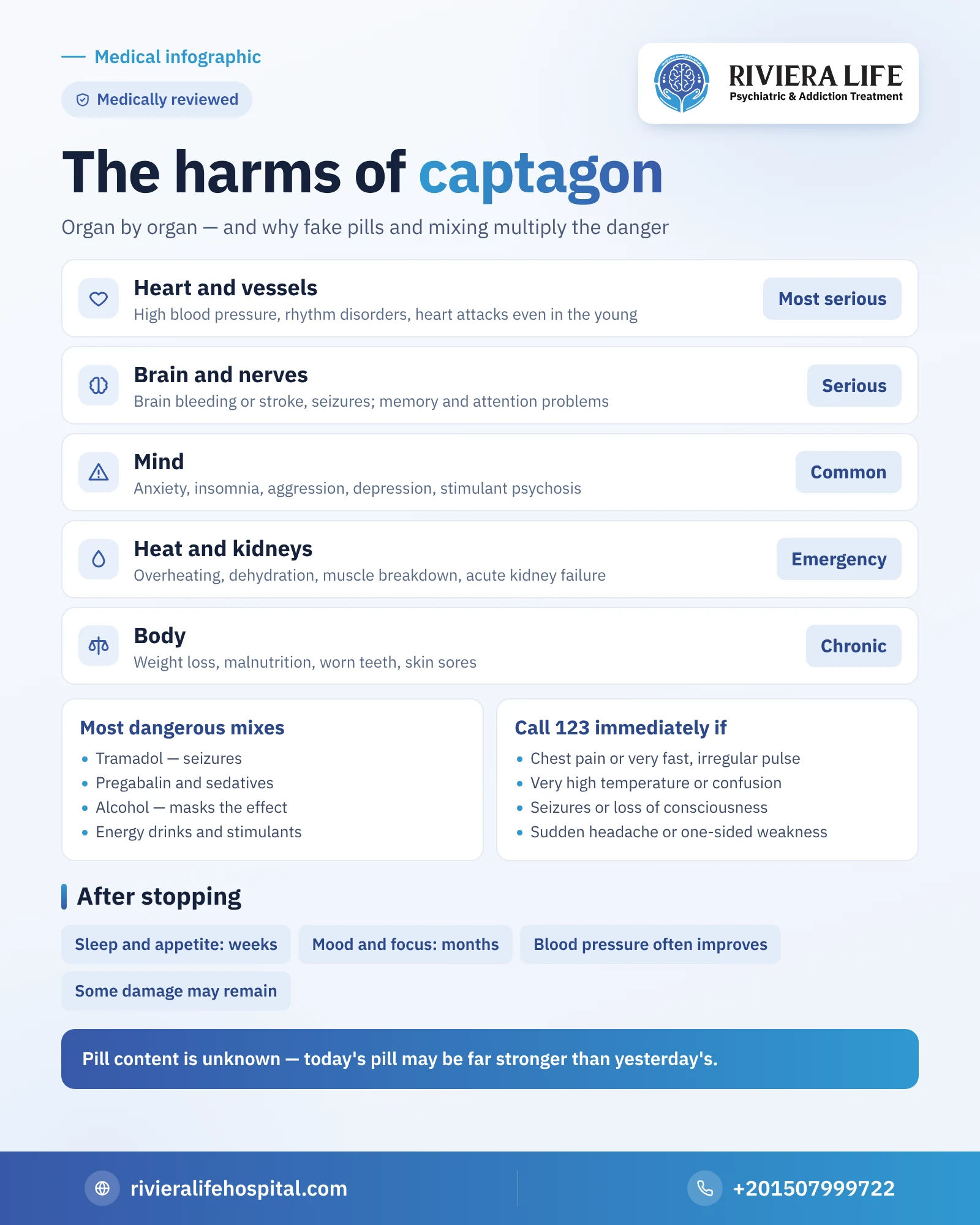
The most serious harms of captagon fall on the heart and brain: high blood pressure, a fast and irregular pulse, and in less common cases heart attacks and strokes, even in young people. Added to these are overheating and dehydration, and psychological harms that start with anxiety and insomnia and may reach suspicion and hallucinations, then weight loss, worn teeth, and declining memory and concentration. What doubles the danger is that the pills in circulation are counterfeit with variable contents, and are often mixed with tramadol, pregabalin or alcohol. In this article we go through the harms organ by organ, and what improves after stopping.
The effect of captagon on the body in the first hours
Even a single pill puts the body on alert. Blood pressure and heart rate rise, blood vessels narrow, body temperature rises, the mouth dries, and the jaw muscles clench. With higher doses, or pills stronger than usual, there may be uncomfortable palpitations, headache, nausea, severe tension, and sometimes chest pain. In a healthy young man these hours may pass without a visible problem, but in someone with a congenital heart defect or high blood pressure they don’t know about, this may be the time that ends in the emergency department.
The harms of captagon on the heart and blood vessels
The heart bears more of the burden of stimulants than any other organ. With repetition, the following may appear:
- A persistent rise in blood pressure, even on days without use.
- Heart rhythm disorders, some of them serious and sudden.
- Spasm of the coronary arteries and heart attacks, which have been recorded in people in their twenties and thirties.
- Weakness and enlargement of the heart muscle with long-term use.
- An increased risk of weak vessels rupturing or becoming blocked.
These harms aren’t guaranteed to happen to every user, but no one knows in advance who will be affected, and that is exactly what makes them frightening.
Does Captagon raise blood pressure?
Yes. The stimulant in the pill activates the nervous system that raises blood pressure and speeds the heart within minutes to hours of taking it, and pressure rises further with large doses, repeated pills in the same night, or mixing with other stimulants. In someone who already has high blood pressure or a congenital defect of the heart or vessels, this sudden rise can be the start of a clot or a bleed. With long-term use, blood pressure may stay high even on days without use.
The harms of captagon on the brain and nerves
A sudden rise in blood pressure may cause bleeding in the brain or a stroke, one of the most serious complications of stimulants, though uncommon. Seizures may also occur with high doses or when mixed with tramadol. In the long term, research on amphetamines suggests that heavy repeated use may be linked to changes in the dopamine systems and problems with memory, attention and impulse control, part of which improves after stopping for long enough.
Psychological harms: from anxiety to psychosis
This side often surprises families more than any other. Captagon may cause:
- Anxiety, tension and panic attacks, especially with repeated doses.
- Chronic insomnia that disrupts the whole of life.
- Irritability, aggression and quick temper.
- Depression during breaks in use, which may reach thoughts of self-harm.
- Stimulant-induced psychosis: suspicion, paranoia, persecutory ideas and auditory or visual hallucinations, usually appearing with high doses and lack of sleep.
The psychosis usually clears within days to weeks after stopping, but it may last longer or return in some patients, especially if they go back to using. That is why it needs a psychiatric assessment and follow-up, not just waiting.
The harms of Captagon on the eyes and vision
While the pill is acting the pupils widen, so sensitivity to light increases and near vision may blur temporarily. With staying up and blinking less come dry, red eyes and a gritty feeling, and the eyelids may twitch. These symptoms usually go away once the effect ends and regular sleep returns.
The more serious harms are rare but real: a sudden widening of the pupil can trigger an acute attack of glaucoma in people who have a narrow eye angle without knowing it, showing as severe eye pain, headache, redness and sudden blurred vision with nausea, an emergency that needs an eye doctor at once. And a sharp rise in blood pressure with spasm of the vessels can, in a few cases, affect the vessels of the retina, causing a sudden loss of part of the vision.
Heat, dehydration and the kidneys
Stimulants raise body temperature, and with them the ability to sense thirst and tiredness decreases. With long exertion, late nights and hot weather, the temperature may rise to a dangerous level, and muscle breakdown may occur, releasing substances that strain the kidneys and may cause acute kidney failure. Those who work in a physical job or stay up late in crowded, hot places are more exposed to this risk.
Harms to weight, teeth and skin
Constant suppression of appetite leads to weight loss, malnutrition and vitamin deficiencies, and the exhaustion and weak immunity that follow. A dry mouth and teeth grinding lead to decay, worn teeth and jaw pain. Spots and sores may appear on the skin from repeated scratching or picking, a behavior that increases with high doses.
Counterfeit pills: a danger you can’t see
Because the pills circulating under the name captagon are made in illegal labs, there is no way to know the concentration of amphetamine in them or what has been added. Today’s pill may be much stronger than yesterday’s, so the user is exposed to a higher dose than they are used to without knowing it. Our page on captagon explains the difference between the original medicine and these pills in detail.
The most dangerous things captagon is mixed with
- Tramadol: raises the risk of seizures, and masks part of the stimulant’s effects, pushing toward more.
- Pregabalin and sedatives: used to “come down” from the effect, so the body is pushed in two opposite directions, with the added risk of dependence on a second substance.
- Alcohol: masks the feeling of how strong the pill’s effect is, so the person uses more, and it increases dehydration and the burden on the heart.
- Other stimulants and energy drinks: double the burden on the heart and body temperature.
Our page on the harms of ice compares these harms with what a stronger stimulant from the same family does.
Captagon and driving
Some drivers think the pill makes them more alert on the road, but overconfidence and impulsivity raise the risk, and as the effect wears off after hours of staying awake, sudden sleepiness and severe distraction may follow. This turns the danger from one person into everyone on the road. The same applies to those who work with heavy machinery or at heights, where a single moment of distraction is enough to cause a serious injury. Feeling alert during the effect doesn’t mean judgment of distance and speed is sound.
The harms of captagon on pregnancy and the fetus
Amphetamine-type stimulants during pregnancy are linked to an increased risk of premature birth, low birth weight and placental complications, as well as high blood pressure in the mother. A pregnant woman who uses needs joint follow-up between the obstetrician and the psychiatrist, and shouldn’t stop or continue without supervision. The effect of captagon on desire and fertility is covered in our article on captagon and sex.
The harms to study, work and relationships
The paradox is that someone who started the pill to improve their performance usually ends up performing worse: unstable grades, absence on comedown days, and mistakes at work from exhaustion. Money is drained, relationships with family grow tense from lying and irritability, and legal problems may come from possession. In teenagers in particular the price is doubled, because these are the years in which study habits, friendships and a person’s image of themselves take shape, and use at this stage disrupts all of that at a time when it is hard to make up for.
Do captagon’s harms go away after stopping?
Many of them improve. Sleep, appetite and weight return within weeks, mood and concentration improve gradually over months, and blood pressure falls in many people. But some harms, such as damaged teeth or the effects of a previous heart attack or stroke, may remain. So the earlier the stop, the more is recovered, and the longer the use, the slower and harder recovery becomes; the way there is explained on our page on captagon addiction treatment.
Captagon overdose: how does it happen, and what should you do?
There is no “safe” amount you can rely on, as the content of the pills in circulation is unknown, and may contain more than one active substance at varying concentrations. So the same pill may be tolerable for one person and fatal for another, and the risk rises greatly when combined with alcohol, tramadol or other substances, and when using after days of staying awake and dehydration.
A stimulant overdose usually shows with signs like these:
- Pain or pressure in the chest and strong palpitations.
- A very high temperature with heavy sweating, or sweating that stops.
- Seizures or fainting.
- Severe agitation, hallucinations or unexplained violent behavior.
- A sudden severe headache, weakness in a limb or disturbed speech.
The first step is always to call an ambulance on 123, then move the person to a calm, safe place and remove anything that could hurt them, cool them with ventilation and light clothing, don’t leave them alone, and tell the paramedics what they took, even if admitting it is embarrassing. Don’t force them to vomit or give them anything by mouth if they are confused or having seizures.
Rescue steps by substance are explained in drug overdose, and on the danger of mixing read the dangers of mixing drugs.
Signs of poisoning that need an ambulance
Call an ambulance on 123 immediately if you see
Especially if the person has mixed captagon with other substances or used in hot weather.
- Pain or pressure in the chest, or a very fast, irregular pulse
- A very high temperature or confusion, or hot skin with no sweating
- Seizures or loss of consciousness
- A sudden severe headache, weakness on one side of the body, or slurred speech
- Hallucinations, severe agitation or violent behavior
More from our captagon guide
- Captagon: the complete guide
- The symptoms of captagon addiction
- Captagon withdrawal symptoms
- The harms of amphetamines
- Heroin vs captagon: wakefulness, drowsiness, danger and treatment
Questions many people ask
It may cause spasm of the arteries and a sharp rise in blood pressure, which raises the risk of heart attacks and strokes, even in young people, in cases that are uncommon but serious.
It may cause temporary psychosis including suspicion and hallucinations, especially with high doses and lack of sleep. It usually clears after stopping, but needs a psychiatric assessment and may return with renewed use.
It may pass without a visible problem for many people, but its contents are unknown, and it may be dangerous for someone with a heart problem or high blood pressure they don't know about.
Combining them raises the risk of seizures, and masks some of the stimulant's effects, pushing toward a larger amount, as well as the risk of dependence on both substances.
Blood pressure and pulse improve in many people after stopping, but some damage, such as the effects of a previous heart attack, may remain. That is why a heart check is advised as part of the treatment assessment.