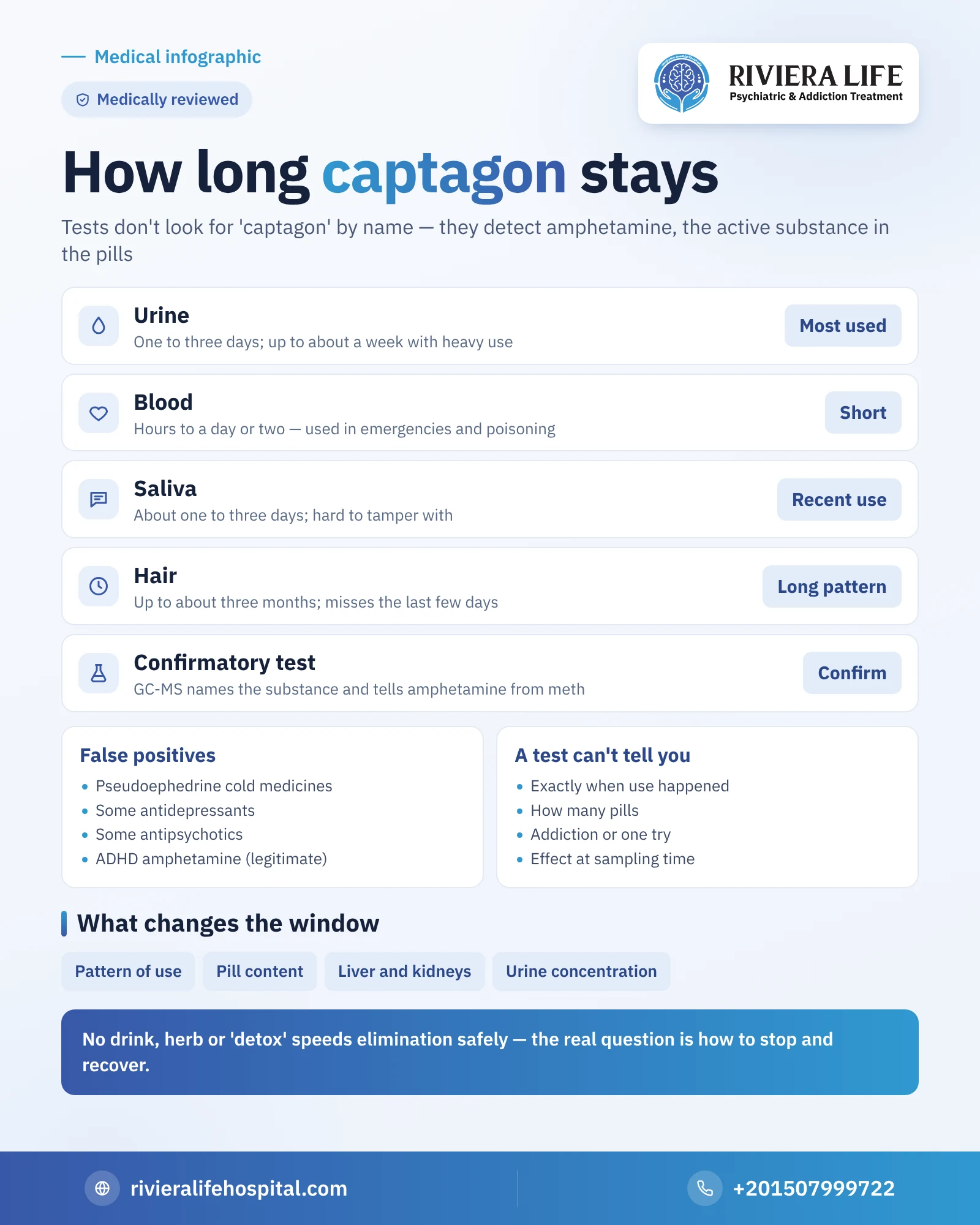
How long captagon stays in the body depends on the type of sample: it usually shows in a urine test for one to three days after the last pill, and the period may extend to about a week in someone who uses large amounts over a long time. In blood its window is short, from hours to about a day or two; in saliva about one to three days; while hair keeps its trace for about three months.
The important thing is that the test doesn’t look for “captagon” by name, but for amphetamine, which is found in the pills in circulation or produced from the original substance. In this article we explain what each test reveals, why the period varies, and when a positive or negative result may be inaccurate.
What does a captagon test look for?
The original substance in the old medicine Captagon, fenethylline, breaks down quickly in the body into amphetamine and theophylline. The pills in circulation today usually contain amphetamine directly along with caffeine. In both cases, what the test detects is amphetamine. That is why strips and reports usually say “amphetamine” or the abbreviation AMP, and there is no routine test named captagon. Caffeine and the other added substances aren’t looked for by usual tests.
How long captagon stays in the body in each type of test
These are approximate, commonly accepted periods for amphetamine, and may vary from person to person:
| Sample type | Approximate period after last use | When it is usually used |
|---|---|---|
| Urine | One to three days, and up to about a week with heavy use | Workplace tests, follow-up and general screening |
| Blood | Hours to a day or two | Emergencies and assessing poisoning |
| Saliva | About one to three days | Rapid screening for recent use |
| Hair | Up to about three months | Knowing the pattern of use over a longer period |
Urine test
The most used because it is easy and inexpensive. The body excretes a large part of amphetamine in urine unchanged, so it is easily detected in the first days. Someone who uses daily for weeks accumulates more in their body, so the window lengthens.
Blood test
It reflects roughly what is going on in the body right now, which is why it helps in emergencies when someone arrives with a fast pulse, agitation or seizures and the doctor needs to know what they took. But it isn’t suitable for detecting use that happened days ago.
Saliva test
The sample is taken directly in front of the person responsible for the test, so it is hard to tamper with, and it reveals use in the previous day or few days.
Hair test
Hair grows carrying the trace of what is used, so the part close to the scalp reveals captagon use over roughly the previous three months. The last few days don’t show in it, because a hair takes time to grow above the skin.
Why does the period vary from person to person?
- Pattern of use: one pill on an occasion differs from daily pills for months.
- Pill content: because concentration varies a lot, a person may take more or less amphetamine than they think.
- Liver and kidney health: the weaker their function, the longer captagon stays in the body.
- Age, weight and general health.
- Urine concentration when the sample is taken.
- The accuracy of the test used: each strip or device has a minimum detection threshold, so the lab may detect a result that a home strip misses.
The effect wearing off doesn’t mean the substance has left
The pill’s stimulant effect usually lasts for hours, then comes the comedown. But the end of the felt effect doesn’t mean the body has got rid of the amphetamine; the substance remains detectable in urine for days after the person feels “back to normal”. The reverse is also true: the substance leaving the urine doesn’t mean the brain has recovered, as craving and depression may continue for weeks, as the page on captagon withdrawal symptoms explains.
The home strip: amphetamine or methamphetamine?
Multi-slot test strips usually contain a slot for amphetamine and a separate one for methamphetamine. Captagon shows mainly in the amphetamine slot, while ice shows in the methamphetamine slot and may show in both. So it is important to know which slot you are reading. You can compare this with detection times for ice in our article on how long methamphetamine stays in the body, and with amphetamine in general in our article on how long amphetamines stay in the body.
Screening and confirmatory tests
Rapid strips and the first lab screen rely on an immune reaction that recognizes a group of substances with a similar structure, not one specific substance. That is why a positive result is considered “preliminary”. The right next step is a confirmatory test with gas chromatography coupled to mass spectrometry, which identifies the substance by name, measures its concentration, and distinguishes amphetamine from methamphetamine and from substances that resemble them.
When does a positive result appear without use?
An amphetamine strip can react with other substances, including:
- Cold and decongestant medicines containing pseudoephedrine or ephedrine.
- Some antidepressants and some antipsychotics.
- Some blood pressure medicines and other less common medicines.
- Medicines for ADHD containing amphetamine, which give a true result but are legitimate with a prescription.
So tell the lab about all the medicines you take before the test, and don’t rely on a preliminary result without confirmation.
Does the test reveal everything in counterfeit pills?
Not always. Pills circulating under the name captagon vary in composition: some contain a small amount of amphetamine with a lot of caffeine, and some may contain other substances that don’t show in the amphetamine slot at all. This explains why someone may show clear signs of use while a home strip comes back negative, or why an unexpected substance shows up in the lab. In these cases, extended tests in specialized labs that look for a wider range of substances help, and the doctor decides when they are needed based on the full picture of the case, not the result of a single strip.
What can’t a test tell you?
The test says the substance is present in the sample above a certain threshold, but it doesn’t determine precisely when the use happened, how many pills, whether the person is addicted or tried it once, or whether they were under the influence at the moment the sample was taken. A negative result doesn’t rule out a problem if there are clear signs, as the last use may have been before the window ended. That is why diagnosis remains the doctor’s responsibility, using the test alongside the signs explained in our article on captagon addiction symptoms.
How are tests used during treatment?
In stimulant addiction treatment programs, regular urine tests are done, but they aren’t a tool of punishment. They are part of a therapeutic approach that rewards the patient for negative results, help the team detect any relapse early before it worsens, and rebuild trust between the patient and family with tangible evidence. You will find their place within the full plan in our article on captagon addiction treatment.
Before you buy a strip for your son
A home strip may be useful, but it is harmful if used as a trap. Think before using it: what will you do if the result is positive? It is better for the next step to be ready: a confirmatory test, a calm conversation and an appointment for a specialist consultation. And if it comes back negative while the late nights, weight loss and irritability continue, don’t consider the matter closed. The goal isn’t to prove an accusation but to reach treatment, and for your son to feel that the family is on his side, not against him.
Cleansing the body of captagon: is there a quick way?
The frank answer: no. The body gets rid of amphetamine through the liver and kidneys at its own pace, and no drink, herb, supplement or hot bath shortens this process safely or with scientific evidence. What is sold under the name “cleansing” or “detox” is a commercial promise, and some of it harms the kidneys and heart, especially for someone exhausted by late nights and little food.
There is a common confusion between two different things:
- The substance leaving the blood and urine: a biological process that takes its time, governed by the amount and duration of use and kidney and liver function.
- The recovery of the brain, sleep and mood: a much slower path that needs weeks and months and medical and psychological support.
So the more useful question isn’t “how do I cleanse my body quickly?” but “how do I stop safely and recover?”. Stopping under medical supervision that monitors sleep, mood and blood pressure, and intervenes if severe depression or thoughts of self-harm appear, is what we explained in captagon withdrawal symptoms and in the plan for captagon addiction treatment.
After stopping, many things improve gradually, and you can learn what to expect in the body’s recovery after quitting drugs.
More from our captagon guide
- Captagon: the complete guide
- Captagon addiction symptoms
- Captagon withdrawal symptoms
- Captagon addiction treatment
- Types of captagon pills: original, counterfeit and why the types are a gamble
- Captagon vs tramadol: effect, harms and the risks of combining
Questions many people ask
Usually one to three days after the last pill, and the period may extend to about a week with heavy repeated use. The period varies with the amount, the content of the pills and kidney health.
No. The test detects amphetamine, the active substance in the pills in circulation and the product of the original substance. That is why it shows in the amphetamine slot on the strip.
It shows mainly in the amphetamine slot. The methamphetamine slot is for substances such as ice, and a confirmatory lab test is what distinguishes between them precisely.
Yes. Decongestants containing pseudoephedrine and some psychiatric medicines may give a positive preliminary result, which is why you should tell the lab about your medicines and request a confirmatory test.
A hair test reflects roughly the last three months, but it doesn't reveal use in the last few days.