Depression and diabetes come together more than people expect, and the relationship between them runs in both directions: living with diabetes raises the likelihood of depression, and depression makes sugar harder to control and increases the risk of type 2 diabetes. Many studies show that the likelihood of depression in diabetics is close to double that in others, yet it goes undiagnosed in many cases because fatigue and irritability are attributed to high sugar. Here we explain how the two illnesses overlap, how to tell depression from “diabetes distress”, and what helps.
Why do diabetes and depression come together?
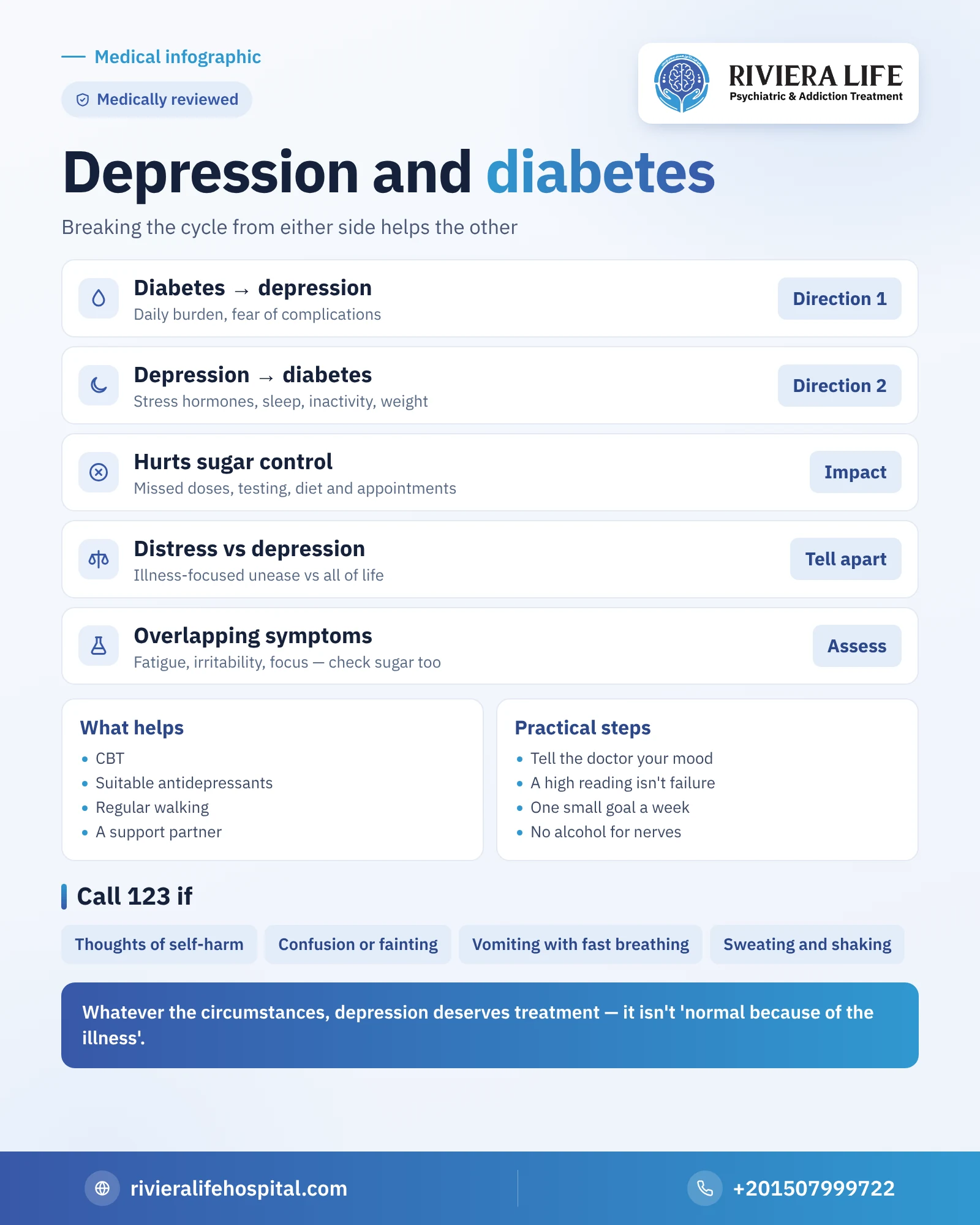
There is no single cause, but a network of factors that feed each other. Diabetes is a daily illness with no holiday from it: testing, counting, medicines, appointments and fear of complications, and this burden alone drains the mind. On the other hand, depression is linked to disturbed stress hormones, sleep and inflammation, all of which affect the body’s response to insulin. Added to that, a depressed person becomes less active and eats emotionally so his weight increases, all factors that raise the risk of type 2 diabetes.
How does depression harm sugar control?
- It weakens the drive to test sugar and take medicine on time, so missed doses accumulate.
- It makes it hard to stick to diet, walking and medical appointments.
- It increases emotional eating, meal times are affected and sleep is disturbed.
- Despair rises from the idea that “there’s no point”, so the patient stops caring for himself.
- Visits to the doctor are delayed so the problem is discovered at the stage of complications.
Here is a vicious circle: uncontrolled sugar increases exhaustion and mood swings, which in turn deepens depression. Breaking the circle from either side benefits the other.
Depression or diabetes distress?
Doctors use the term “diabetes distress” to describe exhaustion from caring for the illness: unease, frustration and boredom with daily calculations, and feelings of guilt at every high reading. This distress isn’t necessarily depression, but it may turn into it if it lasts. The approximate differences:
| Aspect | Diabetes distress | Depression |
|---|---|---|
| Subject of the unease | Linked to the illness and its management | Covers all of life |
| Pleasure | Remains in other activities | Recedes in almost everything |
| Self-worth | Usually preserved | Guilt and a feeling of worthlessness |
| Sleep and appetite | Affected according to sugar | Persistently disturbed |
| Response to improved sugar | The unease eases | Remains despite improved readings |
The table only helps understanding, and the diagnosis is made by the doctor after assessment. And the two may come together.
Signs that deserve attention in a diabetic
Ask for a mood assessment if any of the following lasts two weeks or more: sadness or emptiness most of the day, loss of interest in things you used to love, neglecting testing or medicine despite knowing their importance, severe sleep disturbance, a feeling of guilt or pointlessness, or thinking that the illness “won’t get better whatever you do”. You will find the full list of symptoms in our article on depression symptoms.
Symptoms shared by sugar and mood
Exhaustion, irritability, difficulty concentrating, weight change, thirst and drowsiness may appear with disturbed sugar and with depression. That is why a good doctor doesn’t assume that mood is the cause or the reverse. The usual approach is to review sugar readings, HbA1c, the thyroid and perhaps vitamins, then assess mood with structured questions. And if your mood swings with low sugar, that is a matter of medication control, discussed with the diabetes doctor.
Treating depression and diabetes together: what helps?
Psychotherapy
Cognitive behavioral therapy has proven useful in depression, and also helps in dealing with pessimistic thoughts about the illness. Some programs combine psychological support with diabetes management together, which is useful in diabetes distress.
Medicines
The doctor may prescribe suitable antidepressants. It is important that the depression doctor knows you have diabetes, because some psychiatric medicines tend to increase weight or affect sugar more than others, such as those we covered in our articles on mirtazapine and olanzapine. No medicine is started, stopped or has its dose adjusted except under the doctor’s supervision, and the same goes for diabetes medicines. For more on the classes: antidepressants.
Lifestyle
Regular walking, better sleep and a balanced diet benefit mood and sugar together. Don’t set yourself perfect goals: half an hour of walking three times a week is better than a perfect plan that stops after two days. Having a support partner who follows up with you also helps, whether from the family or from diabetes patient groups.
Teenagers and young people with diabetes
Type 1 diabetes usually begins in childhood and adolescence, a stage sensitive to appearance and belonging to friends. Some teenagers hide the illness or ignore testing so as not to feel different, and some resent family monitoring and withdraw. If a teenager shows persistent sadness or irritability with neglect of treatment, read teen depression. And there is a special danger sign: the patient deliberately reducing insulin for fear of weight gain. This is dangerous behavior that requires an urgent assessment by the medical and psychological team, and isn’t left to him.
How often do we check mood?
Medical guidelines in many countries recommend that a diabetic is asked about his mood periodically, especially at diagnosis, when complications appear, and when sugar is hard to control despite commitment. In reality this rarely happens in our clinics, so the patient should take the initiative and raise the topic. One sentence is enough: “I feel my mood has changed over the last two months”. After that the doctor decides whether a specialist assessment is needed.
Practical steps for a diabetic
- Tell the diabetes doctor about your mood as you tell him about your readings, as it is part of following the illness.
- Don’t belittle your achievement: a high reading isn’t a personal failure but information used to adjust the plan.
- Choose one small goal this week instead of changing your whole life.
- Tell someone close the signs of a sharp drop in sugar so he knows how to act.
- Avoid alcohol and sleeping pills “for the nerves”, as they disturb sugar and mood together.
Call an ambulance on 123 immediately if you see
Some situations combine a psychological risk and a sugar risk, and don't wait for the clinic appointment. You can also call the mental health hotline on 16328.
- Thoughts of death or self-harm or of deliberately stopping treatment
- Confusion, fainting, seizures or difficulty waking
- Repeated vomiting with severe thirst and fast breathing or a strange breath smell
- Heavy sweating with shaking and confusion that doesn’t improve quickly
Complications and depression: fear feeding fear
When complications appear such as neuropathy or problems with the kidneys, eyes or feet, the likelihood of depression rises, and with it the risk of neglecting treatment, which speeds up the complications. That is why psychological assessment at this stage is part of medical treatment, not a luxury. Chronic pain from neuropathy also overlaps with mood and sleep, and the doctor may find that treating pain and sleep relieves part of the sadness. This doesn’t mean what you feel is “normal because of the illness”; whatever the circumstances, depression deserves treatment.
What does the family do?
What most exhausts a diabetic is monitoring: “How much did you eat? What’s the reading?”. Try replacing it with the question: “How can I help you today?”. Join him in healthy cooking and walking instead of imposing orders on him. And if you notice long withdrawal and neglect of treatment, offer to accompany him to a psychiatrist, and present it as part of diabetes care, not an accusation.
How can Riviera Life help you?
The psychiatry consultants at Riviera Life in Sheikh Zayed assess mood in complete confidentiality while taking your physical condition into account, and coordinate the plan with your treating doctor when needed. You can request a free first consultation on +201507999722.
More from our depression guide
Questions many people ask
It doesn't cause it alone, but the daily burden of the illness and its complications clearly raise its likelihood. And the relationship is mutual: depression itself may raise the risk of developing type 2 diabetes.
Distress is unease linked to managing the illness and usually eases as the plan improves, while depression covers all of life, with loss of pleasure, changes in sleep and appetite and a feeling of guilt.
Yes, because it weakens the drive to stick to medicine, diet and testing, sleep is disturbed with it, and stress hormones are linked to insulin resistance.
The doctor prescribes what suits your condition, as some medicines may affect weight or sugar more than others. That is why the psychiatrist must know you have diabetes.
If sadness or loss of interest lasts two weeks or more, if you start neglecting testing and medicine, or if thoughts of despair or self-harm appear.