Morphine addiction doesn’t usually start on the street, but often starts with a hospital bed or a prescription after surgery, a fracture or chronic pain that found no solution. The substance itself is strong in activating the brain’s reward system, but the causes of morphine addiction don’t stop there; what determines who will become addicted and who will stop safely is a mixture of factors: the length of use and its dose, the presence of continuing pain, untreated depression or anxiety, a genetic predisposition, and easy access to the medicine. This article explains how the painkiller turns into dependence then into addiction, who is most at risk of that, and what protects the patient and their family.
Why does morphine cause dependence?
Morphine strongly activates opioid receptors, and among what it does is raise dopamine release in the reward circuit, the same circuit that makes us feel satisfied after food or an achievement. The brain quickly learns that this substance erases pain and distress together, so it links it to comfort. With repetition the number of responsive receptors decreases or their sensitivity weakens, so the person needs a larger amount for the same effect, and feels bad when the medicine is absent. This adaptation happens in everyone who takes morphine regularly, but it doesn’t turn into addiction in everyone.
How does the road start from a prescription?
The recurring story resembles this: a man in his forties had spinal surgery, left with a strong painkiller for two weeks, then the two weeks stretched to two months because the pain didn’t completely calm. He noticed that the medicine also relieved him of work tension and helped him sleep, so he started taking it before its time, then started looking for another doctor when the prescription ran out. At no moment did he decide to become an addict, but slid step after step. The greatest danger appears when the medicine starts performing a function other than the one it was prescribed for.
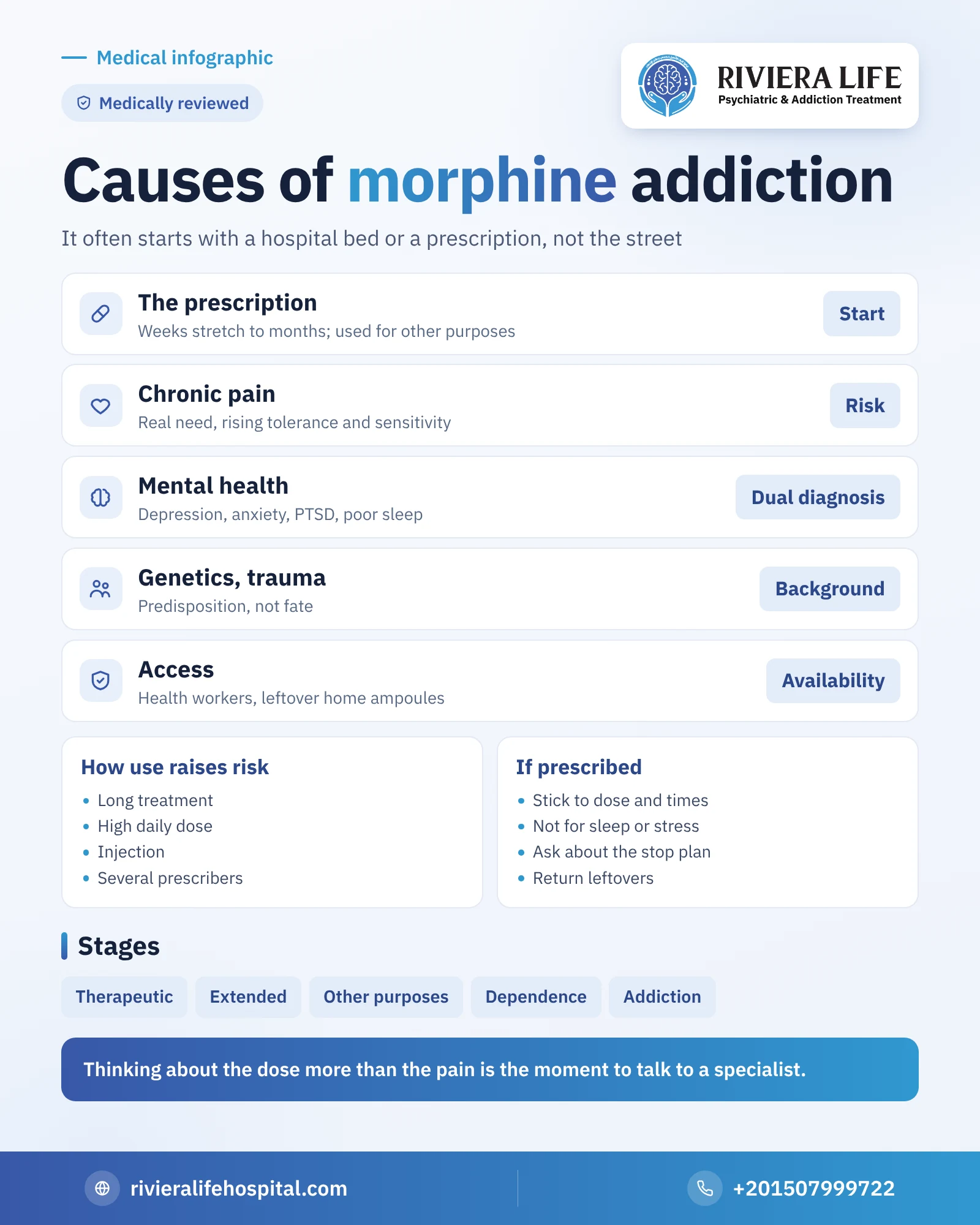
From painkiller to addiction: successive stages
- Therapeutic use: a specified dose for clear pain and for a limited period.
- Extended use: treatment lengthens because of continuing pain or slow recovery.
- Use for other purposes: for sleep, anxiety or escape from psychological pressure.
- Physical dependence: troublesome symptoms when late, and a need for a higher dose.
- Addiction: loss of control, seeking the medicine in any way, and continuing despite harm.
Chronic pain: a cause and a risk factor at the same time
The chronic pain patient stands in a difficult area. They need real pain relief, but long-term use of opioids raises the likelihood of dependence, and may increase their sensitivity to pain over time, so they think their illness is worsening and ask for a larger dose. Long pain itself also exhausts mood and sleep, so the medicine becomes a treatment for pain and sadness together. That is why modern guidelines recommend looking for non-opioid alternatives for chronic pain whenever possible, and reviewing doses regularly. For those who want the wider picture, the article on the factors that lead to opioid addiction brings these causes together for all painkillers of this family.
Mental disorders and dual diagnosis
Depression, anxiety, post-traumatic stress disorder and sleep disorders clearly raise the likelihood of addiction. Morphine eases these feelings temporarily, so it unintentionally turns into an unsuitable “psychiatric medicine”. The problem is that the improvement is temporary, then the distress returns more severely when the dose is absent. Treating these disorders in parallel with the addiction isn’t a luxury, but an essential condition for reducing relapse.
Genetic and biological factors
Family and twin studies indicate that genetics explains an important part of susceptibility to addiction. Having a father or brother who suffered from addiction to any substance raises the risk, not because addiction is “transmitted” as it is, but because the way the brain responds to substances and stress is affected by genes. Individual differences in morphine metabolism and receptor sensitivity play a role in how each person feels the medicine. But genetics is a predisposition, not a final verdict.
Trauma and life pressures
Exposure to abuse or neglect in childhood, losing a close person, or severe financial and family pressures are all linked to an increased risk of addiction. Someone carrying an old psychological wound may find in morphine the first thing that silences this wound, so they cling to it more than others. Something similar happens with accumulated daily pressures: debts, unemployment, chronic marital disputes, or caring for a patient for years. In these circumstances the person isn’t looking for euphoria so much as for a few hours of calm, and this precisely is what makes stopping difficult.
Is addiction a choice or an illness?
The first dose, especially outside the prescription, involves a degree of choice. But with repetition areas in the brain responsible for decision-making, controlling impulsivity and evaluating consequences change, so the degree of this choice weakens gradually. That is why medical bodies classify addiction as a disorder that needs treatment, not a moral defect that needs preaching. This understanding doesn’t exempt the person from their responsibility for recovery, but it changes the family’s way of dealing with them from blame to treatment.
Easy access to morphine
The closer the medicine is, the greater the risk. This appears in two groups: workers in the health sector, especially in anesthesia, emergency and intensive care, because they deal with the substance daily, and added to this are work pressure and night shifts. The second group is the families of cancer and palliative care patients, where amounts of morphine sometimes remain at home after the patient’s death or the end of their treatment, without anyone disposing of them safely.
A family member, exhausted from months of sleepless nights and caregiving, may find that one ampoule gives them sleep they haven’t known for a long time, then the experience repeats. That is why we always advise handing over whatever morphine remains to the hospital or pharmacy as soon as it is no longer needed, and not keeping it “for emergencies”.
A history with other substances
In Egypt many opioid patients go through a tramadol stage before others, then move to stronger substances when its effect decreases. Also, someone who uses pregabalin, sedatives, hash or alcohol is more susceptible to misusing morphine, and more susceptible to its dangerous complications when combined. You will find the shared factors of this family on the opioids page, and for a comparison with tramadol specifically see the article on the causes of tramadol addiction.
Factors related to the way of use itself
- Length of treatment: the longer regular use extends, the greater the likelihood of dependence.
- A high daily dose: higher doses are linked to a greater risk of addiction and overdose.
- Injection: morphine reaches the brain faster, so the link between the substance and comfort strengthens.
- Multiple prescriptions from different doctors without coordination between them.
- Starting at a young age, because the brain in adolescence and early youth is more sensitive to these substances.
Factors that protect against addiction
On the other hand, there is what clearly reduces the risk: a warm family relationship in which the person can talk about their pain and distress, early treatment of depression and anxiety, a doctor who follows the patient regularly and reviews the need for the medicine, work or study that gives life meaning, friendships away from use, and correct knowledge of the difference between therapeutic use and misuse.
If morphine is prescribed for you: how do you reduce the risk?
Stick to the dose and times as the doctor wrote them, and don’t use it for sleep or tension. Tell the doctor about any previous history you or your family have with addiction, and about all the medicines you take. Ask them from the beginning about the expected duration of treatment and the stopping plan. Keep the medicine in a safe place away from others, and hand over what remains to the pharmacy or hospital when treatment ends. And if you notice that you think about the dose more than you think about the pain, this is a suitable moment to talk with a specialist. You can learn the early signs in the article on morphine addiction symptoms, and the treatment options in the article on morphine addiction treatment.
More from the morphine guide
- Morphine: a complete guide
- Morphine addiction symptoms
- The harms of morphine
- Morphine addiction treatment
Questions many people ask
The likelihood is low in most patients if use is short and supervised, and rises with prolonged treatment, using it for something other than pain, and risk factors such as a previous history of addiction or untreated depression.
Because of easy access to the substance, along with work pressure, night shifts and exhaustion. This doesn't mean all workers are at risk, but it makes control over stock and psychological support for them important.
Genetics explains an important part of susceptibility to addiction in general, but it doesn't settle the outcome. Environment, early treatment and the way the medicine is used change the path to a great degree.
That may happen, as many who get used to tramadol look for a stronger substance when its effect decreases. Both work on opioid receptors, and moving between them raises the risk of overdose.
Don't keep it at home. Hand it over to the treating hospital or pharmacy to dispose of it safely, because leftover amounts are among the causes of misuse within families.