Morphine addiction symptoms are often mixed up with the symptoms of the illness for which the medicine was originally prescribed, and this is what makes discovering them late. The mother who sees her son asleep all day after an operation doesn’t think of addiction, and the wife who hears her husband complain of back pain every day believes he needs an extra injection.
The most prominent signs worth attention are: pinpoint pupils and frequent drowsiness, requesting the medicine before it’s due or in a larger amount, multiple doctors and prescriptions, and a change in mood when the medicine is delayed. This article arranges the physical, behavioral and psychological signs, and explains how to tell a patient who really needs their painkiller from a person who has lost control over it.
Why is the discovery of morphine addiction delayed?
In most types of addiction the mere presence of the substance is a warning. Morphine, however, may enter the home with a medical prescription, be dispensed by the hospital pharmacy, and be given by a nurse in front of everyone. That is why the family shouldn’t be preoccupied with the question: is he taking morphine? But with the more important question: how does he take it, why, and what happens when he stops? Addiction here is discovered from the pattern of behavior around the medicine more than from the medicine itself.
There is a second group whose signs disappear easily: those who obtain morphine from outside the medical framework, or health workers who have access to it. These often keep a disciplined appearance for a long time before the cracks show.
Physical signs while under the influence of morphine
These are signs that appear during the hours the person is under the influence of the substance, and you may notice them in an ordinary family gathering:
- Very small pupils even in dim light.
- Heavy drowsiness and short naps while sitting or talking, then waking suddenly.
- Slow speech and an unusually calm tone.
- Repeated itching of the face, nose and arms, because morphine releases histamine in the skin.
- Redness of the face or a feeling of warmth.
- Nausea or vomiting, especially at the start of use or after increasing the amount.
- Frequent complaints of constipation and heavy use of laxatives.
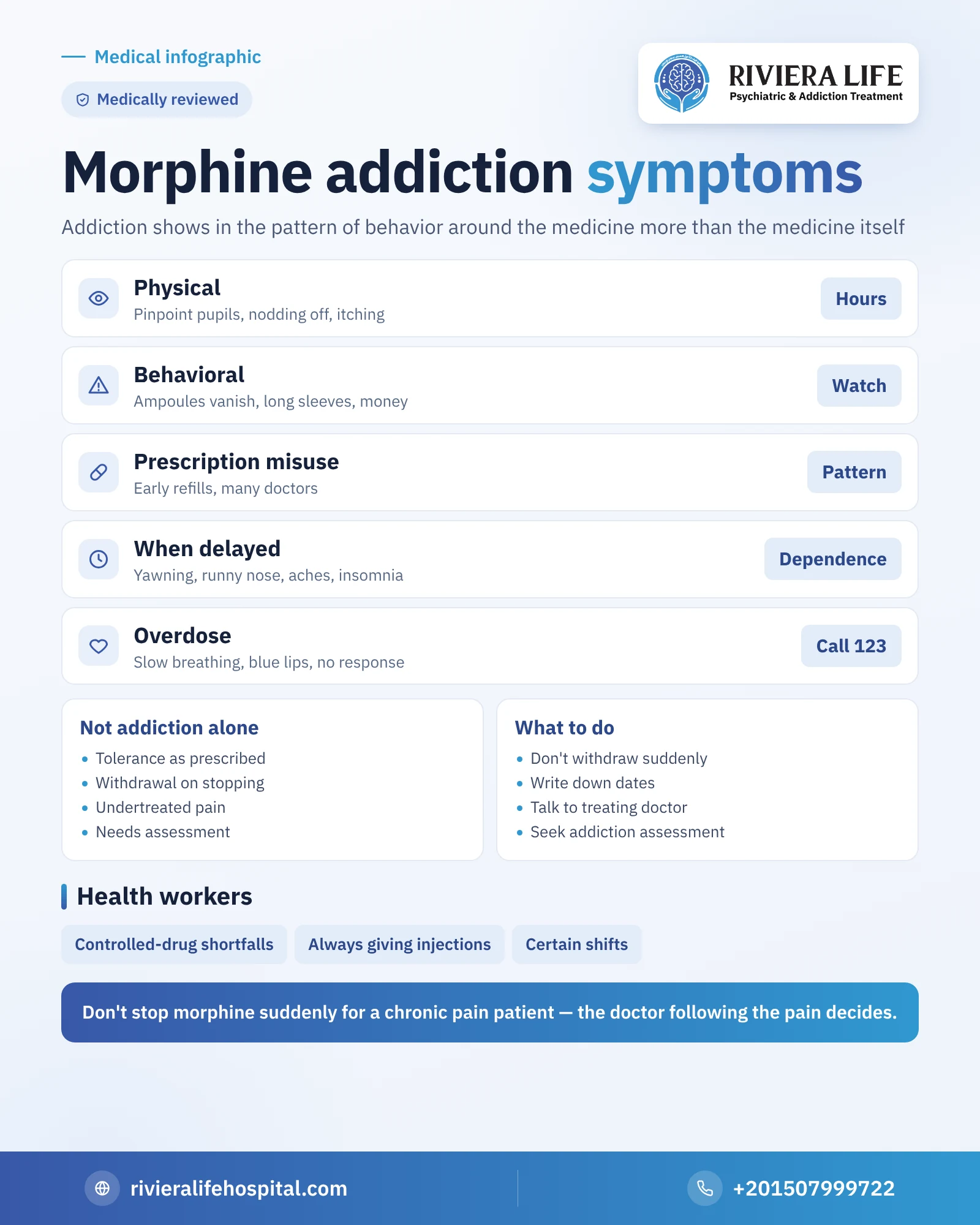
Behavioral signs
Behavior is more truthful than complaints. Among the changes that recur in someone misusing morphine:
- Ampoules or tablets disappearing from the home faster than the written schedule allows.
- Exaggerated protection of the place where the medicine is kept, or carrying it in the pocket all the time.
- Unjustified short absences, and going into the bathroom often and staying locked in for a long time.
- Wearing long-sleeved clothes in the heat, a sign worth attention if combined with others.
- Repeatedly asking for money for vague reasons, or selling personal belongings.
- A clear decline at work or in studies and household commitments.
Things you may find at home
Sometimes physical evidence comes before any confession. Pay attention if you find empty ampoules that don’t match the treatment schedule, syringes and rubber bands in the room of someone who doesn’t need injections, medicine boxes from multiple pharmacies, or prescriptions with the names of doctors you don’t know. Other signs include remains of white powder or broken tablets, and small folded bags. A single item from this list doesn’t mean there is addiction, but its recurrence with a change in behavior deserves a calm conversation and asking for a consultation.
Signs specific to a patient receiving morphine by prescription
The move from therapeutic use to misuse happens gradually, and leaves traces that the doctor and family notice together:
- Requesting renewal of the prescription before it’s due, with repeated excuses such as the medicine being lost or spilled.
- Visiting more than one doctor or more than one hospital to obtain additional prescriptions without telling any of them about the others.
- Taking the medicine for sleep or anxiety or after a family disagreement, not to relieve pain.
- Refusing any alternative painkiller even before trying it, and insisting on morphine specifically or on the injection form.
- Complaints of pain increasing as the supply nears its end, even though the original cause of the pain is improving.
- Anger or severe tension when the doctor suggests reducing the dose.
These signs don’t necessarily mean the patient is lying about their pain. Some patients suffer pain that hasn’t been treated well so they seek more, a condition doctors know and which needs assessment, not accusation.
Signs in the healthcare work environment
Doctors, nurses and pharmacists are closer to morphine than others, and signs of misuse appear in them differently: repeated shortfalls in the controlled-drug stock, constantly volunteering to give patients injections, asking to work particular shifts, or patients complaining that pain relief wasn’t enough on a particular person’s shift. These are cases that need confidential treatment, as recovery is possible and returning to work is possible in many of them.
Psychological and mood signs
After the dose the person seems unusually calm and relaxed, as if nothing worries them. Then the state changes as the hours pass: irritability, tightness of the chest and sharp replies. Over time general listlessness may appear, loss of interest in hobbies and friends, withdrawal from family gatherings, and flat denial or anger when the subject is raised. This picture may overlap with real depression, which is common among chronic pain patients and deserves separate treatment.
What happens when the medicine is delayed?
Among the clearest signs of dependence is that the person shows repeated yawning, a runny nose and watery eyes, sweating and chills, muscle aches, and insomnia within hours of the usual dose being delayed. The presence of these symptoms means the body has adapted to morphine, but on its own it doesn’t settle whether this is addiction. The timing and stages of these symptoms are explained in the article on morphine withdrawal symptoms.
Health signs that appear with continued use
With months of misuse visible problems accumulate: weight loss and pallor, chronic constipation, reduced sexual desire, menstrual disturbance in women, and bruises, needle marks or abscesses on the arms if the person injects themselves. The details of these effects on the body’s organs are in the article on the harms of morphine.
Physical dependence or addiction?
Doctors use specific criteria to diagnose opioid use disorder, revolving around four domains: loss of control over amount and duration, craving, continuing despite health and social harm, and neglecting duties and activities. The disorder is classified as mild, moderate or severe according to the number of criteria met.
The detail that matters to patients’ families specifically: tolerance and withdrawal symptoms aren’t counted among the criteria for addiction if morphine is taken as the doctor prescribed it. A patient who needs a higher dose after weeks and feels symptoms when it is stopped isn’t an addict for this reason alone. What points to addiction is behavior: lying, seeking more, and use for something other than pain. For comparison with the signs of other opioids, see the article on opioid addiction symptoms.
What do you do if you notice these signs?
Don’t withdraw the medicine suddenly, and don’t confront the person while under the influence. Write down what you noticed with its dates: amounts, times and changes in behavior. Then request a meeting with the treating doctor if there is one, as they can review the prescription and adjust the plan. And if there is no illness or prescription at all, the next step is a specialized addiction assessment. You can also learn how dependence starts and who is most vulnerable to it in the article on the causes of morphine addiction.
Treatment itself begins with a medical assessment and safe supervised withdrawal, then rehabilitation that prevents relapse, as the article on morphine addiction treatment explains. And the family shouldn’t try to stop morphine suddenly for a patient taking it for chronic pain, as reducing it needs the decision of the doctor who is also following the pain.
Danger signs that can’t wait
Call the ambulance on 123 immediately if any of these appear
These are signs of a possible overdose, and breathing may stop within minutes.
- No response to calling or shaking
- Very slow or irregular breaths, or an unusual snoring sound while asleep
- Blue lips or fingertips
- Very small pupils with cold, clammy skin
At Riviera Life the assessment begins with a confidential session with a psychiatrist specialized in addiction, who listens to the family and the patient, and determines whether the problem is pain that needs better management, dependence that needs gradual stopping, or addiction that needs a full program.
More from the morphine guide
- Morphine: a complete guide
- Morphine addiction treatment
- How long morphine stays in the body
- The causes of morphine addiction
Questions many people ask
Watch the behavior around the medicine: requesting the prescription before it's due, multiple doctors, using it for sleep or anxiety, and anger when reducing it is suggested. Discuss your observations with the treating doctor before any decision.
It may be, because morphine releases histamine in the skin, causing itching and redness. But it is a non-specific sign, and gains importance when combined with pinpoint pupils, drowsiness and a change in behavior.
Not necessarily. Withdrawal symptoms mean the body has adapted to the medicine, and this happens to many patients who stick to the prescription. Addiction is diagnosed by loss of control and continuing despite harm.
Yes, health workers may keep a disciplined appearance for a long time. Repeated shortfalls in the controlled-drug stock and a change in performance are among the most important signs, and confidential treatment is available.
Don't rush into confrontation. First check whether they were part of a prescribed treatment, record what you found, then talk with the person at a calm time and ask for a specialized medical assessment.