Morphine and sex is a topic patients and their companions ask about with embarrassment, because morphine in most cases is a hospital medicine: given to a cancer patient, after a major operation, or for severe pain that ordinary painkillers can’t manage. In this picture the patient and their partner wonder: why has desire disappeared? And is morphine the cause, or the illness and tiredness? Medical references say that opioids, including morphine, may lower sex hormones in men and women with continuous use, weakening desire, erections and the menstrual cycle. The article addresses this issue from the point of view of the patient and their companion, then distinguishes it from use outside medical supervision.
Morphine and sex: why does it affect hormones?
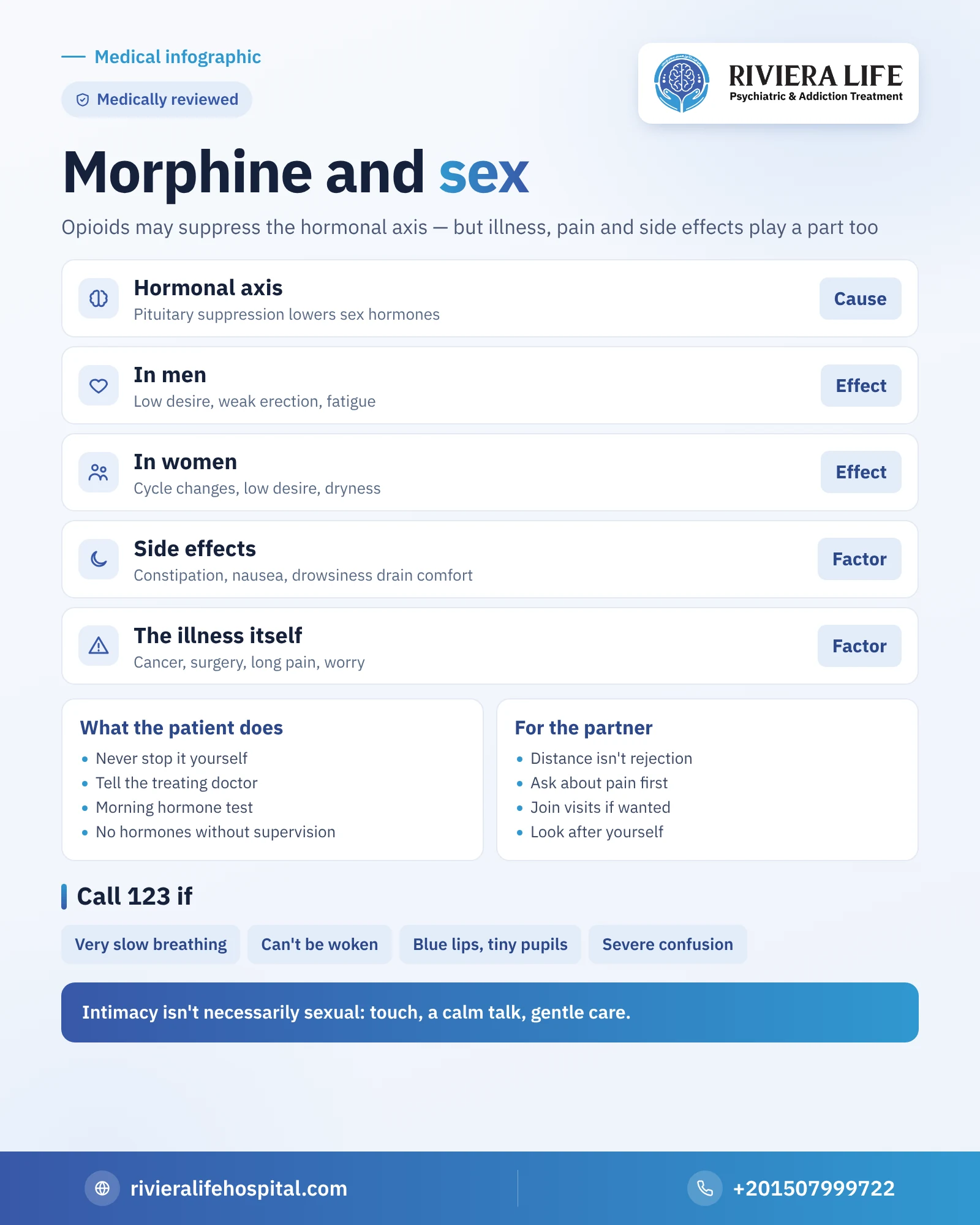
Morphine acts on opioid receptors in the brain, including areas that regulate the pituitary gland and the hormonal axis that controls the production of male and female hormones. When this axis stays suppressed for weeks and months, testosterone falls in men, and the menstrual cycle and female hormones may be disturbed in women. This condition is called opioid-induced sex hormone deficiency in the medical literature, and endocrinology references discuss it in detail. Not every patient goes through it to the same degree; the severity differs between individuals and with the duration of use.
The illness alone is enough to weaken desire
Before blaming the medicine, remember that the illnesses morphine treats are exhausting in themselves. A cancer patient suffers tiredness, loss of appetite and anxiety, and may be undergoing chemotherapy or radiotherapy that changes hormones, mood and body image. And someone who has lived with severe pain for weeks fears movement and avoids closeness. So the real picture is usually a mix of pain, illness, medicine and psychology. The details of what morphine does to the brain, heart and breathing are in the article on the harms of morphine.
What might a man notice?
- Reduced desire: among the first things to appear with low testosterone.
- Weak erections: or difficulty maintaining them.
- Tiredness and low mood: and he may feel muscle weakness and reduced activity.
- A change in the experience of orgasm: delayed or weaker.
These signs don’t confirm the cause by themselves, but the doctor may order a morning male hormone test along with other tests to know whether the deficiency is real before suggesting any step. And the patient shouldn’t buy hormonal medicines or stimulants himself, as they carry particular risks with heart and prostate disease.
And in women?
A woman treated with morphine for a long period may notice a disturbed or absent cycle, weak desire and dryness that makes closeness painful, and difficulty reaching orgasm. An absent cycle doesn’t necessarily mean ovulation has stopped completely in every woman, so someone planning to avoid or achieve pregnancy needs to consult her doctor rather than guess. A woman with pelvic pain or other illnesses needs an assessment specific to her condition.
How do doctors deal with hormone deficiency?
The doctor starts by confirming that the deficiency is real and not a result of severe illness or lack of sleep, then looks at the options. They may reassess the whole pain management plan, may use non-drug methods for pain such as physiotherapy and local injections when they suit the case, and in selected cases the specialist discusses hormonal treatment after examining the heart, prostate and other risks. These are individual decisions taken after examination and tests, where imitation or advice passed from person to person isn’t appropriate.
Constipation, drowsiness and nausea: the forgotten side
Morphine causes severe constipation, nausea, drowsiness and a dry mouth in some patients. These symptoms seem far from sex, but they drain comfort and confidence in the body: someone suffering bloating, constipation and nausea doesn’t think about intimacy. Dealing with these symptoms under the doctor’s supervision, such as laxatives and adjustments to the plan, gives the patient back part of their comfort. No one asks the patient to bear it in silence; treating side effects is an essential part of care.
Intimacy isn’t necessarily sexual
At a stage of severe illness, the meaning of closeness between spouses changes: a touch of the hand, a quiet sit together, an honest conversation, and care for the body without pressure. It helps the patient and partner to agree that pain and tiredness aren’t rejection. Palliative care teams in some hospitals offer psychological and family support for these matters. And someone who can’t open the conversation with their doctor can write their question on a piece of paper and hand it over, as doctors are used to these questions.
To the patient’s companion
If you are the wife or husband of a patient taking morphine, know that the distance between you is usually not a rejection of you. Many hide their tiredness for fear of burdening the other, and the partner interprets it as coldness. Ask about pain before asking about the relationship, take part in medical visits if the patient wishes, and remember that you too carry a burden that needs space to breathe, and psychological support if the long caring role exhausts you.
What does the patient do?
The patient doesn’t change the amount of morphine or stop it themselves. The first step is to tell the treating doctor about the change, as they may adjust the plan, move to another painkiller, add treatment for some effects, or order tests and refer to an endocrinology or andrology specialist. Stopping suddenly after continuous use causes painful withdrawal, so reduction must be gradual and supervised. The article on morphine withdrawal symptoms explains what may happen to someone who stops suddenly.
What if the use wasn’t for treatment?
The picture changes for someone who uses morphine without medical supervision: no limits on amount and no monitoring of hormones or breathing, the effects on desire, erections and fertility widen, and this comes with the risk of overdose, which multiplies with alcohol and sedatives. It has no sexual benefit at all; rather, it is one of the causes of the relationship’s decline. To compare this path with what happens with other opioids, read heroin and sex and opium and sex. And for the difference between morphine and others, there is the difference between tramadol and morphine.
Call an ambulance on 123 immediately if you see
In a patient taking morphine or in someone who used it without supervision.
- Very slow, irregular or stopped breathing
- Severe drowsiness the person doesn’t wake from when called
- Blue lips or fingertips and very small pupils
- Severe confusion or fainting
Does desire return after treatment ends?
If morphine was the cause, hormones usually improve gradually after organized stopping or switching to another plan, which may take weeks or months depending on the duration of use and the general condition. If the illness is a main cause, improvement is linked to how the illness and its treatment develop. In all cases, the matter isn’t judged in a few days, and regular follow-up with the doctor remains the best road. It also helps to reassess the whole picture periodically: pain, sleep, mood, constipation and hormones, as one side may improve while another stays, and each side needs its own treatment.
When do you need an addiction treatment program?
If the prescribed medicine starts turning into an unbearable need, such as increasing the amount yourself, looking for other sources, hiding the use, or feeling you can’t function without it, a specialist assessment is a must. You will find in the article on the causes of morphine addiction how dependence starts after a prescription. At Riviera Life the consultants assess your case in complete confidentiality and work with the pain doctor when needed, and the first consultation is free on +201507999722. You will find the stages in morphine addiction treatment.
More from the morphine guide
- Morphine: the complete guide
- The harms of morphine
- Morphine withdrawal symptoms
- Morphine addiction treatment
Questions many people ask
Endocrinology references state that opioids may suppress the hormonal axis so testosterone falls with continuous use, and the severity differs between individuals.
The cycle may be disturbed, desire weakens, and dryness and difficulty reaching orgasm occur, and these symptoms overlap with the illness and pain.
Don't stop it yourself, as stopping suddenly causes painful withdrawal. Tell the doctor so they can adjust the plan or order tests.
The specialist decides after tests and an examination of the heart, prostate and other risks, and buying hormonal medicines without supervision isn't right.
Hormones usually improve gradually after organized stopping, but improvement may take weeks or months and is also linked to the underlying illness.