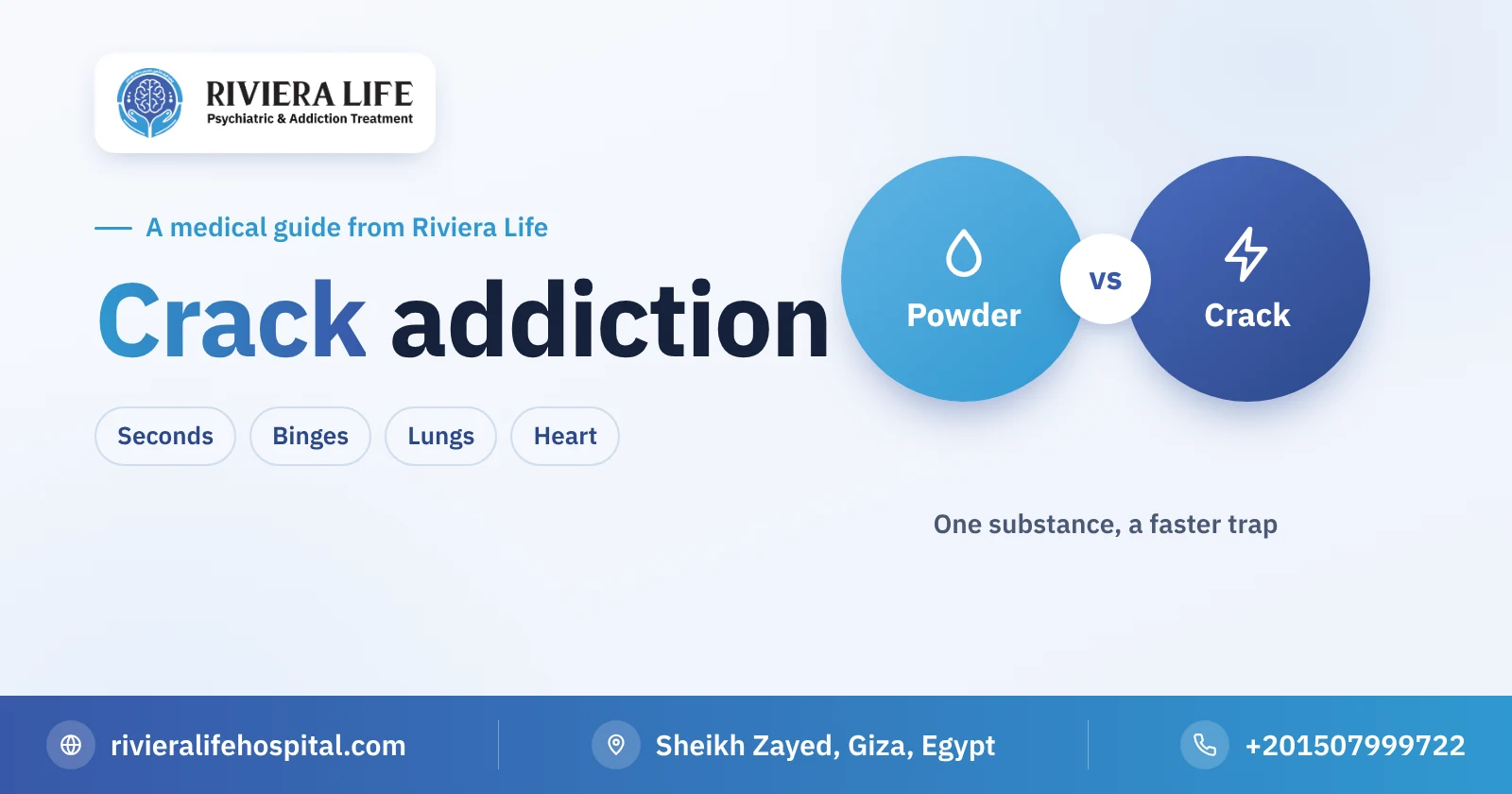
Crack is cocaine in a solid form that is smoked, and addiction to it is one of the fastest kinds of addiction to form, because the substance reaches the brain within seconds and its effect fades within minutes, leaving behind a pressing urge to repeat the experience. Many people end up, after just a few weeks, in smoking sessions that go on for hours, followed by psychological and physical collapses. In this article we give a complete picture of crack addiction: what it is and how it differs from cocaine powder, why it is so quickly addictive, its main symptoms and harms to the lungs, heart and mind, and how it is treated, with links to articles that detail each aspect.
What is crack?
Crack is the base form of cocaine, and appears as small, hard pieces, white tending to yellowish or beige, that look like pebbles. Its name comes from the crackling sound it makes when heated. Unlike cocaine powder, which is usually snorted, crack is smoked, and this difference in how it is used is what makes the big difference in how fast addiction develops and how severe the harms are. The active substance is the same in both cases.
The difference between crack and cocaine powder
| Point of comparison | Cocaine powder | Crack |
|---|---|---|
| Form | A fine white powder | Small, hard pieces |
| Common route of use | Snorting through the nose | Smoking |
| Onset of effect | Within minutes | Within seconds |
| Approximate duration of effect | A quarter of an hour to half an hour | Five to ten minutes |
| Speed at which addiction forms | Fast | Clearly faster |
| Characteristic harms | Damage to the nose and sinuses | Lung damage and burns on the lips and fingers |
Why is crack so quickly addictive?
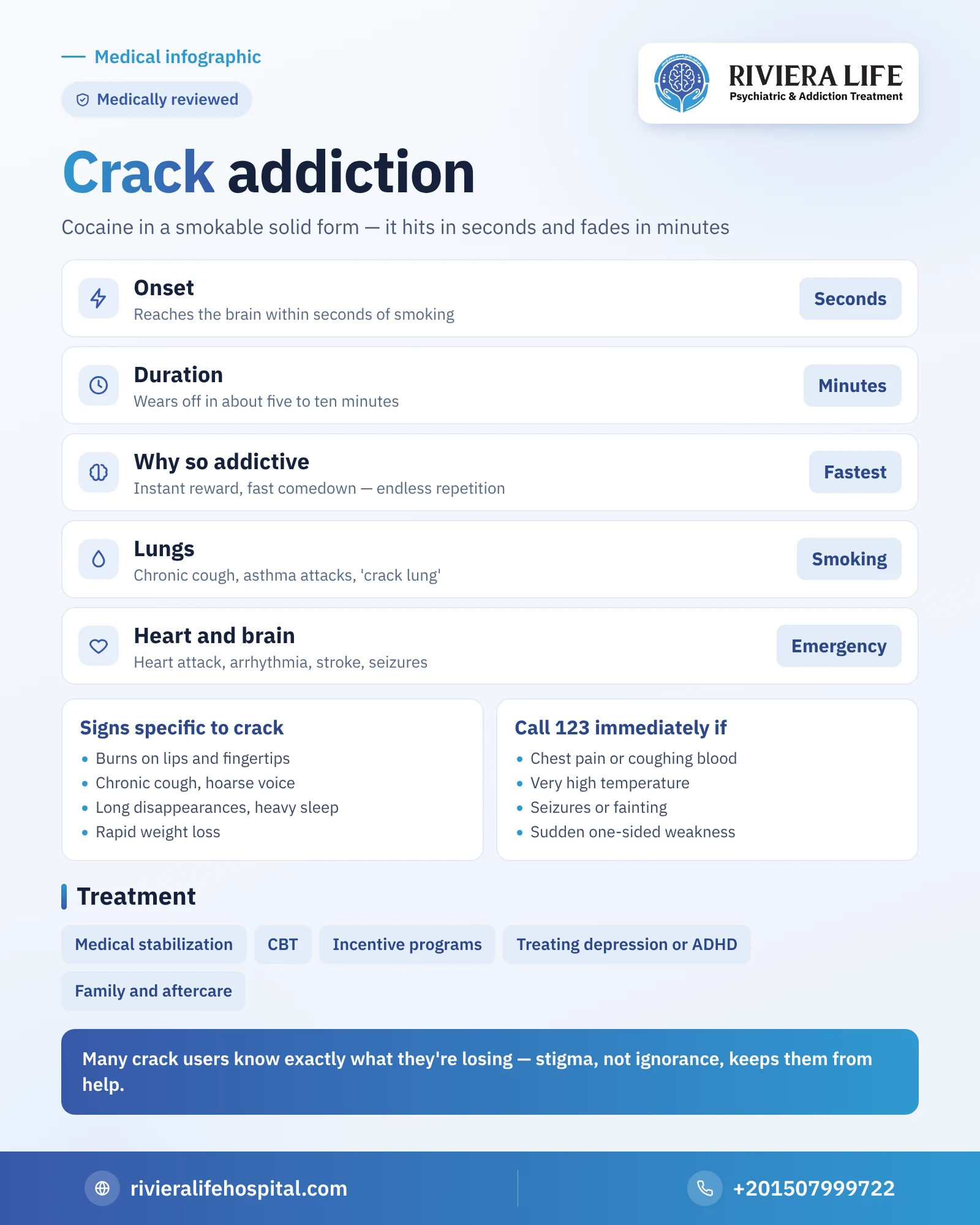
The brain learns from timing. The shorter the gap between an action and its reward, the stronger the learning. Crack delivers an intense high within seconds of smoking, so the brain links the action and the pleasure almost instantly. Then the comedown arrives just as fast: distress, tension and craving within minutes. So smoking is repeated not only in search of the high, but to escape the comedown.
This is how long sessions form in which crack is smoked again and again until the substance, the money or the energy runs out, and then the person sinks into heavy sleep and deep sadness. With every cycle, tolerance increases, natural pleasures recede, and the road to addiction gets shorter.
Symptoms of crack addiction
The symptoms of crack resemble those of cocaine in general — excessive energy, little sleep, mood swings and unexplained spending — which our article on cocaine addiction symptoms details. But crack has signs specific to smoking:
- Small burns or blisters on the lips and fingertips.
- A chronic cough that may bring up dark phlegm, and a hoarse voice.
- Long disappearances lasting a night or more, then a whole day of sleep.
- Rapid wasting and clear neglect of hygiene and appearance.
- Intense suspicion and mistrust, and searching the floor for imagined leftovers.
Why do some people start using crack?
Many start with crack because it is sold in small quantities that seem cheaper, then discover that repeated buying makes its real cost higher. And someone who uses cocaine powder may move on to it in search of a stronger, faster effect. The factors known in every addiction also play their part: genetic predisposition, early trauma, untreated depression or ADHD, and an environment where the drug is available. The details of these factors are in our article on the causes of cocaine addiction.
The effect of crack on the lungs
Smoking delivers the substance, the heat and the impurities directly to the airways. That is why crack smokers suffer from a chronic cough and shortness of breath, and their asthma attacks may become dangerously worse. After an intense smoking session, a condition known as “crack lung” can occur, with chest pain, severe shortness of breath, a high temperature and sometimes coughing up blood — an emergency. Repeated use also increases the likelihood of lung infections.
Its effect on the heart and brain
Like any form of cocaine, crack raises blood pressure and heart rate and narrows the arteries, including those of the heart itself. This can cause angina or a heart attack even in young people with no previous problems, and can cause a dangerous disturbance of heart rhythm. In the brain, a stroke, bleeding or seizures can occur, and body temperature can rise to dangerous levels.
The psychological impact of crack
With long sessions and little sleep, severe anxiety and suspicion appear, and may develop into temporary psychosis with auditory or visual hallucinations, a feeling of insects crawling under the skin, or a belief that someone is chasing them. After the session ends comes acute depression and a sense of guilt, and some people have thoughts of self-harm at this stage, which calls for close follow-up and rapid medical intervention.
Its effect on life and the family
Crack’s fast rhythm makes the need for money pressing and repeated, so debts pile up, things may disappear from the house, or the person may fall into legal trouble. Work or study declines, and relationships with a partner and children become strained. Some users leave their children or commitments for long hours during a session without noticing time passing, which puts the family in front of real risks that can’t be put off.
And the side that is rarely seen is shame: many crack users know very well what they are losing, but fear of stigma stops them asking for help, so they keep going round in the same circle. A family living through this situation will find practical steps in our article on how to deal with someone addicted to cocaine.
Crack withdrawal and how long it stays in the body
Crack withdrawal is mostly psychological rather than physical: severe exhaustion and long sleep at first, then low mood, loss of pleasure and a pressing craving that may last for weeks. It usually isn’t life-threatening like alcohol withdrawal, but depression at this stage needs follow-up, as our article on cocaine withdrawal symptoms explains. How long it shows up in tests is detailed in our article on how long crack stays in your system.
Crack addiction treatment
There is still no approved medicine that directly treats cocaine or crack addiction, but treatment is effective when it is built on sound foundations:
- A first stage under medical supervision: to treat insomnia, depression and anxiety and monitor the heart and lungs, with an assessment of any thoughts of self-harm.
- Cognitive behavioral therapy: to understand the triggers and build practical ways of resisting craving.
- Incentive programs: which reward commitment and negative tests, one of the most successful approaches with stimulants.
- Treating accompanying disorders: such as depression and ADHD, because neglecting them raises the likelihood of relapse.
- Involving the family and follow-up after discharge: because the first months are the hardest.
You will find the stages and duration in detail in our article on cocaine addiction treatment.
When is crack an emergency?
Call an ambulance immediately on 123 if you see
Don't try to calm them by force; move dangerous objects away and wait with them until help arrives.
- Chest pain, severe shortness of breath or coughing up blood
- A very high temperature with sweating and confusion
- Seizures or loss of consciousness
- Sudden weakness on one side of the body or slurred speech
- Hallucinations, severe agitation or talk of self-harm
How can Riviera Life help you?
At Riviera Life in Sheikh Zayed, consultants in psychiatry and addiction treatment set a plan for a crack patient that begins with a period of stabilization under round-the-clock medical supervision, then a psychological and behavioral rehabilitation program that includes the family, and follow-up after discharge. All of this under a Ministry of Health license and complete confidentiality, and the first consultation is free. To get in touch: +201507999722.
More from our cocaine guide
- Cocaine: the complete guide
- How long crack stays in your system
- How to recognize someone addicted to cocaine
- Cocaine addiction treatment
Questions many people ask
The active substance is the same, but crack is a solid form that is smoked, so it reaches the brain within seconds and its effect is short, while the powder is usually snorted and its effect begins within minutes.
Because the speed of the high, and then the speed of the comedown, drive constant repetition within a single session, so the brain learns to bond with the substance very quickly.
Burns on the lips and fingertips, a chronic cough and hoarseness, long disappearances followed by heavy sleep, clear weight loss, with suspicion and mood swings.
No medicine is yet approved to treat it directly. Treatment relies on medical supervision at the start, cognitive behavioral therapy, incentive programs and follow-up.
Yes. Many people recover with an integrated treatment program that includes the family and follow-up after discharge, and the first months are the most important for preventing relapse.