If you are asking how to deal with a cocaine addict, know that dealing with him differs from dealing with someone addicted to a sedative, because you are facing a person who swings between two extremes: hours of enthusiasm, confidence and irritability, then days of burnout, sadness and sleep. Understanding this rhythm is the key to everything: when to talk, how to protect yourself during agitation, how to deal with endless money requests, and how to use the moment of regret after the crash to open the door to treatment. This guide is for loved ones, whether you are a father, wife, brother or friend, and offers tried practical steps without magic promises.
Understand the rhythm before you move
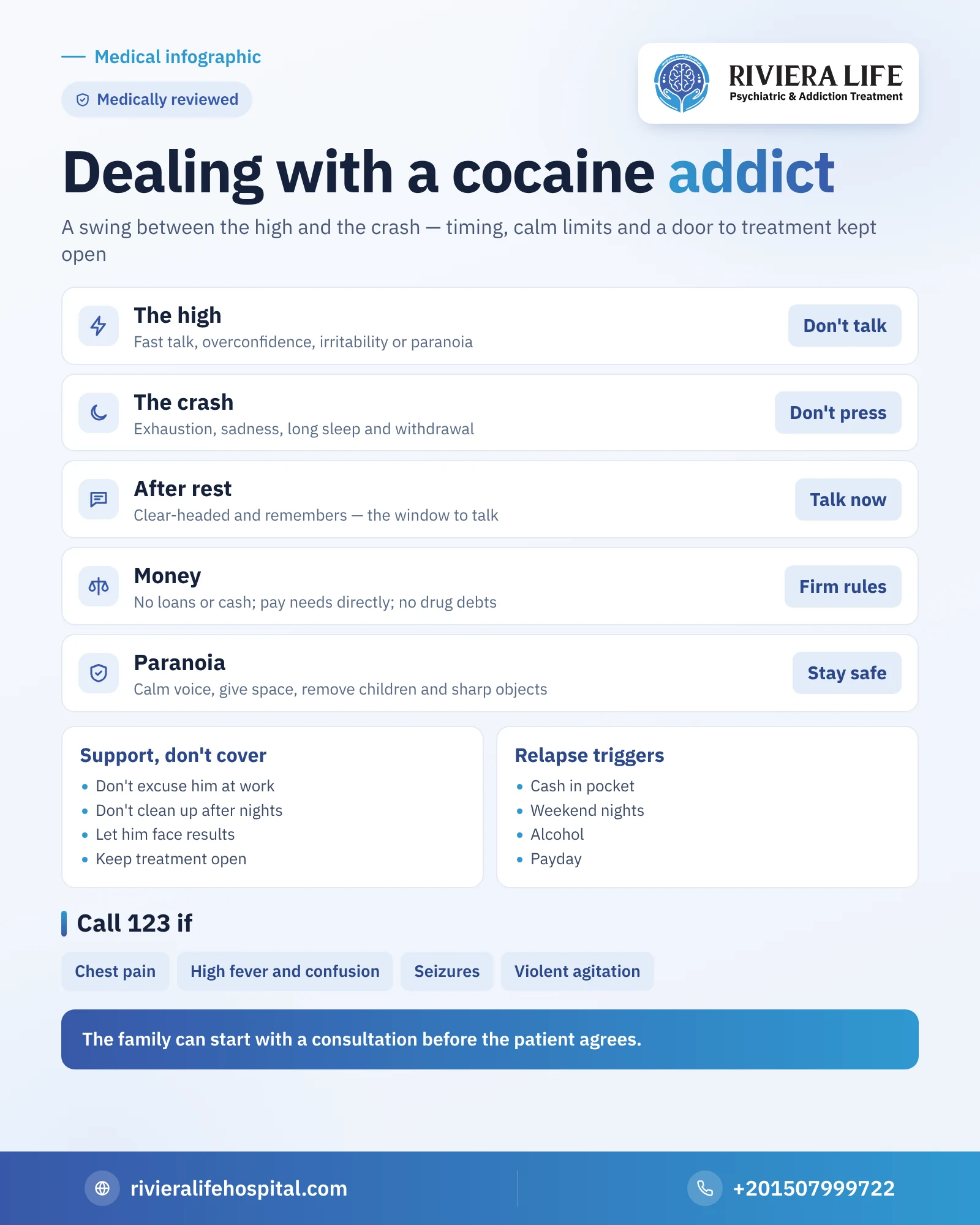
A cocaine episode usually passes through three stages you can notice at home. The first is the effect: fast talk, enthusiasm and exaggerated confidence, which may come with irritability and suspicion. The second is the crash: exhaustion, sadness, long sleep and withdrawal from people. The third is craving: after he regains some energy, tension begins and the desire to return appears, so the going out repeats.
Each stage needs a different action. And if you aren’t yet sure that what you are seeing is cocaine, start with our article on how to recognize a cocaine addict before any step.
When to talk? Choosing the right timing
- Not during the effect: he is in a state where he doesn’t listen, and any discussion may turn into a quarrel, especially if he is suspicious.
- Not at the peak of the crash: when he is very exhausted and depressed, because harsh talk may increase his sense of despair.
- But after he has rested: the next day or the one after, when his mind is relatively clear and he still remembers what happened, and in this period he is often more ready to admit there is a problem.
What do you say in the first conversation?
Sit with him alone or with one person he trusts, and start with what you saw with your own eyes. “You came back on Friday at six in the morning, slept until sunset, and were completely different on Saturday” is truer and stronger than “you’ve ruined yourself”. Then talk about yourself: “I’m worried, and I no longer know how to help you”.
After that, ask his opinion, and listen even if the answer is evasive. Many cocaine users see themselves as “in control” because they don’t use daily, or because they are still working. Don’t argue with this picture, but ask questions that make him review it himself: “How many times this month did you say it was the last time?” and “What did you lose because of Thursday night?”.
And end with a small, specific request: one consultation with a doctor, or a call to a specialist to ask questions, not a promise to stop immediately.
If he becomes irritable, suspicious or aggressive
Cocaine may cause, especially with long sleepless nights or large amounts, a state of severe suspicion in which the person feels those around him are conspiring against him, and it may reach hallucinations. At this moment logic doesn’t help, and the only aim is for the situation to pass safely:
- Speak in a low voice with short sentences, and don’t argue with his strange ideas or mock them.
- Give him space and don’t corner him in a room or corridor.
- Move the children away from the place, and put sharp objects and car keys away from him.
- If you feel in danger to yourself or others, leave the place and get help immediately.
After he has calmed down completely, talk about what happened, as these situations are often among the strongest motives for accepting treatment.
Money: the point where the household is drained most
Cocaine is expensive, and demand for it repeats within a single episode, so the household budget collapses faster than you expect. Set clear, fixed financial rules:
- No loans and no cash, however convincing or moving the story.
- Basic needs are paid directly to the payee: a bill, study expenses or rent.
- Review shared bank cards and withdrawal limits, and close what isn’t necessary.
- Don’t pay his debts to friends or dealers, as this funds the next episode.
And tell him clearly that money is available for one thing, treatment, and that you are ready to pay its cost today if he agrees.
When use is tied to nights out and friends
Cocaine in many cases is linked to a place, company and occasion: a particular night out, specific friends, or drinking alcohol, which opens the door to it. You can’t control his friends, but you can reduce the opportunities: suggest alternative activities on the nights he usually goes out, encourage him toward sport or any morning commitment, and warn him that alcohol with cocaine forms a double danger to the heart. For those who want to understand why some become more attached to cocaine than others, our article on the causes of cocaine addiction explains the risk factors.
The difference between supporting him and covering for him
Calling his manager to justify his absence, convincing relatives he “has a cold”, hiding the matter from his father, and cleaning up what a night of using left behind before anyone sees it: all are things loved ones do with good intentions, but they keep the consequences of his use away from him and so make continuing easier. Real support is to be there for him as a person, to leave him the results of his decisions, and to keep the door to treatment always open.
If the addict is your life partner
A wife or husband is in a harder position, because use touches safety, trust, intimacy and the children all together. Put your safety and the children’s safety first, and don’t accept him driving with them or staying with them alone after a night of using. Seek psychological support for yourself, and don’t hide the matter from family members who can help. And if there are changes in intimacy, our article on cocaine and sex explains their causes and what improves after stopping.
If he refuses treatment
Refusal at first is expected. Keep the boundaries, and repeat the offer calmly at suitable times, especially after a bad episode or a clear loss. Research indicates that training the family in specific communication methods, based on reward and not blame, increases the chances of the user accepting treatment, and the family can start this training with a specialist before he agrees. And in cases where the person becomes a danger to himself or others because of a severe psychiatric disorder, Egypt’s mental health care law regulates the possibility of admission without his consent based on a medical assessment, and the specialist team explains to the family when this applies.
The day he agrees: don’t postpone
Call the same day. Prepare his ID card, a list of any medicines he takes, and what you know about the substances he uses with cocaine, such as alcohol, hashish or tramadol, as this changes the treatment plan. Cocaine withdrawal is usually not physically dangerous like alcohol withdrawal, but it brings depression and intense craving that may need close follow-up, and the details of this stage are in our article on cocaine withdrawal symptoms. The full plan and its duration are explained in our article on cocaine addiction treatment.
After treatment: build a plan against relapse together
Cocaine triggers are specific and can be planned for: cash in the pocket, weekend nights, alcohol, the numbers of particular friends, and payday. Agree on what will change in each, such as having the salary transferred to an account that can’t be withdrawn in cash for a while, and deleting particular numbers. And if a slip happens, treat it as a signal to adjust the plan, not as proof of failure, and contact the treatment team quickly.
In emergencies
Call an ambulance on 123 immediately if you see
Don't try to control him by force, move away anything that may hurt him, and tell the paramedics everything he took.
- Chest pain, severe palpitations or shortness of breath
- Very high temperature with sweating and confusion
- Seizures or loss of consciousness
- Violent agitation, hallucinations or threats to harm himself or others
How can Riviera Life help you?
The family doesn’t need to wait for the patient’s agreement to ask for help. You can start with a free, confidential consultation with the Riviera Life team in Sheikh Zayed, to learn how to open the conversation and set boundaries, then the patient joins when he is ready a treatment program supervised by psychiatry and addiction consultants, including a family program and follow-up after discharge. Contact us around the clock: +201507999722.
More from our cocaine guide
- Cocaine: the complete guide
- Cocaine addiction symptoms
- The physical and psychological harms of cocaine
- Crack addiction
Questions many people ask
A day or two after he has rested from a using episode, when his mind is clear and he remembers what happened, not during the effect or at the peak of exhaustion.
Speak calmly and don't argue with his ideas, give him space, move children and sharp objects away, and leave and get help if you feel in danger.
Paying drug debts funds the next episode. It is better to pay basic needs directly and make money available for treatment only.
It isn't usually physically dangerous like alcohol withdrawal, but depression and intense craving may be strong and need medical follow-up, especially when other substances are involved.
Keep the boundaries, repeat the offer at moments of readiness after bad episodes, and get a consultation yourself to learn communication methods that raise the chances of him accepting.