How do you recognize cocaine addiction in someone who goes to work, laughs at dinner and seems normal most of the week? That is exactly the problem: cocaine is a short-acting substance, and many who use it do so at night or at weekends, so the signs appear only in intermittent bursts. But the close family has something the doctor doesn’t at the first visit: daily observation. This practical guide explains what you can actually notice at home, how to distinguish it from other, innocent causes, how to confirm without losing the person’s trust, and what to do once the picture is clear.
Why is cocaine use discovered late?
The effect of snorted cocaine usually lasts between about a quarter and half an hour, then the person repeats it if they want to continue. This means someone who uses on a Thursday night out may come back on Sunday morning with nothing on their face but tiredness. Cocaine is also expensive, so its use is often linked to social circles that seem “respectable”: nights out, successful friends and work that requires late hours, which makes the family the last to suspect.
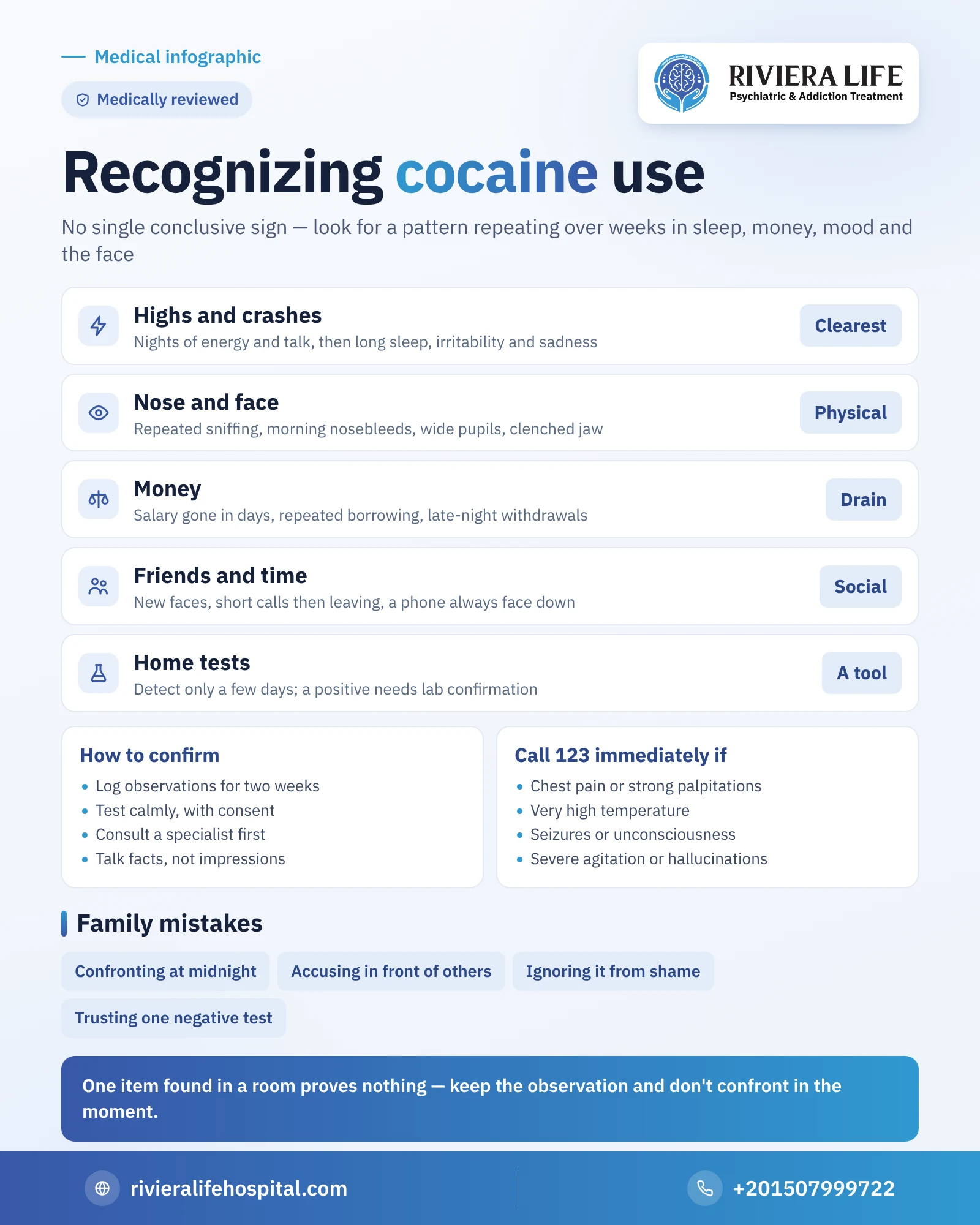
That is why you shouldn’t look for one conclusive sign. Look for a pattern that repeats: different behavior on particular days, and small changes in money, sleep and the face that come together over weeks.
The rhythm of highs and crashes: the clearest thing families see
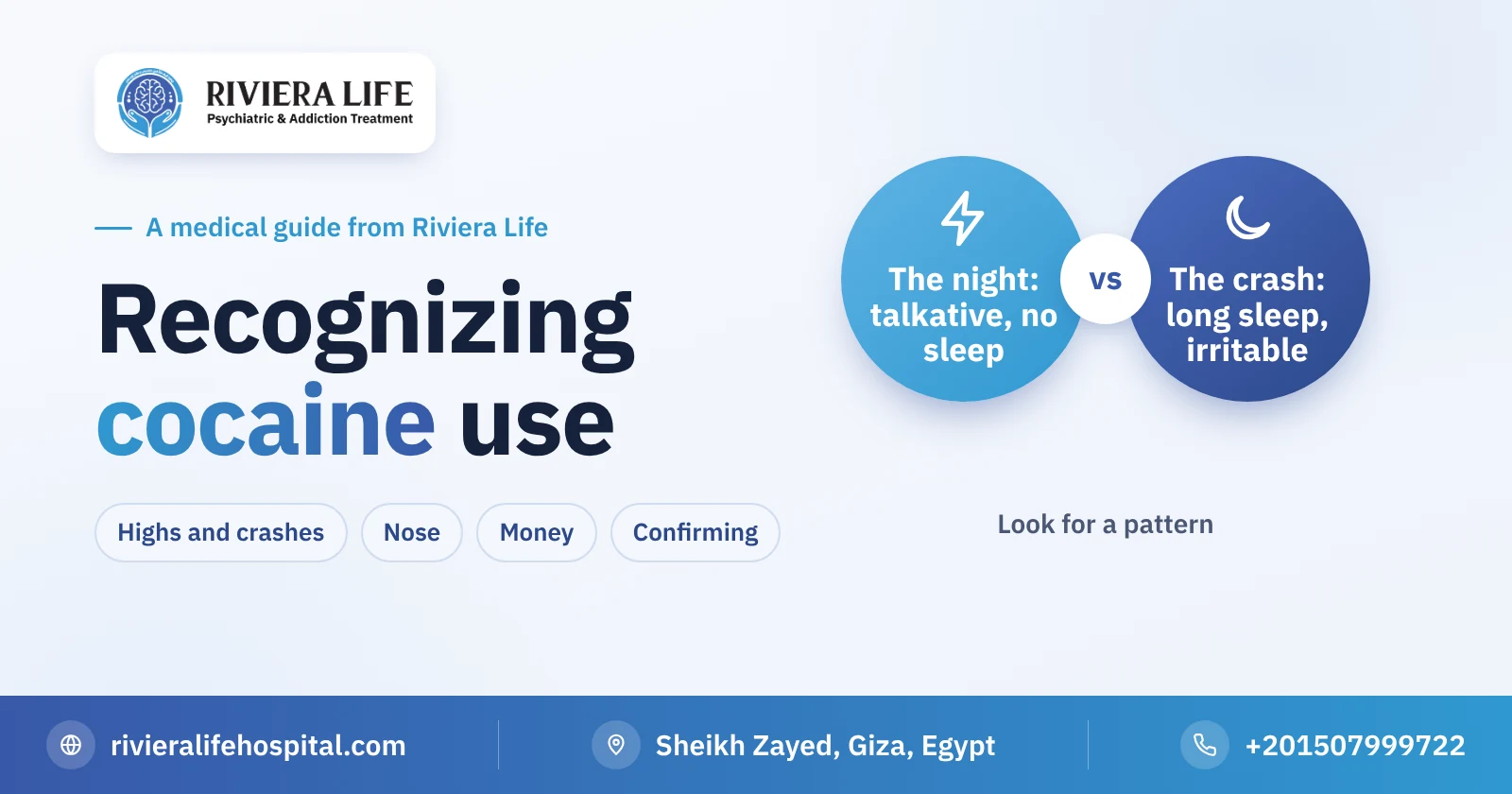
What most distinguishes cocaine use in daily life is the fluctuating rhythm. On the night of use, the person is strikingly enthusiastic, talkative and quick-moving, feels neither hunger nor sleepiness, and comes home very late or not at all. Then comes what users call the “crash”: long sleep that may extend to noon the next day or beyond, irritability, unexplained sadness, a sudden big appetite and withdrawal from conversation.
Track this rhythm on a calendar. If you notice that days of lethargy and irritability always come after certain nights, and that it repeats every week or every payday, this observation matters more than any single sign.
Signs in the nose, face and body
- The nose: a runny or blocked nose or repeated “sniffing” without having a cold, frequent nosebleeds especially in the morning, or rubbing the nose a lot.
- The eyes: wide pupils at a time that doesn’t justify it, with a glazed, tense look.
- The jaw and teeth: clenching the jaw or grinding the teeth, or moving the jaw repeatedly.
- Frequent trips to the bathroom: short, repeated visits during gatherings or outings, returning more energetic.
- Weight and sleep: weight loss over time, and unexplained late nights followed by heavy sleep.
If it reaches ulcers inside the nose, a whistling sound while breathing or a change in the nose’s shape, these are signs of advanced damage explained in our article on cleaning the nose from cocaine and its effects.
Things that may catch your eye at home or in the car
We don’t advise searching the room as if it were a crime scene, but some things turn up by themselves while tidying or doing the laundry, and it helps to know what they mean:
- A banknote tightly rolled or folded in a strange way, or small pieces cut from drinking straws.
- A bank or membership card with a trace of white powder on its edge.
- A small mirror or smooth glass surface kept in an unusual place.
- Very small plastic bags, empty or with residue.
- With crack in particular: small glass pipes, many lighters, or small burns on the lips and fingertips.
One thing from this list proves nothing. Keep the observation, and don’t confront them with it in the moment.
Money, time and friends
Cocaine consumes money at a speed out of proportion to any other hobby. You may notice the salary running out in days, repeated requests to borrow with changing excuses, cash withdrawals in the late hours of the night, or small valuables disappearing from the house. This is often accompanied by a change of friends: new faces they don’t introduce you to, short calls after which they go out immediately, and a phone that never leaves their hand and is always turned face down.
At work or school, the picture starts with days of absence after holidays, then repeated lateness, then complaints about performance. Anyone who needs an explanation of why a successful person falls into this trap will find the answer in our article on the causes of cocaine addiction.
Changes in mood and speech
Under the influence, the person talks fast, jumps from one subject to another, exaggerates in talking about big plans and projects, and seems more confident than usual. They may become quick to anger or suspicious of what those around them say, as if everyone is watching them. On crash days the situation flips: sadness, guilt, loss of pleasure in things they used to love, and a wish to sleep and isolate. This sharp swing between the two extremes within a few days is very noticeable to those who live with them.
Is it cocaine or another cause?
Many of the signs above have innocent explanations, or other explanations that deserve attention. This table helps you slow down before judging:
| What you notice | May point to cocaine if | Other possible explanations |
|---|---|---|
| Runny nose and nosebleeds | It repeats after nights out without a cold or allergy | Nasal allergies, dry air, nasal sprays |
| Excess energy and little sleep | It comes in short bursts followed by a crash | Other stimulants such as ice and captagon (longer effect), or a manic episode |
| Sadness, lethargy and long sleep | It regularly repeats after days out | Depression, work exhaustion, or alcohol |
| Weight loss | It comes with late nights and unexplained spending | A thyroid problem or a physical illness |
| Wide pupils | They appear with enthusiasm and fast speech | Some medicines, or dim lighting |
For those unsure whether it is cocaine or a depressant drug such as heroin, the two pictures are almost opposite, as our article on the difference between cocaine and heroin explains.
How do you confirm without losing them?
Record your observations for two weeks
Write the date, exactly what you saw, and what came before and after. After two weeks you will have a clear picture that either confirms the suspicion or dispels it, and you will have specific facts to talk about instead of impressions.
The home test: a helping tool, not a final verdict
Home test strips usually detect a substance produced when the body breaks down cocaine for a few days after the last use, so they may come back negative if done some time after use. A positive result is preliminary and needs lab confirmation. Most importantly, the test should be requested calmly and with their consent, not by deception or force, because that destroys what you will later need to persuade them into treatment. You will find the details of detection windows in our article on how long cocaine stays in the body.
Consult a specialist before you act
The family can sit with a psychiatrist or addiction specialist on its own, present its observations, and hear a neutral opinion on how serious the situation is and how to open the conversation.
Mistakes families make when they suspect
- Confronting them in the middle of the night while they are under the influence, when they are tense and suspicious and may become aggressive.
- Accusing them in front of siblings or relatives, so it turns into defending their dignity rather than a conversation about health.
- Ignoring the signs for fear of “scandal” until debts and problems pile up.
- Relying on one negative test for complete reassurance.
- Putting the mother or wife alone in charge of watching and solving.
When can’t it wait?
Some situations aren’t about suspicion at all, but about a danger to life. Cocaine raises blood pressure, heart rate and body temperature, and may cause acute poisoning, especially with alcohol or other stimulants.
Call an ambulance on 123 immediately if you see
Don't leave them alone, move sharp objects away, and try to cool their body with wet cloths until help arrives.
- Chest pain or pressure, or strong palpitations
- A very high temperature with heavy sweating or hot skin
- Seizures or loss of consciousness
- Severe agitation, hallucinations or suspicion that drives them to harm themselves or others
- A sudden severe headache or weakness on one side of the body
Once the picture is clear: what is the next step?
Confirmation isn’t the end of the road but its beginning. The next step is planning a calm conversation aimed at a medical assessment, not extracting a confession; you will find its steps in detail in our article on how to deal with a cocaine addict. If you want to understand when use medically becomes addiction, our article on cocaine addiction symptoms presents the full clinical picture.
At Riviera Life in Sheikh Zayed, the family can start with a free and completely confidential consultation, even before the patient knows, to learn how to act and what options are available for their situation. Reach us around the clock: +201507999722.
More from our cocaine guide
- Cocaine: the complete guide
- Cocaine addiction treatment
- The physical and psychological harms of cocaine
- Crack addiction
Questions many people ask
They may seem normal for a while because cocaine's effect is short and usually linked to particular nights, but the pattern shows over time in sleep, money, mood and work.
Swinging between nights of activity, staying up and talking a lot, then days of long sleep, irritability and sadness, especially if it repeats on fixed dates.
No, because a home test only detects use within a few days, and may come back negative if done some time after the last use. Observation over weeks and a doctor's opinion matter more.
Not on their own, as nasal allergies and dry air can cause them. They become meaningful if they repeat after nights out alongside other signs in behavior and money.
Yes. The family can present its observations to a psychiatrist or addiction specialist confidentially, to learn how serious the situation is and the best way to open the conversation.