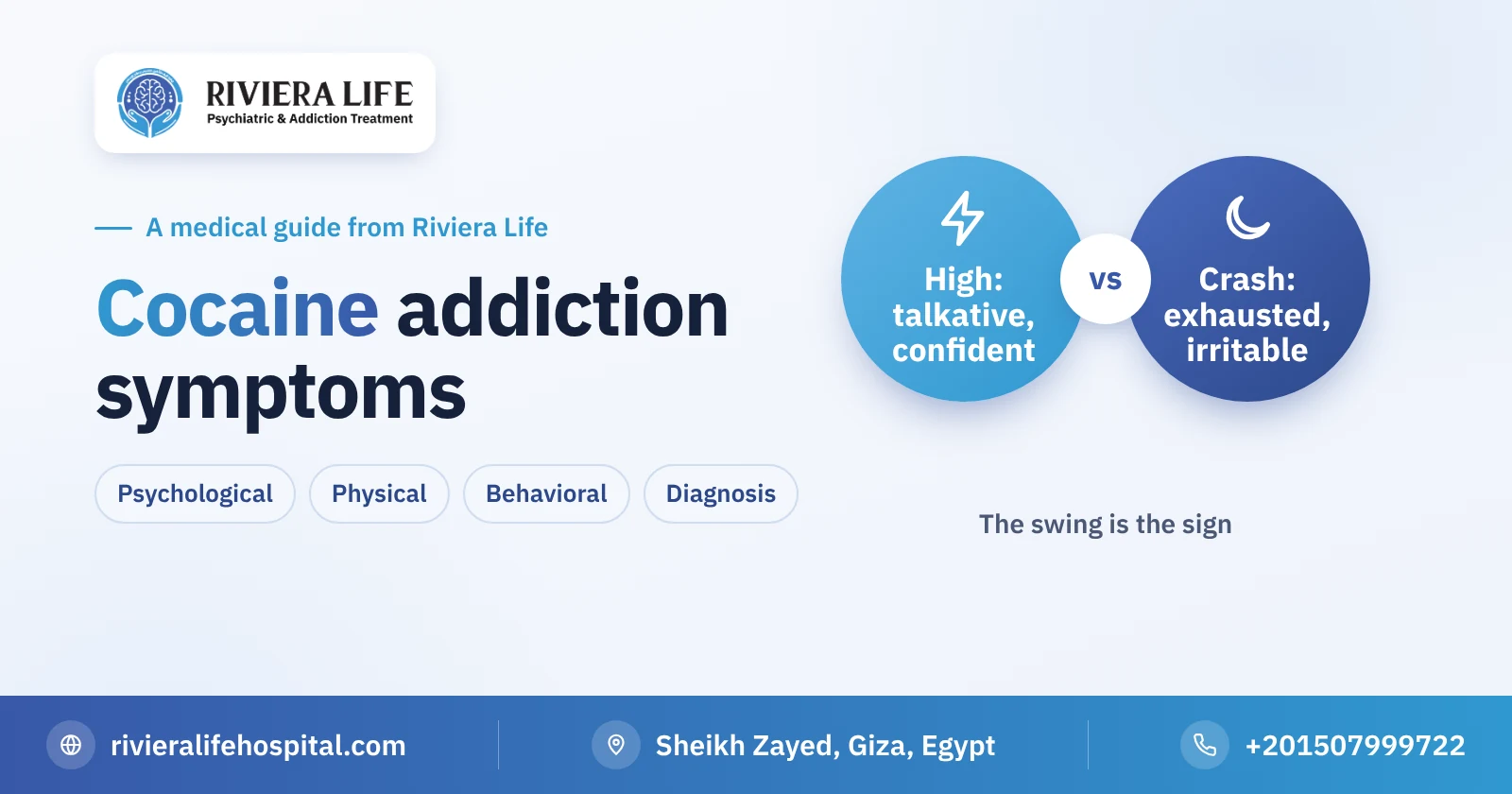
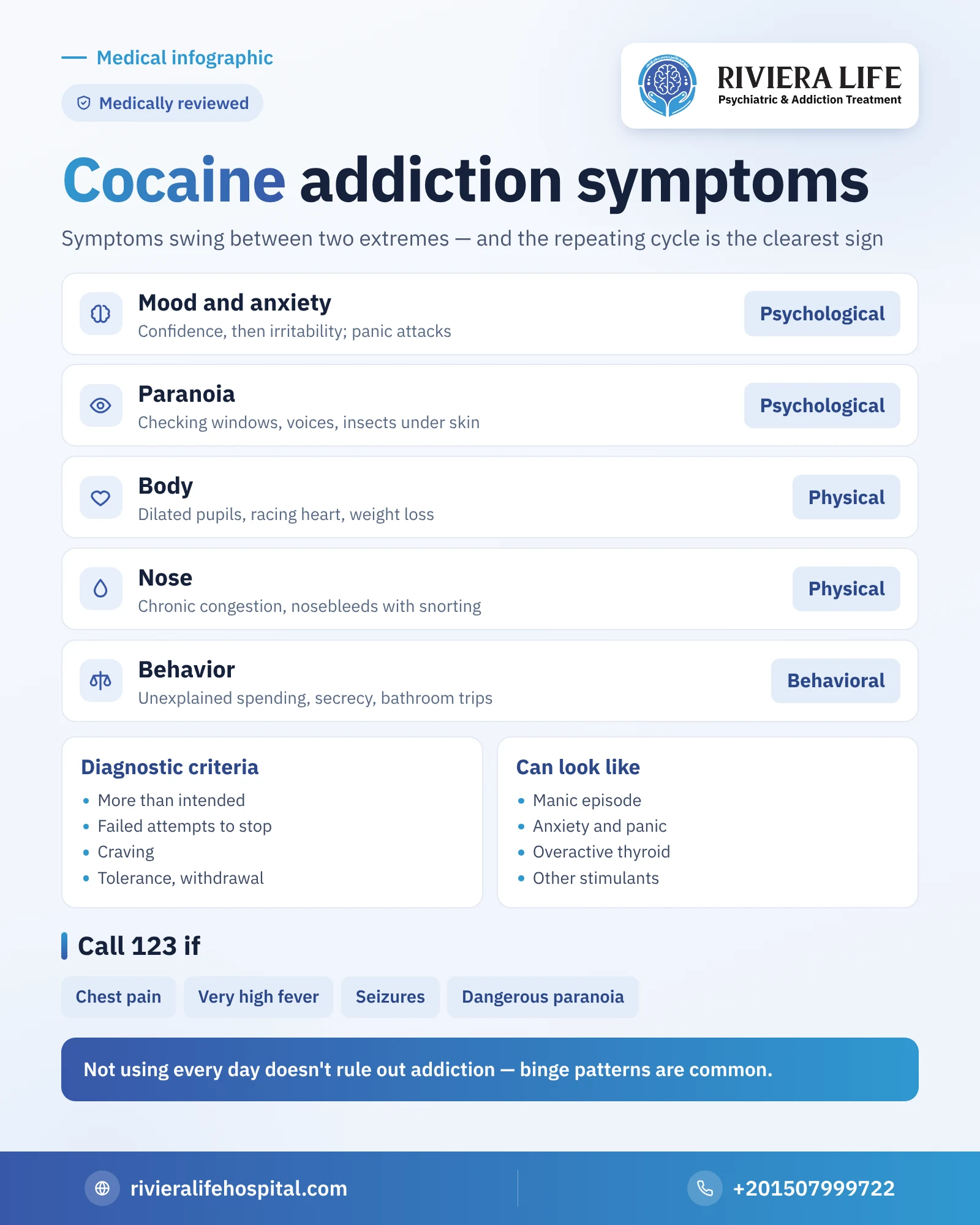
Cocaine addiction symptoms don’t appear in a fixed form, but swing between two extremes: activity, chattiness and excess confidence during the effect, then exhaustion, gloom and irritability in the following days. This swing itself, when it repeats and gets out of control, is the clearest feature of addiction. Doctors group the symptoms into three sets: psychological, such as anxiety, suspicion and urgent cravings; physical, such as heart palpitations, weight loss and nose problems; and behavioral, such as secrecy and unexplained spending. This article explains each set, the medical diagnostic criteria, and how these symptoms are distinguished from psychological and physical conditions that resemble them.
Symptoms of use or symptoms of addiction?
Not everyone who shows signs of cocaine is addicted. There are acute effect symptoms that appear after the dose and disappear within an hour or two, and there are addiction symptoms that relate to the relationship with the substance: can the person stop? Is the space cocaine occupies in their life widening? Do they continue despite losses? The doctor is more interested in the second type, because effect symptoms may happen to someone who tried it once, while the pattern of losing control only appears with repetition.
There is a third set relating to withdrawal, meaning what appears after stopping: exhaustion, long sleep and depression. These symptoms have a separate article, cocaine withdrawal symptoms, and we mention them here only because they are part of the cyclical picture of addiction.
Psychological symptoms of cocaine addiction
Mood swings and anxiety
In the hours of the effect the person seems confident, enthusiastic and fast-talking, then flips into tension and irritation at the slightest thing. Over time anxiety becomes a fixed trait even away from use, and panic attacks may appear with palpitations, shortness of breath and a feeling that death is near.
Suspicion and psychotic symptoms
One of the symptoms most distressing for the family is the user becoming paranoid: checking the windows, thinking someone is watching them or plotting against them. In more severe cases they may hear voices or feel insects crawling under their skin, so they scratch and injure themselves, a medically known symptom with stimulants. These symptoms may disappear as the substance wears off, but they recur and intensify with continued use.
Urgent craving
Craving for cocaine isn’t just longing. It is a thought that intrudes into the mind on seeing money in hand, hearing a song linked to nights out, or calling a particular friend, and the patient may describe it as “pulling” them against their will.
Physical symptoms
Some physical symptoms appear during the effect, and some build up over months of use:
- Dilated pupils, sweating and a noticeably raised heart rate.
- Jaw clenching, teeth grinding and repeated involuntary movements.
- Loss of appetite, weight loss and neglected meals.
- Insomnia on nights of use, then very long sleep in the following days.
- A chronically runny or blocked nose, repeated bleeding and a weakened sense of smell with snorting.
- Palpitations or repeated chest pain, a sign that always deserves a heart check.
Behavioral symptoms
Behavior sometimes reveals addiction before the body does, and among the most important things doctors note in the interview:
- Large spending out of proportion to income, and debts and repeated borrowing.
- Whole nights away, then disappearing into the bedroom for a day or two.
- A decline in performance at work or study after a short period of excess enthusiasm.
- Changing the circle of friends and attachment to particular nightlife places.
- Repeated trips to the bathroom at occasions and gatherings.
- Lying about small details and anger at simple questions.
If you are a family member looking for a practical way to notice these signs at home, we have devoted a separate guide to it, how do you recognize someone addicted to cocaine?.
The binge and crash cycle: why do symptoms swing?
Many people addicted to cocaine use in binges: a night or two of close-together doses, then collapse, sleep and hunger, then relatively calm days, then a new binge. So you may see the person almost normal on Tuesday, and exhausted and pale on Sunday. This pattern confuses the family and gives the patient an argument for denial: “I don’t use every day.”
But the doctor looks at the whole cycle, not a single day, and counts binges coming closer together and their amount increasing as a sign that addiction is progressing. Another important sign is the patient starting to use alone after using only at gatherings, or the binge extending into working days.
Medical diagnostic criteria
Doctors rely on an approved diagnostic manual that sets eleven criteria for stimulant use disorder over a year, including:
- Using larger amounts or for longer than intended.
- Failed attempts to cut down or stop.
- Spending long hours obtaining cocaine or recovering after it wears off.
- A strong, urgent craving to use.
- Neglecting work, study or home, and giving up activities they used to love.
- Continuing despite clear psychological or physical problems they know cocaine causes.
- Tolerance, meaning needing a larger amount for the same effect, and withdrawal symptoms appearing on stopping.
Two or three criteria mean a mild disorder, four or five moderate, and six or more severe. This classification isn’t meant to stigmatize, but helps choose the suitable intensity of treatment.
How do you tell cocaine symptoms from other conditions?
Some cocaine symptoms resemble other conditions, which is why addiction isn’t diagnosed from a single symptom:
- A manic episode in bipolar disorder: also involves fast speech, little sleep and excess confidence, but it lasts for continuous days and doesn’t break off suddenly after an hour.
- Anxiety and panic disorders: similar in palpitations and tension; the difference is that the attacks are linked to times of use.
- An overactive thyroid: causes palpitations, weight loss and irritability, and a simple blood test reveals it.
- Other stimulants: amphetamines and methamphetamine give a similar picture, but their effect is much longer, and testing identifies the substance.
Symptoms that differ by route of use
Snorting leaves its mark on the nose: chronic congestion, bleeding and crusts, and with continued use it may reach a hole in the nasal septum, which we cover in our article on cleaning the nose from cocaine. Smoking crack is linked to coughing, dark sputum and small burns on the lips and fingertips, with details in our article on crack addiction. And injecting leaves puncture marks and bruises on the veins, and adds the risk of infection.
Disorders that appear alongside addiction
The doctor often discovers that cocaine addiction isn’t the only problem. Depression, anxiety disorders and ADHD are more common among users, as is using alcohol or sedatives to ease the crash. Distinguishing what preceded the addiction from what resulted from it needs follow-up for weeks after stopping, because some depressive symptoms improve on their own, and some reveal an existing disorder that needs its own treatment.
How does the doctor assess the case?
Specialist assessment combines a detailed interview with the patient, a conversation with the family if they agree, a physical examination including blood pressure, pulse, nose and skin, and an ECG when there are palpitations or chest pain. A urine test is used to confirm the substance and reveal what is mixed with it, bearing in mind that its result reflects only the last few days, as we explain in our article on how long cocaine stays in the body. Then the suitable treatment plan is built on that.
Symptoms that can’t wait
Call an ambulance on 123 immediately if you see
These are signs of poisoning that may affect the heart or brain; don't wait for them to calm down on their own.
- Chest pain or pressure
- A very high temperature with agitation
- Seizures or loss of consciousness
- Hallucinations or suspicion that pushes them to harm themselves or others
If you recognize these symptoms in someone you love, the next step is assessment, not angry confrontation. The Riviera Life team of consultants in psychiatry and addiction treatment receives these cases in complete confidentiality, and the first consultation is free.
More from our cocaine guide
- Cocaine: the complete guide
- Cocaine addiction treatment
- The causes of cocaine addiction
- The physical and psychological harms of cocaine
Questions many people ask
They usually start with clear swings between excess activity and exhaustion, with unexplained spending and repeated late nights. Over time failed attempts to stop and urgent cravings appear, the most important sign medically.
It may cause suspicion and persecution, auditory hallucinations or a sensation of insects under the skin, especially with high doses and long binges. These symptoms call for an urgent psychiatric assessment.
Yes, a pattern of spaced-out binges is common in cocaine addiction. The criterion is loss of control and continuing despite harm, not the number of days of use.
Cocaine symptoms are linked to times of use and disappear within hours, while a manic episode lasts for continuous days. A detailed interview, testing and follow-up after stopping settle the difference.
No, chest pain after cocaine may be a sign of reduced blood supply to the heart or a clot, even in young people, and calls for going to the emergency department immediately.