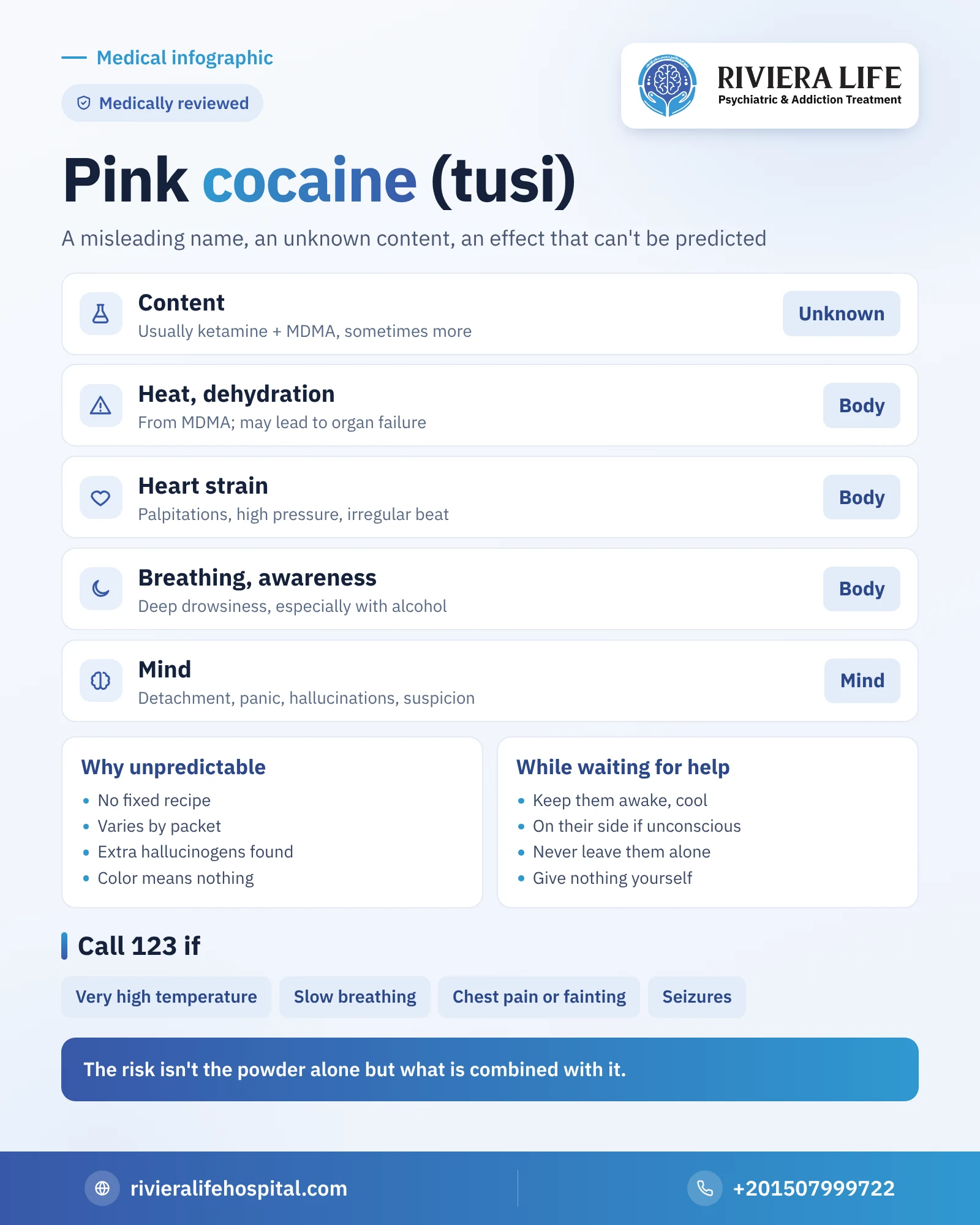
Pink cocaine, also called “tusi”, is a pink powder that has appeared in nightlife and party circles in recent years, and became known by this name because it seems luxurious and familiar. The surprise is that in many samples analyzed by official bodies it contains no cocaine at all, but a mix including ketamine and ecstasy (MDMA) and other substances in proportions that change from sample to sample. In other words, its name deceives, its content is unknown, and its effect can’t be predicted. In this article we explain what tusi is, why its mix is a particular danger, the signs that require an ambulance, and how parents can deal with the matter.
What is “pink cocaine” really?
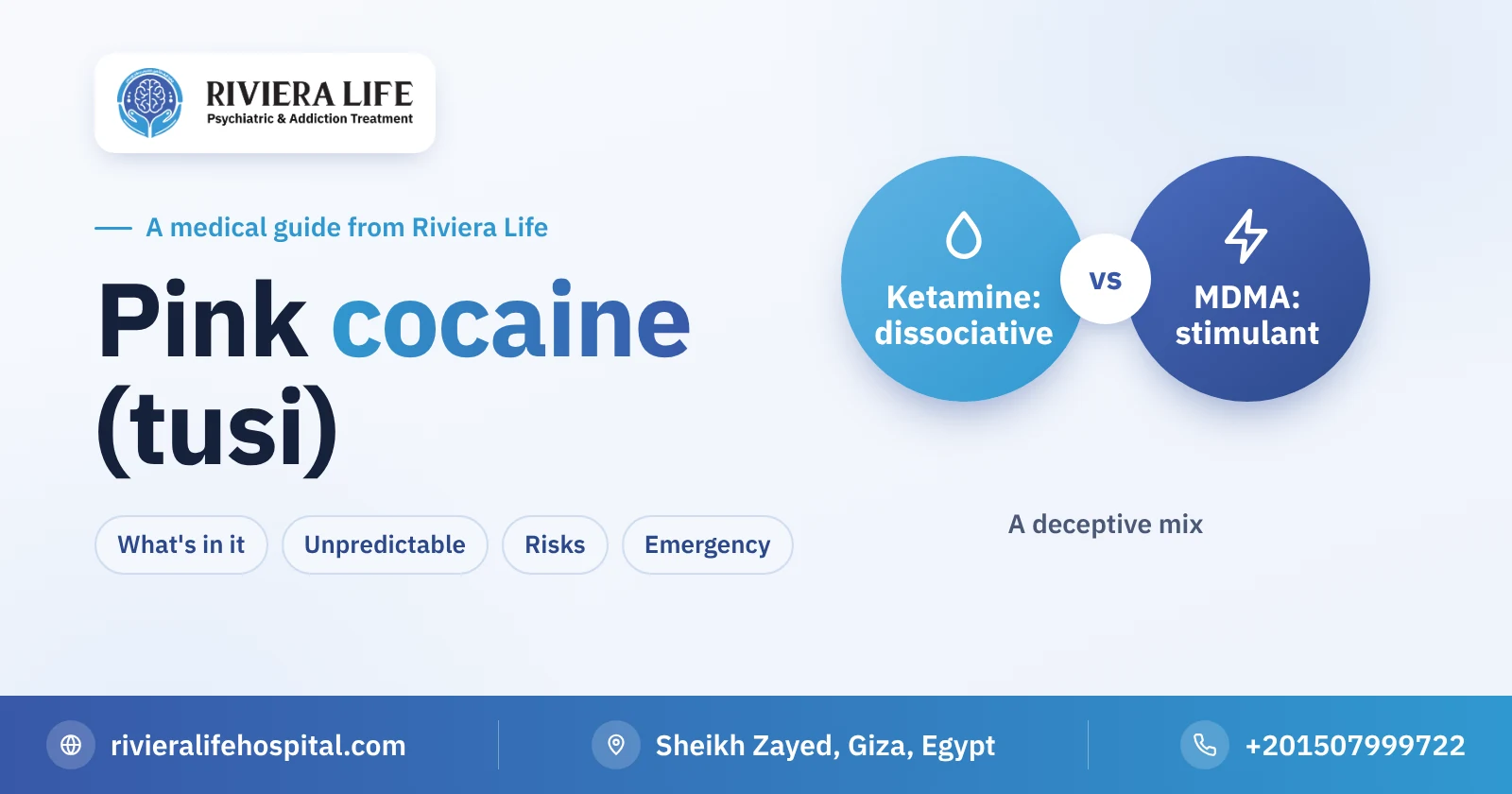
The name is more marketing than science. Analyses announced by law enforcement bodies in some countries showed that “pink cocaine” samples contain ketamine and MDMA, and sometimes caffeine and others, and that real cocaine is rarely in them. The appearance of the substance in reports has been linked to nightlife in Latin America, Europe and the United States, while its arrival in any particular local market is hard to state with certainty. The pink color is presumably a dye added for appearance, and indicates neither type nor quality. To learn about real cocaine and its harms, see the article on the harms of cocaine.
Why is it called “cocaine” when it isn’t?
Because cocaine is associated in people’s minds with luxury and nightlife, its name attracts an audience that doesn’t think of traditional drug use. And because the powder’s color and appearance are attractive, some young people believe it is a “lighter” or “newer” option. This naming means a person may take two substances whose proportions they don’t know while thinking they are taking a third, so they expect a familiar stimulant effect and get a completely different experience. Not knowing here isn’t a detail but the core of the danger.
What happens when ketamine and MDMA come together?
The two substances act in opposite ways. Ketamine is a dissociative anesthetic that separates the person from their body and surroundings and numbs pain. MDMA, known as ecstasy, is a stimulant that promotes a feeling of closeness, and raises temperature and heart rate. When they come together, the person may not feel their body’s warning signs: they dance for hours, their body overheats and loses fluids, while the ketamine numbs them to pain and tiredness. One may hide the symptoms of the other, so those around them don’t notice the situation has got out of control until late. To understand each substance separately, you can read the harms of ketamine and the harms of ecstasy.
Why is it spreading among young people?
Tusi spreads mainly through images and short clips that portray it as part of the party and luxury lifestyle, and through phrases such as “smoother cocaine” or “lighter”. The powder’s color alone is enough to make it seem a special product rather than a drug. This image feeds the idea that it is less dangerous, when in truth it is only less clear. Ironically, the powder that seems “classier” may be the most obscure in its content. And a teenager who receives this image from peers doesn’t usually ask about the chemistry, but whether others have tried it.
Why can’t its effect be predicted?
There is no fixed recipe for tusi: powder of the same color may contain a high proportion of ketamine in one packet, a high proportion of MDMA in another, and unexpected substances in a third. Additional hallucinogenic or stimulant substances have been found in other samples, including rare compounds that alter perception more strongly. The result is that the same person may take the same powder on two nights and have very different experiences. There is no reliable home method to confirm the content before use, and appearance and color indicate nothing.
The difference between real cocaine and pink cocaine
| Aspect | Real cocaine | Pink cocaine (tusi) |
|---|---|---|
| Main substance | A single stimulant substance extracted from the coca plant | Usually a mix of ketamine, MDMA and other substances |
| Type of effect | Stimulation, confidence and a short rush | A mix of dissociation, stimulation and emotion, which changes a lot |
| Predictability | Relatively less obscure, with variation in purity | Its content is unknown and differs between packets |
| Main danger | The heart and rapid addiction | Temperature, breathing, consciousness and panic, with mixing |
Physical risks
- Raised temperature and dehydration: from the effect of MDMA, which may reach organ failure in severe cases.
- Heart strain: palpitations, raised blood pressure and an irregular pulse, more dangerous with exhaustion and alcohol.
- Breathing and consciousness: ketamine in large amounts may cause deep drowsiness and loss of response, especially with alcohol and sedatives.
- The bladder: repeated ketamine use is linked to painful urination and bladder damage.
- Injuries: dissociative anesthesia stops the feeling of pain, so falls and wounds happen unnoticed.
Psychological risks
The psychological effect differs from person to person, but it may include a feeling of detachment from reality, sudden panic, hallucinations, and suspicion that may continue after the effect wears off. Someone with anxiety, depression or a predisposition to psychosis is more exposed to a painful experience. After the effect ends, some users suffer a drop in mood for several days, which pushes some to repeat use to escape the bad feeling. The article on drug-induced psychosis explains how this sometimes turns into a condition that needs treatment.
Does it cause addiction?
There is no “tusi addiction” as an independent diagnosis, but its components carry a potential for dependence. Ketamine may cause urgent craving, tolerance and clear psychological dependence, and MDMA causes tolerance and a drop in mood afterwards. Someone who repeats use at parties alone may find themselves looking for it at other times. If craving starts controlling their decisions, that is a sign that needs assessment, and the article on ketamine addiction details the stages of this dependence.
Mixing with alcohol and other substances
Most people who use these powders at nightlife venues drink alcohol, and some add other substances. This combination is what turns an ordinary night into an emergency: alcohol and ketamine together depress consciousness and breathing, and alcohol with MDMA doubles dehydration and strain on the heart. No one should be reassured that “the powder is light”, because the risks don’t concern the powder alone but what is combined with it.
Call an ambulance on 123 immediately if you see
After using any powder of unknown content, don't wait for these signs to go away on their own.
- A very high temperature or heavy sweating with confusion
- Deep drowsiness, no response, or slow breathing
- Chest pain, severe palpitations or fainting
- Seizures, severe agitation or frightening hallucinations
- Repeated vomiting with inability to drink
While waiting for the ambulance, keep the person awake as far as possible in a cool place, put them on their side if they lose consciousness, don’t leave them alone, and don’t give them any medicine or drink of your own.
What do parents do?
The family usually notices changes in late nights and going out, unexplained sums of money, severe exhaustion after weekends, and mood swings. Don’t confront your son or daughter while they are under the influence; wait for a calm time. Start with what you saw, mention your worry for their safety rather than their reputation, and ask for one medical consultation. If there is use of other substances or psychological symptoms, ask for an early assessment. At Riviera Life, consultants in psychiatry and addiction follow these cases, with round-the-clock medical supervision, complete confidentiality and a family program. The first consultation is free on +201507999722 in Sheikh Zayed, Giza.
More from the ketamine guide
- Ketamine: the complete guide
- The harms of ketamine
- The harms of ecstasy
- Mixing drugs: why do combinations become deadly?
- Cocaine: the complete guide
Questions many people ask
Usually not. Published analyses of its samples found ketamine, MDMA and sometimes other substances, and real cocaine is rare in them.
Because the proportions of its components change from one packet to another, so the user doesn't know what they are taking, and because combining a dissociative drug with a stimulant hides the body's warning signs.
Ketamine and alcohol may double the depression of consciousness and breathing, and MDMA and alcohol increase dehydration and strain on the heart.
There is no independent diagnosis by this name, but ketamine and MDMA carry a potential for psychological dependence and tolerance.
There is no reliable home method, and color and appearance don't indicate the content, so using it remains a risk that can't be estimated.