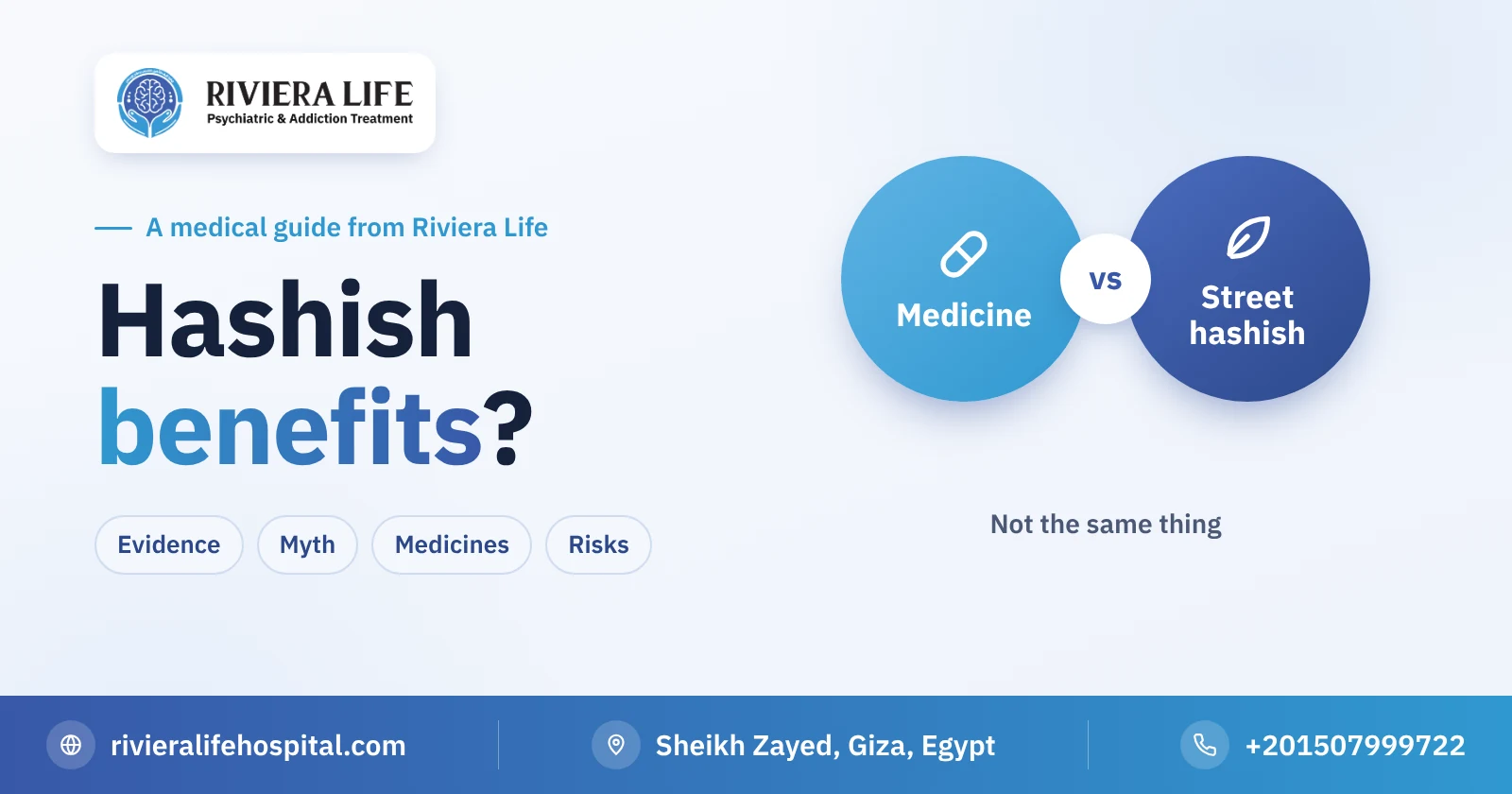
The benefits of hashish as users describe them are one thing, and what medicine has proven is another. There are medicines derived from the cannabis plant, or synthesized to resemble its compounds, that have proven useful in very limited medical conditions, such as rare types of epilepsy, severe nausea accompanying chemotherapy, and muscle stiffness in multiple sclerosis. But these medicines are one thing, and the piece of hashish smoked on the street is something else entirely. The claim that hashish treats depression, insomnia or anxiety isn’t backed by the evidence — often the opposite happens. Here we separate what has been scientifically proven from what is an impression, and explain why the feeling of benefit deceives the person who has it.
The short answer before the details
When you read a headline saying a study has proven the benefits of cannabis, what is usually meant is a single pure substance, at a known concentration, given to selected patients under medical supervision, and compared with a placebo. That doesn’t mean smoking hashish is beneficial, just as the presence of morphine in hospitals doesn’t make heroin a medicine. Medical benefit is tied to the substance, the dose, the patient and the follow-up, and doesn’t transfer automatically to a product of unknown composition.
What do studies mean by the benefits of cannabis?
The cannabis plant contains hundreds of compounds, the best known being two: tetrahydrocannabinol (THC), responsible for the high and altered perception, and cannabidiol (CBD), which doesn’t cause the same high. These compounds affect a natural system in the body involved in regulating pain, appetite, nausea and muscle movement, which is where researchers’ interest in them came from.
But research interest doesn’t equal medical approval. Many of the proposed uses still have weak or conflicting evidence, and only a few have reached the stage of a medicine approved by regulators such as the U.S. Food and Drug Administration.
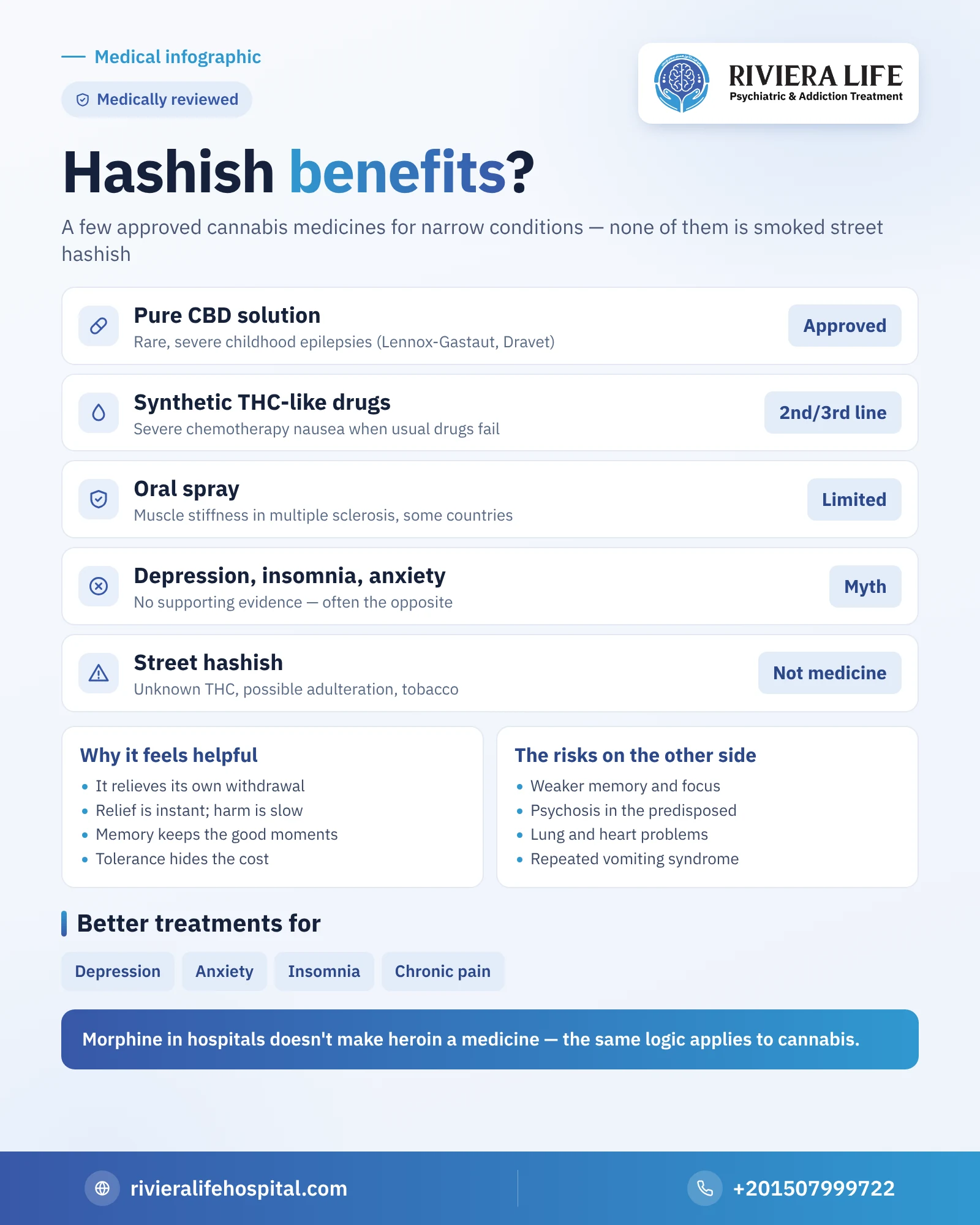
Approved cannabis-derived medicines and the conditions they are for
These are the uses backed by acceptable evidence; their availability differs from country to country, and they are only dispensed on prescription from a specialist doctor:
| Type of medicine | Condition | Important note |
|---|---|---|
| Pure cannabidiol as a medicinal solution | Rare, severe epileptic seizures beginning in childhood, such as Lennox-Gastaut and Dravet syndromes | Usually added to other epilepsy medicines, not a replacement for them, with periodic liver tests |
| Synthetic compounds resembling THC | Severe nausea and vomiting accompanying chemotherapy when the usual medicines aren’t enough | A second or third choice, not the first treatment for nausea |
| An oral spray combining both compounds in calculated proportions | Muscle stiffness and spasms in multiple sclerosis | Available only in some countries, for those not helped by other treatments |
Notice that the list is short, and that every item on it is conditional on a specific condition and the failure of previous treatments. None of them is used for depression, anxiety, insomnia or addiction.
Even these approved medicines have side effects the doctor monitors, including dizziness, drowsiness and changes in appetite, and sometimes mood swings or confusion with THC-like compounds. If a pure, measured medicine needs all this caution, what about a product no one knows the contents of?
Why don’t these benefits apply to street hashish?
Imagine a patient with multiple sclerosis taking a medicinal spray, and a young man smoking a hashish joint while sitting with his friends. The difference between them isn’t just in the name:
- Concentration: the medicine’s contents are precisely known, while a piece of hashish may carry a very high proportion of THC that no one knows, and these proportions have risen a lot compared with decades ago.
- Purity: street hashish may be mixed with other substances or adulterated with synthetic cannabinoids that are far more dangerous.
- Route of entry: smoking adds smoke and tar, and in Egypt hashish is usually rolled with tobacco, adding nicotine addiction.
- Follow-up: the medicine is given for a set period with side effects monitored, while use continues with no ceiling and no oversight.
- The goal: the medicine treats a specific symptom, while use seeks a high that needs a larger amount over time.
Myth: hashish treats depression
Many users say hashish is what makes life bearable. The truth is that it may give temporary relief for a few hours, but studies link regular use to an increased risk of depression, not a decrease, especially in those who started young. Over time something like a cycle appears: a bad mood, then hashish that eases it a little, then flatness and low motivation the next day, then the need for a new dose. Real depression has effective psychological and medication treatments, which you will find in our article on depression treatment.
Myth: hashish treats insomnia
Hashish may help with falling asleep quickly at first, and this is what convinces many that it treats insomnia. But it changes the structure of sleep and reduces the dream stage, and with continued use tolerance develops and its effect weakens. Then comes the surprise on stopping: severe insomnia and disturbing dreams as part of hashish withdrawal symptoms, so the person believes they can’t sleep without it, when the problem was created by hashish itself. Chronic insomnia has safe behavioral and medication treatments that a doctor sets.
Other common myths
- It calms anxiety: that may happen for minutes in some people, but higher doses can cause panic attacks and suspicion, which we detail in our article on hashish addiction and suspicion.
- It boosts creativity and focus: the feeling that your thoughts are deep is one thing, and actual performance is another; hashish weakens short-term memory and attention.
- It’s safe because it’s a natural plant: many poisons are natural, and natural doesn’t mean safe.
- It isn’t addictive: a significant proportion of regular users develop cannabis use disorder, and the proportion rises with an early start and daily use.
Why does the user feel they are benefiting?
The feeling of benefit is real, but its explanation is usually wrong. The first reason is relief of withdrawal: someone who uses daily becomes tense, irritable and sleepless when they are late, and when they smoke they calm down, so they think hashish treats tension, when it is treating the lack of itself. The second reason is that relief is immediate and clear, while the harm is slow and invisible: memory weakening a little, motivation dropping, relationships cooling. The third reason is that memory keeps the moments of pleasure and forgets the nights that ended in anxiety or palpitations.
The other side of the scale: risks that outweigh any imagined benefit
Even if we assume temporary relief, the price of regular use is high: weaker memory and concentration, a higher risk of psychosis in those predisposed, lung and heart problems, repeated vomiting syndrome, and effects on a teenager’s brain that hasn’t finished developing. We have gathered these harms in detail in our article on the harmful effects of hashish. Added to that, hashish is illegal in Egypt, and possession and use can bring legal consequences.
What about hashish oil and cannabidiol products?
Oils and products marketed as treating almost everything are widespread online. The only approved cannabidiol medicine is for specific epilepsy conditions, while commercial products may differ in concentration from what is written, may contain undeclared THC, and may interact with other medicines. There is nothing to justify using them as a treatment for psychiatric or chronic illnesses instead of medical treatment.
If you use hashish as a treatment
Ask yourself honestly: what problem am I trying to treat? Is it insomnia, anxiety, sadness or pain? Then take it to a doctor. Most of these problems have well-studied treatments. And if you notice that you can’t sleep or calm down without hashish, or that you are increasing the amount to get the same effect, these are signs of dependence that deserve an assessment; our article on hashish addiction treatment explains how treatment works. Don’t stop any medicine prescribed for you, or replace it with hashish, without your doctor.
How can Riviera Life help you?
At Riviera Life, consultants in psychiatry and addiction treatment assess what lies behind the use, whether insomnia, anxiety or depression, and treat it with well-studied methods instead of a temporary painkiller. The first consultation is free and confidential, around the clock, on +201507999722.
More from our hashish guide
- Hashish: the complete guide
- The harmful effects of hashish on the brain, heart and body
- The difference between hashish and marijuana
- Hashish addiction treatment and relapse prevention
Questions many people ask
The proven benefit concerns medicines extracted or synthesized from cannabis compounds for a few specific conditions, dispensed on prescription and under follow-up. Smoking hashish itself isn't an approved treatment for any illness.
It may speed up drowsiness at first, but it changes sleep quality, its effect weakens with tolerance, and it then causes clear insomnia on stopping, so it seems as if the person can't sleep without it.
Commercial products may differ in concentration from their label, may contain the substance that causes the high, or may interact with other medicines. Consult your doctor before using any of them.
With regular use, much of this relief is easing the symptoms of missing hashish itself — tension and irritability — not treating an underlying problem.
Yes. Psychotherapy such as cognitive behavioral therapy and medicines prescribed by a psychiatrist have proven effective, without the addiction and psychosis risks linked to hashish.