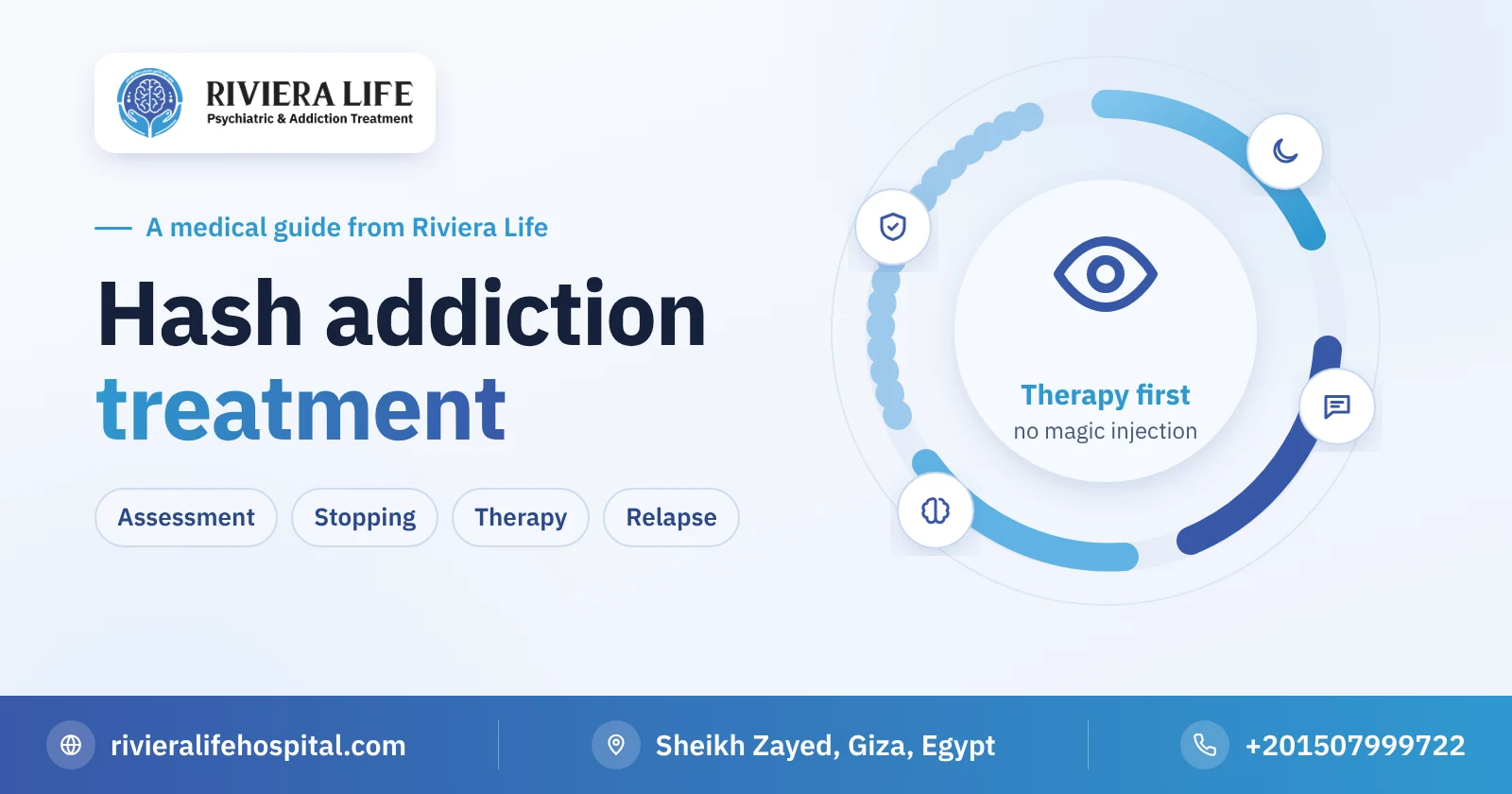
Hash addiction treatment is possible, and its results are good when it is built on organized psychological and behavioral therapy, not on advice and willpower alone. There is still no approved medicine that wipes out the craving for hash, so treatment relies on a careful assessment, a safe passage through the first weeks of stopping, sessions that change the person’s relationship with the substance, and treating the anxiety or depression that often hides behind it. This article explains the stages of treatment, its expected duration, when outpatient follow-up is enough and when admission is needed, and how to choose the right place.
Does hash addiction really need specialist treatment?
Families often hear the phrase “he’ll stop on his own when he grows up”. This sometimes happens, but someone who has reached daily use and tried to stop once or twice and failed usually won’t stop because they got a year older. Addiction here isn’t just a bad habit, but an adaptation in the brain that makes the first days without hash heavy: insomnia, nervousness and a distress whose source the person doesn’t know. With each failed attempt their conviction that they “can’t” grows. Specialist treatment breaks this cycle with a clear plan, and uncovers whether a psychiatric disorder lies behind the use that also needs treating.
The stages of hash addiction treatment
The details differ from person to person, but the journey usually passes through these stations:
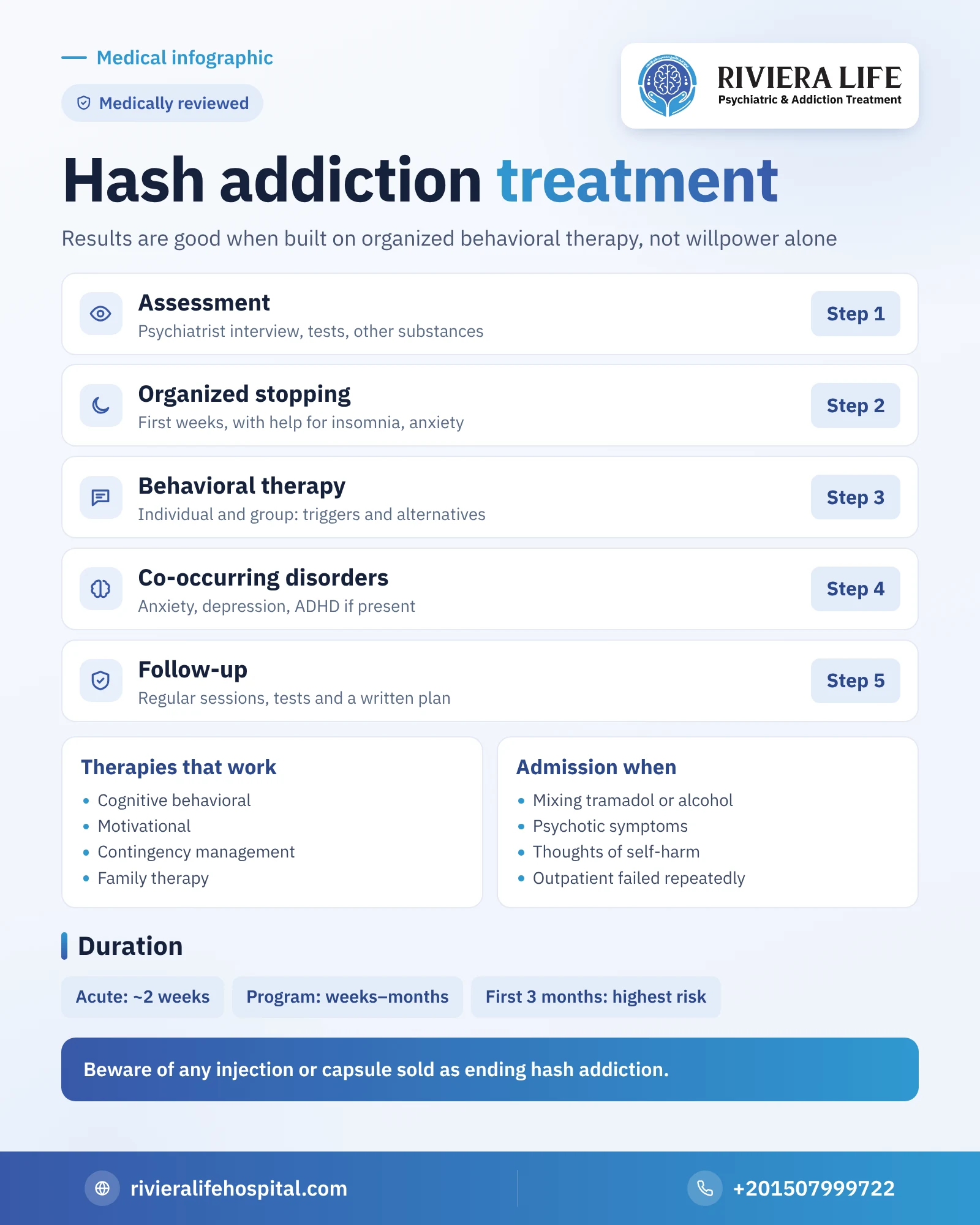
- Assessment: an interview with a psychiatrist, tests, and questions about other substances used with hash.
- Organized stopping: getting through the first weeks of withdrawal with treatment for insomnia and anxiety when needed.
- Psychological and behavioral therapy: individual and group sessions to understand triggers and build alternatives.
- Treating accompanying disorders: anxiety, depression, and attention deficit hyperactivity disorder, if present.
- Follow-up and relapse prevention: regular sessions, tests and a written plan for difficult moments.
The first assessment: what does the doctor look for?
The first session isn’t an interrogation, but an attempt to draw a complete picture. The doctor asks about the age of onset, how many cigarettes a day, whether you smoke in the morning before going out, and what happens when you stop. They also ask about tramadol, pregabalin and alcohol, because many hash users in Egypt mix it with other substances without mentioning it of their own accord. Then they assess mood, sleep and anxiety, and look for any previous suspicion or hallucinations. In light of this, the severity of the case is determined, along with whether outpatient follow-up is enough for it. If you are still at the stage of observing and want to know the signs first, see hash addiction symptoms.
The first weeks after stopping
Hash withdrawal isn’t usually dangerous to life, but it is unpleasant enough to make many attempts fail. The hardest parts are insomnia, disturbing dreams, nervousness and loss of appetite. The medical team’s role here is to ease these symptoms with short-term medicines when needed, and to monitor mood because some patients go through a clear dip. The details of timing and symptoms are in the article on hash withdrawal symptoms.
Psychological therapy: the heart of hash addiction treatment
This is the part whose effectiveness research proves more than any other for cannabis use disorder, and its methods are often combined in a single program:
Cognitive behavioral therapy
The patient learns to spot the moment that precedes the cigarette: boredom after dinner, a fight at home, sitting at the café. Then they train to deal with it differently, and to turn down the offer when it comes from an old friend without losing face.
Motivational therapy
Many hash users come hesitant, convinced their problem is “simple”. Motivational therapy doesn’t argue with them, but helps them see the gap between what they want for their life and what hash is doing to it, so the decision becomes theirs.
Contingency management
A system that rewards commitment with something tangible, such as linking certain privileges to negative test results. It has proven useful especially when added to the two previous therapies.
Family therapy
With teenagers and young people specifically, involving the family is a decisive factor, because it rebuilds communication and unifies the rules inside the home.
Are there medicines for treating hash addiction?
To this day there is no medicine approved specifically for treating cannabis use disorder. What the doctor does is treat symptoms: a temporary medicine for sleep, or treatment for anxiety and depression if their presence is confirmed. Some medicines are being studied in ongoing research, but their results haven’t yet reached a general recommendation. So beware of any place that sells you an “injection” or “capsule” that ends hash addiction, and don’t give your son any sleeping pill or sedative from the pharmacy without a doctor, because some open the door to a new addiction. You will find what the doctor actually prescribes, and why, in Hash addiction medications, and the truth about mixtures sold as natural cures in Herbal addiction treatment.
Treating accompanying anxiety and depression
A large number of hash patients began smoking to calm anxiety, to sleep, or to escape a sadness they can’t name. If the hash stops and this disorder remains untreated, returning is almost guaranteed. That is why the psychiatrist treats these conditions in parallel, with suitable psychological and medication treatment. If pathological suspicion or hallucinations appear, this calls for careful follow-up and may require admission. You will find an explanation of this side in the article on hash addiction and suspicion.
Hospital admission or outpatient follow-up?
Most cases of hash addiction alone can be treated with a regular outpatient program, in which the patient goes to their sessions and continues their work or study. But admission becomes the most suitable option in specific cases: mixing with tramadol, pregabalin or alcohol, psychotic symptoms appearing, thoughts of self-harm, outpatient follow-up failing more than once, or an environment in which the patient can’t stay away from the substance. The plan often begins with a short admission and then moves to outpatient follow-up.
Treating hash addiction at home: when is it safe?
Many families first ask about treating a hash user at home, and it is a fair question, because withdrawal from hash alone rarely threatens life. But “treatment at home” does not mean the patient shuts their door and relies on willpower. It means living at home while tied to a plan set by a doctor: regular sessions, follow-up of sleep and mood, and periodic tests that everyone agrees on in advance.
This route usually works when the following conditions come together:
- Hash is the only substance, without tramadol, pregabalin or alcohol.
- There are no psychotic symptoms, morbid suspicion or thoughts of self-harm.
- The patient wants to stop, rather than only being pushed into it.
- At least one person at home supports them without suffocating surveillance.
- They can stay away from the friends and places linked to using.
If any of these conditions is missing, or the patient has tried to stop at home more than once and gone back, that is a sign the environment itself is part of the problem, and that the start of treatment needs another place.
How long does hash addiction treatment take?
The acute symptoms of withdrawal usually settle within about two weeks, but this isn’t the duration of treatment. The organized psychological program usually extends from several weeks to a few months, then follow-up continues at spaced intervals for several more months. The first three months after stopping are the most vulnerable to relapse, so treatment shouldn’t end before them. The return of the body, concentration and sleep to normal has its own course, explained in the article When does the body return to normal after quitting hash?
How do you quit hash? Practical steps for the first days
Someone asking how to quit hash needs a daily plan more than general advice. These are steps therapists usually agree on at the start of the road, adjusted to each case:
- Set a quit day and don’t postpone it, and get rid of all the hash and gear you have before it.
- Tell someone you trust the date, so they are the first person you call when a strong urge comes.
- Expect insomnia and irritability in the first week, know they ease gradually, and don’t treat them with a sleeping pill from the pharmacy without a doctor.
- Change your evening routine, since that is usually when smoking happened: a walk, exercise, or a visit with no using.
- Write down moments of craving: when they came, where you were and who you were with. This sheet becomes the basis of the relapse-prevention plan later.
- Book a medical assessment if you can’t complete two weeks, or if clear depression or suspicion of others appears.
Preventing relapse: the triggers of daily life
In Egypt hash is linked to particular places and occasions: the rooftop gathering, the summer resort, the wedding, the Thursday night out, and a friend offering “a puff” as if offering tea. The relapse-prevention plan identifies these moments in advance, and sets a practical alternative for each: another place, different company, or a number the patient calls. It also includes organizing sleep and exercise and filling empty time, because boredom is among the strongest causes of returning. And a slip, if it happens, doesn’t mean everything is lost, but means reviewing the plan immediately.
The family’s role during treatment
A family that watches every move and searches the room daily pushes the patient to hide, and a family that ignores lets the problem grow. What is needed is a third way: clear, agreed rules, calm follow-up, and support for progress however small. The detailed steps are in the guide on how to deal with someone addicted to hash.
The right hospital for hash addiction treatment: how to choose
The right hospital for hash addiction treatment is the one that offers what a hash patient specifically needs: strong psychological and behavioral therapy, a psychiatrist who looks for anxiety, depression and psychosis, and long follow-up, not just a room and days of admission. Ask before you decide:
- Does the program rely on cognitive behavioral and motivational therapy, or on admission and sedatives?
- Does the psychiatrist assess and treat anxiety, depression and symptoms of suspicion and psychosis?
- Do they ask about tramadol, pregabalin and alcohol and treat them within the same plan?
- Do they offer outpatient follow-up that lets a student or employee continue their life?
- Are there family sessions and a written relapse-prevention plan after discharge?
- Do they respect confidentiality and not require informing any authority?
And stay away from any place that guarantees a cure rate or promises to end hash addiction in days.
How Riviera Life meets these standards
Riviera Life in Sheikh Zayed meets the previous conditions for hash addiction treatment in Egypt:
- Official license: a hospital licensed by the Ministry of Health.
- Years of practice: fourteen years treating people with addiction, during which thousands have left in recovery.
- Specialist consultants: doctors in psychiatry and addiction treatment who assess the anxiety, depression and suspicion linked to hash.
- A psychological and behavioral program: individual and group sessions that target the triggers of use and build practical alternatives.
- Round-the-clock supervision: 24-hour medical follow-up for those who need admission or mix hash with other substances.
- The family program: sessions that teach parents to support without stifling control.
- Aftercare: follow-up after discharge in the months most vulnerable to relapse.
- Complete confidentiality: full privacy for the data of the patient and their family.
If hash has weighed down your life or the life of someone you love, call us at any hour on +201507999722; the first consultation is free of charge, and the hospital is in Sheikh Zayed, Giza.
More from the hash guide
- Hash: the complete guide
- The causes of hash addiction
- The harms of hash
- How long hash stays in the body
- Hash addiction medicines: what the doctor prescribes, why, and the truth about an approved medicine
- The benefits of hash: what science has actually proven and what remains a myth
Questions many people ask
There is no medicine approved specifically for hash addiction yet. Treatment relies on psychological and behavioral sessions, and the doctor prescribes temporary medicines for insomnia or to treat anxiety and depression when needed.
Yes, many cases are treated with a regular outpatient program. Admission becomes necessary when mixing with other substances, when psychotic symptoms appear, or when previous attempts have failed.
Acute withdrawal settles in about two weeks, while the psychological program usually extends from weeks to a few months, with follow-up after it. The assessment determines the actual duration.
Usually because of returning to the same company and places, anxiety and depression remaining untreated, or ending follow-up early. The relapse-prevention plan targets these causes specifically.
Choose one that offers organized psychological and behavioral therapy, treats accompanying disorders, and provides follow-up and a family program. Riviera Life in Sheikh Zayed meets these criteria, with a Ministry of Health license, fourteen years of experience and complete confidentiality.