A family rarely notices heroin addiction symptoms or discovers use on its first day. Usually the story starts with small details that are easy to explain: sleeping at strange times, repeated requests for money, a bedroom door closed more than usual. Then these details pile up until they become a picture that can’t be ignored. This article helps you read that picture early: the physical, behavioral and psychological signs of heroin use, how they develop over time, when use becomes addiction in the medical sense, and what to do if you suspect.
A reminder before starting: no single sign is enough to prove use, as many of them may have another explanation. The real value lies in several signs coming together and persisting, and in a clear change from the person’s usual nature.
Physical signs of heroin use
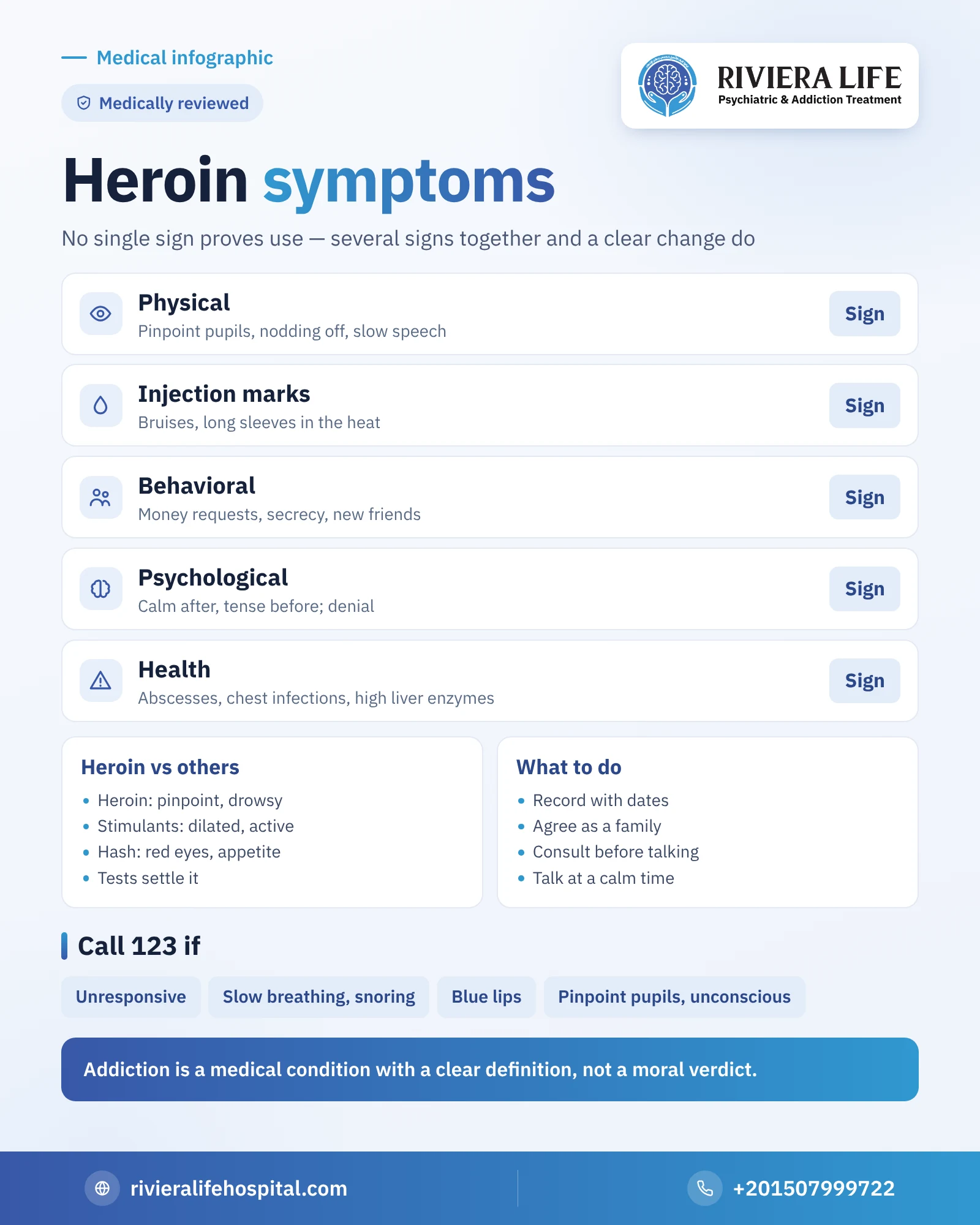
Some signs appear directly during the effect, and some build up with continued use. Among the clearest:
- Very small pupils even in dim light, one of the most consistent signs with opioids.
- Heavy drowsiness and repeated short naps while sitting or talking, then sudden waking.
- Slow speech, heavy movement, and redness or itching of the skin, especially on the face and nose.
- Weight loss and little interest in food and personal hygiene.
- Chronic constipation and repeated nausea.
- Puncture marks or bruises on the arms, hands or feet in those who inject, and wearing long sleeves even in the heat to hide them.
- A repeatedly runny or congested nose in those who snort.
And there is an important opposite sign: if the person repeatedly shows yawning, sweating, a runny nose and irritability at certain times, and these symptoms suddenly disappear after they go out and come back, these may be withdrawal symptoms relieved by the dose. The details of these symptoms are in the article on heroin withdrawal symptoms.
Behavioral signs
Behavioral changes are usually the first thing to catch the family’s attention, because they touch daily life directly:
- Constantly asking for money with changing excuses, or money and valuables disappearing from the house.
- A clear decline in study or work, and repeated absence and lateness.
- Friends changing suddenly, and moving away from old friends and relatives.
- Extreme secrecy: locking the room, hiding the phone, going out for repeated short periods without a clear explanation.
- Repeated lying about small details that don’t call for lying.
- Neglecting the hobbies and activities they used to love.
- Disturbed sleep times: staying up long, then sleeping deeply during the day.
Items that may point to use
The family may sometimes find things that seem out of place, such as pieces of aluminum foil with burn marks, spoons burnt underneath, very small bags with powder remains, empty pen tubes, or syringes and rubber tourniquets. Finding these things doesn’t necessarily mean they belong to the room’s owner, but it is enough reason to talk with them calmly and ask for a medical assessment.
Psychological and mood signs
Heroin changes mood in a swinging way that can be noticed over time. After use the person seems unusually calm, detached from what is around them, indifferent to problems. Then as the effect fades they become irritable, anxious and quick-tempered. With continued use deeper signs appear:
- Emotional flatness and loss of enthusiasm for anything not related to the substance.
- Low mood that may reach depression.
- Constant justification and denial, or intense anger when the subject is approached.
- Poor concentration and short-term memory.
Health signs that appear with continued use
As the months pass, heroin’s effects start to show on general health, and they may be what first leads the family to the doctor without knowing the real cause:
- Repeated skin infections or abscesses at injection sites.
- Repeated colds and chest infections due to weak breathing and weak immunity.
- Severe chronic constipation that doesn’t respond to the usual treatments.
- Disturbed periods in women and weak sexual desire in both sexes.
- Tooth decay and gum inflammation due to dry mouth and neglected care.
- Unexplained test results, such as raised liver enzymes or a positive hepatitis C result.
If these health problems come together with clear behavioral changes, it helps to tell the treating doctor your suspicions frankly, because this changes the way they assess the case. You will find a wider picture of what heroin does to the body’s organs in the article on the harms of heroin.
How do the signs develop from trying to addiction?
Addiction doesn’t happen all at once. In the early stages use may be intermittent, so signs appear on certain days and then disappear, and the person seems normal most of the time. With repeated use tolerance begins, so they need a larger amount, the time between doses shortens, and the unpleasant symptoms when a dose is late become clearer. In the advanced stage the person’s whole day is organized around getting and using the substance, all other priorities decline, and financial, legal and health problems show clearly.
Knowing this progression matters because many families wait for the “big signs” before acting, while intervention in the early stages is easier and more successful.
Can someone use heroin and seem normal?
Yes, for a time. Some users keep their job and appearance for months, especially at first or if they have financial resources that allow them to get the substance without visible problems. These are sometimes called “functioning addicts”. But this balance is fragile, as it depends on continued access to the substance, and hides a real risk of overdose behind it. So the absence of clear signs doesn’t mean the situation is safe if there are strong reasons to suspect.
How do you tell heroin signs from other substances?
Some signs distinguish heroin from other common drugs. Heroin and opioids in general cause pinpoint pupils, drowsiness and slowness, while stimulants such as shabu, cocaine and Captagon cause dilated pupils, excess activity, staying up and talking a lot. Hash is usually linked to red eyes, increased appetite and unexplained laughter. But mixing more than one substance is very common, appearance alone isn’t enough for diagnosis, and tests and medical assessment are the way to find out the truth. You can learn how the substance shows up in tests in the article on how long heroin stays in the body.
Signs of use in teenagers
In teenagers the signs of use mix with the swings of the age itself, so they are easy to ignore. What usually distinguishes use is that the change is sudden and comprehensive rather than gradual: a collapse in grades within one term, a complete change in the group of friends, stealing small things from home, loss of interest in sport or the main hobby. And a teenager is more vulnerable to overdose because of little experience with the substance and its effect, which makes early intervention more urgent.
When is use addiction?
Doctors use specific criteria to diagnose opioid use disorder, measuring how far the substance controls the person’s life over a year. Among the most important of these criteria:
- Using larger amounts or for longer than intended.
- Repeated failed attempts to cut down or stop.
- Losing long hours trying to get heroin or getting rid of its effects.
- Strong craving to use.
- Falling short in study, work or home responsibilities because of use.
- Continuing despite problems in relationships or health.
- Using in dangerous situations.
- Tolerance and the appearance of withdrawal symptoms.
The more criteria apply, the more severe the disorder. But this assessment is carried out by the doctor in a detailed interview, and the aim of presenting it here is to help the family understand that addiction is a medical condition with a clear definition, not a moral verdict on the person.
What do you do if you notice these signs?
The first step is not to act under the effect of shock. Write down what you noticed with its dates, and discuss it with someone you trust in the family so you agree on one approach. Contact a specialized medical service for a consultation even before talking with the person, as it helps you plan the conversation and know the available options. When talking, choose a time when they are calm and not under the influence, and talk about your fear for them and about specific behaviors you have seen, not general accusations. The guide on how to deal with a heroin addict includes detailed practical steps for this stage.
Danger signs that can’t wait
Call an ambulance on 123 immediately if you see
These are signs of a possible overdose, and the first minutes are what matter most.
- A person who doesn’t respond to calling or shaking
- Very slow breathing or snoring and choking sounds
- Lips or nails turning blue
- Very small pupils with loss of consciousness
Heroin is one substance from the opioid family, and you will find its full picture, from its origin to its effect on the brain and its legal status in Egypt, on the heroin page. And if your suspicions are confirmed, the next step is to learn about heroin addiction treatment and its stages.
Questions many people ask
Very small pupils with heavy drowsiness and repeated short naps are among the clearest signs during the effect, but they aren't enough on their own for diagnosis.
Heroin causes slowness, drowsiness and pinpoint pupils, while stimulants cause excess activity and dilated pupils. But mixing substances is common, and tests and medical assessment settle the matter.
Yes, for a time, especially at first or with money that covers the use. But behavioral and financial signs usually appear with time, and the risk of overdose remains even if the person seems normal.
When several criteria apply to the person over a year, such as loss of control over the amount, failed attempts to stop, continuing despite problems, and the appearance of tolerance and withdrawal. The doctor determines the diagnosis and its severity.
It is better to wait a day or two to plan, consult a medical service, then talk at a calm time about your worry and about specific behaviors, away from accusation and threats.