When talking about the harms of heroin, thinking turns straight to overdose, and it really is the most dangerous thing about it. But the picture is much wider than that; heroin leaves its mark on the lungs, heart, liver, kidneys, hormones and brain, and its effect extends to the family, work and money. Some of these harms appear from the first doses, and some build up silently over years. This article sets out the short and long-term harms, what injecting and mixing with other substances add, heroin’s effect on pregnancy and teenagers, and what can improve after stopping.
Short-term harms of heroin
In the hours after use, the person may suffer from:
- Slowed breathing, the most dangerous direct harm and the cause of most deaths.
- Severe drowsiness, clouded thinking and slowed reactions, raising the risk of accidents and falls.
- Nausea and vomiting, a real danger if it happens during loss of consciousness because the person may choke on it.
- Low blood pressure and a slow heartbeat.
- Itching, dry mouth and heavy limbs.
Long-term harms of heroin on the body
With continued use for months or years, harms build up in more than one body system:
The respiratory system
Heroin weakens the cough reflex and deep breathing, so lung infections recur, especially with smoking and poor nutrition. The lungs may also be affected by insoluble substances mixed with heroin when it is injected.
The heart and blood vessels
Repeated injecting may carry bacteria into the blood, reaching the heart valves and causing a serious infection that may need surgery. Veins are also damaged and blocked over time, and clots and infections appear in the limbs.
The liver and kidneys
Most liver harm comes from hepatitis C and B transmitted by sharing injection equipment, and it may progress to cirrhosis. The kidneys may be affected by repeated infections, by substances mixed with heroin, and by muscle breakdown if the person stays unconscious for a long time in one position.
The digestive system
Chronic constipation is one of the most common harms, because opioids slow bowel movement. It is accompanied by poor appetite, malnutrition and weight loss, as well as tooth decay and gum inflammation due to dry mouth and neglected care.
Hormones and immunity
Long-term opioid use affects the hormonal glands; testosterone may fall in men and periods may be disturbed in women, with weak sexual desire and difficulty conceiving. The immune system is also weakened, so infections recur and last longer.
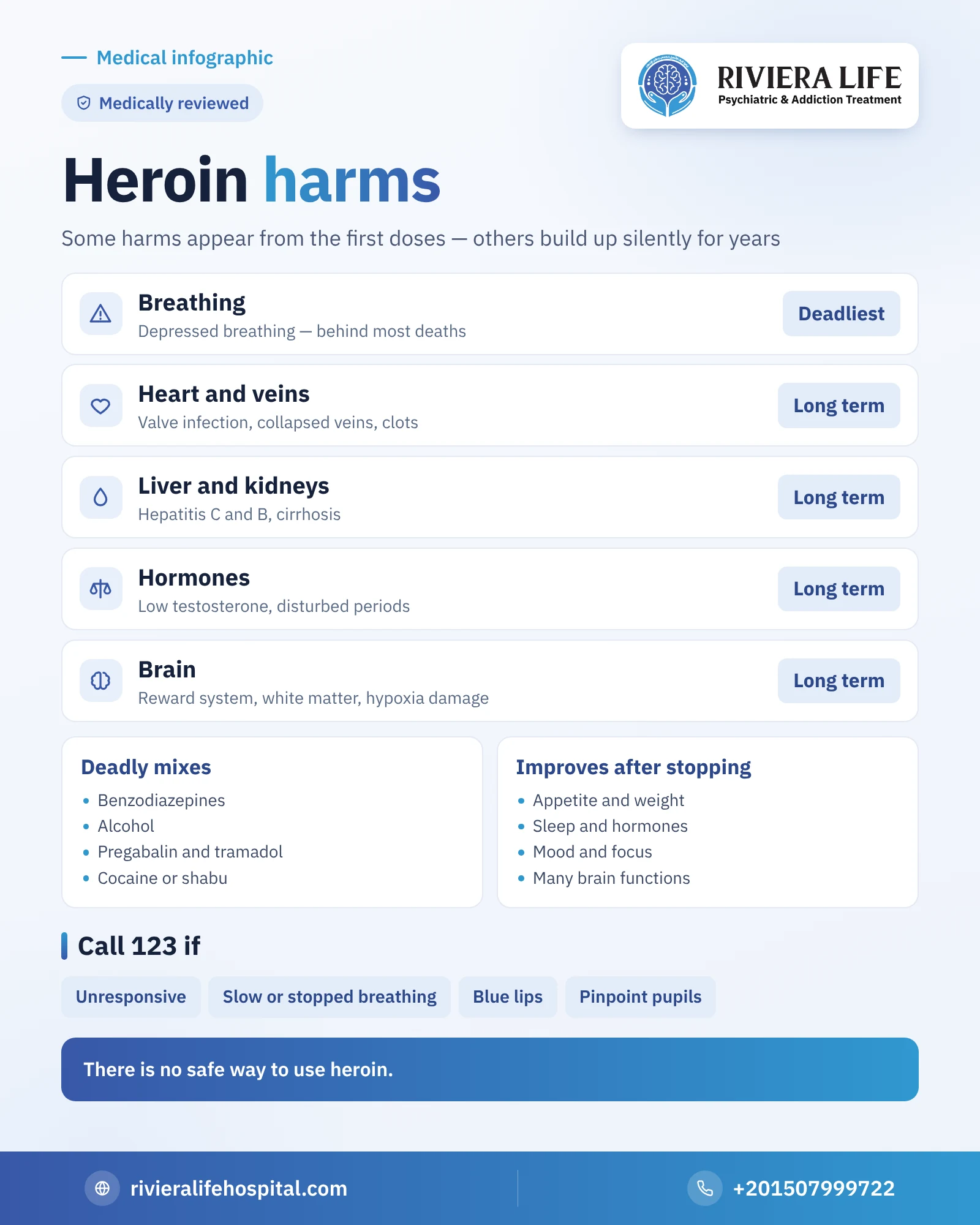
Harms of heroin on the brain and mental health
Heroin changes the way the brain’s reward system works, so the ability to enjoy ordinary things declines, and the motivation for work and relationships falls. Imaging studies link long-term use to changes in the brain’s white matter, which is responsible for carrying signals between its regions, which may be reflected in decision-making, controlling impulses and coping with stress. Psychologically, the risk of depression, anxiety and sleep disorders rises, and thoughts of hopelessness increase, especially in periods of withdrawal and relapse.
How does lack of oxygen harm the brain and body?
When breathing slows because of a large dose, the oxygen reaching the brain falls. If this lasts a few minutes it may cause permanent damage to brain cells, even if the person survives. Someone who survived an overdose may afterwards have problems with memory, movement or concentration. That is why calling an ambulance as soon as signs of overdose are noticed is a matter of life, not just a precaution.
Harms of mixing heroin with other substances
Many heroin deaths don’t happen because of heroin alone, but because of mixing it with other substances that also depress breathing. Among the most dangerous combinations:
- Sedatives and sleeping pills such as benzodiazepines, which multiply breathing depression.
- Alcohol, which combines breathing depression with a higher risk of vomiting and choking.
- Pregabalin and tramadol, both common in Egypt, which raise the risk of depression and seizures.
- Stimulants such as cocaine and shabu, which may temporarily mask heroin’s effect so the person takes a larger amount, then the depression appears after the stimulant’s effect wears off.
- Heroin: the complete guide
Harms of injecting and sharing equipment
Injecting adds independent harms to those of the substance itself, including abscesses and skin infections, collapsed veins, heart valve infection, and transmission of hepatitis C and B and HIV through sharing needles and equipment. Deep skin infections may in rare cases reach tissue damage that calls for surgical intervention.
Do the harms differ by method of use?
Some harms differ, but the basic danger is the same. Injecting is more linked to infection and problems with the veins and heart, smoking strains the lungs and airways, and snorting causes irritation and bleeding of the nose and damage to the nasal septum over time. But all methods cause dependence and addiction, and all can end in an overdose.
Harms of heroin on pregnancy and the fetus
Heroin crosses the placenta to the fetus, and its use during pregnancy is linked to a higher risk of premature birth, low birth weight and placental problems. The baby is often born dependent on opioids, so after birth withdrawal symptoms appear such as intense crying, tremor and difficulty feeding and sleeping, a condition that needs specialized care in a neonatal unit. The solution isn’t sudden stopping, which may also harm the fetus, but early medical follow-up and suitable medicine treatment during pregnancy. To learn about the effect of other substances on the fetus and how a pregnant woman can get safe help, see the article on drugs and pregnancy.
Harms of heroin on teenagers
The brain in adolescence is still developing, especially the areas responsible for self-control and decision-making. That is why a teenager moves faster into addiction, and is more vulnerable to overdose because of little experience with the substance and its effect. The harm extends to study, relationships and future opportunities, and use may cut off important years of building skills and identity.
Social and financial harms
Heroin’s harm doesn’t stop at the user’s body. As getting the substance becomes a daily priority, trust within the family erodes, lying, borrowing and selling possessions recur, and performance at work declines, sometimes until the job is lost. The family is exposed to great psychological and financial pressure, and children in the home may be deeply affected. Use is also linked to legal problems that may leave a long mark on the person’s life.
Do heroin’s harms go away after stopping?
The good news is that many harms improve after stopping and treatment. Appetite, weight, sleep and hormones gradually return to normal over months, and mood and concentration improve with time and psychotherapy. Areas of the brain regain a large part of their functions with long abstinence. But some harms, such as chronic hepatitis, heart valve damage or the effect of oxygen deprivation on the brain, may need special treatment or leave a permanent mark, which is an extra reason not to delay treatment. You will find the stages of treatment and what to expect in the article on heroin addiction treatment.
Signs of overdose
Call an ambulance on 123 immediately if you see
Don't wait for the person to wake up on their own.
- Loss of consciousness and no response to calling
- Very slow, irregular or stopped breathing
- Blue lips and nails
- Very small pupils
To learn about the early signs of use before these harms build up, see the article on heroin addiction symptoms. And heroin’s effect on sexual desire, ability and fertility is explained in detail in the article on heroin and sex.
Questions many people ask
Depressed breathing that can lead to overdose and death, and the risk increases greatly when heroin is mixed with sedatives or alcohol or after a period of abstinence.
The greatest harm to the liver usually comes from viral hepatitis transmitted by sharing injection equipment, and it may progress to cirrhosis. That is why everyone who has injected is advised to have virus tests.
Yes, it may lower testosterone in men and disturb ovulation and periods in women, and these changes usually improve after stopping and treatment.
Many improve gradually with long abstinence and treatment, such as mood, concentration and sleep. But damage from lack of oxygen in a previous overdose may be permanent.
Smoking avoids the harms of needles and infection, but it strains the lungs and also causes addiction and overdose. There is no safe way to use heroin.