Drugs and pregnancy is a relationship that doesn’t concern the mother alone: most substances cross the placenta and reach the fetus, and their effects vary with the type of substance, its timing in pregnancy and the amount. Alcohol may cause a permanent syndrome in the child’s development, opioids may leave the newborn with withdrawal symptoms after birth, and stimulants and smoking raise the risk of premature birth and low weight. But the most important message is this: stopping some substances suddenly can also be dangerous, and confidential medical help without judgment is the safest path for mother and child. This article is for every pregnant woman who uses or fears she has harmed her baby, and for every family that wants to help.
Drugs and pregnancy: how do drugs reach the fetus?
The placenta isn’t the tight barrier many people think. Most substances that reach the mother’s blood cross it and reach the fetus, which doesn’t have a mature liver to get rid of them quickly. In the first weeks the organs form, so substances may affect their formation, and in the following months growth and brain development are affected.
The outcome isn’t determined by the substance alone, but also by the amount and how often it is used, mixing more than one substance, the mother’s nutrition, and whether there is regular pregnancy follow-up. That is why no article can judge a particular case; only the doctor assesses your situation.
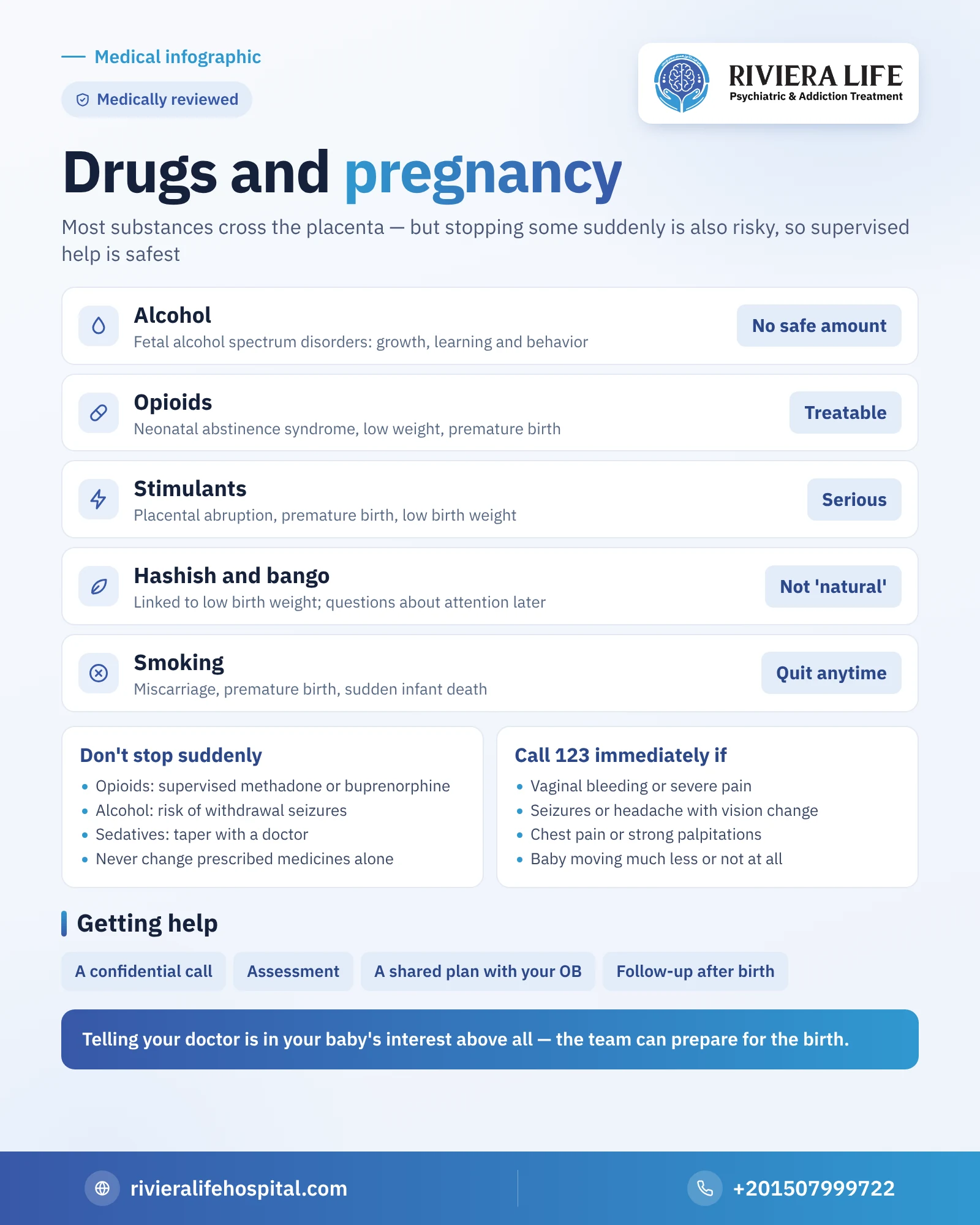
| Substance | The main things it may cause in the fetus or newborn |
|---|---|
| Alcohol | Fetal alcohol spectrum disorders: problems with growth, learning and behavior |
| Opioids | Neonatal abstinence syndrome, low weight and premature birth |
| Stimulants | Placental abruption, premature birth and low weight |
| Hashish and bango | A link with low birth weight, and open questions about attention development |
| Smoking | Miscarriage, premature birth and sudden infant death |
Alcohol and fetal alcohol spectrum disorders
There is no known safe amount of alcohol during pregnancy, and no safe time. Alcohol interferes with the growth of the fetus’s cells, especially in the brain, and may cause what are called fetal alcohol spectrum disorders. These include distinctive facial features in some children, delayed growth, difficulties with learning, memory and attention, and behavioral problems that show at school. Their effects last a lifetime, but they are completely preventable by stopping.
If the mother depends on alcohol, stopping suddenly may cause dangerous withdrawal, so it must be done under medical supervision. The details of alcohol’s harms to the mother herself are in the harmful effects of alcohol.
Opioids and neonatal abstinence syndrome
When the mother regularly uses heroin, tramadol, codeine or nalbuphine, the fetus’s body becomes used to it too. After birth the source is cut off suddenly, so the newborn goes through withdrawal symptoms that usually appear in the first days, and may be delayed with some substances. Its symptoms include sharp, constant crying, tremor, difficulty feeding and sleeping, diarrhea and sweating.
This condition is treatable in neonatal units, and the medical staff prepare for it if they know in advance. That is why telling the doctor is in the child’s interest above all.
Why can stopping suddenly be dangerous?
The natural reaction of any pregnant woman who discovers the risk is to stop immediately. But with some substances that may do more harm than good. Sudden opioid withdrawal puts the fetus under stress, and raises the risk of relapse and going back to using in a dangerous amount. That is why medical guidelines usually recommend that a pregnant woman dependent on opioids receive medication treatment under supervision, such as methadone or buprenorphine, rather than stopping abruptly.
The same applies to alcohol and sedatives, where withdrawal may cause seizures that threaten mother and fetus. The firm rule: don’t stop or change any prescribed medicine on your own; talk to your doctor first.
Stimulants: cocaine, ice and captagon
Stimulants narrow blood vessels and raise blood pressure, so less blood and oxygen reach the fetus. They are linked to an increased risk of placental abruption, a serious bleed for both mother and fetus, as well as premature birth and low weight. The mother herself may suffer a sharp rise in blood pressure or a heart rhythm disorder. Their long-term effects on the child’s development are still being studied, and poverty, poor nutrition and home circumstances are intertwined with them.
Hashish and bango during pregnancy
Some pregnant women believe hashish eases nausea or tension, and that it is “natural” and therefore harmless. But the active substance crosses the placenta, and studies link its use during pregnancy with low birth weight and are investigating its relationship with later attention and learning problems. Synthetic cannabis, such as strox, is more dangerous because its composition is completely unknown. For treating nausea there are safe options set by the obstetrician.
Smoking and nicotine
Smoking is the most widespread substance and the most underestimated. It is linked to miscarriage, premature birth, low weight and placental problems, and to an increased risk of sudden infant death after birth. Shisha and e-cigarettes aren’t safe alternatives, and secondhand smoke at home has an effect too. The good news is that quitting at any stage of pregnancy helps, and you can start with our article on quitting smoking.
Sedatives, pregabalin and prescribed medicines
Some pregnant women take medicines prescribed for anxiety, pain or epilepsy, which for some have turned into dependence. Using sedatives close to delivery may cause floppiness, breathing difficulty or withdrawal symptoms in the newborn. Pregabalin has a separate article: pregabalin and pregnancy. In every case, the doctor decides with the pregnant woman how to balance the medicine’s benefit and risk, and how to reduce it if necessary.
Pregnancy follow-up without fear of judgment
What most stops a pregnant woman from speaking is shame and fear of how the doctor or family will see her. But a pregnant woman who hides her use deprives herself and her baby of more careful follow-up, and may reach delivery without anyone being prepared for the newborn’s condition. A good doctor asks in order to treat, not to judge.
Imagine a woman five months pregnant who has taken tramadol for years and is ashamed to admit it. If she hides it, her baby may be born with withdrawal symptoms that no one understands in the first hours. If she speaks up, the doctor prepares a safe treatment plan for her, and the neonatal team prepares to receive the newborn.
Pregnancy in this situation needs a team: an obstetrician who monitors the fetus, an addiction doctor who manages treatment, and a family that supports instead of blaming. Our article on women’s addiction covers fears around motherhood and stigma in more detail.
Breastfeeding and drugs: common questions
Many substances pass into breast milk. It is usually advised to avoid breastfeeding with continued regular use of alcohol, hashish or stimulants. A mother who is stable on medication treatment for opioid addiction under medical supervision, however, is often encouraged by doctors to breastfeed for its benefits, after assessing her condition. Viral infections and other medicines also affect the decision, so each case is settled with the doctor.
Call an ambulance on 123 immediately if you see
A pregnant woman who uses needs urgent care when any of these signs appear.
- Vaginal bleeding or severe, persistent abdominal pain
- Seizures, or a violent headache with disturbed vision
- Chest pain or strong palpitations
- Severe sleepiness or slow breathing after using
- A clear decrease in, or stopping of, the baby’s movements
How do you get confidential help?
It starts with a call or consultation in which the situation is explained honestly, without needing to inform anyone you don’t want to inform. Then comes an assessment of the type of substance, the stage of pregnancy and your psychological state, then a plan agreed between the addiction doctor and the obstetrician: whether supervised withdrawal inside the hospital is needed, medication treatment, or outpatient follow-up. Follow-up continues after the birth, because the first months may bring stress and relapse, and postpartum depression may appear.
At Riviera Life, consultants in psychiatry and addiction treatment assess the pregnant woman in complete confidentiality, and the withdrawal stage is managed under round-the-clock medical supervision in coordination with the following obstetrician, with a family program and aftercare. The first consultation is free on +201507999722.
Read also
- Pregabalin and pregnancy: does it cause birth defects?
- Women’s addiction: why it is different and how to start treatment confidentially
- The harms of opioids on body and mind
- Drug overdose: the signs and first aid
- How drugs affect the menstrual cycle: delays, missed periods and when to see a doctor
Questions many people ask
Not necessarily; the effect depends on the substance, the amount and the timing. The best step now is to tell your obstetrician frankly so they can assess the situation and monitor the baby.
The newborn may go through withdrawal symptoms called neonatal abstinence syndrome, which isn't addiction in the behavioral sense. It is treatable, and the medical team prepares for it if they know in advance.
Medical guidelines consider them a preferred option over continuing to use or stopping suddenly for a pregnant woman dependent on opioids. The doctor decides the option and the right follow-up.
There is no known safe amount of alcohol during pregnancy. Complete abstinence is the approved medical recommendation.
Treatment at a hospital committed to confidentiality isn't disclosed to anyone without your permission. Even so, having at least one supportive person during pregnancy may help you.