The short answer
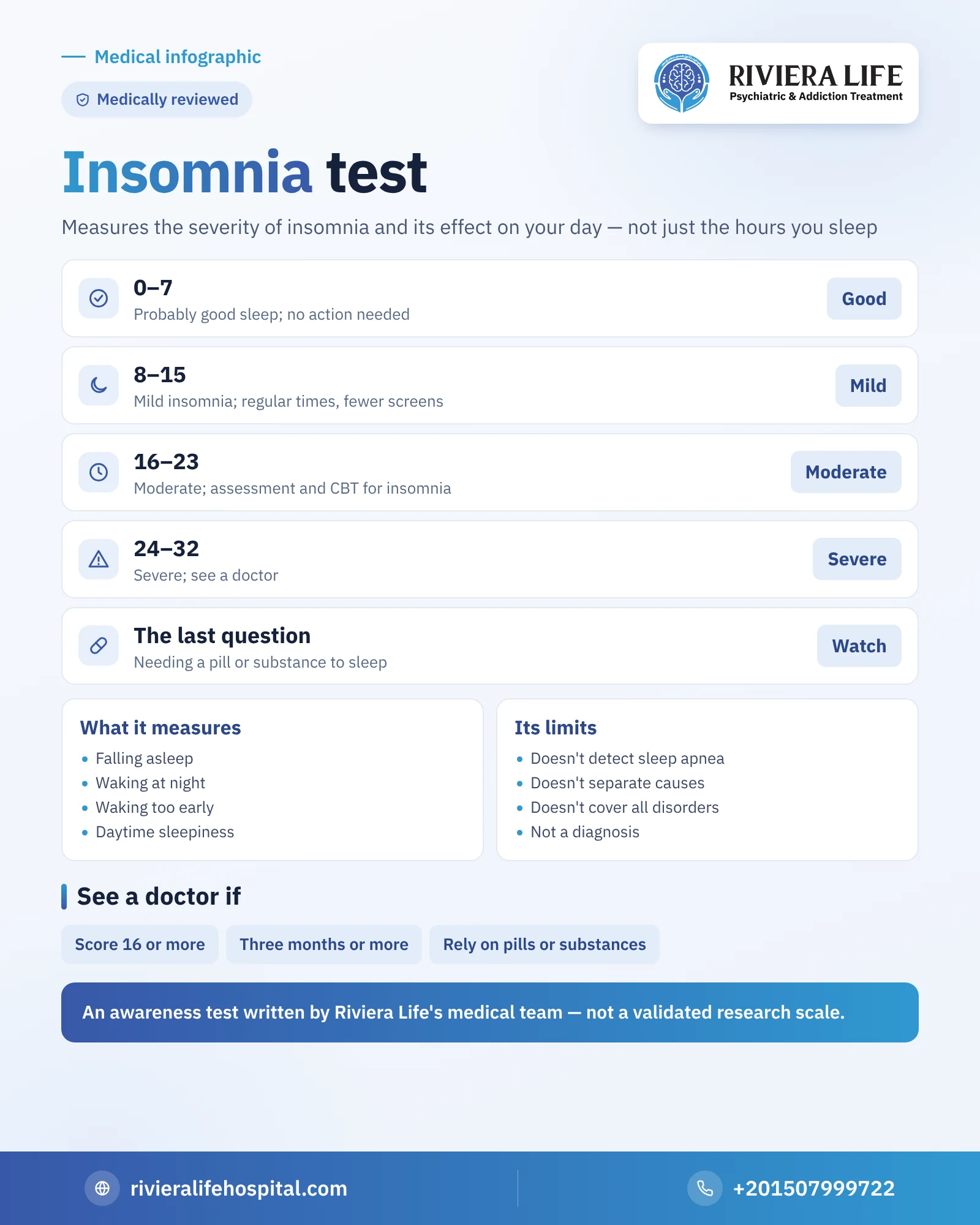
The Riviera Life insomnia test is eight questions about the past month, measuring difficulty falling asleep, waking at night, waking early, unrefreshing sleep, daytime sleepiness, worry about sleep, and relying on a medicine or substance to sleep. Each answer scores from 0 to 4, and the score runs from 0 to 32: 0 to 7 is probably good sleep, 8 to 15 mild insomnia, 16 to 23 moderate, and 24 or more severe. Insomnia that lasts three months or more deserves an assessment.
- DurationAbout a minute and a half
- ScoreFrom 0 to 32
- 16 or moreAn assessment by a doctor
A night or two of bad sleep before an important event is something everyone knows. But when the bed becomes a place for tossing and thinking, and worry about sleep itself begins before you turn off the light, insomnia has built its own cycle. This test measures the severity of insomnia and its effect on your day, not just the number of hours you sleep.
Start the insomnia test
Insomnia test
Over the past month, how often has the following happened to you?
To discuss your result with a psychiatrist in confidence, the first consultation is free on +201507999722.
This is an awareness test prepared by the medical team at Riviera Life; it is not a research-standardized scale or a diagnosis. Your answers are not saved or sent to anyone; the calculation happens on your device only.
What your score means
| Score | Meaning | What helps you? |
|---|---|---|
| 0 to 7 | Probably good sleep | No action |
| 8 to 15 | Mild insomnia | Regular sleep times and fewer screens and less caffeine |
| 16 to 23 | Moderate insomnia | An assessment, and behavioral therapy for insomnia |
| 24 to 32 | Severe insomnia | See a doctor |
The last question carries special weight
If you answered “often” or “always” about needing a medicine or substance to sleep, pay attention even if your total score is moderate. Sleeping pills and sedatives lose their effect over time and are hard to leave, and stopping them suddenly causes worse rebound insomnia. And many who turn to hashish or alcohol to get drowsy find their sleep worse after weeks. Details in sleeping pill addiction.
The test’s limits
- It doesn’t detect sleep apnea, whose sign is loud snoring with severe daytime sleepiness despite sleeping enough hours.
- It doesn’t distinguish between primary insomnia and insomnia resulting from depression or anxiety, which is very common.
- It doesn’t cover the other sleep disorders, which you will find in sleep disorders.
About this test
These questions were prepared by the medical team at Riviera Life, cover the three patterns of insomnia and their daytime effect, and we added the question about relying on substances because of its importance in our daily work. It is an awareness test, not a research-validated scale and not a diagnosis.
How can Riviera Life help you?
We assess the psychological and medication causes of insomnia, help those used to sleeping pills stop gradually and safely, and treat the anxiety or depression behind sleeplessness. The first consultation is free and confidential on +201507999722.
Read also
Questions many people ask
When difficulty sleeping happens at least three nights a week for three months or more, with a clear effect on the day.
The doctor may prescribe them for a short period, but relying on them for long causes habituation, and behavioral therapy for insomnia is an effective and safe option.