The short answer
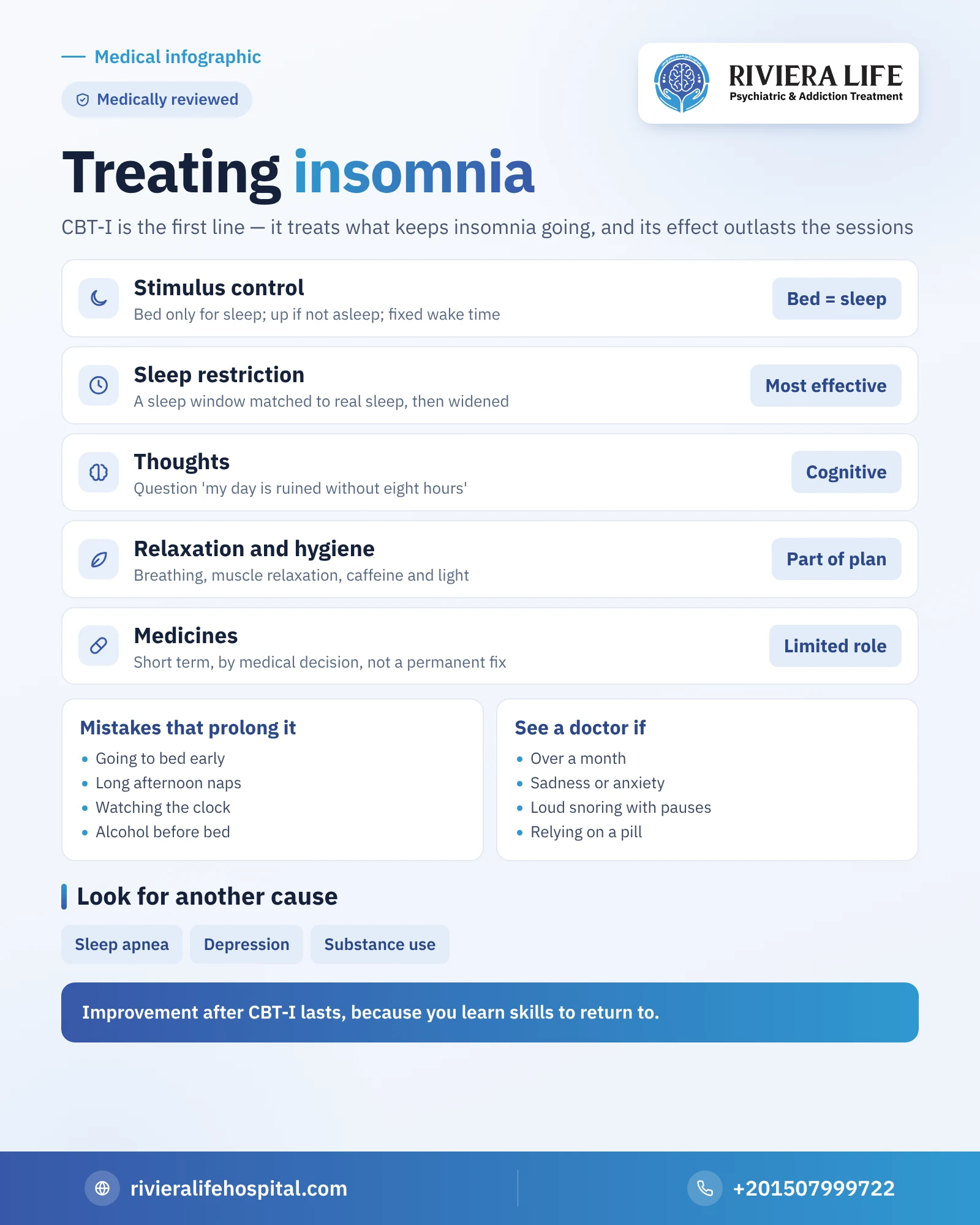
Treating chronic insomnia starts with cognitive behavioral therapy for insomnia, the first line in medical guidelines because it treats what keeps insomnia going, not just its symptoms, and its effect lasts after the sessions end. It rests on regulating sleep times, linking the bed to sleep alone, cutting wasted time in bed, and changing the thoughts that increase worry about not sleeping. Sleeping pills have a short, specific role decided by the doctor, and aren’t a permanent solution. And if insomnia is part of depression, anxiety, sleep apnea or substance use, treating the cause is an essential part of treating the insomnia.
- First lineCognitive behavioral therapy for insomnia
- Sleeping pillsFor a short period and by medical decision
- When to look for another causeLoud snoring, persistent sadness, or substance use
Many who search for insomnia treatment have tried herbs, warm drinks and pills available at the pharmacy, then found the hard nights come back. The reason is that chronic insomnia doesn’t continue because of what started it, but because of habits and thoughts that form around it over time: going to bed early to make up, watching the clock, and worrying about tomorrow. This guide explains what actually works, why, and the order of the steps.
First: is it insomnia that needs treatment?
A bad night after a tiring day or before an exam isn’t an illness. Doctors talk about insomnia disorder when difficulty falling asleep, repeated waking, or waking early without being able to get back to sleep recurs at least three nights a week for three months, with a clear effect in the daytime: exhaustion, poor concentration or irritability, despite having the time and conditions for sleep.
Before any plan, the doctor asks about causes that shouldn’t be missed: loud snoring with pauses in breathing, tingling legs at night, symptoms of depression and anxiety, medicines that may cause insomnia, and caffeine, alcohol and drugs. Because treating insomnia without attention to these causes is like lowering a fever without knowing its source.
Cognitive behavioral therapy for insomnia: how does it work?
This treatment is known by the abbreviation CBT-I, and usually runs to between four and eight sessions, and it can be delivered individually, in groups or through reliable digital programs. It consists of several elements that work together:
Stimulus control: redefining the bed
As insomnia goes on, the bed turns in its owner’s mind into a place for tossing and thinking. The aim is to link it again to sleep: don’t go to bed until you feel sleepy, use the bed only for sleep, not for the phone or work, and if you don’t fall asleep within what seems like a long time, get up and go to another place with dim lighting and come back when sleepiness returns, and wake at the same time every day however the night went.
Restricting time in bed
This is the most effective element and the hardest at first. The therapist sets a sleep window close to the number of hours the patient actually sleeps, not the hours he spends in bed, so sleep pressure increases and sleep becomes deeper and less broken, then the window is widened gradually with improvement. This part needs supervision, because sleepiness increases in the first days, and it doesn’t suit some cases such as uncontrolled epilepsy or bipolar disorder without adjustment.
Working on thoughts
Thoughts such as “if I don’t sleep eight hours my day will be ruined” or “I’ll never sleep tonight” raise tension in bed and drive sleep away. The patient learns to examine these thoughts and put them in proportion, and to set aside a time for worry in the evening away from the bed.
Relaxation and sleep hygiene
Breathing exercises and muscle relaxation help those who find it hard to calm their bodies, and sleep hygiene rules come in, such as regulating caffeine, light, exercise and dinner. But these rules alone aren’t enough to treat chronic insomnia; they are part of the plan, not the whole plan.
When are insomnia medicines used?
Medication has a place, but a limited one. The doctor may prescribe it for a short period in acute insomnia linked to a crisis, to support the patient at the start of behavioral treatment, or when this treatment isn’t available. Among the options doctors discuss:
- Hypnotics of the zolpidem family and its relatives: they help with falling asleep, but the possibility of dependence on them exists, and they may cause complex behaviors during sleep in some people.
- Benzodiazepines: doctors usually avoid them in chronic insomnia because of dependence, weakened memory and falls in older people.
- Medicines that act on the orexin system responsible for wakefulness, available in some countries.
- Low doses of some antidepressants with a sedating effect, such as trazodone or doxepin, especially if insomnia comes together with depression.
- Melatonin: its benefit in ordinary insomnia is modest, and clearer in body clock disorders and older people.
As for sedating antihistamines bought without a prescription, they aren’t advised as ongoing treatment, because their effect weakens with repetition and they may cause daytime sluggishness and confusion in older people. You will find details of dependence on hypnotics in our article on sleeping pill addiction.
When insomnia is part of another condition
Insomnia often comes together with depression and anxiety, and the relationship goes both ways: insomnia raises the risk of depression, and depression spoils sleep. In this case it isn’t enough to wait for sleep to improve on its own after the mood is treated, as the evidence points to the benefit of treating insomnia directly alongside depression.
And in recovery from addiction, insomnia is one of the most persistent symptoms after stopping, especially after alcohol, sedatives and hashish, and it is one of the common causes of relapse because the patient returns to the substance in order to sleep. That is why the sleep plan at this stage needs special care in choosing medicines, and you will find what helps in our article on melatonin and sleep in recovery.
How long does insomnia treatment take?
Most who stick to cognitive behavioral therapy notice improvement within a few weeks, though the first or second week may be harder because of restricted time in bed. The important difference from pills is that improvement continues after the sessions stop, because the patient has learned skills he returns to if insomnia comes back in a period of stress.
Mistakes that prolong insomnia
- Going to bed early to make up, so time in bed without sleep grows longer.
- Long naps in the afternoon.
- Sleeping until noon on days off, so the body clock is disturbed for the rest of the week.
- Watching the clock at night and counting the hours left until morning.
- Alcohol before sleep: it speeds the start of sleep but breaks up the second half of the night.
- Increasing the dose of a sleeping pill without consulting the doctor when its effect weakens.
When do you need a psychiatrist or sleep doctor?
Ask for an assessment if insomnia continues for more than a month despite changing habits, comes with sadness and loss of interest or persistent anxiety, if the person who sleeps beside you notices loud snoring and pauses in breathing, if you have come to depend on a sleeping pill, alcohol or a substance to sleep, or if exhaustion has begun to threaten your safety in driving or work. And if insomnia comes with thoughts of self-harm, this needs urgent help, not an ordinary appointment.
How can Riviera Life help you?
At Riviera Life, insomnia treatment starts with an assessment that looks for the cause: a mood disorder, anxiety, substance use or dependence on a sleeping pill, then a plan is built combining cognitive behavioral therapy for insomnia with treatment of the accompanying condition, and safe gradual withdrawal from sleeping pills when needed. Follow-up is offered in the outpatient clinic or within a stay if the insomnia is part of a wider condition. You can also measure the severity of your insomnia before the visit with our insomnia test.
More from our insomnia guide
- Insomnia: the complete guide
- Sleep disorders: types and signs
- Anxiety at bedtime
- Sleeping pill addiction
Questions many people ask
Cognitive behavioral therapy for insomnia is the first line in medical guidelines, because it treats what keeps insomnia going and its effect lasts after the sessions end.
They ease symptoms for a short period by medical decision, but they don't treat the causes of chronic insomnia, and some carry a risk of dependence.
Most people who stick to cognitive behavioral therapy notice improvement within a few weeks, though the first week may be harder.