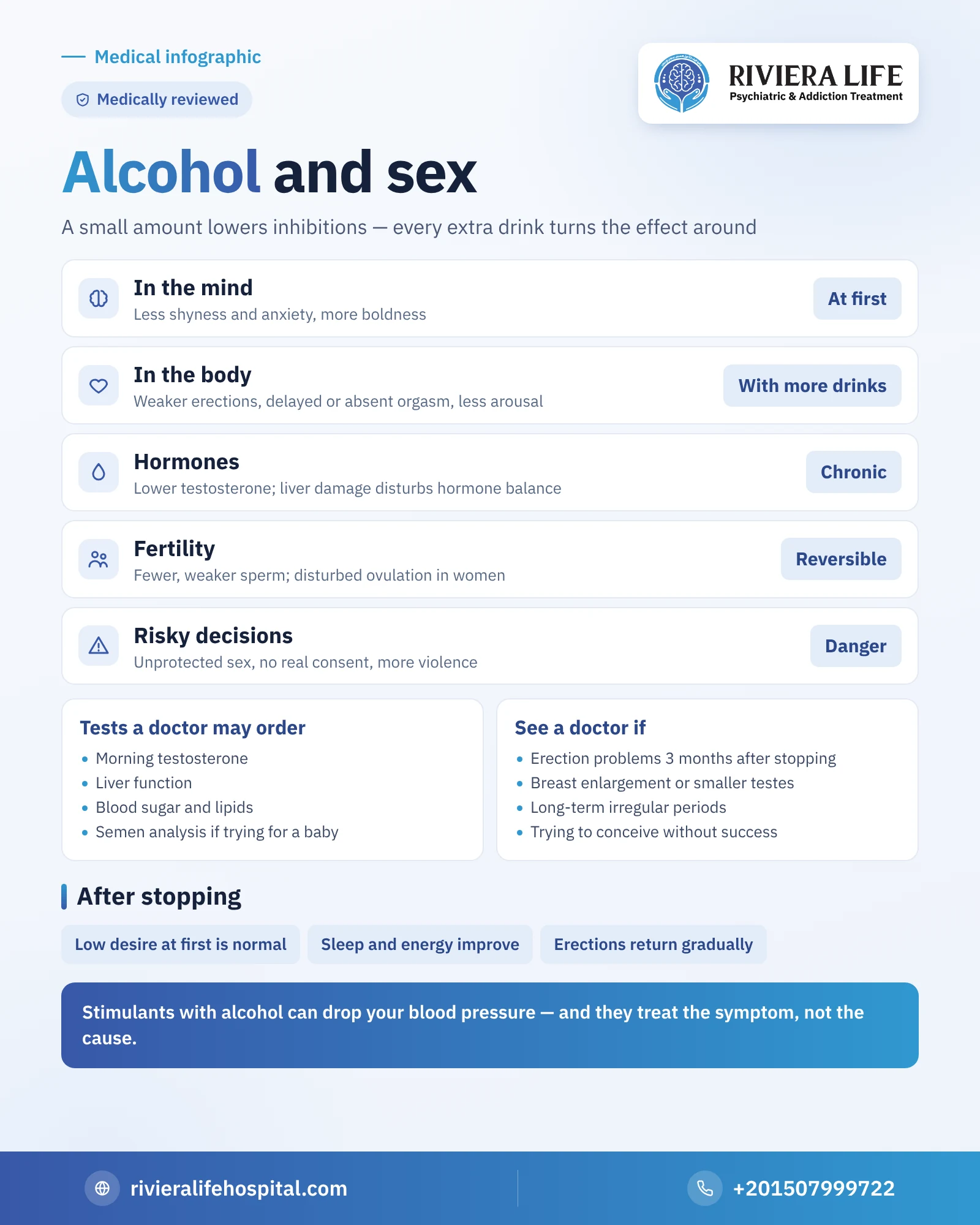
Many people link alcohol with romantic nights, and some believe a couple of drinks remove tension and improve performance. This is partly true in small amounts: shyness eases and boldness grows. But the relationship between alcohol and sex turns around with every extra drink: erections weaken, ejaculation is delayed or doesn’t happen, and arousal in women falls. With chronic drinking, the harm extends to hormones, fertility and the marriage itself. This article explains what happens to men and women in the short and long term, what returns after stopping, and when you need a doctor.
Does alcohol improve sex?
Alcohol raises desire in the mind and lowers it in the body. At first it calms anxiety and weakens inhibitions, so a person feels bolder and freer. But the nervous system the body needs for arousal, erection and orgasm is the very one alcohol depresses. The common result is that desire is present while the body lets its owner down, creating embarrassment and anxiety that, ironically, push some people to drink more the next time.
What happens to the body during sex after drinking?
In men, an erection needs healthy nerve signals, enough blood flow and the ability to keep that blood in the penis; alcohol in large amounts slows the signals and weakens this process, so the erection is weak or short-lived and ejaculation is delayed or impossible. In women, lubrication and sensation decrease, and orgasm becomes harder and less intense, even though desire may seem higher. Add drowsiness, nausea and dehydration, and the hoped-for night turns into a disappointing experience for both partners.
Alcohol and long-term erectile dysfunction
The problem doesn’t stay on the night of drinking. Regular drinking over years is linked to persistent erectile weakness, even on days when the man doesn’t drink, for overlapping reasons: damage to peripheral nerves, high blood pressure, affected blood vessels and lower male hormones, as well as accompanying depression and anxiety. The longer the drinking and the larger the amount, the slower the recovery, but many men notice a clear improvement after months of stopping.
How does alcohol affect hormones?
Alcohol is directly toxic to the testosterone-producing cells in the testes, and it also affects the signals from the brain that regulate its production. With chronic drinking, testosterone may fall, weakening desire, energy and muscle mass. And if the liver is damaged, its ability to regulate the female hormones naturally present in men weakens, so some patients develop breast enlargement, shrinking of the testes and loss of body hair. These changes are signs of advanced liver disease and deserve an urgent examination.
Alcohol and sex in women
Women are usually affected by alcohol faster than men at the same amount, for reasons related to body size and the proportion of water in the body. In the short term, arousal and lubrication decrease and orgasm becomes difficult. Chronic drinking, on the other hand, can cause menstrual irregularity, weak desire and chronic dryness, and it is also linked to depression, which switches off interest in intimacy. Many women hesitate to mention these complaints to the doctor, even though they are a normal part of the assessment.
Does alcohol cause infertility?
Regular heavy drinking is linked in men to a lower sperm count, weaker motility and changes in shape, and in women to disturbed ovulation and difficulty conceiving. The effect may improve after stopping, because sperm is renewed within about three months. If a couple is planning a pregnancy, stopping alcohol is one of the simplest and most important steps. And once a pregnancy begins, complete abstinence becomes essential, because alcohol passes to the fetus, as our article on the harmful effects of alcohol explains.
Alcohol and risky sexual behavior
Because alcohol impairs judgment, it is linked to decisions a person wouldn’t have made sober: sex without protection, or with people they don’t know, with the risk of sexually transmitted infections and unplanned pregnancy that follows. A person who is severely drunk is also not in a state to give conscious consent — a point both partners must understand. Alcohol is also linked to increased violence within relationships.
How does drinking affect a marriage?
In many homes the problem doesn’t start in the bedroom but before it: a husband coming home late smelling of alcohol, repeated arguments, and a wife who has lost trust and her sense of safety. In this atmosphere intimacy is hard to sustain, even if physical function is intact. Drinking may also increase jealousy and irritability, and the relationship itself becomes a place of tension. That is why treating erectile weakness alone isn’t enough; repairing trust is part of sexual recovery.
Do sexual stimulants solve the problem?
Some men turn to sexual stimulants to make up for the effect of alcohol, without consulting a doctor. These medicines don’t treat the cause, and combining them with alcohol can lead to a drop in blood pressure, dizziness and fainting, especially with blood-pressure medication. Relying on them also postpones facing the underlying problem. The right decision is for a doctor to assess the cause of the weakness, which may be hormonal, vascular or psychological — or alcohol alone.
What happens after you stop drinking?
In the first weeks after stopping, desire may stay low and performance anxiety may appear; this is normal and usually temporary, as the body and mood readjust. Over the months, sleep, energy and hormone levels improve in many people, and erections and sensation return gradually. The speed varies with age, how long someone drank, and the state of their liver and nerves. You will find a description of what people generally go through at this stage in our guide to quitting alcohol.
Do addiction treatment medicines affect your sex life?
The medicines a doctor prescribes to support abstinence from alcohol aren’t usually known for a major effect on sexual function, but some medicines used to treat accompanying depression or anxiety may affect desire or delay ejaculation. If you notice a change after starting a new medicine, talk to the doctor so they can adjust the plan, and don’t stop the medicine on your own. The details of these medicines and their role are in our article on alcohol addiction treatment.
What tests might the doctor order?
When a man who drinks, or who has recently stopped, complains of weak erections or desire, the doctor doesn’t just prescribe a quick treatment but looks for the cause. They may order a morning testosterone measurement, pituitary hormones, liver function, blood sugar and lipids, a blood-pressure check, and sometimes a semen analysis if the couple is trying for a baby.
For women, a hormone test may be ordered if periods are irregular. These tests help distinguish between a temporary effect that goes away with stopping and a physical problem that needs specific treatment, such as liver disease or diabetes that hasn’t yet been discovered. Many men discover through this visit other health problems that alcohol has silently created.
When do you need a doctor?
Ask for a consultation if weak erections or desire continue about three months after stopping, if you notice breast enlargement or smaller testes, if periods are irregular for a long time, or if you are planning a pregnancy and it hasn’t happened. And if the drinking is still going on and you feel you can’t stop, that is the problem worth starting with — the first step is to learn the symptoms of alcohol addiction and ask for a confidential assessment.
More from our alcohol guide
- Alcohol: the complete guide
- The harmful effects of alcohol on body and mind
- Alcohol addiction treatment: stages and medication
- The causes of alcohol addiction
- Sedatives and sex: their effect on desire, erections, orgasm and consent
- Night Calm and sex: insomnia, desire, sleep behaviors and consent
Questions many people ask
It may in large amounts, because it depresses the nervous system, but this usually comes with weaker erections and difficulty reaching orgasm, so it is not an improvement in performance.
They improve in many men within weeks to months of stopping; the speed depends on how long they drank, their age, and the health of their nerves, liver and blood vessels.
Chronic heavy drinking can lower testosterone, because it damages cells in the testes and affects the hormonal signals from the brain, and this is worse with liver disease.
It isn't advisable without a doctor: the combination can lower blood pressure and cause dizziness and fainting, and stimulants don't treat the real cause of the weakness.
Yes. Heavy drinking can reduce sperm count and quality, which usually improve within about three months of stopping, because sperm is constantly renewed.