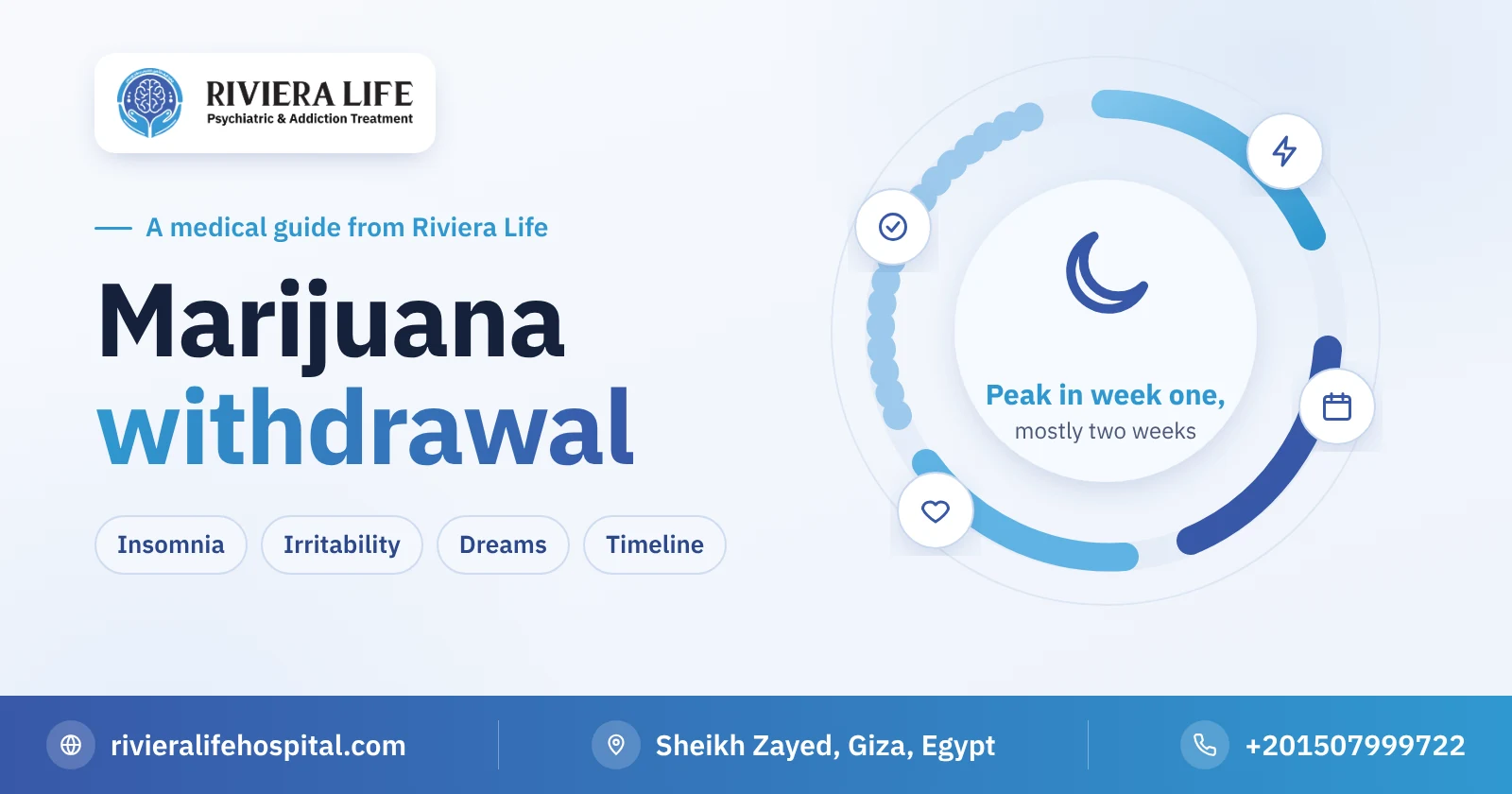
Marijuana withdrawal symptoms usually begin one to three days after the last use, peak during the first week, then gradually calm down over about two weeks, while sleep disturbance and disturbing dreams may last a month or more. The most prominent things the person feels are irritability, insomnia, anxiety and loss of appetite. These symptoms aren’t usually life-threatening, but they are the leading reason home attempts to stop fail. Here we set out the timeline stage by stage, what makes withdrawal more severe for some people, and how to get through it with the least suffering.
Does marijuana have real withdrawal symptoms?
For decades the prevailing belief was that marijuana doesn’t cause withdrawal, and that what the user feels after stopping is just “boredom”. But accumulating studies have changed this picture, and cannabis withdrawal syndrome has become a recognized diagnosis in the diagnostic manual of mental disorders. Research suggests that a large proportion of regular users, perhaps close to half, go through clear withdrawal symptoms on stopping. With the rising concentration of THC in today’s varieties, withdrawal has become clearer and longer than users of previous generations described.
Why do symptoms appear after stopping?
During months of use, the brain got used to the presence of an outside substance that activates cannabinoid receptors, so it reduced their number and the activity of its natural system. When the substance suddenly disappears, the brain finds itself with an exhausted system that isn’t enough to regulate sleep, appetite and mood, so symptoms appear until it regains its balance. And because THC is stored in fat and released from it slowly, withdrawal appears later and more gradually compared with other substances. Our article on marijuana addiction explains how this adaptation forms from the start.
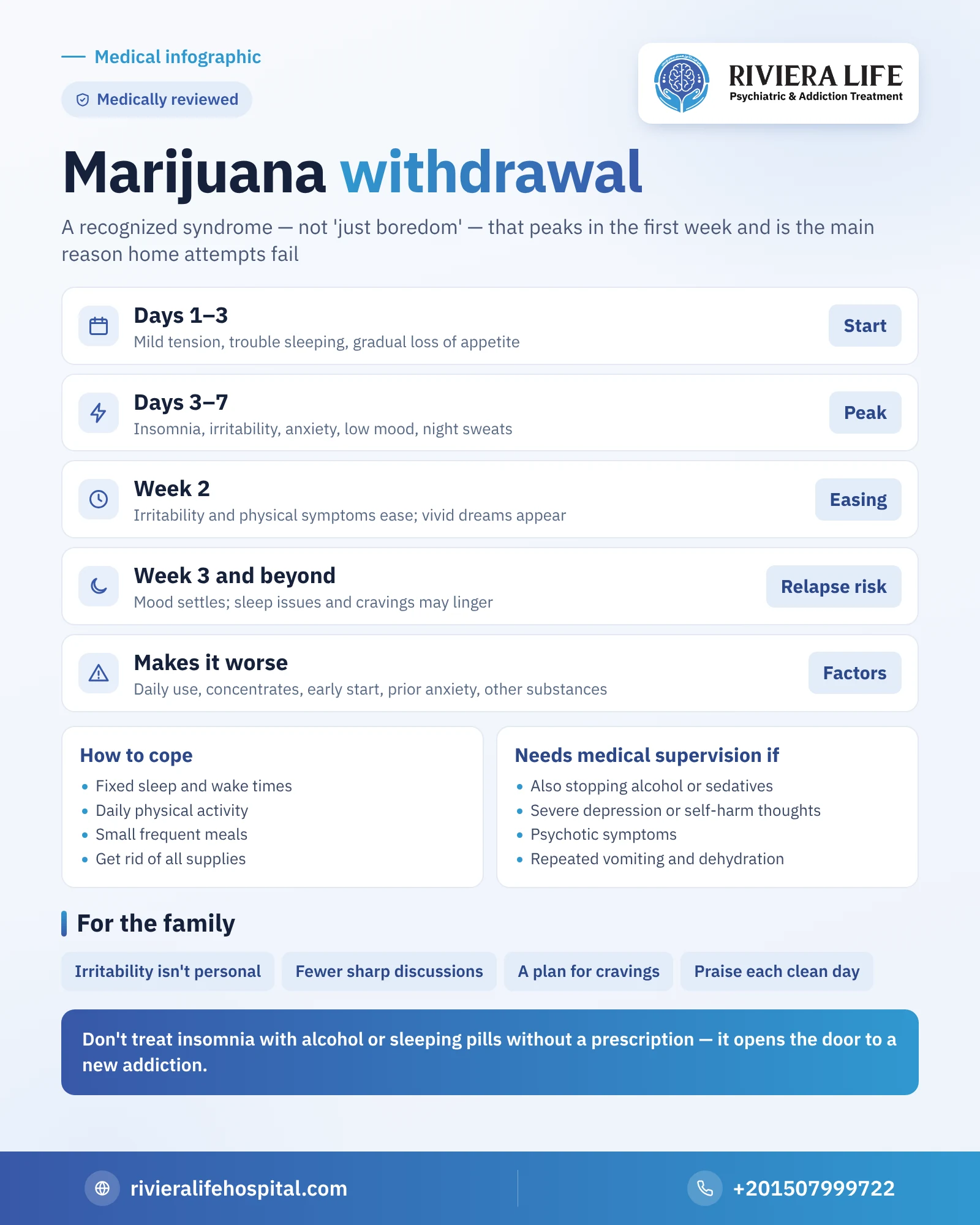
The timeline of withdrawal symptoms
The details vary from person to person depending on the amount and length of use and the strength of the variety, but most cases follow this approximate sequence. In someone who used concentrates or vapes all day, symptoms may start earlier and the peak be more severe:
Days one to three: the start
Mild tension and a heavy chest without a clear reason, difficulty sleeping on the first or second night, and gradual loss of appetite. Those around notice that the person has become quick to anger and less patient.
Days three to seven: the peak
Here the symptoms reach their most severe. Clear insomnia, irritability that may reach outbursts of anger, anxiety, low mood, night sweats, and sometimes headache, abdominal pain and slight tremor. These days are the most dangerous in terms of going back to using.
The second week: easing
Irritability and physical symptoms gradually ease, and appetite returns bit by bit. But sleep remains broken, and unusually many and vivid dreams appear.
The third week to the end of the month and beyond
Mood settles for most people, while some are left with sleep problems and intermittent cravings to use, which intensify in particular situations. This stage needs relapse prevention skills more than medicine. Cravings often come after a sudden feeling of improvement, when the person convinces themselves that “one joint” won’t hurt because they are now in control, and this very thought is one of the most common gateways back.
Psychological withdrawal symptoms
- Irritability and quick anger over small things, the best-known symptom.
- Anxiety, tension and a feeling of unease.
- Low mood and loss of enjoyment of things.
- An urgent craving to use that comes in waves.
- Difficulty concentrating and restlessness.
Physical withdrawal symptoms
- Loss of appetite and weight loss in the first week.
- Abdominal pain and nausea.
- Sweating, especially at night.
- Headache and slight tremor.
- Chills, or sometimes a feeling of heat without a real rise in temperature.
These physical symptoms are much milder than opioid or alcohol withdrawal, but when combined with insomnia and irritability they make the first days truly exhausting. Anyone who belittles them in front of the patient or calls them pampering is making a mistake, as that pushes the patient to hide their suffering and then go back to using in secret.
Insomnia and disturbing dreams: the longest symptom
Marijuana reduces the stage of sleep in which dreams occur, so when the person stops, the brain makes up for it strongly, and dreams come intense, vivid and sometimes frightening. This is accompanied by difficulty falling asleep and frequent waking. Many people in recovery say insomnia was harder than any other symptom, and that it was the main driver of going back to the “sleep joint”. That is why treatment focuses on regulating sleep from day one.
What makes withdrawal more severe?
- Daily use, or use several times a day.
- Using high-concentration concentrates and vapes.
- A long duration of use, especially if it began in adolescence.
- Pre-existing anxiety or depression that marijuana was covering.
- Stopping other substances at the same time, such as alcohol, sedatives or tobacco.
The last point is important: withdrawal from alcohol and sedatives may be dangerous and needs medical supervision that can’t be taken lightly.
How do you deal with the symptoms?
- Fix your bedtime and wake time, keep your phone away from the bed, and cut down on stimulants after the afternoon.
- Do daily physical activity, as it improves sleep and eases anxiety and irritability.
- Eat small, frequent meals even with a weak appetite, and drink water regularly.
- Tell someone you trust that you are going through a hard period, and agree to call them when cravings intensify.
- Get rid of all equipment and supplies, and delete the numbers of those you bought from.
- Don’t treat insomnia with alcohol or sleeping pills without a prescription, as this opens the door to a new addiction.
How can the family support someone going through withdrawal?
Irritability in these days isn’t directed at the family personally, but is part of the symptoms, and understanding this spares the home many clashes. It helps for the family to reduce sharp discussions and big decisions during the peak week, to provide light, favorite food despite the weak appetite, and to share a simple daily activity such as an evening walk.
It is also useful to agree in advance on what happens if cravings intensify: who they call and where they go, instead of improvising a reaction in a moment of weakness. Praising every day that passes without use has a stronger effect than constant reminders of past mistakes. If the family notices deep sadness or talk of despair, this is the time to call the doctor, not to wait.
When do you need medical supervision?
For many it is enough to go through withdrawal with outpatient follow-up, but direct medical supervision becomes necessary if the person is also using alcohol, sedatives or tramadol, if severe depression or thoughts of self-harm appear, if there are psychotic symptoms, or if previous attempts failed at the same peak. In cases of repeated vomiting and dehydration, the patient needs an urgent assessment. What comes after withdrawal, psychotherapy and follow-up, you will find in our article on marijuana addiction treatment.
Does the substance leave the body when the symptoms end?
Not necessarily. Symptoms may end in two weeks while marijuana’s breakdown products still show in a urine test for a heavy user for longer, a point that matters to many who face tests at work or school. The details are in our article on how long marijuana stays in the body.
How can Riviera Life help you?
At Riviera Life the peak days pass under round-the-clock medical supervision, with treatment targeting sleep and anxiety, and psychotherapy sessions that start early to build skills for dealing with cravings before discharge. Most importantly, the plan doesn’t stop when the symptoms end, but extends to aftercare and a family program.
More from our marijuana guide
- Marijuana: the complete guide
- Marijuana addiction treatment
- Marijuana addiction symptoms
- How long marijuana stays in the body
Questions many people ask
Most symptoms last about two weeks and are most severe in the first week. Sleep disturbance and vivid dreams may extend for a month or more in heavy users.
It isn't usually life-threatening, but it may be dangerous if accompanied by severe depression or thoughts of harm, or if the person is stopping alcohol or sedatives at the same time.
Because marijuana reduces the stage of sleep in which dreams occur, and after stopping the brain makes up for it strongly, so dreams come intense and vivid, then gradually calm down.
A temporary loss of appetite and weight may happen in the first days, then appetite usually returns in the second week.
It isn't advised without a doctor, as some sleeping pills cause new dependence. The doctor chooses the right treatment for sleep according to the case.