The harms of marijuana are wider than its “light” reputation suggests. It weakens short-term memory and concentration, raises the workload on the heart, irritates the airways when smoked, and is linked with daily use of potent types to a higher risk of anxiety, depression and psychosis. Added to this are two harms doctors have been seeing more in recent years: cannabinoid hyperemesis syndrome, and poisoning from foods with added cannabis. This article sets out the harms to the brain, mind, body and life, explains who is most at risk, and what improves after stopping.
Harms that occur within hours of use
- Weakened short-term memory and attention, and difficulty following tasks.
- Slowed reaction and disturbed judgment of distances and time.
- A faster heartbeat, and sometimes a drop in blood pressure on standing suddenly, with dizziness.
- Acute anxiety or a panic attack, especially with potent types or the first time.
- Temporary suspicions and persecutory thoughts, and sometimes hallucinations with large doses.
Memory, concentration and learning
The hippocampus, responsible for turning new information into memories, is rich in the type of receptor THC acts on. That is why the first thing affected is the ability to store new information and retrieve it, not old memories. A student who uses regularly may study for hours and then discover that nothing has stuck. Studies indicate that part of this weakness improves weeks after stopping, while some may persist in those who started early and used heavily for years.
The brain in adolescence
The brain before the mid-twenties is still building and refining its networks, and the front areas responsible for planning and controlling impulses are the last to mature. The presence of THC at this stage is linked in studies to lower academic performance, a higher likelihood of dropping out, and problems with attention and memory that may not fully recover. The teenager is also more vulnerable to addiction itself, as the article on the causes of marijuana addiction explains.
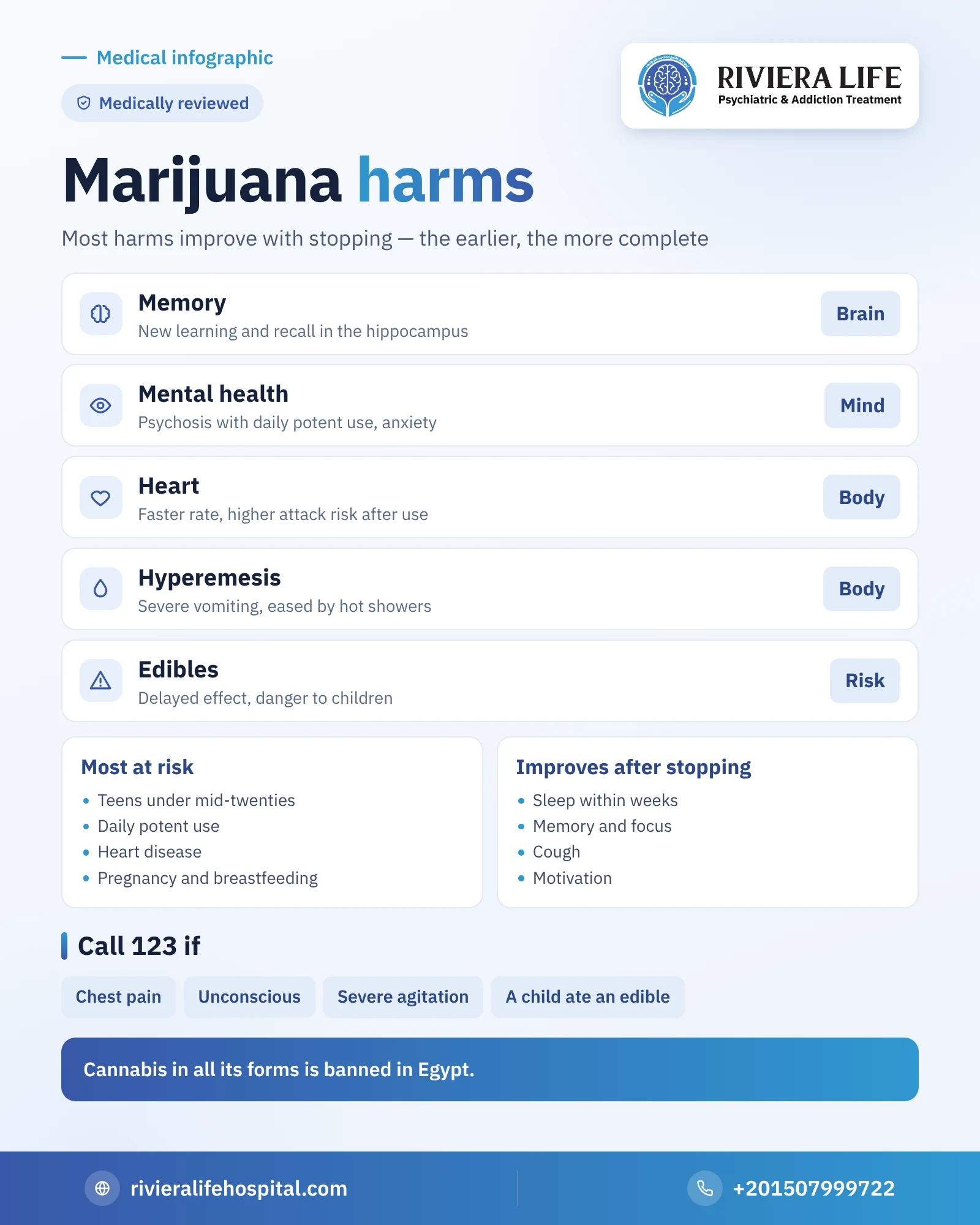
Mental health: anxiety, depression and psychosis
The relationship between marijuana and mental health runs in both directions, but some facts have become established:
- Psychosis: daily use of high-concentration types is linked to a clear rise in the risk of psychotic episodes, and may reveal schizophrenia early in those with a genetic predisposition.
- Anxiety and panic attacks: although many use it to calm down, regular use may increase anxiety in the long term.
- Depression: heavy use is linked to higher rates of depression, especially in those who started as teenagers.
- Listlessness: loss of motivation and indifference to goals are among the things families complain about most.
Any hallucinations or suspicions that continue after the effect wears off need an urgent psychological assessment, not waiting for them to disappear on their own.
The heart and blood vessels
Marijuana noticeably raises the heart rate in the first hours, and may change blood pressure. In a healthy young person this usually passes without a problem, but in someone with coronary artery disease or a rhythm disturbance it may be enough to trigger chest pain or a heart attack, and studies point to a higher risk of heart attack in the hour after smoking. There have also been reports of rhythm disturbances and strokes in young users, and the relationship is still being studied.
The lungs and respiratory system
Marijuana smoke contains many of the irritants and carcinogens found in tobacco smoke, and it is usually inhaled deeply and held longer, so these substances stay in contact with the lungs for longer. That is why regular smoking is linked to chronic cough, phlegm and repeated bronchitis, and the picture worsens when mixed with tobacco, as is common. Vaporizers aren’t necessarily a safe alternative; in 2019 the United States saw a wave of acute lung injuries linked to adulterated THC cartridges and an additive in them, and some of those affected needed intensive care.
Cannabinoid hyperemesis syndrome
It affects some daily users over long periods, and appears as repeated bouts of nausea, severe vomiting and abdominal pain, separated by calm periods. Its distinctive sign is that the patient is temporarily relieved by hot showers, so they repeat them for hours. The paradox is that the patient often increases use, thinking it eases the nausea, so the condition worsens. The syndrome may cause severe dehydration, electrolyte disturbance and kidney injury, and usually only disappears with complete stopping of marijuana.
Edibles: delayed poisoning and a danger to children
The effect of sweets and drinks with added cannabis is delayed by roughly half an hour to two hours, then lasts many hours. This delay pushes some to eat more, so the whole effect arrives at once: panic, a racing heart, vomiting and severe confusion. More dangerous still, these products look like ordinary sweets, and a child at home may eat one and develop deep drowsiness, difficulty breathing or seizures, which is an emergency.
Pregnancy and breastfeeding
THC crosses the placenta and reaches the fetus, and also passes into breast milk. Use during pregnancy is linked to lower birth weight, and studies point to possible effects on the child’s attention and behavior later. That is why health authorities advise complete abstinence during pregnancy and breastfeeding, even if it is presented as a natural remedy for morning sickness.
Driving and accidents
Slowed reaction and poor judgment of distances make driving under the influence of marijuana dangerous, and the risk multiplies greatly with alcohol. The problem is that the user often feels they are “driving carefully”, slowing down and leaving more distance, while tests show a clear decline in their ability to pay attention to more than one thing at once, such as a child crossing suddenly or a car changing lanes.
With edibles the effect lasts many hours longer than the person expects, so they drive thinking the effect has gone. And in countries that have legalized marijuana, detecting driving under its influence has become one of the hardest challenges for traffic police, which is an indicator of the size of the problem, not its triviality.
The effect on daily life
Harm accumulates slowly outside the body: falling grades, lost job opportunities, relationships strained by irritability and withdrawal, and money spent on the substance and its tools. Added to that in Egypt is the legal risk, as cannabis in all its forms is banned, and possession may end in a case that completely changes a young person’s future. Many families only notice this picture late, and the article on marijuana addiction symptoms helps them spot the beginning.
Signs that call for emergency care
Call an ambulance on 123 immediately if you see
Marijuana poisoning, especially from edibles and concentrates, may need urgent intervention.
- Chest pain or very fast palpitations with difficulty breathing
- Loss of consciousness or difficulty waking the person
- Hallucinations or severe agitation with a risk to self or others
- Continuous vomiting with signs of dehydration such as little urine and dizziness
- A child who has eaten a product containing cannabis, even if they seem normal
What improves after stopping?
The reassuring news is that most of these harms improve with stopping. Sleep settles within weeks, concentration and memory gradually improve, the cough eases, hyperemesis usually disappears within days to weeks, and motivation returns with time and treatment. The earlier the stopping, the more complete the recovery. The first two weeks pass with withdrawal symptoms explained in the article on marijuana withdrawal symptoms, and at Riviera Life they can be got through under medical supervision with an assessment of what the substance has left on mental health; the first consultation is free.
More from the marijuana guide
- Marijuana: the complete guide
- Marijuana addiction and how it develops
- Marijuana addiction treatment
- How long marijuana stays in the body
- Drug vapes: cannabis and synthetic cannabis in e-liquids and how to protect your children
- Hydro vs bango: cultivation, potency, effect and the risks of dependence
Questions many people ask
A large part of weakened memory and concentration improves weeks to months after stopping, but some effect may persist in those who started as teenagers and used heavily for years.
It doesn't cause schizophrenia in every user, but daily use of potent types raises the risk of psychosis, and may reveal schizophrenia early in those with a genetic predisposition.
A condition that affects some chronic users and causes bouts of severe vomiting and abdominal pain eased by hot showers, and usually only improves with complete stopping.
It raises the heart rate, and may be dangerous for those with artery disease or rhythm disturbance, and studies point to an increased risk of heart attack right after use.
They may reduce some combustion substances, but unregulated cartridges have been linked to acute lung injuries, and they often contain a higher concentration that speeds up addiction.