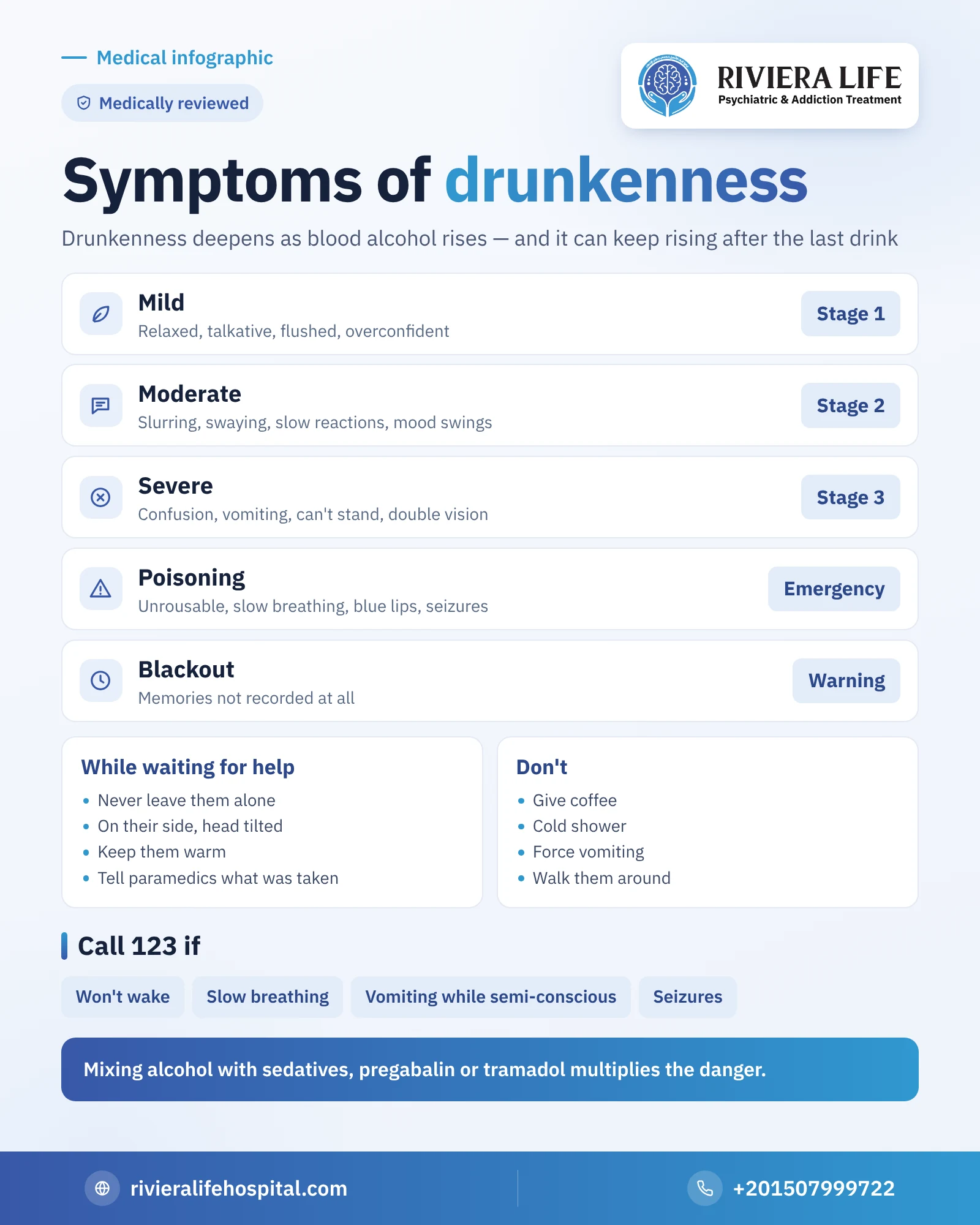
The symptoms of drunkenness progress as the alcohol level in the blood rises: they begin with talkativeness and a flushed face, then slurring, swaying and slow reactions, then confusion, vomiting and difficulty standing, and may end in alcohol poisoning when breathing slows and the person loses consciousness. The difference between the last two stages isn’t always clear to those around, which is why some people die because their friends thought they were “just asleep”. In this article we explain the stages of drunkenness, the danger signs that call for an ambulance, memory loss, what happens the next day, and when repeated drunkenness is a sign of a bigger problem.
How does alcohol cause drunkenness?
Alcohol passes from the stomach and intestines into the blood within minutes, and reaches the brain, where it acts as a depressant. At first it depresses the areas responsible for control and caution, so the person seems bolder and merrier, which is why many think it is a stimulant. With larger amounts the depression extends to the centers of movement and balance, then to the centers of alertness and breathing in the brainstem. The liver clears alcohol at an almost fixed rate that can’t be sped up, so if a person drinks faster than the liver can cope, alcohol builds up in the blood and drunkenness increases.
Stages of drunkenness by severity
The division into stages is approximate, and a person may jump from one stage to another quickly if they drink a large amount in a short time:
The mild stage
A feeling of relaxation and warmth, more talk and a louder voice, a flushed face, and excess confidence. The person seems normal to someone who doesn’t know them, but their judgment of distance and speed has already been affected.
The moderate stage
Clear slurring, swaying when walking, slow reactions, mood swings between laughter and irritability or crying, and reckless decisions such as fighting or driving. Small gaps in remembering what happened may begin.
The severe stage
Confusion and not knowing the place and time, vomiting, inability to stand without help, double vision and heavy drowsiness. Here the risk of choking on vomit, falling and injury becomes great.
Alcohol poisoning
Great difficulty waking the person or complete loss of consciousness, slow or interrupted breathing, cold pale or bluish skin, and seizures may occur. This is an emergency that may lead to coma or death.
Why does drunkenness differ from person to person?
Two drinks may make one person merely merry and knock another down. The reasons for this difference include:
- Speed of drinking: the same amount within an hour is far more dangerous than within four hours.
- An empty stomach: raises blood alcohol faster.
- Weight and sex: women and lighter people usually reach higher levels from the same amount.
- Type of drink: spirits carry more alcohol in a small volume.
- Medicines and other substances: double the depressant effect.
- Tolerance: someone who drinks a lot may not seem drunk, but their blood alcohol may be high, and tolerance itself is a sign the body has become used to it.
Signs of alcohol poisoning: when do you call an ambulance?
Don’t wait for all the signs to appear. One of them is enough with a large amount drunk:
Call an ambulance on 123 immediately if you see
Especially if the person drank a large amount quickly, or mixed alcohol with sedatives, pregabalin or tramadol.
- They don’t respond or you can’t wake them
- Very slow breathing or pauses between breaths
- Cold skin and a pale or blue color around the lips
- Vomiting while semi-conscious
- Seizures or an epileptic fit
What do you do until help arrives?
- Don’t leave them alone, and don’t let them sleep on their back; put them on their side with the head tilted slightly down so they don’t choke if they vomit.
- Cover them to keep them warm, as alcohol makes the body lose heat.
- Tell the paramedics what they drank, roughly how much, and any pills they took.
And don’t do what people commonly do: no coffee, no cold shower, no forcing them to vomit, and no trying to walk them around. These methods don’t lower blood alcohol, and some increase the risk of choking or falling. Blood alcohol may keep rising after the last drink, so a person who seems stable may get worse within minutes.
Mixing with other substances doubles the danger
In Egypt alcohol is sometimes mixed with sedatives, pregabalin or tramadol, all of which depress the nervous system, so the person reaches respiratory arrest with an amount of alcohol that wouldn’t have knocked them down alone. We have explained this in our article on pregabalin and alcohol. There is another danger, adulterated alcohol: its first symptoms may resemble ordinary drunkenness, then hours later blurred vision or loss of sight, abdominal pain and shortness of breath appear, an emergency that needs a hospital immediately.
Memory loss after drinking
Some wake up and don’t remember how they got home or what they said. This isn’t ordinary forgetting; alcohol in large amounts disrupts the brain’s ability to record new memories, so events aren’t stored at all, even though the person was walking and talking. The loss may be partial, in broken snapshots, or complete for hours. It is usually linked to fast drinking on an empty stomach, and its repetition is a serious warning, because during those hours the person may drive, fight or put themselves in danger without remembering.
The next day: the hangover
Headache, intense thirst, nausea, exhaustion, sensitivity to light and sound, and sometimes anxiety and tension that some call “hangxiety”. These symptoms result from dehydration, stomach irritation, the effect of alcohol’s breakdown products and disturbed sleep. There is no magic cure for it; it usually passes within about a day with rest, fluids and food. The common mistake is treating the hangover with a new drink in the morning, a habit worth pausing on because it is one of the signs of the beginning of dependence.
Drunkenness in teenagers and the inexperienced
A young person drinking for the first time at a party, or taking up a challenge with friends over who can drink more, is at risk of poisoning from smaller amounts than expected, because their body isn’t used to alcohol and they don’t know the signs to stop. Their friends often fear calling an ambulance because of parents or trouble, so they leave them “to sleep”. If your son is this age, agree with him in advance that he will call you or an ambulance in any dangerous situation without fearing punishment that night, as his friend’s life matters more than any later reckoning.
Drunkenness and driving
The ability to drive is affected long before the person feels drunk, even in the mild stage. The problem with drunkenness is that it weakens self-judgment, so the person says they are completely fine. The simple rule: whoever has drunk doesn’t drive, don’t ride with someone who has drunk, and take their keys if you can.
When does drunkenness point to a problem?
Being drunk once doesn’t mean addiction, but some patterns deserve attention:
- Drinking to drunkenness most times, and difficulty stopping after the first drink.
- Repeated memory loss.
- Needing a larger amount to reach the same effect.
- Drinking in the morning to ease tremor or a hangover.
- Repeated problems at work, at home or with the law because of drinking.
- A visit to the emergency department because of drinking, even once.
If some of these apply, you may find a clearer picture in our article on alcohol addiction symptoms, and in our article on the harms of alcohol what repeated drinking does to the body in the long term.
How can Riviera Life help you?
If drunkenness has turned into a repeated pattern, or the person can no longer stop, the consultants in psychiatry and addiction treatment at Riviera Life assess the case and set a safe plan for stopping under round-the-clock medical supervision. The first consultation is free and confidential on +201507999722.
More from our alcohol guide
- Alcohol: the complete guide
- How long alcohol stays in the body, and tests
- The harms of alcohol on body and mind
- How to deal with someone addicted to alcohol
- Ethyl vs methyl alcohol: methanol poisoning and medical alcohol
- Driving under the influence of drugs: the dangers, the law and what families can do
Questions many people ask
No, they may make the person a little more alert but don't lower the alcohol in the blood. Only time clears it from the body, and with signs of poisoning an ambulance must be called.
Only if they respond and breathe regularly, placed on their side and not left alone. If they are hard to wake or their breathing slows, it is an emergency.
Because large amounts of alcohol disrupt the brain's recording of new memories, so events aren't stored at all even though the person was moving and talking.
It usually passes within about a day with rest, fluids and food. Treating it with a new drink in the morning is a dangerous habit that may indicate the beginning of dependence.
Not always, but drinking to drunkenness most times, repeated memory loss and needing a larger amount are signs that deserve a medical assessment.