The clearest symptoms of opioid addiction the family notices are sudden drowsiness and pinpoint pupils during the effect, then irritability, yawning and a runny nose when a dose is late, with behavioral changes such as secrecy, asking for money and running out of medicine before it should. One sign proves nothing, but several signs coming together and persisting for weeks deserve attention. The picture differs slightly depending on the substance; someone misusing tramadol doesn’t look exactly like someone using heroin. In this article we set out the physical, behavioral and psychological signs, what distinguishes misuse of prescribed medicines, and when to act.
When does opioid use become addiction?
Not everyone who takes an opioid painkiller is addicted. A patient who takes morphine after surgery may have a body that gets used to it, and feel some symptoms when it is stopped, without being addicted. Addiction, or what doctors call opioid use disorder, begins when a pattern of loss of control appears that repeats over a twelve-month period and meets at least two diagnostic criteria; among its most prominent features:
- Using larger amounts or for longer than the person intended.
- Repeated, failed attempts to cut down or stop.
- Spending long hours searching for the opioid or recovering from its effect.
- A strong craving that occupies thinking.
- Falling short at work, study or home because of it.
- Continuing despite clear health or family problems.
- Giving up hobbies and activities that used to be important.
Doctors estimate the severity of the case by the number of criteria that apply; the more there are, the more severe the disorder. Tolerance and withdrawal symptoms alone aren’t counted as criteria for addiction if the medicine is used as the doctor prescribed.
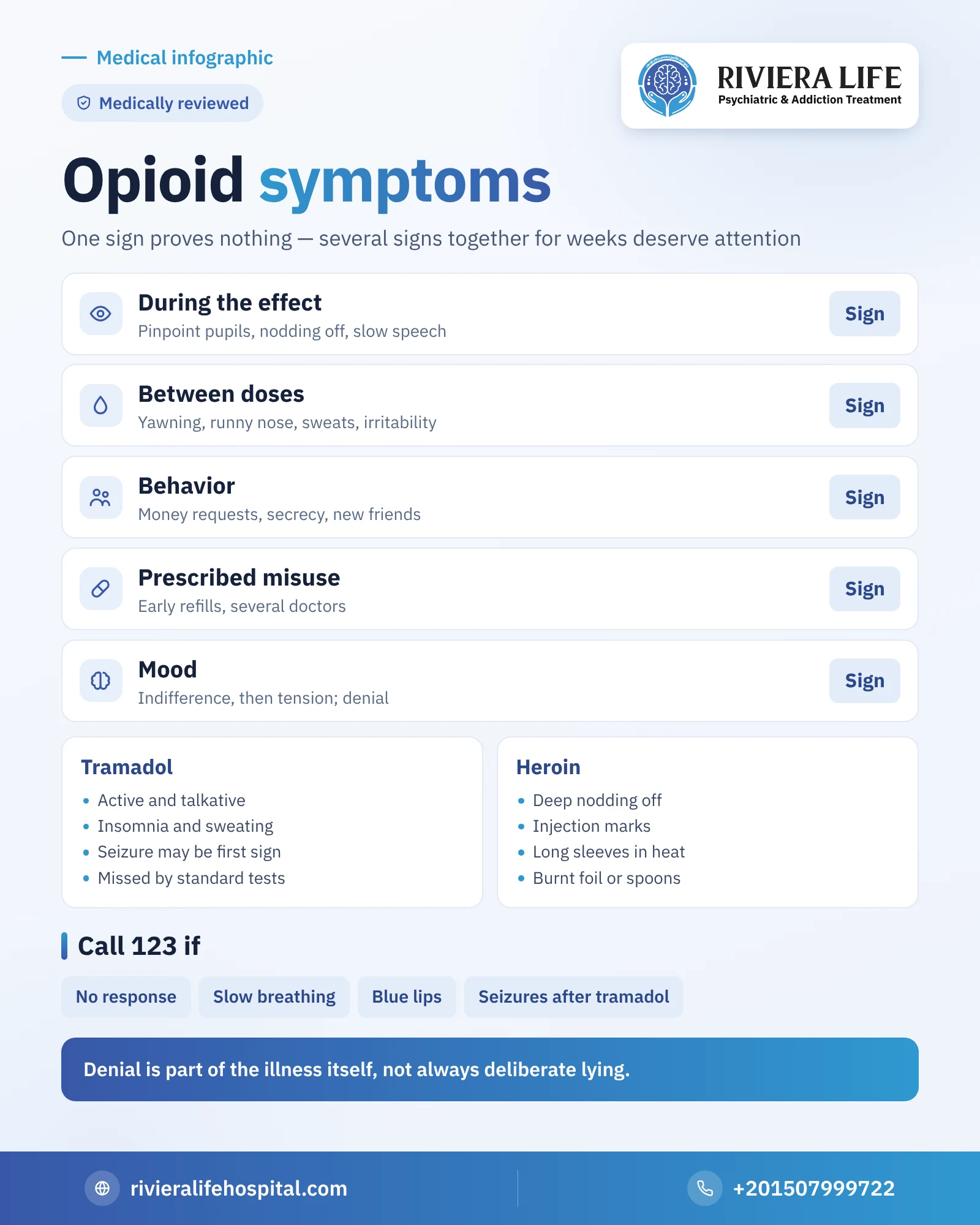
Physical signs during the effect
In the hours after use you may notice:
- Very small pupils even in dim light.
- Drowsiness and short naps while sitting or talking, then sudden waking.
- Slow or heavy speech, and slowed movement.
- Repeated itching of the nose, face or arms.
- Unusual calm or detachment from what is going on around them.
- Sometimes nausea and vomiting, especially in a new user.
Physical signs between doses
When a dose is late, an almost opposite picture appears: dilated pupils, repeated yawning, a running nose and eyes, chills and sweating, muscle and bone pain, diarrhea, and clear irritability that suddenly disappears after a short absence. This swing between extreme calm and extreme tension is among the clearest things families pick up on. The details and timing of this stage are in the article on opioid withdrawal symptoms.
Behavioral signs
Change in behavior sometimes comes before any clear physical sign:
- Asking for money with new excuses, or money and valuables disappearing from the house.
- Repeated short absences without a convincing explanation.
- Constantly locking the door and phone, and new friends no one knows.
- Decline in study or work, and repeated lateness and time off.
- Changed sleep times: staying up long, then sleeping during the day.
- Neglect of appearance and personal hygiene.
Psychological and mood signs
Mood swings with the level of the substance in the body. After the dose the person seems content or indifferent, and before it becomes quick-tempered and anxious. Over time a general listlessness and loss of enthusiasm appear, and symptoms of depression may creep in. Denial and anger at any question recur, and justifications multiply, such as “I work hard” or “it’s an ordinary painkiller”. This denial is part of the illness itself, and isn’t always deliberate lying.
Signs of misusing prescribed painkillers
When the source is a medical prescription, the signs differ, because the medicine is legitimately present at home:
- Running out of the medicine before it should, with repeated stories about losing the pack or dropping it.
- Visiting more than one doctor or pharmacy to get the same medicine.
- Insisting on a particular medicine and refusing any non-opioid alternative.
- Complaining of pain that increases despite a higher dose, or pain that doesn’t match the original injury.
- Tablets missing from other family members’ medicines, especially the elderly.
- Continuing the painkiller long after the cause of pain has gone.
To learn about the opioid medicines in circulation and their names, see the article on types of opioid painkillers.
Things you may find at home
Some items point to use if found together with other signs: empty tablet strips in strange places, multiple cough syrup bottles, burnt aluminum foil, ampoules or syringes and tourniquets, used medical patches, or spoons with burn marks. Finding one of them isn’t enough to judge, but it gives you something to talk about with the specialist instead of relying on feeling alone.
How do the signs differ by type of opioid?
A tramadol user may seem active and talkative at first rather than drowsy, suffers insomnia and sweating, and the first sign may come as a seizure. You will find the full picture in the article on tramadol addiction symptoms. Heroin, on the other hand, is more linked to deep nodding off, injection marks on the arms and hiding the skin with long sleeves even in the heat; it is detailed in the article on heroin addiction symptoms. Morphine addiction is seen more after long pain treatment or among those who handle medicines through their work.
Signs in teenagers and young people
Many teenagers start with a tramadol tablet they take from a friend before an exam, a match or a night out, or with cough syrup from the home cabinet. That is why their signs appear as a change in daily life more than clear physical signs: a sudden drop in grades, giving up a sport they loved, changing their group of friends, asking for more pocket money without a convincing reason, and exaggerated sensitivity about their phone and room.
Parents may confuse this with the natural swings of adolescence. The difference is that natural swings come and go, while the pattern of use accumulates and grows over the weeks. And early, calm talk with the teenager is much more successful than waiting for conclusive proof.
Signs in the elderly and chronic patients
In the elderly, signs of excessive painkiller use may be wrongly interpreted as ageing: forgetfulness and confusion, repeated falls, severe constipation, daytime drowsiness. And if the patient takes several medicines at once, such as a sleeping pill and an opioid painkiller, the risk rises further. Reviewing the full list of medicines with the doctor is a simple step that may reveal the problem early.
Signs that call for an ambulance immediately
Call an ambulance on 123 immediately if you see
These aren't signs of addiction, but signs of a life-threatening overdose.
- No response to calling or shaking
- Very slow or irregular breathing, or strange snoring
- Lips or nails turning blue
- Very small pupils with cold skin
- Seizures after taking tramadol
What do you do if several signs come together?
Collect your observations with their dates, then choose a calm time when the person is alert to talk with them about your worry, without accusation or threats. A test may help, but the ordinary opioid strip doesn’t detect tramadol or some synthetic opioids, as explained in the article on how long opioids stay in the body. The most important step is a specialist assessment that determines the severity of the case and the right plan, whose stages you will find in the article on opioid addiction treatment.
And avoid secretly searching their room and phone every day, or announcing your suspicion in front of the rest of the family and relatives; these steps usually push the person to hide more, and destroy the trust you will need later to persuade them to get treatment.
At Riviera Life, the family can start with a consultation before the patient themselves is convinced, in complete confidentiality, so everyone gets a clear plan instead of guessing.
Raw opium addiction symptoms: a different picture from tablets and injections
Someone who uses raw opium leaves behind no empty medicine boxes or needles, which is why the family is slow to notice. Most users are older men who swallow the substance or smoke it at fixed times of day, and describe it as an old habit that is no problem.
The signs worth noticing here are slightly different:
- Laziness and heaviness in the morning that only go after taking the usual amount, with yawning and a runny nose if it is late.
- Severe chronic constipation, itchy skin, and poor appetite with gradual weight loss.
- Sticky dark brown pieces or small hidden smoking tools appearing, and a heavy sweet smell in the room.
- Pinpoint pupils, slow speech and drowsiness while sitting.
- Repeated disappearance of small sums, or regular absence at particular times.
And because the user themselves sees it as a “treatment” that helps them work, calm confrontation is more useful than accusation. To learn about the substance and its effect, see the article on opium: what it is and how it affects the body, and if the signs come together, the next step is explained in opium addiction treatment with safe gradual withdrawal.
More from the opioids guide
- Opioids: the complete guide
- The harms of opioids on body and mind
- Opioid withdrawal symptoms
- Opioid addiction treatment
Questions many people ask
The clearest signs are pinpoint pupils and sudden drowsiness during the effect, then yawning, a runny nose and irritability when a dose is late, with changes in money, sleep and secrecy. What counts is signs coming together and persisting.
No. The body may get used to the medicine and withdrawal may appear when it is stopped without addiction. Addiction means loss of control and continuing despite harm, and the doctor determines it with diagnostic criteria.
Running out of the medicine early, visiting more than one doctor or pharmacy, insisting on a specific medicine, and continuing to take it after the cause of pain has gone.
Yes, a tramadol user may seem active and talkative with insomnia, sweating and a risk of seizures, while heroin is more linked to deep nodding off and injection marks.
Immediately if they don't respond to calling, their breathing becomes slow or irregular, their lips turn blue, or they have seizures after tramadol. Call 123.