Bupropion is one of the few medicines that doctors prescribe for two completely different purposes: treating depression, and helping a smoker quit. It doesn’t work like most antidepressants, as it doesn’t raise serotonin, so some well-known troublesome effects such as sexual dysfunction and weight gain are absent with it. On the other hand, it has a rare but serious risk, seizures, which is why it doesn’t suit everyone. Here we explain who it is prescribed for, how it differs, when the doctor avoids it, and the truth about what is said about its misuse. No doses or instructions for use here; starting, adjusting and stopping are the doctor’s decision alone.
What is bupropion?
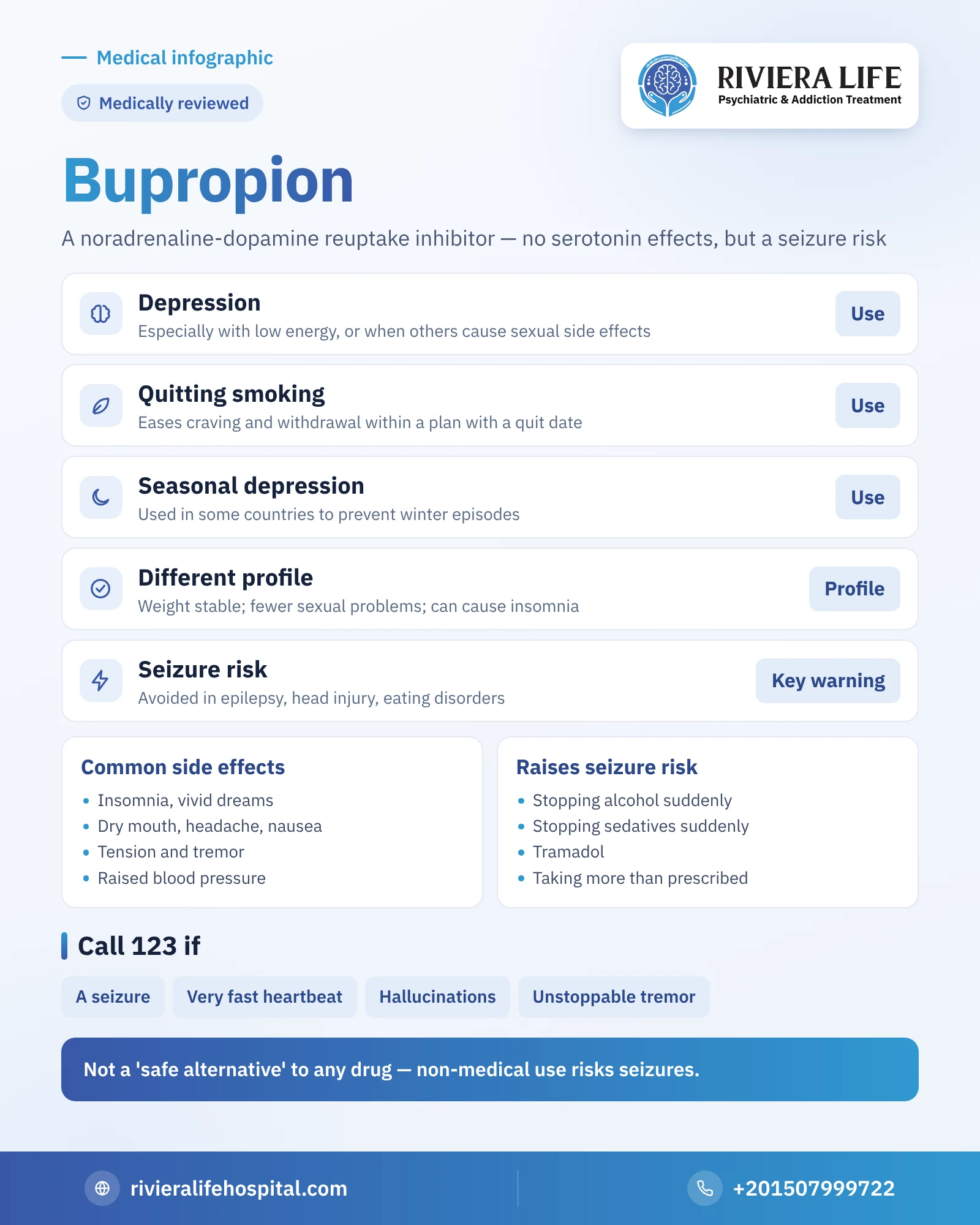
Bupropion belongs to a class known as noradrenaline and dopamine reuptake inhibitors. This means it keeps these two neurotransmitters in the space between cells for longer, so energy, concentration and motivation improve in those worn down by depression. It isn’t nicotine or a stimulant, and isn’t considered a drug of abuse, but it is a prescription medicine that requires medical assessment. You will find the other classes and how they work in our article on antidepressants.
Brand names and availability in Egypt
Its best-known brand name in the world is Wellbutrin when prescribed for depression, and Zyban when marketed for quitting smoking. Its presence in Egyptian pharmacies can’t be stated with certainty; it may be available under local or imported names and may be out of stock. Ask the pharmacist or your doctor before looking for it, and don’t buy it from an unreliable source or online, as tablets of unknown origin are dangerous in themselves.
What is bupropion used for?
- Depression: especially when lethargy and low energy dominate, or when other medicines cause sexual dysfunction or drowsiness the patient can’t tolerate.
- Quitting smoking: it reduces nicotine craving and withdrawal symptoms in some smokers, and is one of the medication options the doctor offers the patient.
- Seasonal depression: in some countries it is used to prevent its winter episodes.
- As an add-on to another medicine: when the response to the first antidepressant isn’t enough, the doctor may add it to strengthen the effect.
ADHD isn’t considered an approved indication for bupropion, although it has been tried in some cases by specialist decision. Anyone wanting to understand the broader picture of depression treatment should read depression treatment.
How does it differ from other antidepressants?
The most common medicines raise serotonin, which explains the nausea, sexual dysfunction and weight gain in some users. Bupropion hardly touches serotonin, so these complaints are less frequent with it, and weight tends to stay stable or decrease slightly. On the other hand, it may cause insomnia, anxiety and tremor, because its effect is relatively stimulating. That is why it is usually given in the morning, which is decided by the doctor, not the patient.
Quitting smoking with bupropion
The medicine doesn’t replace willpower, but it eases part of the battle: the intense craving, tension and low mood that accompany the first days after the last cigarette. The doctor usually sets a quit date within the treatment plan, not after it, and follows the patient up after weeks. They may combine it with nicotine replacement such as nicotine gum if they see fit, and the patient shouldn’t do this on their own, as the combination may raise blood pressure. For general details on ways of quitting cigarettes, read quitting smoking, and on the nature of the attachment itself, nicotine addiction.
Common side effects
- Difficulty sleeping and vivid dreams, especially if the medicine is taken late.
- Dry mouth, headache and nausea.
- Tension, tremor and anxiety attacks in some patients.
- Loss of appetite and slight weight loss.
- A rise in blood pressure or pulse rate in a few.
- A skin rash or itching, which calls for telling the doctor early.
The risk of seizures: why is it the most important warning?
Bupropion lowers the seizure threshold in a small proportion of patients, and the risk increases the more the amount exceeds what is prescribed or other factors combine with it. That is why the doctor rules it out for someone with epilepsy or a history of seizures, a previous head injury, or an eating disorder such as bulimia or anorexia. Among the factors that multiply the risk is stopping alcohol or sedatives suddenly, which is why someone addicted to alcohol or benzodiazepines needs a careful assessment before it is prescribed, and tramadol raises the same risk. For seizures and their causes in general, see the MedlinePlus page on seizures.
Call an ambulance on 123 immediately if you see
After taking an excessive amount of bupropion, or if a seizure appears after taking it:
- A seizure or loss of consciousness
- A very fast or irregular heartbeat
- Hallucinations or severely disturbed thinking
- Severe agitation or tremor that won’t stop
- Continuous vomiting with severe dizziness
Is bupropion misused?
Yes, there are reports of people taking it in non-medical ways in search of a stimulating effect, ways that push the medicine to an extremely dangerous level; among the most prominent results are seizures, heart problems and mental disturbance. We don’t explain here how this happens; what matters is that you know this isn’t a “safe alternative” to any substance. If you know someone doing this, they need a medical and psychiatric assessment, and if a seizure or loss of consciousness appears, the ambulance comes first. For dealing with multiple substance use, read about the dual diagnosis program.
Medicines and conditions that conflict with bupropion
Tell your doctor and pharmacist about everything you take, because interactions are many. The most important are monoamine oxidase inhibitors, which aren’t combined with it and need a gap after they are stopped. There are medicines that rely on the same liver enzyme that processes bupropion, so their blood levels change, including some antidepressants, antipsychotics and heart medicines. Alcohol too: drinking heavily or stopping it suddenly both raise the risk of seizures. The medicine usually doesn’t suit someone with uncontrolled high blood pressure or severe liver disease, and needs caution in kidney disease.
Questions smokers ask before starting
Many ask: do I smoke during treatment? It is best for quitting to have a clear date within the plan, and for the doctor to know if the attempt stumbles rather than you hiding it. Does the medicine cause weight gain after giving up cigarettes? It may reduce the gain in some smokers but doesn’t prevent it, and regular meals and daily walking remain more important. Is it suitable for someone who drinks alcohol? Heavy drinking or stopping suddenly both raise the risk of seizures, so the doctor must be told frankly. And if the first attempt fails, that doesn’t mean final failure, as most smokers need more than one attempt before they succeed.
Pregnancy and breastfeeding
There is no single answer that suits everyone. The doctor compares the risks of depression or continued smoking to the mother and fetus with what is known about the medicine, and may prefer other alternatives. If you become pregnant during treatment, don’t stop it suddenly, but contact your doctor to decide the next step.
Suicidal thoughts and the specific warning for young people
Like other antidepressants, bupropion carries a warning about worsening suicidal thoughts in teenagers and young people up to roughly their mid-twenties, especially in the first weeks or when the amount is changed. This doesn’t mean the medicine is dangerous for them, but that close follow-up is essential. If an inclination to self-harm or severe hopelessness appears, contact the doctor immediately, the mental health hotline on 16328 or an ambulance on 123, and for more read suicidal thoughts.
Stopping bupropion
Withdrawal symptoms with it are less than with some other antidepressants, but stopping suddenly may cause irritability, mood swings and insomnia in some patients. The doctor sets a suitable reduction plan and watches for the return of symptoms. Read more in antidepressant withdrawal symptoms.
Is bupropion addictive?
It isn’t classified as an addictive medicine when used as the doctor prescribed; it doesn’t give a high or cause compulsive craving. The danger only appears when it is used for non-medical purposes. For the difference between physical dependence and addiction in psychiatric medicines, read are psychiatric medicines addictive?
If you are considering bupropion for depression or quitting smoking, or have multiple substance use with depression, book your free first consultation with a consultant psychiatrist at Riviera Life in Sheikh Zayed, Giza, in complete confidentiality, so we can review your condition and medicines before any decision.
More from our psychiatric medicines guide
- Psychiatric medicines: the complete guide
- Antidepressants: their types and how they work
- Quitting smoking: the steps and aids
- The best medication for depression and anxiety: how does the doctor choose?
Questions many people ask
It reduces craving and withdrawal symptoms in some smokers, but it doesn't work alone; a quit date and follow-up with the doctor are needed.
Because it lowers the seizure threshold in a small proportion of patients, so the risk rises in someone with an existing predisposition.
These effects are less common with it than with most antidepressants because it doesn't raise serotonin, but they are possible in some patients.
Heavy drinking or stopping alcohol suddenly both raise the risk of seizures, so the doctor must be told frankly about drinking habits.
It isn't classified as such when used as prescribed, but using it for non-medical purposes is extremely dangerous and may cause seizures.