Pregabalin addiction symptoms don’t look like the stereotype of an addict: there is no smell, no implements and no narrow pupils to catch the eye. What usually shows is an unsteady walk, heavy speech in the middle of the day, sleep at odd times, and empty strips turning up again and again in the bin. And because the medicine is dispensed on prescription, many families are slow to link these changes to it. This article helps you tell a patient taking their treatment from someone who has lost control of the amount, and sets out the physical, behavioral and psychological signs, the signs of mixing with other substances, and when it is time for a medical assessment.
Pregabalin is the active substance in the medicine “Lyrica” and in other brand names including “Lyrolin”, so the signs here apply to all these preparations.
When does treatment turn into a problem?
Having pregabalin in the house proves nothing: large numbers of patients take it for nerve pain, epilepsy or anxiety without becoming addicted. The real question is how it is being used. The problem starts when the amount separates from the prescription: an extra capsule “because the pain got worse”, then another before sleep, then a strip running out days early. It also starts when the medicine comes from a source other than the doctor, or when the aim becomes the feeling of ease and lightness rather than relieving a symptom of illness. Understanding this difference protects the family from two mistakes: accusing a genuine patient, or ignoring an addiction hiding behind an old prescription.
Visible physical signs
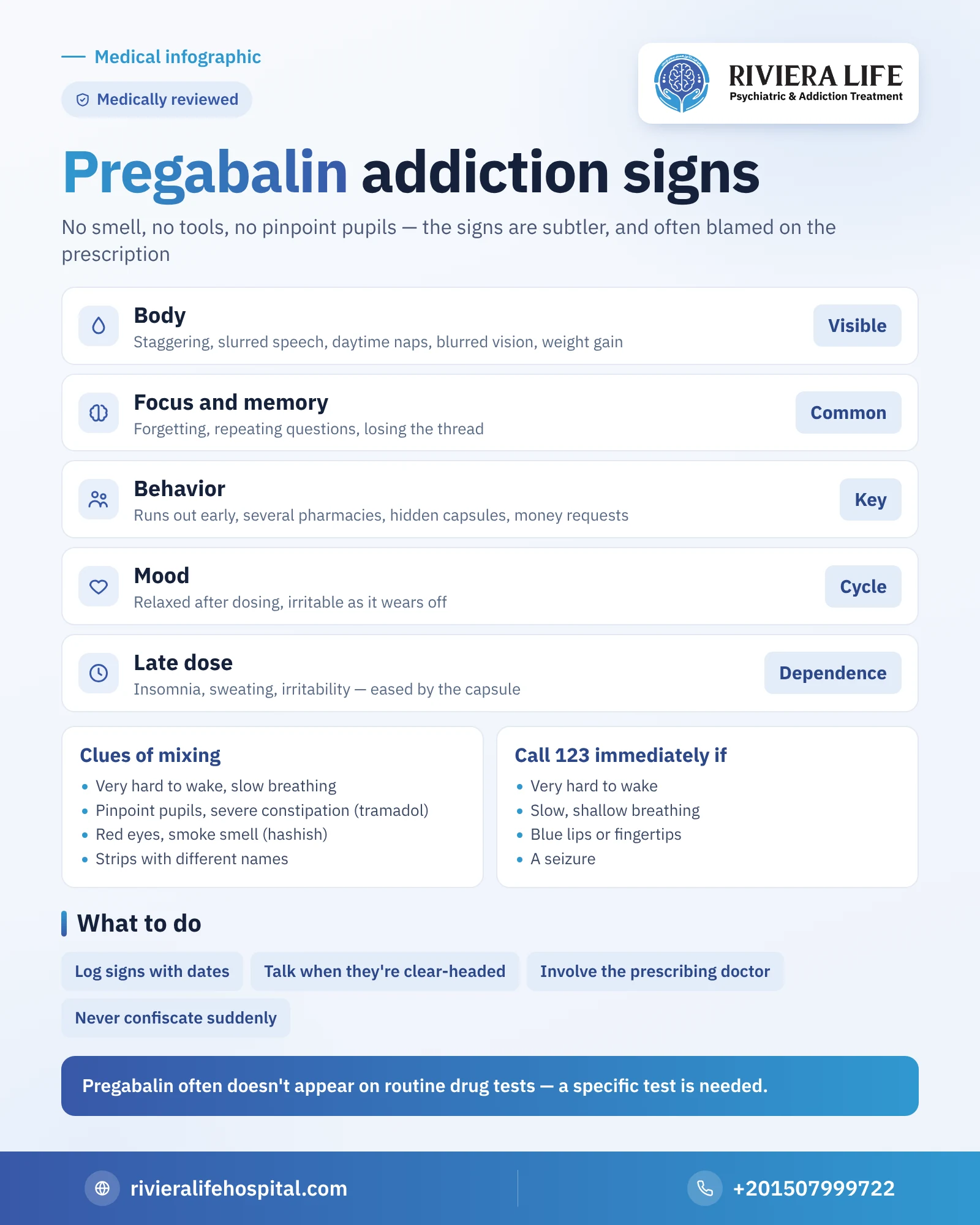
Many of the physical signs are originally known side effects of the medicine, but they become clearer and more frequent with large amounts:
- A staggering walk and unsteadiness, stumbling and bumping into furniture or doors.
- Slow or slurred speech resembling that of someone who has been drinking.
- Daytime drowsiness and sudden dozing while sitting or talking.
- Blurred vision, or complaints of seeing double.
- Noticeable weight gain and swelling of the feet or ankles.
- Dry mouth and constipation.
- A slight tremor or shaking of the hands when the usual dose is late.
Signs in concentration and memory
One of the things families notice most is that the person has become “not focused”. They forget what they were told minutes ago, repeat the same question, and lose the thread of a conversation in the middle. Their performance at work or study declines, small mistakes multiply, and they may seem detached from what is going on around them, as if watching from behind glass. These signs appear because large doses slow down all nervous activity, not just the pain centers. And if they recur while driving, they aren’t a passing detail, but a real risk of accidents.
Behavioral signs
Behavior often reveals what the person is trying to hide; the most important things to watch for include:
- The medicine running out early, and repeated requests for new prescriptions or a change of doctor.
- Buying from more than one pharmacy, or getting capsules from friends or colleagues.
- Keeping capsules in scattered places: pockets, the car, a desk drawer.
- Repeated requests for money with no clear reason, or small sums disappearing from the house.
- Anger when asked about the medicine, or when someone tries to count the strips.
- Withdrawing from family gatherings and preferring to be alone in their room.
- Missing work or study because of drowsiness or “tiredness”.
Psychological and mood signs
Mental state swings in a cycle that can be noticed. After use the person seems unusually relaxed, laughing a lot or tolerant of what used to anger them; then their mood drops as the effect wears off, and they become tense and quick to anger, unable to bear discussion.
Over time a general flatness and loss of enthusiasm may appear, insomnia if they haven’t taken the capsule before sleep, and anxiety that grows as the strip nears its end. Some people using large amounts go through episodes of confusion or disorganized thinking, a sign that calls for a quick assessment. And if thoughts of hopelessness or talk of self-harm appear, don’t wait: this needs a doctor the same day.
Signs that point to mixing it with other substances
In Egypt, misuse is rarely limited to pregabalin alone. The presence of tramadol, hashish or sedatives with it changes the picture, and signs that suggest mixing include:
- Deep drowsiness from which the person is hard to wake, or slow breathing during sleep.
- Narrow pupils with severe constipation, which suggests an opioid such as tramadol.
- Red eyes and a distinctive smell of smoke, which suggests hashish.
- Finding strips with different names in the same place.
Mixing is far more dangerous than pregabalin alone; our article on the harmful effects of pregabalin explains why the risk of depressed breathing rises with it.
What might you find at home?
Pregabalin needs no implements, so its physical traces are simple but repeated. You may find empty strips in numbers that don’t match any prescription, boxes of medicine under different brand names containing the same substance, or capsules emptied of their contents. You may notice receipts from several pharmacies, or messages on the phone asking about the “strip” or the “color”. In teenagers and young people it usually comes with a change of friends and going-out times, and a sudden drop in grades. None of these signs proves anything on its own, but together with the physical signs above, they make a medical assessment a necessity, not a luxury.
What happens when a dose is late?
One of the clearest signs of dependence is that the person changes when a capsule is late: insomnia, sweating, irritability, anxiety and a tight feeling in the chest, then all of it settles as soon as they take it. This cycle alone is enough to suggest physical dependence. What happens on stopping completely, how long it lasts, and why it can reach seizures are detailed in our article on pregabalin withdrawal symptoms.
How does the doctor diagnose pregabalin addiction?
The doctor doesn’t rely on a single sign, but on a pattern stretching over months. They ask about the actual amount compared with what was prescribed, failed attempts to cut down, the time spent getting the medicine, a pressing craving for it, continuing despite problems at work, at home or with health, needing a larger amount for the same effect, and symptoms on stopping. The more of these aspects there are, the more severe the disorder. The doctor adds a specific test when needed, because pregabalin doesn’t appear in many routine tests, as our article on how long pregabalin stays in your system explains.
Are the signs different in someone taking it on prescription?
A committed patient may suffer slight dizziness or weight gain in the first weeks, but they don’t hide the medicine, don’t run out early, and don’t get angry when asked about it. The worrying sign in them is raising the amount on their own, or starting to ask another doctor for it. In that case the solution is to go back to the treating doctor and review the plan, not to stop suddenly at home.
How can you be sure without losing their trust?
Write down your observations with dates instead of relying on impressions: when the strip ran out, when the walk changed, when they slept at the wrong time. Then choose a calm moment when they are clear-headed, say what you have seen without accusation, and ask about the prescription and how they feel. Repeated secret searching closes the door to conversation, and suddenly confiscating all the medicine may expose them to dangerous withdrawal. If they have a treating doctor, involve them; if not, ask for a specialist assessment. To understand why they reached this point in the first place, our article on the causes of pregabalin addiction will help.
Signs that mean the situation is an emergency
Call an ambulance immediately on 123 if you see
Especially if pregabalin, whatever its brand name such as Lyrica or Lyrolin, has been taken with tramadol, alcohol or sedatives.
- Great difficulty waking the person
- Slow, shallow or irregular breathing
- Blue lips or fingertips
- A seizure
- Severe confusion and inability to stand
How can Riviera Life help you?
If several signs from this list come together for you, the next step is a confidential assessment by a consultant in psychiatry and addiction treatment, establishing whether it is a problem of use that can be controlled with the treating doctor, or dependence that needs a gradual taper under supervision. The first consultation at Riviera Life is free, and the family is involved from the first meeting. You will find what follows the diagnosis in our article on pregabalin addiction treatment.
More from our pregabalin guide
- Pregabalin: the complete guide
- Pregabalin withdrawal symptoms and how long they last
- The difference between pregabalin and tramadol
- Pregabalin addiction treatment and its stages
Questions many people ask
Usually the medicine running out early, together with unsteady walking or repeated daytime drowsiness. The two together matter more than any single sign.
Not necessarily: they are known side effects even with medical use. What points towards addiction is a change in how it is used, hiding it, and increasing the amount without a doctor.
There is no distinctive sign in the eyes as with opioids, but the person may complain of blurred or double vision. Very narrow pupils suggest an opioid with it, such as tramadol.
A committed patient takes the prescribed amount, doesn't hide it, and doesn't run out early. Someone addicted raises the amount themselves, looks for other sources and becomes tense when a dose is late.
Don't do that without a doctor, because stopping suddenly after heavy use can cause severe symptoms, including seizures. Ask for a medical assessment that sets a safe withdrawal plan.