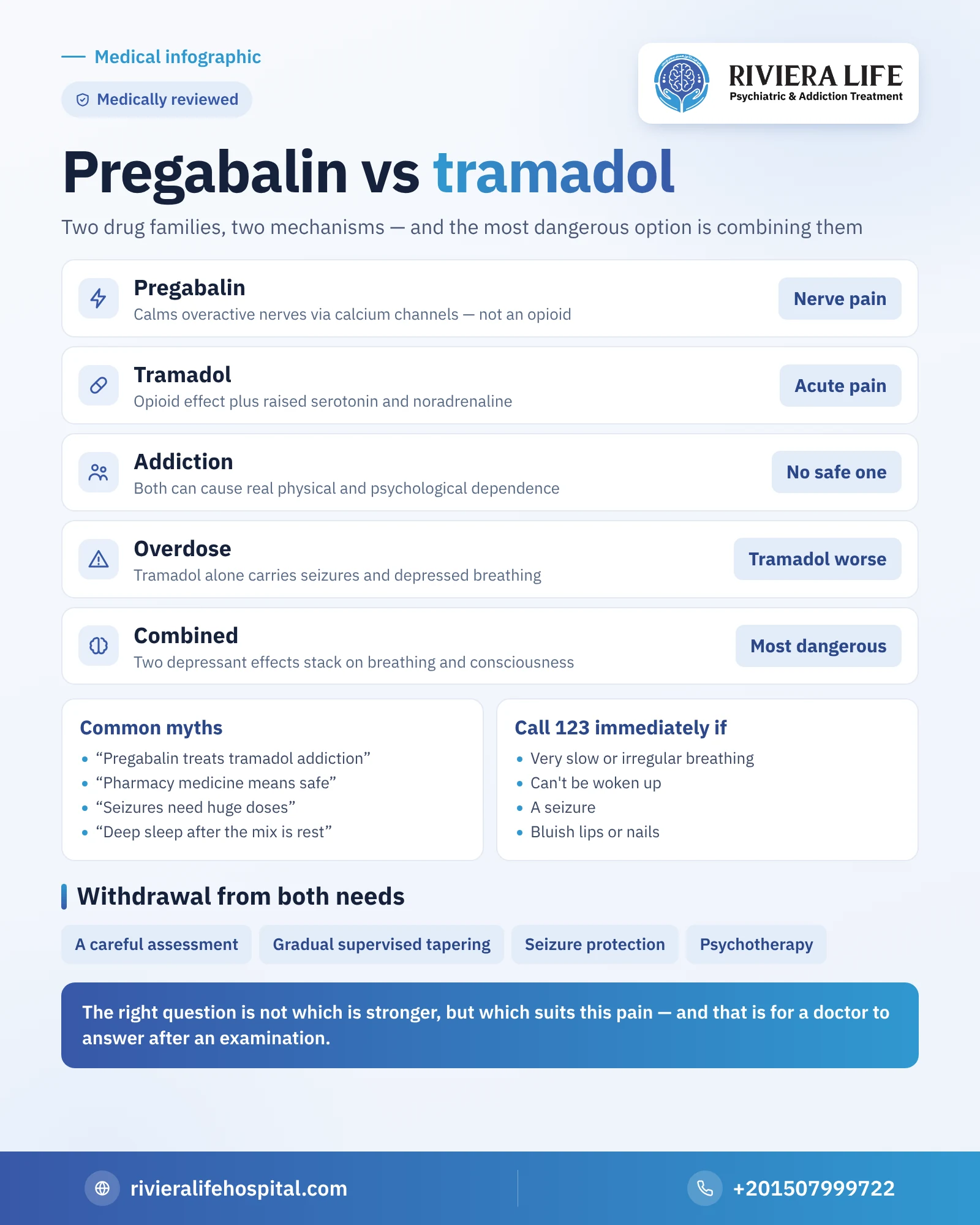
“Which is stronger: pregabalin or tramadol?” is a question that comes up again and again when people look up the difference between the two, but it compares substances from two different families. Tramadol is an opioid painkiller that also raises serotonin and noradrenaline, while pregabalin is a medication that calms overexcited nerves and is not an opioid. So the answer depends on what you mean: tramadol is stronger for relieving acute pain, pregabalin is better suited to many types of nerve pain, and both can cause real dependence. In terms of danger, tramadol on its own carries the risk of seizures and depressed breathing — and combining the two is the most dangerous option of all.
Pregabalin vs tramadol at a glance
| Point of comparison | Pregabalin | Tramadol |
|---|---|---|
| Drug family | Gabapentinoids, which calm the nerves | Opioid painkillers |
| How it works | Reduces the release of excitatory messengers via calcium channels | Activates opioid receptors and raises serotonin and noradrenaline |
| Best-known medical uses | Nerve pain, epilepsy and sometimes generalized anxiety | Moderate to relatively severe pain |
| How misuse feels | Relaxation, dizziness and mild euphoria | Pain relief, energy and a feeling of being able to work |
| Main risk on its own | Severe drowsiness, dizziness and falls | Seizures, depressed breathing and serotonin syndrome |
| Withdrawal | Insomnia, anxiety, sweating and nausea | Aches, diarrhea, runny nose and insomnia, sometimes with anxiety and tingling |
Two different families, two different mechanisms
Tramadol works in two ways at once. Part of its effect is opioid, coming mainly from a substance the liver converts it into, and another part resembles certain antidepressants, because it blocks the reuptake of serotonin and noradrenaline. This dual mechanism explains why users feel pain relief and energy at the same time. Pregabalin, on the other hand, does not go near the opioid receptors. It binds to part of the calcium channels in nerve cells and reduces excitatory signals, so nerve pain settles and some people feel relaxed.
This difference is not just a scientific detail; it shapes the kind of risk and the way treatment works, as we will see. For a full picture of tramadol, see our page on tramadol.
Which is stronger for pain relief?
It depends on the type of pain. For the pain of fractures, operations and acute injuries, tramadol is the stronger painkiller, while pregabalin is not used for this purpose at all. For nerve pain, however — such as the burning and tingling linked to diabetes, shingles or the spine — pregabalin is among the first-choice options in medical guidelines, and opioids are usually only considered later. So the more precise question is not “which is stronger?” but “which suits this pain?” — and that is for the doctor to answer after an examination.
Which is more addictive?
Both cause physical and psychological dependence, but in different ways. Tramadol has the nature of an opioid: tolerance that pushes the user to increase the amount, and clear physical withdrawal that makes stopping hard. Pregabalin was at first considered low-risk, but it later became clear that it is increasingly misused, especially by people with a history of opioid use. So neither of them is “safe”, and many of the people who reach treatment use both together. The factors that lead to addiction are explained on our page about the causes of pregabalin addiction.
Which is more dangerous in an overdose?
A large dose of pregabalin alone usually causes severe drowsiness, confusion and dizziness, and in a few cases it may cause seizures. Tramadol poisoning, by contrast, is generally more dangerous: it can cause seizures even with no medical history, depressed breathing and an irregular heartbeat, and together with other medications that raise serotonin it can cause a condition called serotonin syndrome, with fever, tremor, stiffness and agitation. These complications are detailed in our article on the harmful effects of tramadol.
Why is combining them so common in Egypt?
Many users combine tramadol and pregabalin for reasons they repeat: pregabalin “boosts” tramadol’s effect, eases its withdrawal symptoms when it is not available, or helps them sleep after a full day of activity. It may begin with a genuine prescription for each from two different doctors, neither of whom knows about the other, and then the amounts grow. This is where the danger lies: what looks like a “boost” is really two depressant effects piling up on the brain.
The risks of combining them: seizures and depressed breathing
- Depressed breathing: tramadol slows the breathing center because of its opioid nature, and pregabalin adds sedation on top. International regulators have warned of serious breathing difficulties when gabapentinoids are combined with opioids, and studies have linked this combination to more overdose deaths.
- Seizures: tramadol lowers the seizure threshold, and stopping pregabalin suddenly after long-term use may increase susceptibility to them, so the conditions for a seizure come together.
- Severe drowsiness and accidents: dizziness, unsteadiness and slow reactions, with a risk of falls and of road and workplace accidents.
- Mixing with other substances: adding alcohol, sedatives or hashish multiplies all of the above.
Call an ambulance immediately (123 in Egypt) if you see
With tramadol and pregabalin together, deterioration can happen during sleep, so don't leave the person alone.
- Very slow or irregular breathing, or unusual snoring during sleep
- Difficulty waking them, or loss of consciousness
- A seizure
- Bluish lips or nails
- A high temperature with tremor, muscle stiffness and agitation
Signs families notice
With tramadol, a family may notice extra energy and an unusual ability to work for hours, followed by irritability, sweating, yawning and a runny nose when the pill is late, with smaller pupils than usual and frequent constipation. With pregabalin, unsteadiness, slurred speech, forgetfulness and drowsiness at odd times are more common. When the two are combined, the person may seem “lost” or sleep so deeply that they are hard to wake — a sign that deserves serious attention. The signs specific to pregabalin are detailed in our article on pregabalin addiction symptoms.
Withdrawal: what happens when each one is stopped?
Tramadol withdrawal resembles opioid withdrawal: muscle and bone aches, diarrhea, a runny nose and watery eyes, chills and insomnia, sometimes with severe anxiety, panic attacks and tingling in the limbs because of its effect on serotonin. Pregabalin withdrawal is dominated by insomnia, anxiety, sweating, nausea and headache. Someone stopping both at once needs a plan that takes both withdrawals into account, not just “getting through” the first days. You will find the details in our articles on pregabalin withdrawal symptoms and tramadol withdrawal symptoms.
Can a doctor prescribe them together?
In some cases, yes — for example, mixed pain with a nerve component and a non-nerve component. But the doctor does so with great caution: the lowest possible amounts, a set duration, monitoring of breathing and drowsiness, and complete avoidance of alcohol and sedatives. There is a big difference between a considered prescription followed up by a doctor and a mix whose amounts the person decides for themselves. If you take either one on prescription, make sure every doctor you see knows about the other medication.
Common ideas that need correcting
- “Pregabalin treats tramadol addiction”: it may ease some withdrawal symptoms temporarily, but it does not treat the addiction, and it often adds a second dependence on top of the first.
- “If it’s from the pharmacy, it’s safe”: safety depends on the prescription and follow-up, not on where it was bought. Excess amounts and mixing turn any medication into a danger.
- “Tramadol only causes seizures in huge amounts”: a seizure can happen at lower amounts than people expect, especially with other medications or a history of head injury.
- “Deep sleep after the mix is just rest”: it may be a sign of depressed breathing, not simply peaceful sleep.
How is addiction to both treated?
The plan starts with a careful assessment of the amounts, the duration and any other substances, followed by safe, gradual withdrawal under medical supervision, with medications that ease opioid withdrawal symptoms and protect against seizures, and then psychotherapy that deals with what led to the use: chronic pain, work pressure, anxiety or depression. At Riviera Life this is handled by consultants in psychiatry and addiction treatment, with round-the-clock medical supervision and complete confidentiality. The steps are set out in detail in our article on pregabalin addiction treatment, and the first consultation is free on +201507999722.
More from our pregabalin guide
- Pregabalin: the complete guide
- Pregabalin side effects and serious risks
- Pregabalin vs gabapentin: the difference and which suits whom
- Pregabalin vs Captagon: the difference
Questions many people ask
No. Tramadol is an opioid painkiller that also raises serotonin and noradrenaline, while pregabalin calms nerves through calcium channels and is not an opioid.
Tramadol is stronger for acute pain such as injuries, while pregabalin is better suited to many types of nerve pain — the choice depends on the type of pain.
Both depress the nervous system, so the risk of slowed breathing rises; tramadol also lowers the seizure threshold, and adding alcohol or sedatives increases the danger further.
It may ease some symptoms temporarily, but it is not a treatment for addiction and often adds a second dependence. Safe withdrawal follows a medical plan.
In specific cases, yes — at the lowest possible amounts, for a set period, with monitoring of breathing and drowsiness and with alcohol and sedatives avoided.