Psychotic depression is a severe depressive episode accompanied by psychotic symptoms, meaning delusions or hallucinations that cost the patient their ability to distinguish between what they feel and what is real. Doctors call it major depressive disorder with psychotic features, and its delusions usually revolve around guilt, illness, poverty or punishment. It is one of the most dangerous forms of depression because the risk of self-harm in it is high, but at the same time it responds well to the right treatment. Here we explain how it differs from ordinary depression, its signs, why it needs urgent intervention, and how it is treated.
What is psychotic depression?
Psychotic depression isn’t an illness separate from depression, but a feature added to the diagnosis of the episode when it reaches a degree at which the patient loses contact with reality. The American diagnostic manual describes it as major depression with psychotic features, and the International Classification of Diseases calls it a moderate or severe depressive episode with psychotic symptoms. It is estimated that a notable proportion of severely depressed patients admitted to hospitals show these symptoms, though they often go undiagnosed because patients hide them.
The difference between this and the other types of depression you will find in the article on types of depression is that this article goes deep into one particular form: how it looks, how it is discovered, and why it needs a different treatment plan.
How does it differ from ordinary severe depression?
A patient with severe depression may say “I feel I’m a burden on my family”. A patient with psychotic depression says “I am the cause of all the family’s disasters, and God will punish us all because of me”, and believes it with a certainty no argument can move. The sadness is the same in both cases, but in the second it has turned into a firm conviction detached from reality. The person also tends to have severe slowness of movement and speech, or on the contrary restlessness and anxiety that won’t settle, with acute insomnia and clear weight loss.
Mood-congruent delusions
Most delusions of psychotic depression agree with the dark mood, so they seem like an exaggerated extension of feelings of guilt and helplessness:
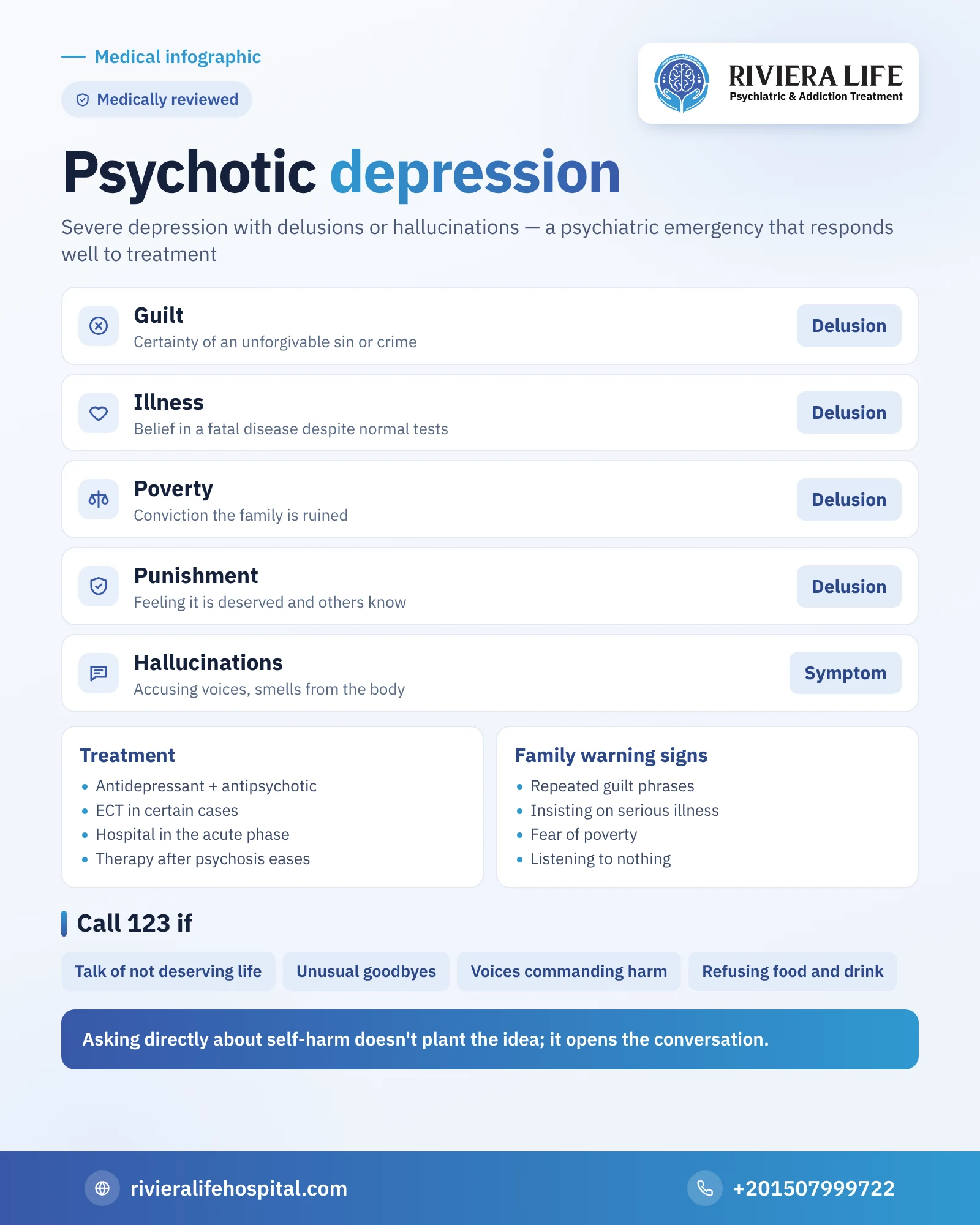
- Delusions of guilt: certainty of having committed a great sin or an unforgivable crime, and the person may hold themselves responsible for a relative’s death or a public disaster.
- Delusions of illness: a belief in having a malignant or infectious disease despite normal tests, or that their organs are rotting.
- Delusions of poverty: conviction that the family is bankrupt and everything is lost despite a stable financial situation.
- Delusions of punishment: the feeling that what they are going through is a deserved punishment, and that others know their sin and talk about it.
- Nihilistic delusions: in rare severe cases the person may believe they are dead or that their body no longer exists.
Hallucinations in psychotic depression
The patient may hear voices that accuse them, insult them or tell them they don’t deserve to live, and may smell foul odors they think come from their body. These hallucinations usually agree with the theme of the delusions. Sometimes delusions appear that have nothing to do with mood, such as believing one’s thoughts are controlled, and here the doctor looks more closely at the possibility of another disorder. To read more about hallucinations as a symptom and their different causes, see the hallucinations guide.
Who is most vulnerable?
It isn’t possible to predict who will be affected, but doctors notice that psychotic depression appears more in particular situations:
- Very severe or recurrent depressive episodes, especially if a psychotic episode came before.
- Older people, in whom delusions of illness and poverty are common and may be mixed up with symptoms of dementia.
- The period after childbirth, which needs special attention to the safety of the mother and baby.
- A family history of bipolar disorder or psychotic depression.
- Using alcohol or drugs during a depressive episode.
Having one of these factors doesn’t mean being affected, but it is an additional reason not to delay assessment if the depression intensifies.
Why is it considered a high-risk condition?
Studies indicate that the risk of suicide in psychotic depression is higher than in non-psychotic depression. The delusions may convince the patient that they deserve punishment or that their absence will relieve their family, and the voices may push them in the same direction. Added to this is refusing food and drink because of delusions of illness or guilt, and the dehydration and wasting that follow. That is why doctors deal with this condition as a psychiatric emergency, and usually favor starting treatment in hospital.
Danger signs that can’t wait
Seek urgent help immediately if you see
Call an ambulance on 123 or go to the nearest emergency department, and don't leave the person alone until help arrives.
- Talk of death or of not deserving to live
- Unusual goodbyes to family or giving away belongings
- Voices commanding them to harm themselves
- Complete refusal of food and drink
- Severe slowness reaching a halt in movement and speech
Keep medicines and sharp tools out of their reach, and ask them calmly and clearly whether they are having thoughts of harming themselves; asking directly doesn’t plant the idea, but opens the door to talking. You can ask for guidance from the hotline of the General Secretariat of Mental Health on 16328 or 0220816831.
Signs that alert the family
Many patients hide their delusions out of embarrassment or fear, or because they see them as facts that need no explanation. So it helps to notice these signs in someone going through depression:
- Exaggerated guilt phrases repeated in the same wording, which reassurance doesn’t ease.
- Insisting on a serious illness despite normal tests, and moving between doctors.
- Intense worry about poverty with refusal to spend on necessities.
- Listening to something that isn’t there, or quiet talking to oneself.
- A sudden suspicion that others know their “secret” or are plotting their punishment.
How is it diagnosed?
The doctor starts by confirming a major depressive episode, then looks directly for delusions and hallucinations with calm questions, because the patient may not mention them of their own accord. After that they distinguish the condition from close forms: schizophrenia, where psychotic symptoms continue even as mood improves; schizoaffective disorder; and depression in bipolar disorder, an important distinction because treatment differs. They also rule out physical causes, medicines and drugs with the appropriate tests, especially in older people.
Treating psychotic depression
An antidepressant alone usually isn’t enough in this condition, so the plan relies on several axes the doctor sets according to the case:
- Combining an antidepressant and an antipsychotic: the main medication option in medical guidelines; the doctor chooses the type and duration and follows the side effects.
- Electroconvulsive therapy: done under general anesthesia and supervised by a medical team, it is among the most effective treatments for psychotic depression, and is used especially with severe risk, refusal of food or no response to medicines. Its most notable side effect is temporary memory disturbance.
- Hospital admission: provides safety and continuous monitoring in the acute stage.
- Psychotherapy: its biggest role comes after the psychotic symptoms recede, to deal with negative thoughts and build a relapse-prevention plan.
No medicine may be adjusted or stopped except with the treating doctor, as stopping suddenly is among the best-known causes of the episode returning. You will find the general details of depression treatment in depression treatment.
Does the patient recover?
Yes, most patients improve clearly with the right treatment, and the delusions usually disappear as the depression recedes. But the possibility of episodes returning remains, which is why doctors often recommend continuing treatment for a period after improvement, and regular follow-up that catches early signs. It helps for the family to agree with the patient after recovery on a written plan: what signs appeared the first time, and who calls the doctor if they return.
How can Riviera Life help you?
At Riviera Life in Sheikh Zayed, consultant psychiatrists assess the case quickly, and provide safe admission with round-the-clock medical supervision when needed, involving the family in the post-discharge plan and with complete confidentiality. The first consultation is free, and contact is always available on +201507999722. To see the wider picture of psychotic symptoms and their causes, see the psychosis guide.
More from the depression guide
- Depression: the complete guide
- Types of depression and their degrees of severity
- Depression treatment and the steps of recovery
- Psychosis: the complete guide
- Electroconvulsive therapy: the reality today, its indications and side effects
- Schizoaffective disorder: symptoms, types and how it differs from schizophrenia
Questions many people ask
In psychotic depression the delusions appear during the depressive episode and usually disappear as it improves, while in schizophrenia the psychotic symptoms continue independently of mood.
Yes, it is one of the most severe forms of depression, with a higher risk of self-harm and refusing food, so it needs urgent assessment and usually starting treatment in hospital.
Usually not. Medical guidelines often recommend combining an antidepressant with an antipsychotic, or electroconvulsive therapy in certain cases, and the doctor alone sets the plan.
It is done under general anesthesia and supervised by a medical team, and is among the most effective treatments for this condition; its most notable side effect is temporary memory disturbance.
It may, which is why doctors often recommend continuing treatment for a period after improvement, with regular follow-up and a written plan to catch early signs.