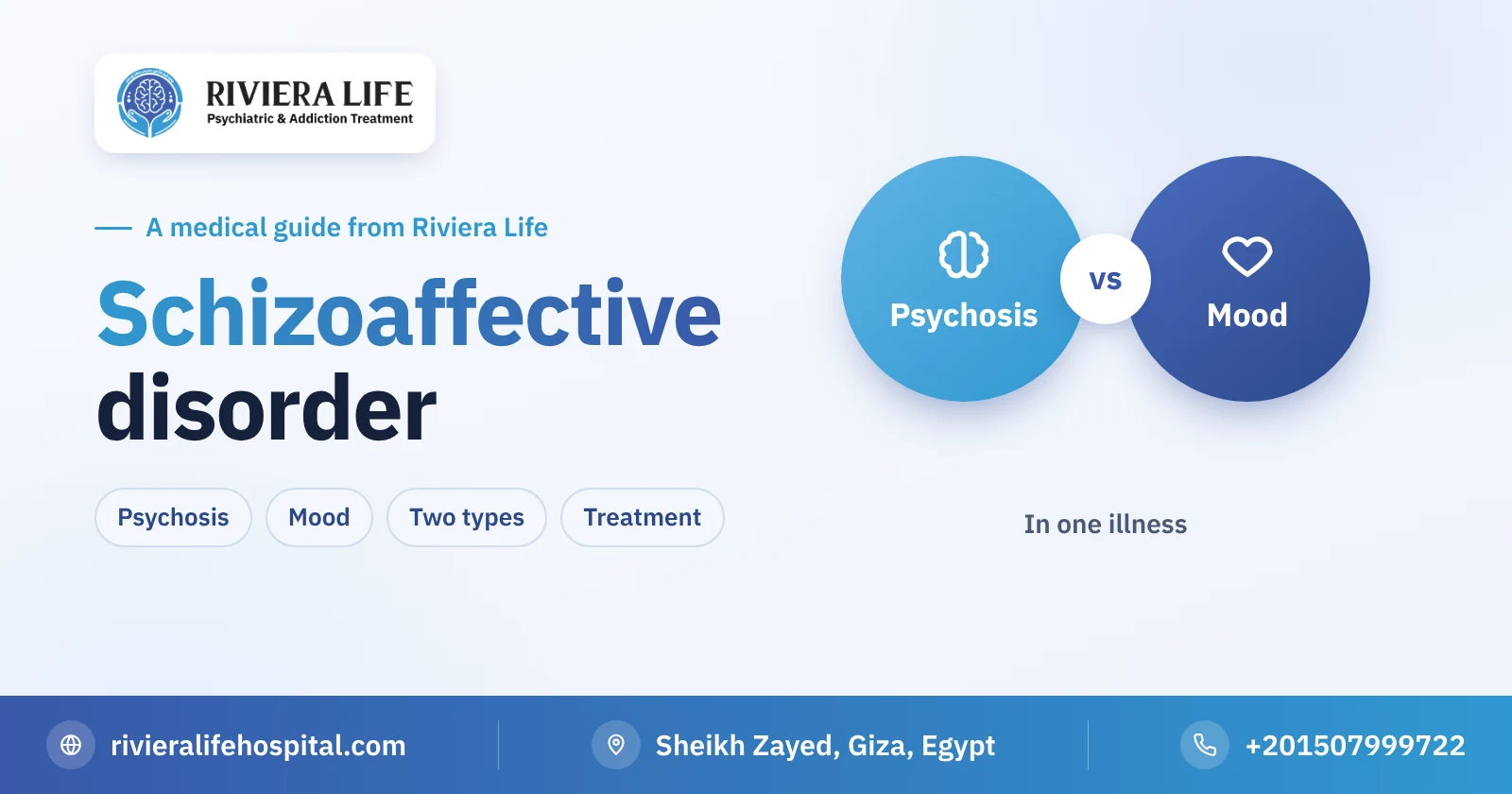
Schizoaffective disorder is a psychiatric illness that combines symptoms of psychosis, such as hallucinations and delusions, with symptoms of a mood disorder, meaning episodes of depression or mania, in a single long illness. It lies between schizophrenia and mood disorders, which is why its diagnosis is often delayed and it is confused with others. The good news is that it is treatable, and that long follow-up with medicine, psychotherapy and family support makes many patients stable. This article explains what it means, its types and how it differs from schizophrenia and bipolar disorder, and its assessment is for the psychiatrist alone.
What does schizoaffective disorder mean?
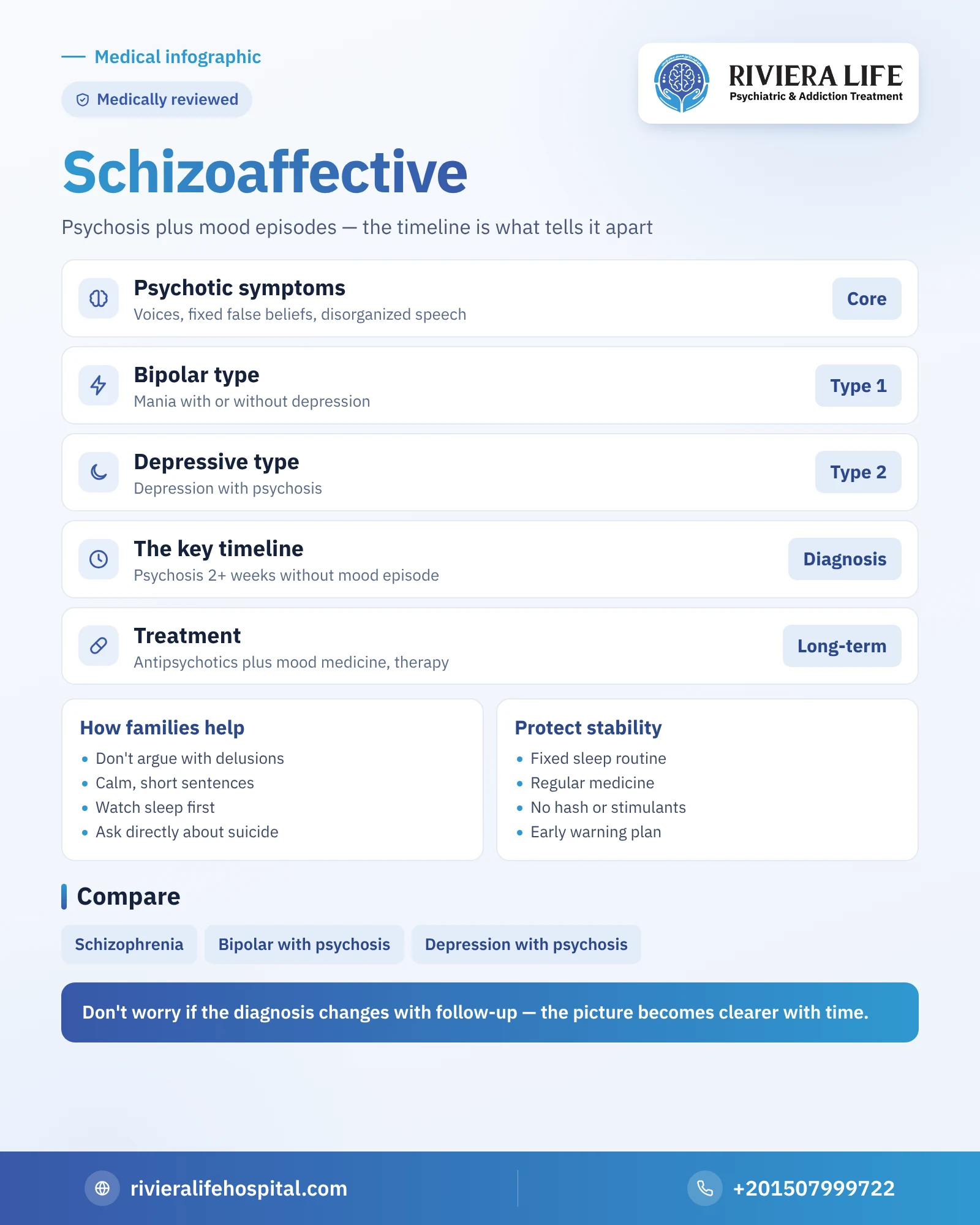
The word “schizo” refers to psychosis, and the word “affective” refers to mood. The person goes through periods in which unrealistic thoughts or voices others don’t hear mix with deep sadness or excessive activity and emotion. It isn’t a passing mixture: it is a continuing illness, sometimes interrupted by partial stability. According to the diagnostic criteria, psychotic symptoms alone, without a mood episode, must appear for at least two weeks during the illness, and mood symptoms must be present for most of the illness, not a short part of it. This point specifically is what distinguishes it from others.
The two types: bipolar and depressive
- The bipolar type: manic episodes are part of it, and may be accompanied by depressive episodes. Excessive energy, fast speech and little sleep come together with delusions of grandeur or persecution or hallucinations.
- The depressive type: mood episodes are limited to depression, so the patient feels a heavy sadness and negative thinking together with psychotic symptoms.
This division guides the supporting medicines, as the type of mood determines what the doctor adds to the treatment of psychosis.
Symptoms: what does the family see?
Psychotic symptoms
- Hearing voices talking to the patient or about them, or seeing things that aren’t there.
- Fixed unrealistic ideas, such as believing someone is watching or plotting against them or that they have special abilities.
- Scattered speech that is hard to follow, and strange behavior.
Mood symptoms
- In mania: very little sleep, fast speech, energy and agitation, and reckless behavior.
- In depression: sadness, loss of interest, slowness, a feeling of despair or guilt, and thoughts of death.
Negative and cognitive symptoms
Reduced speech, social withdrawal, poor concentration and neglect of personal care may also appear, all familiar in schizophrenia. Symptoms vary between patients and between stages.
The difference between it and schizophrenia and bipolar disorder
| Condition | Psychosis | Mood |
|---|---|---|
| Schizophrenia | The basic element and continues | Mood symptoms may exist but are short or of less weight |
| Bipolar disorder with psychotic features | Appears only during a mood episode | The basic element |
| Depression with psychotic features | Appears only during depression | Major depression |
| Schizoaffective disorder | Also appears in periods without a mood episode | Present for most of the illness |
The deciding factor, then, is the timeline: do hallucinations and delusions continue after mood calms? If yes for two weeks or more, with mood present for most of the time, the doctor leans towards schizoaffective disorder. To learn what distinguishes schizophrenia alone see schizophrenia symptoms and types of schizophrenia, and for mood bipolar disorder symptoms.
How does the doctor diagnose it?
There is no blood test or scan that confirms it. The doctor gathers a detailed story from the patient and family, and draws a timeline of symptoms: when the psychosis started, when the mood started, and whether they overlapped. They rule out other causes such as drugs, alcohol, thyroid and brain diseases and some medicines. That is why it helps for the family to bring dated notes, and to tell the doctor the truth about any drug use. The diagnosis may change after months of follow-up, as the picture becomes clearer with time.
What are the causes?
Doctors don’t know a single cause. Research points to an overlap of genetic factors, as the illness is more common in those with schizophrenia or bipolar disorder in their family, with differences in brain chemistry and development, and environmental factors such as drug use, especially hash and stimulants, and severe pressures and traumas. The family or upbringing isn’t a cause. The illness usually appears in late adolescence or early adulthood, and is believed to be less common than schizophrenia and mood disorders. For more on the factors see the causes of schizophrenia and the causes of psychosis.
Treatment: three pillars
Medicine
Treatment usually relies on antipsychotics, and the doctor adds, depending on the type, mood stabilizers or antidepressants if needed. The patient works with the doctor to choose the most suitable medicine and manage its side effects. The dose, changes and stopping are the doctor’s decisions alone, as stopping suddenly is among the best-known causes of relapse. On medicine in general: antipsychotics.
Psychotherapy and rehabilitation
- Cognitive behavioral therapy to deal with voices, thoughts and negative thinking.
- Psychoeducation for the patient and family about the illness, the medicine and signs of relapse.
- Training in social and life skills and supported employment.
- Regulating sleep and the daily routine to stabilize mood.
Hospital when needed
The patient may need admission in a severe episode: mania accompanied by psychosis, suicidal thoughts, or refusing food and medicine. Admission here is to protect them and adjust treatment, not a punishment, and the patient then returns to regular follow-up. For more on the treatment of the closest disorder: schizophrenia treatment.
Why is it so often confused?
Because the symptoms overlap with other illnesses, and change from one period to another. A young man is diagnosed first with schizophrenia then after a year it becomes clear that mood is present for most of the illness, and another is treated as bipolar for years then psychotic symptoms that continue on their own become apparent. So the family shouldn’t be upset if the diagnosis changes during follow-up; this happens because the doctor learns from the course of the illness. What matters is that the patient receives treatment that covers psychosis and mood together and doesn’t break off from it.
Work, study and daily life
Stability is built in small steps: a fixed sleep routine, regular medicine times, and work or study as far as the condition allows, then a gradual increase. Some patients return to their jobs successfully, and others need part-time work or a supported rehabilitation program. Most importantly, avoid severe pressure, lack of sleep and stimulant substances, as these bring symptoms back more than anything else.
It helps the patient to learn their early signs themselves: a change in sleep, being bothered by sounds, new suspicion, and unusual agitation. If they appear, they should contact their doctor early before the episode worsens, as early intervention shortens the episode and often protects from hospital admission.
Drugs and alcohol
Substance use doubles the risk. Hash and stimulants may bring back delusions and hallucinations, alcohol worsens depression and disturbs sleep, and all of them weaken commitment to medicine. If your relative uses, make sure the doctor knows, as integrated treatment of both conditions together is more successful. Read schizophrenia and addiction.
How does the family deal with it?
- Don’t argue with the patient about their delusions and don’t endorse them; say you understand their fear but you see the matter differently.
- Speak calmly and in short sentences, and reduce stimuli at home.
- Watch sleep, as it is the first thing to change before a relapse.
- Don’t neglect mood symptoms, and ask directly about suicidal thoughts if you notice despair.
- Encourage continuing on medicine and follow-up, and work with the doctor when they stop it.
- Ask for support for yourself, as long-term care is exhausting.
Outlook: is it possible to live normally?
The illness is usually chronic, but many patients regain a good level of functioning with continuing treatment, and medical references indicate that their improvement may on average be better than many other psychotic disorders. Work, marriage and building relationships are possible for those who stabilize, and the key is commitment, support and avoiding substances. For the marital relationship in this group of illnesses see schizophrenia and marriage.
Ask for urgent help immediately if you see
Call an ambulance on 123 or the mental health hotline 16328 or go to the nearest emergency department:
- Talk of death or self-harm
- Voices ordering harm to self or others
- Agitation, violence or threats
- Refusing food, drink or medicine with a risk to health
- Several nights without sleep with unrealistic thoughts
How does Riviera Life help you?
At Riviera Life in Sheikh Zayed, Giza, we receive patients with psychosis and mood disorders under the supervision of psychiatrists around the clock, with a family program, aftercare and complete confidentiality. The first consultation is free on +201507999722.
More from the schizophrenia guide
- Schizophrenia: the complete guide
- Psychosis: the complete guide
- Schizophrenia treatment
- Bipolar disorder: the complete guide
Questions many people ask
An illness that combines symptoms of psychosis, such as hallucinations and delusions, with mood episodes of depression or mania in a single illness.
In schizophrenia there may be short mood symptoms, while here mood is present for most of the illness, with psychosis lasting at least two weeks without a mood episode.
The bipolar type, which includes mania, and the depressive type, which is limited to depressive episodes.
Yes. Antipsychotics together with mood treatment, psychotherapy and family support help stability, and treatment is long-term.
Many patients do so when stable on treatment, avoiding substances and having support.