Schizoid personality is a stable pattern of detachment from social relationships and restricted emotional expression, in which the person seems self-sufficient, doesn’t seek friendship and isn’t much affected by praise or criticism. The essential difference between it and shyness or introversion is that its owner usually doesn’t suffer from their solitude, but prefers it. In this article we explain its signs, how it differs from schizotypal and avoidant personality and ordinary introversion, and when it needs treatment and what treatment offers.
What is schizoid personality?
Schizoid personality disorder, also called “schizoid-like” personality in some older Arabic translations, is one of the first-cluster disorders in the American diagnostic manual, the cluster described as odd or withdrawn. It has no relation to schizophrenia despite the similar name in English: there are no hallucinations or delusions in it and no break from reality.
Its features appear in early adulthood, and may be preceded by a solitary childhood with few friends. Its prevalence in the general population is estimated at a few percent at most, but it is rare in clinics because people with it seldom see a problem in their pattern. In the modern international classification it is no longer diagnosed as a separate type, but described within personality disorder with a detachment trait.
What does life look like from the inside?
Imagine an employee in his thirties who has worked in the archive for years, precise in his work, eats his lunch alone, and politely excuses himself from every invitation. He doesn’t hate his colleagues or fear them; he just finds nothing in their company worth the effort. He goes home to spend the evening on a solitary hobby such as programming or puzzles, and feels at ease. When his mother presses him to marry, he is puzzled by the insistence more than he rejects the idea.
This picture sums up the disorder: an inner world that is sometimes rich, outer contact at its minimum, and calm emotion that people see as coldness.
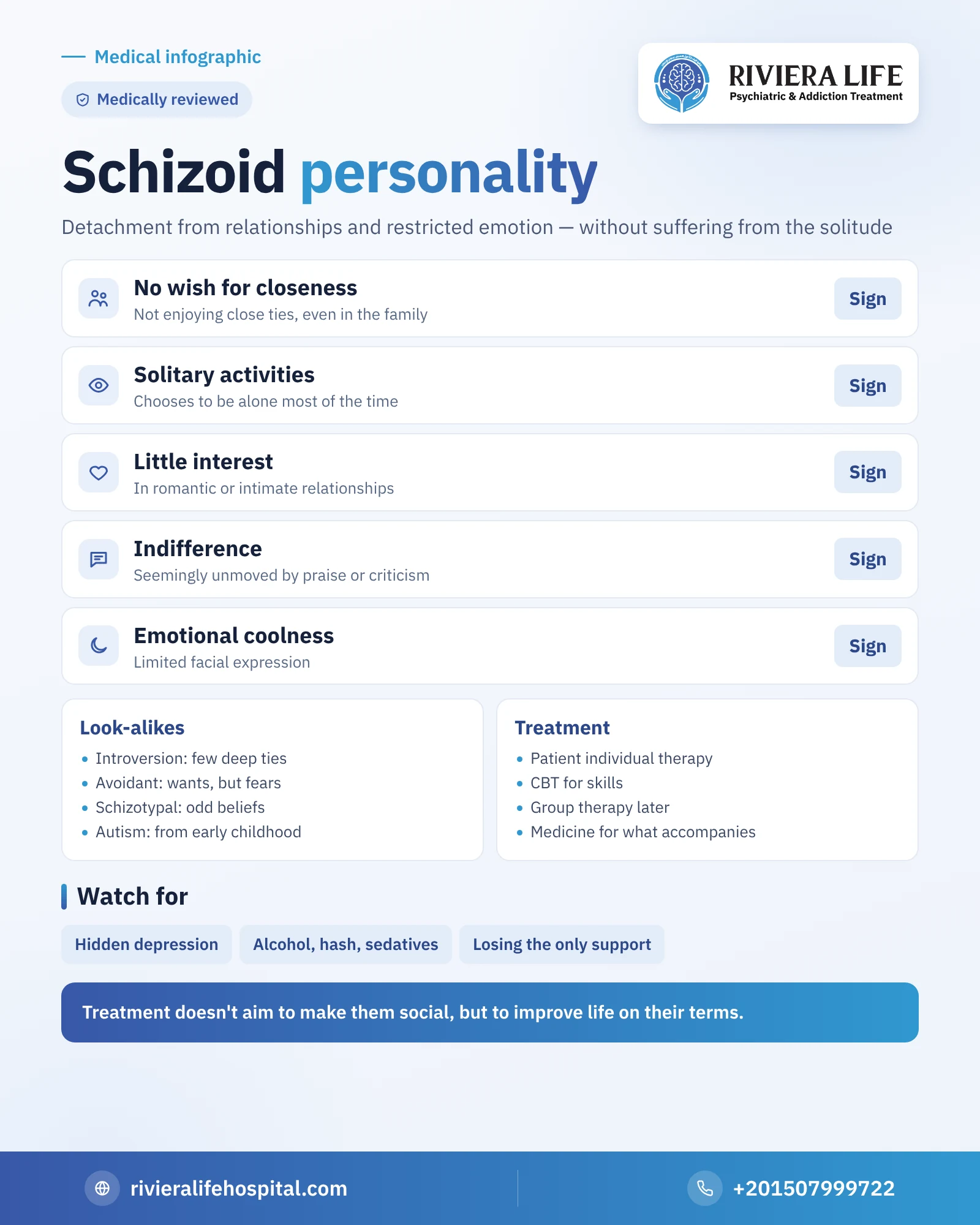
Signs of schizoid personality
The doctor looks for an extended pattern combining a number of the following signs, not for a single trait:
- Doesn’t want close relationships or enjoy them, even within the family.
- Chooses solitary activities most of the time.
- Weak interest in a romantic or intimate relationship with a partner.
- Few activities that give them real pleasure.
- No close friends or confidants except sometimes a first-degree relative.
- Seemingly indifferent to praise or criticism.
- Emotional coolness and limited facial expression.
Two or three traits in a quiet person aren’t enough for diagnosis, and only a doctor or psychologist can determine it after a full assessment.
The difference between schizoid personality and introversion
Introversion is a normal personality trait, not a disorder. The introvert regains energy in quiet and prefers small gatherings, but loves their few friends, is sad to part from them and is touched by a kind word. Someone with schizoid personality doesn’t feel a need for this closeness at all. The introvert chooses a small number of relationships, while the schizoid person doesn’t choose relationships in the first place.
How it differs from schizotypal and avoidant personality
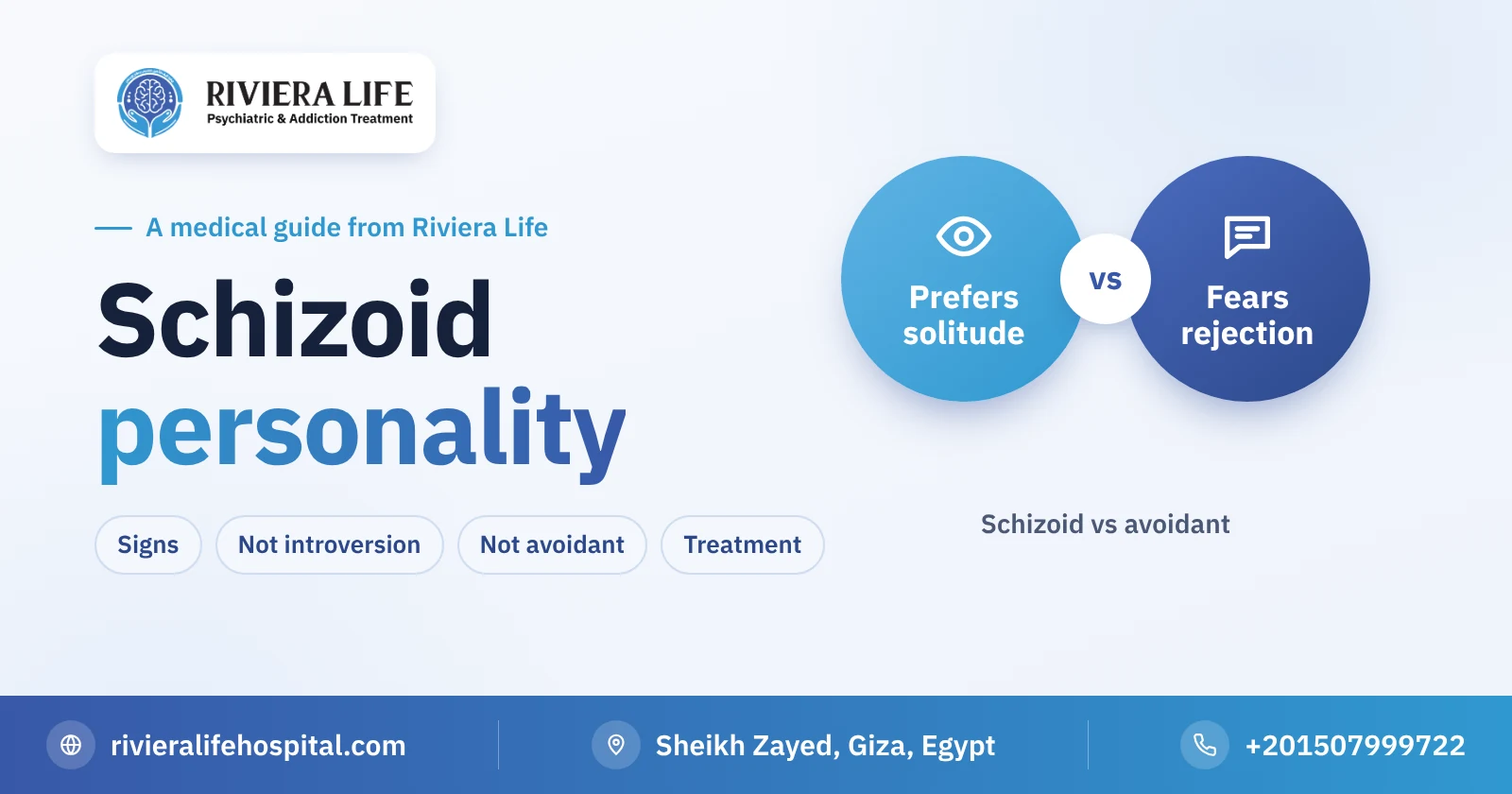
| Pattern | Do they want closeness? | Why do they keep away? | Distinguishing sign |
|---|---|---|---|
| Schizoid personality | No | Finds no pleasure in relationships | Coolness, calm and indifference to opinion |
| Avoidant personality | Yes, strongly | Fear of rejection and embarrassment | Clear pain from loneliness and sensitivity to criticism |
| Schizotypal personality | Usually not | Suspicion and anxiety that familiarity doesn’t calm | Odd beliefs and magical thinking |
| Introversion | Yes, with a few | Preferring quiet | Few deep relationships |
The dividing line with schizotypal personality is the absence of perceptual oddness, which we detailed in schizotypal personality. As for avoidant personality, its owner longs for what they flee from; the details are in avoidant personality. The doctor also distinguishes it from the autism spectrum, in which communication difficulties begin in early childhood with repetitive behaviors and narrow interests.
What happens at work and in marriage?
Many people with this pattern succeed in solitary jobs that need concentration and don’t require intensive contact, such as programming, accounting, research and night work. The difficulty appears on promotion to managing a team, or in environments built on relationships and meetings.
In the family, some marry under family pressure, and the partner feels loneliness inside the marriage and that their feelings find no echo. Here accusing them of cruelty doesn’t help, as they usually don’t intend harm; what helps is an explicit agreement on a minimum of shared time and participation in decisions.
Why does schizoid personality appear?
No single cause is known, but a combination of genetic and temperamental predisposition from childhood, such as extreme quietness and weak response to social rewards, with an early environment that is emotionally cold or low in contact, is thought likely. Schizoid traits are observed slightly more often among relatives of people with schizophrenia, without this meaning that schizoid personality is a stage preceding schizophrenia.
Complications worth attention
The real danger isn’t the solitude itself, but what may creep into it. The person may develop depression that no one notices because they complain little anyway, and may turn to alcohol, hash or sedatives to bear social situations imposed on them. Losing the only relative they depend on, such as a parent, may also leave them without any support network. See the signs of depression in depression symptoms.
How is it diagnosed?
Someone with schizoid personality rarely comes asking for treatment of their personality; they usually come because of depression, insomnia, a problem at work, or family pressure. The doctor conducts a detailed interview about the history of relationships since childhood, sometimes drawing on information from the family and structured personality scales, and rules out depression, psychosis, the autism spectrum and the effect of drugs before reaching the diagnosis.
Treatment of schizoid personality
Treatment doesn’t aim to turn the person into a sociable one, but to improve their ability to work and live, build a minimum of ties that they themselves choose, and treat the disorders that accompany the isolation.
- Patient individual psychotherapy: respects their need for distance, and starts with practical goals set by the patient themselves.
- Cognitive behavioral therapy: helps them notice and name their feelings, and practise specific social skills they need at work.
- Group therapy: may suit some patients after trust is built, as a safe space for contact without pressure.
- Medicine for accompanying symptoms only: no medicine treats the disorder itself, but the doctor may prescribe treatment for depression or anxiety if present, and any adjustment or stopping is done with the doctor.
How does the family deal with a schizoid person?
- Accept that their need for solitude is real and not stubbornness or rejection of you.
- Offer participation without insisting, and leave them free to decline.
- Connect with them through shared interests more than direct emotional conversations.
- Watch for changes in sleep, food and self-neglect, which may be a sign of depression.
- Don’t push them into marriage or a social job by pressure, as the result is usually suffering for everyone.
When should you seek help?
Ask for a psychological assessment if the isolation is accompanied by persistent sadness or loss of interest in what they used to love, increasing use of drugs or sedatives, decline at work and in self-care, or the appearance of odd ideas that weren’t there before. If they talk about harming themselves or ending their life, call the ambulance on 123 or go to the nearest emergency department, and guidance can be sought from the mental health hotline 16328.
How can Riviera Life help you?
The Riviera Life team respects the patient’s privacy and need for distance, starting with a calm assessment with a consultant psychiatrist, setting practical goals in agreement with them, and treating accompanying depression or substance use, with guidance sessions for the family and complete confidentiality. Book your free first consultation on +201507999722.
More from the personality disorders guide
- Personality disorders: the complete guide
- Schizotypal personality: odd beliefs and the link with schizophrenia
- Avoidant personality
- The sensitive personality: a trait or a disorder?
- The introverted personality: a trait or a disorder, and how to tell it from phobia
Questions many people ask
It is a personality disorder when it is a stable pattern causing impairment or distress, and it isn't a psychotic illness. Only a doctor or psychologist can determine it after a full assessment.
Usually they don't suffer from loneliness the way a shy person or someone with avoidant personality does; they prefer it. But they may develop depression or distress under pressure or when losing someone they depend on.
Yes, some marry, but the partner may feel emotional coolness. An explicit agreement on shared and private spaces helps, and marital counselling may be useful.
If you prefer quiet but love your few friends, miss them and are affected by their opinion, this is normal introversion. A lack of any wish for closeness with constant coolness deserves a specialist's opinion.
Patient psychotherapy helps improve functioning at work and in necessary relationships, and treats accompanying depression or anxiety, while respecting the person's need for distance.