Personality disorders and depression often occur together, and each hides and complicates the other: depression that doesn’t respond as it should because behind it lies an old pattern of thinking and relationships, and a personality disorder that doesn’t show its true nature because depression covers the scene. This article explains why this overlap happens, which personality types are most linked to depression, how we tell a passing depression from an old pessimistic nature, why treatment changes when the two occur together, and what the family can do. The diagnosis is made by the psychiatrist alone, after an assessment that usually extends over more than one session.
Why do personality disorders and depression occur together so often?
Studies say that depression is among the most common conditions accompanying personality disorders, and that a considerable proportion of people with chronic or recurrent depression have disordered personality traits. This doesn’t mean that one always causes the other; rather, there are multiple pathways:
- Shared factors: genetic predisposition and a harsh or neglected childhood raise the risk of both together.
- A pattern that feeds sadness: someone who sees themselves as inadequate or unloved, and avoids closeness or clings intensely to others, is exposed to repeated losses in relationships, and this pushes towards depression.
- Depression that changes the picture: when depression lasts long, the person becomes more withdrawn, sharp and pessimistic, so personality traits look more severe than they were.
Personality types most linked to depression
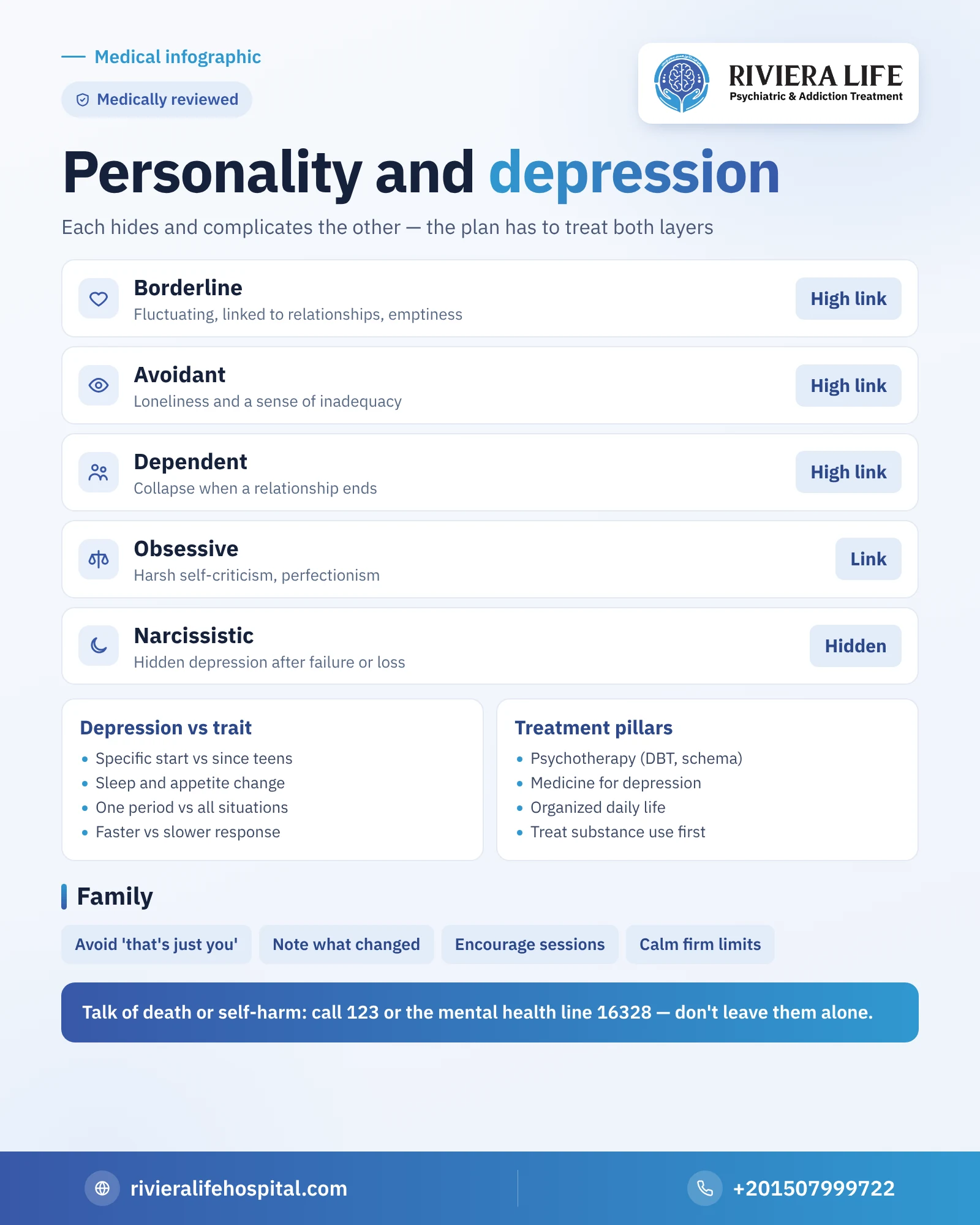
- Borderline: fluctuating depression linked to relationships and a feeling of emptiness, which may be accompanied by impulsivity or self-harm. The details are in the borderline personality guide.
- Avoidant: loneliness and a feeling of inadequacy resulting from staying away from people despite needing them, as in avoidant personality.
- Dependent: collapse when a relationship the person depends on ends, and you will find the details in the dependent personality guide.
- Obsessive-compulsive: harsh self-criticism and exhaustion from perfectionism and the inability to relax.
- Schizoid and schizotypal: social withdrawal that may resemble depression, but has been fixed for a long time.
- Narcissistic: depression that appears when broken by failure, loss or aging, and is often hidden.
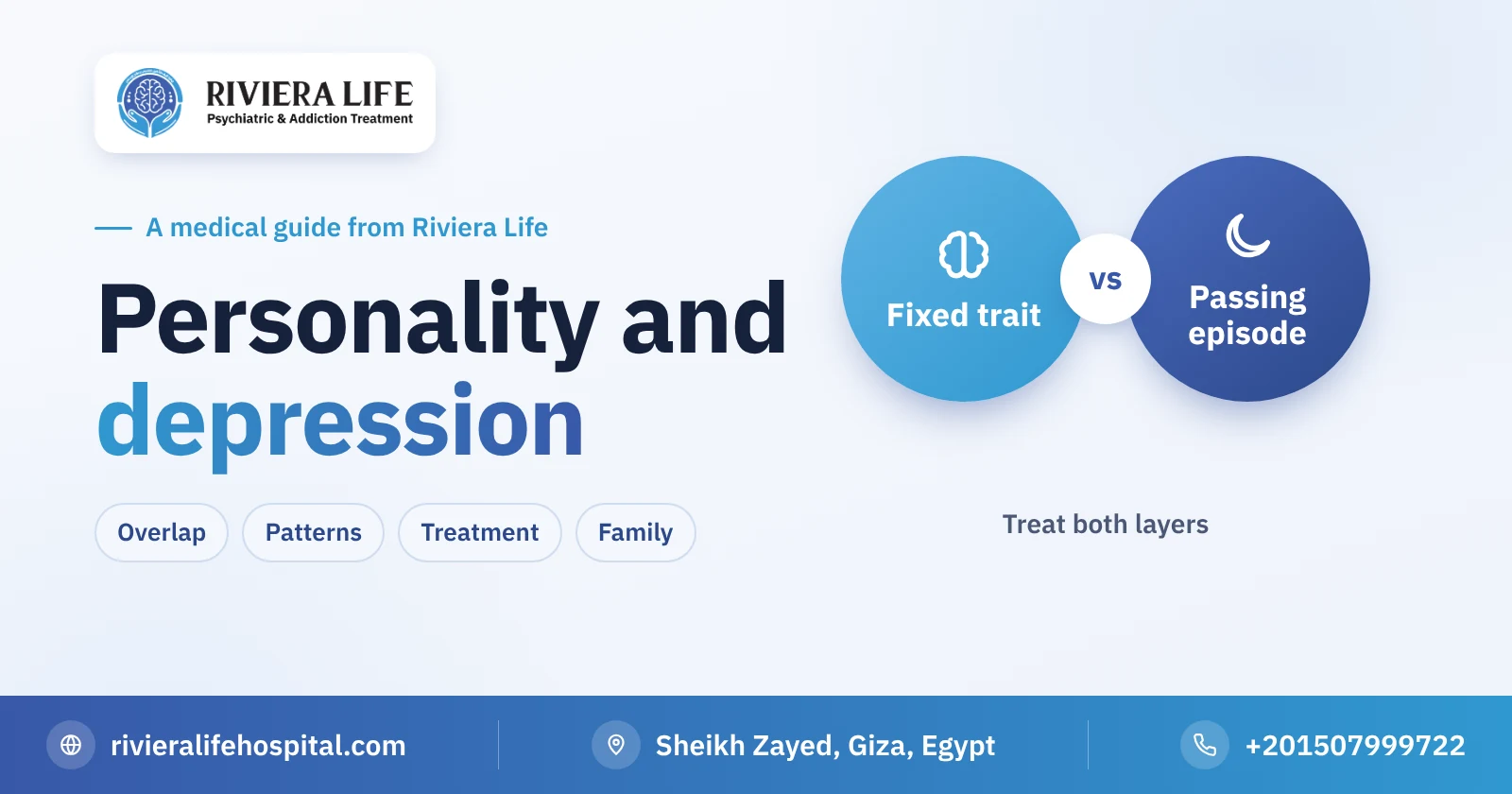
The difference between a passing depression and a fixed personality trait
Among the hardest questions a doctor faces: is this sadness a mood disorder, or is it this person’s way of seeing life? These general differences help:
- The onset: depression usually appears in a specific period with changes from the usual state, while personality traits extend back to adolescence or early adulthood.
- Physical symptoms: disturbed sleep and appetite, slowed movement and loss of interest in everything are closer to depression.
- The breadth: personality traits appear in all relationships and situations, not in one period.
- The response: depression often improves with treatment, while the personality needs longer psychotherapy.
The two may be present together, and this doesn’t mean the case is hopeless, but that the plan needs to treat both layers. To learn the basic signs of depression itself, see depression symptoms.
Why is improvement sometimes delayed?
Research indicates that the presence of a personality disorder may make the response to treatment slower or less stable, or increase the likelihood of depression returning. The logical reasons:
- The need to trust the therapist, then breaking off from them at the first disappointment, which interrupts the plan.
- Stopping medicine without consultation at the first side effect or when feeling better.
- Recurring problems at work and in relationships that renew sadness before the improvement takes hold.
- Using alcohol, sedatives or drugs to escape, which increases and complicates depression, and you will find this in the article on depression and addiction.
This doesn’t mean treatment has failed, but that success requires patience and longer follow-up, and a therapist who expects these stumbles and doesn’t consider them the end of the road.
How does the doctor reach the full picture?
A short meeting isn’t enough. The doctor usually asks to hear the patient’s history across the stages of their life: how they were in childhood and adolescence, what their relationships and work were like, when the sadness began, and whether they went through long periods of improvement. Then they ask about sleep, appetite, energy and concentration, and about any use of alcohol or sedatives, and rule out physical causes such as thyroid disorder. They may use standardized questionnaires, but these alone don’t make a diagnosis. It is often very useful for the patient to bring along a relative who has known them for years, to describe what has changed compared with before.
Depression that looks like anger or emptiness
Not every depression looks like crying and withdrawal. In some people with borderline or narcissistic personality it appears as irritability, agitation and outbursts, and in others as a feeling of emptiness and constant boredom that no activity relieves. These pictures are often interpreted as “a difficult temperament” so their treatment is neglected. If you notice that this irritability is new or more severe than usual, or accompanied by a change in sleep and appetite, make sure to present it to the doctor.
How are the two treated together?
The plan is usually built on several pillars, without prescribing medicines or doses because this is the doctor’s domain alone:
- Psychotherapy: it is the foundation for a personality disorder. Among its best-known types are dialectical behavior therapy, schema therapy, cognitive behavioral therapy and mentalization-based treatment (MBT).
- Medicine: the doctor may prescribe an antidepressant to treat the depression itself, and other medicines for specific symptoms. Medicine doesn’t treat the personality itself, and is reviewed regularly.
- Organizing life: steady sleep, movement and routine, because the disorder feeds on chaos.
- Treating substance use if present: the first of the steps, and it may need the dual diagnosis program.
- The family: sessions that teach how to support without excessive rescuing or blame.
And one rule doesn’t change: don’t start a medicine, stop it or change anything in it except with the treating doctor.
The recovery stage: what should the patient expect?
Improvement in this case comes in two layers and at two different speeds. Depression may ease within weeks to months of starting the right treatment, so sleep, energy and interest return. Personality patterns change more slowly and with repeated practice: for the patient to ask clearly for what they need, to tolerate disagreement without withdrawal or impulsivity, and to form a kinder view of themselves. After the depression improves the patient may feel that “the rest of the problem” is still there, and this is natural and doesn’t mean treatment has stopped working, but that the second stage has begun.
What can the family do?
- Stay away from phrases like “that’s just how you are” or “stop being spoiled”; they add a burden and delay seeking treatment.
- Notice the change: is what you see more severe than usual? This helps the doctor distinguish.
- Encourage continuing the sessions, especially after the first disagreement with the therapist.
- Set calm, firm limits when harmful behavior happens, and don’t ignore threats.
- Take care of yourself; accompanying someone who suffers from both is exhausting.
Seek urgent help immediately if any of these appear
Call the ambulance on 123 or go to the nearest emergency department, and don't leave the person alone.
- Talk about death or that life has no value
- Preparing for a farewell or suddenly giving away belongings
- Self-harm or threatening it
You can also call the hotline of the General Secretariat of Mental Health on 16328. Painful thoughts change with treatment, and asking for help is a brave step.
How does Riviera Life help you?
At Riviera Life in Sheikh Zayed, the psychiatry consultants carry out an assessment that distinguishes between depression and personality traits, and set a plan that combines psychological and medication treatment when needed, with complete confidentiality, round-the-clock medical supervision and a program to support the family. The first consultation is free, and you can call on +201507999722.
More from the personality disorders guide
- Personality disorders: the comprehensive guide
- Depression: the comprehensive guide
- Depression treatment
- Borderline personality treatment
Questions many people ask
It may raise its risk in different ways, including repeated losses in relationships and self-criticism, and the two may also share genetic and childhood factors.
Depression usually appears in a specific period with a change in sleep, appetite and energy, while personality traits extend from adolescence and appear in most situations, and the doctor separates them through assessment.
They may help treat the accompanying depression, but they don't treat the personality itself, and only the doctor determines the medicine and its duration.
Because breaking off treatment, stopping medicine, and recurring relationship problems and substance use may interrupt the plan, so it needs patience and longer follow-up.
Yes, and Riviera Life in Sheikh Zayed provides an assessment and a plan that combine psychological and medication treatment when needed with a program to support the family.