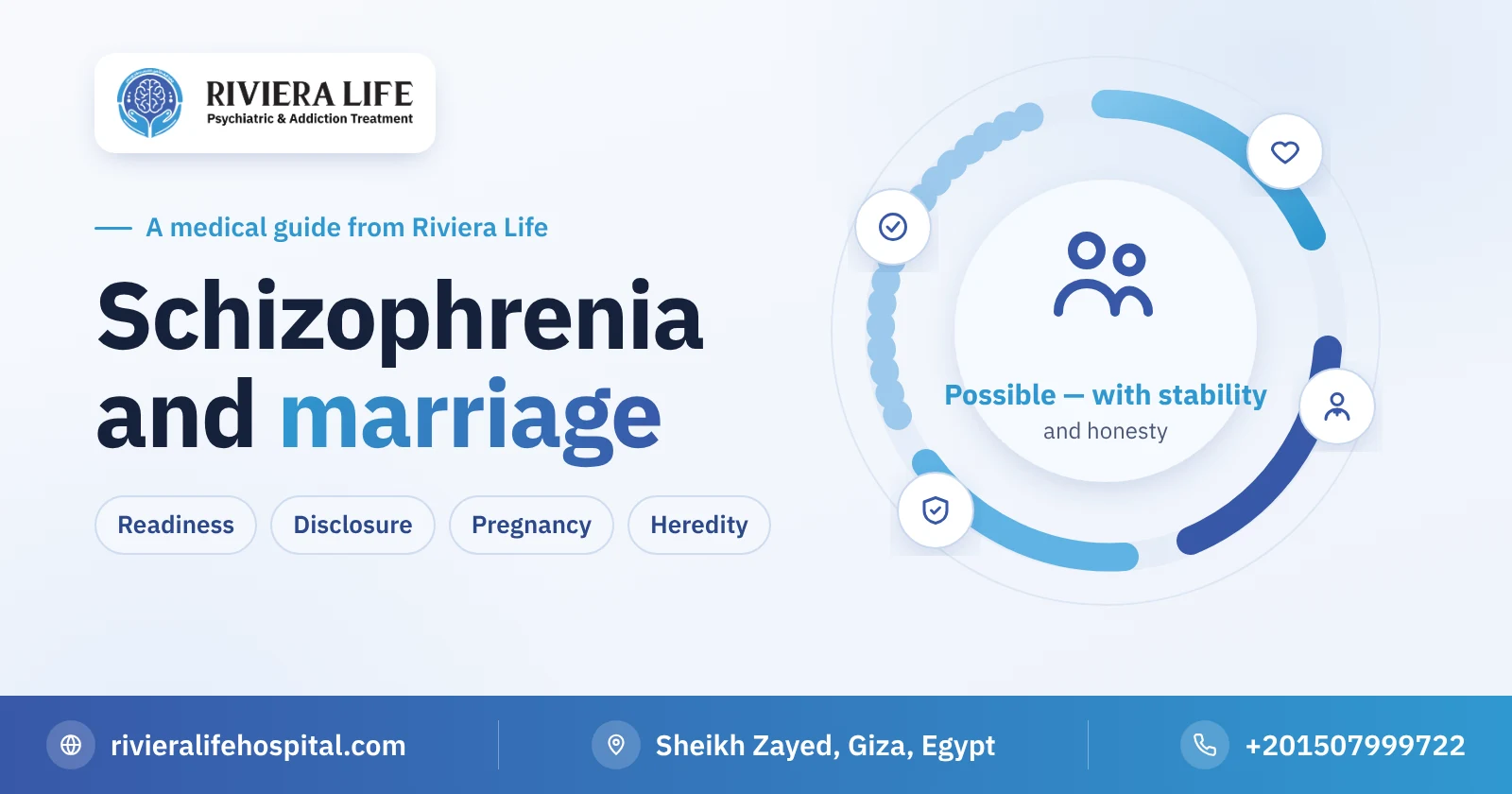
Can someone with schizophrenia marry? The short answer: yes, many people with the illness marry and build stable families, provided the illness is stable on treatment and both partners enter the marriage with full knowledge rather than concealment. Schizophrenia and marriage is a subject many families in Egypt avoid because of stigma and fear of “what people will say”, so they resort to secrecy, and then the problem explodes months later. In this article we answer frankly the questions the patient, their family and the other partner ask: when is the right time, how is disclosure done, what about pregnancy and heredity, and what is the role of the husband or wife in preventing relapse.
Schizophrenia and marriage: does the patient have the right to marry?
Schizophrenia is a chronic illness that can be controlled, not a sentence of isolation. A large number of patients live stable lives in which they work and carry family responsibilities, especially after years of commitment to treatment. Marriage may be a source of real support: a partner who notices change early, a regular daily routine, and a sense of belonging.
But the picture isn’t always rosy. There are cases in which the illness is unstable, the negative symptoms are severe, or insight is weak, so marriage becomes a burden on both sides. That is why the more accurate question isn’t “is it allowed?” but “is this person, at this stage, ready?”. Only an honest assessment with the treating psychiatrist settles that.
Frank questions before making the decision
- Has there been a long enough period of stability without psychotic episodes? Many doctors prefer stability of at least a year or two, and the decision is individual.
- Does the patient keep to their medicine on their own, or only under family pressure?
- Do they know their early signs of relapse and accept being told about them?
- Can they work or contribute to household responsibilities?
- Do they use drugs or hashish? This alone may destroy any stability.
- Does the other partner know, understand and choose out of conviction?
Disclosure before marriage: why is it essential?
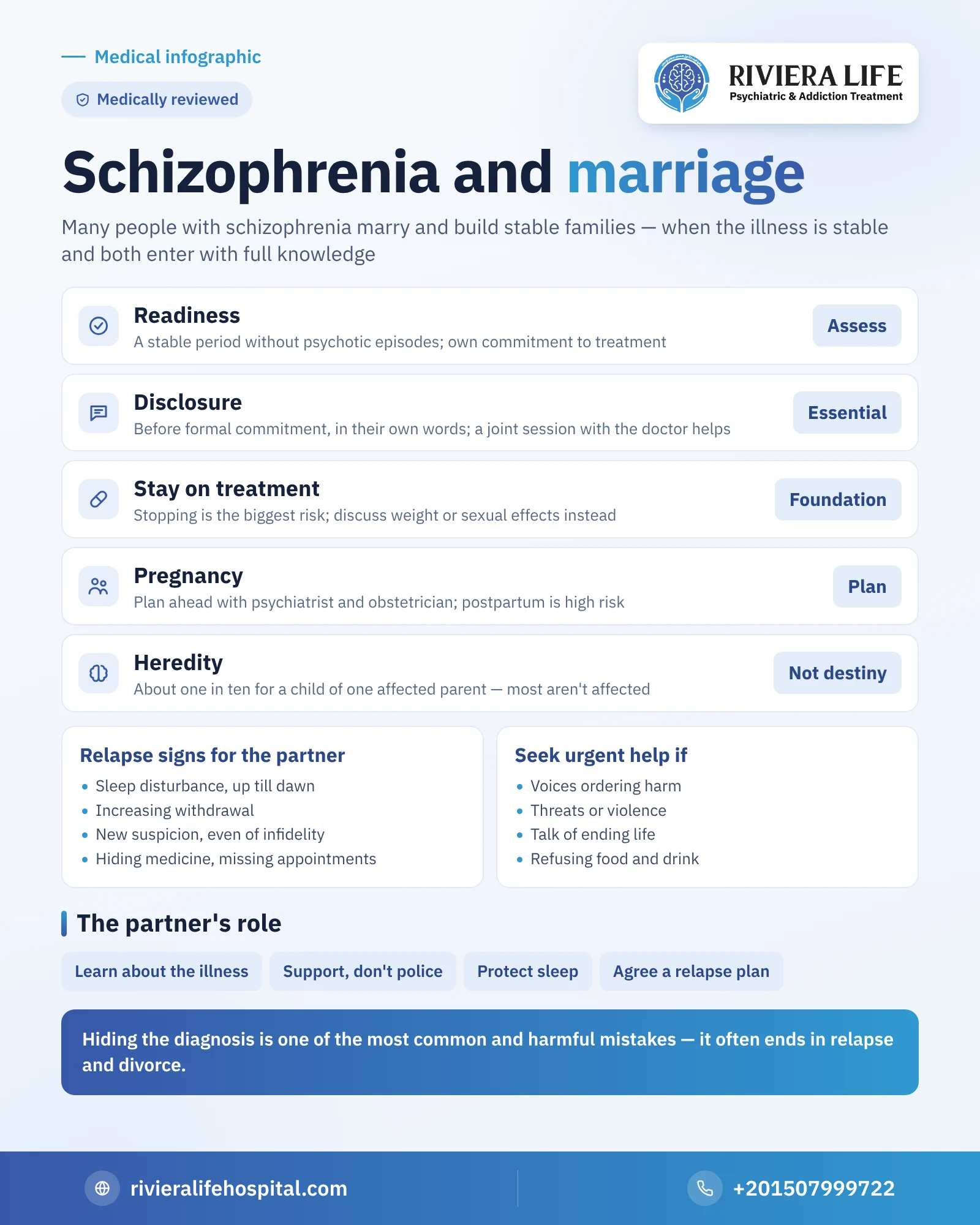
Hiding the illness from the other partner is one of the most common and most harmful mistakes we see. The family hides the diagnosis and says the medicine is “vitamins” or “nerve treatment”, then the husband or wife discovers the truth after a relapse or after finding the medicine box. The result is usually a feeling of betrayal, pressure on the patient to stop the medicine to “prove they are well”, then relapse and divorce.
Honest disclosure protects everyone, and also protects the religious and legal rights of both partners. It can be done in a calm, considered way:
- The patient chooses a time after serious acquaintance and before formal commitment.
- They explain the illness in their own words: what happened to them, how it was treated, and how they are now.
- A joint session with the psychiatrist can be arranged to answer the other partner’s questions clearly.
- The other partner is given time to think without pressure.
Stability on treatment is the foundation of everything
The biggest danger to the marriage of someone with schizophrenia isn’t the illness itself, but stopping treatment. This often happens after marriage: the patient feels well, or is bothered by weight gain or the medicine’s effects on sexual desire, or someone pressures them to give it up. Relapse after stopping is very common, and may come after weeks or months.
The solution isn’t to keep quiet about side effects, but to discuss them with the doctor. Many can be handled by adjusting the dose, changing the medicine or adding a supportive treatment, and that decision belongs to the doctor alone. The details of medication options and the relapse prevention plan are in our article on schizophrenia treatment.
Pregnancy: a plan with the doctor before it happens
If the wife is the one with the illness, pregnancy needs advance planning with the psychiatrist and the obstetrician together, not a sudden decision. The most important points:
- Don’t stop the medicine on your own on learning of the pregnancy; stopping suddenly may cause a serious relapse for both mother and fetus.
- The doctor reviews the current medicine, weighs its benefits against its known risks in pregnancy, and may adjust it before pregnancy rather than after.
- The period after birth is one of the highest-risk periods for relapse, and needs close follow-up and support with sleep and childcare. We explained the changes of this period in our article on postpartum depression.
- Breastfeeding is a decision discussed with the doctor according to the medicine used.
If the husband is the one with the illness, there is no known effect of antipsychotics on the fetus from the father’s side, but some may affect desire or sexual performance, and this is something to discuss with the doctor without embarrassment.
Is schizophrenia passed on to children?
This is the most frequently asked question, and its answer needs precision. Heredity has a real role in schizophrenia, but it isn’t destiny. The risk for the child of one affected parent is higher than in the general population, and references put it at roughly one in ten, meaning the great majority of children aren’t affected. The risk rises further if both parents are affected. Heredity here isn’t a single gene, but a vulnerability that interacts with other factors such as hashish use in adolescence and severe stress.
These figures are approximate and vary between studies, and the doctor or a genetics consultant can discuss them according to family history. The details of genetic and environmental factors are in our article on the causes of schizophrenia.
The role of the husband or wife
The partner isn’t a nurse or a guard, but they are the closest to see change. What really helps:
- Understanding the illness from a reliable source, and attending one or more sessions with the doctor.
- Supporting commitment to medicine without turning it into a daily battle or a tool of threat in disagreements.
- Keeping a regular sleep routine, as late nights are among the most common triggers of relapse.
- Separating the person from their symptoms; withdrawal or saying little may be negative symptoms, not a lack of love.
- Agreeing in advance, during stability, on a clear plan for what happens if signs of relapse appear.
For the wider family, there is a useful general guide in our article on how the family can deal with a person with mental illness.
Relapse signs the partner should watch for
- Sleep disturbance, or staying up until dawn for no reason.
- Increasing withdrawal, saying little or neglecting hygiene.
- New suspicion of the partner, the neighbors or the family, sometimes suspicion of infidelity without evidence.
- Incoherent speech or preoccupation with strange ideas.
- Hiding the medicine or avoiding doctor’s appointments.
When any of these signs appear, contacting the doctor within days may prevent a full episode. As for pathological suspicion in particular, we explained its nature in our article on paranoia.
Seek urgent help immediately if you see
Call an ambulance on 123 or go to the nearest emergency department if the affected partner shows:
- Commands from voices they hear to harm themselves or others
- Threats or violence toward the partner or children
- Talk of ending their life; you can also call the mental health hotline on 16328
- Complete refusal to eat and drink, or prolonged freezing
Support available to the couple
Let’s not forget that the stresses of marriage itself, a new home, financial responsibilities and expectations from both families, may trigger relapse in the first months, so it helps to arrange a follow-up appointment with the doctor before the wedding and shortly after it. Marriage with a chronic illness needs support that isn’t limited to medicine. Family therapy teaches both partners to communicate and resolve disagreements in a way that reduces tension at home, one of the known factors in lowering relapse. The partner also benefits from a space of their own to talk about their stresses without feeling guilty. A regular aftercare plan helps catch problems before they grow.
How can Riviera Life help you?
At Riviera Life in Sheikh Zayed, the patient and their partner or family can sit with a consultant psychiatrist to assess readiness for marriage, plan for pregnancy, or set a relapse prevention plan, in complete confidentiality. If the case needs intensive follow-up, round-the-clock medical supervision is available, with a family program and aftercare. The first consultation is free on +201507999722.
More from our schizophrenia guide
- Schizophrenia: the complete guide
- The causes and risk factors of schizophrenia
- Schizophrenia treatment and the relapse prevention plan
- Schizophrenia and addiction
- Psychosis and marriage: when is it possible, and what about disclosure, pregnancy and children?
Questions many people ask
No. Marriage can be a source of support and stability, but it doesn't replace treatment, and it may increase stress if the illness isn't stable.
Yes. Honest disclosure before commitment protects both sides and prevents a feeling of betrayal later, and it can be done with the help of the psychiatrist.
Many patients become pregnant safely with advance planning between the psychiatrist and the obstetrician; what matters is not stopping the medicine without consultation.
The chance is higher than in the general population but remains relatively low, as most children of patients don't develop it. The doctor discusses the risk according to family history.
Some may affect weight or sexual desire; these are effects that can be discussed with the doctor so treatment is adjusted instead of stopped.