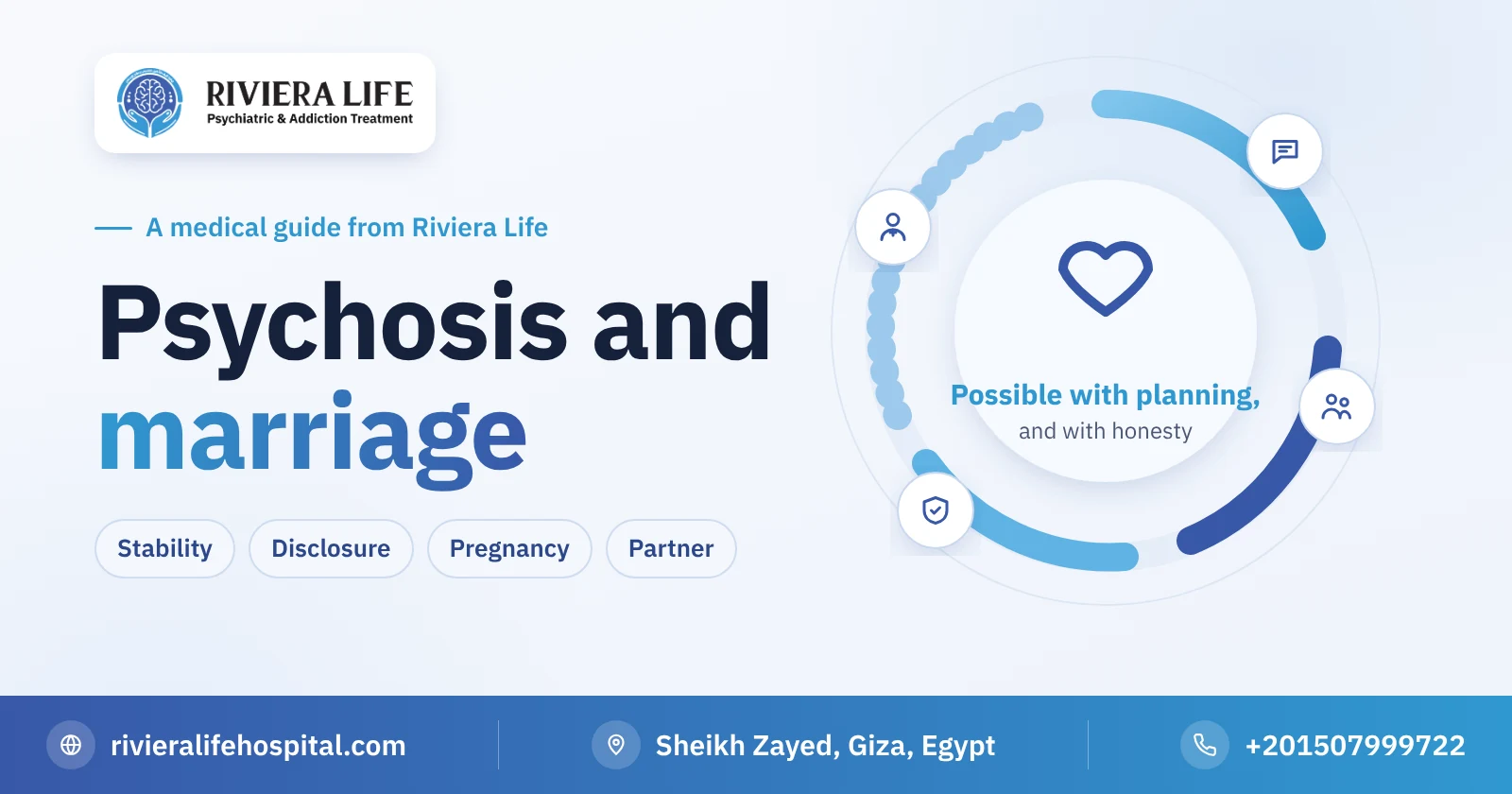
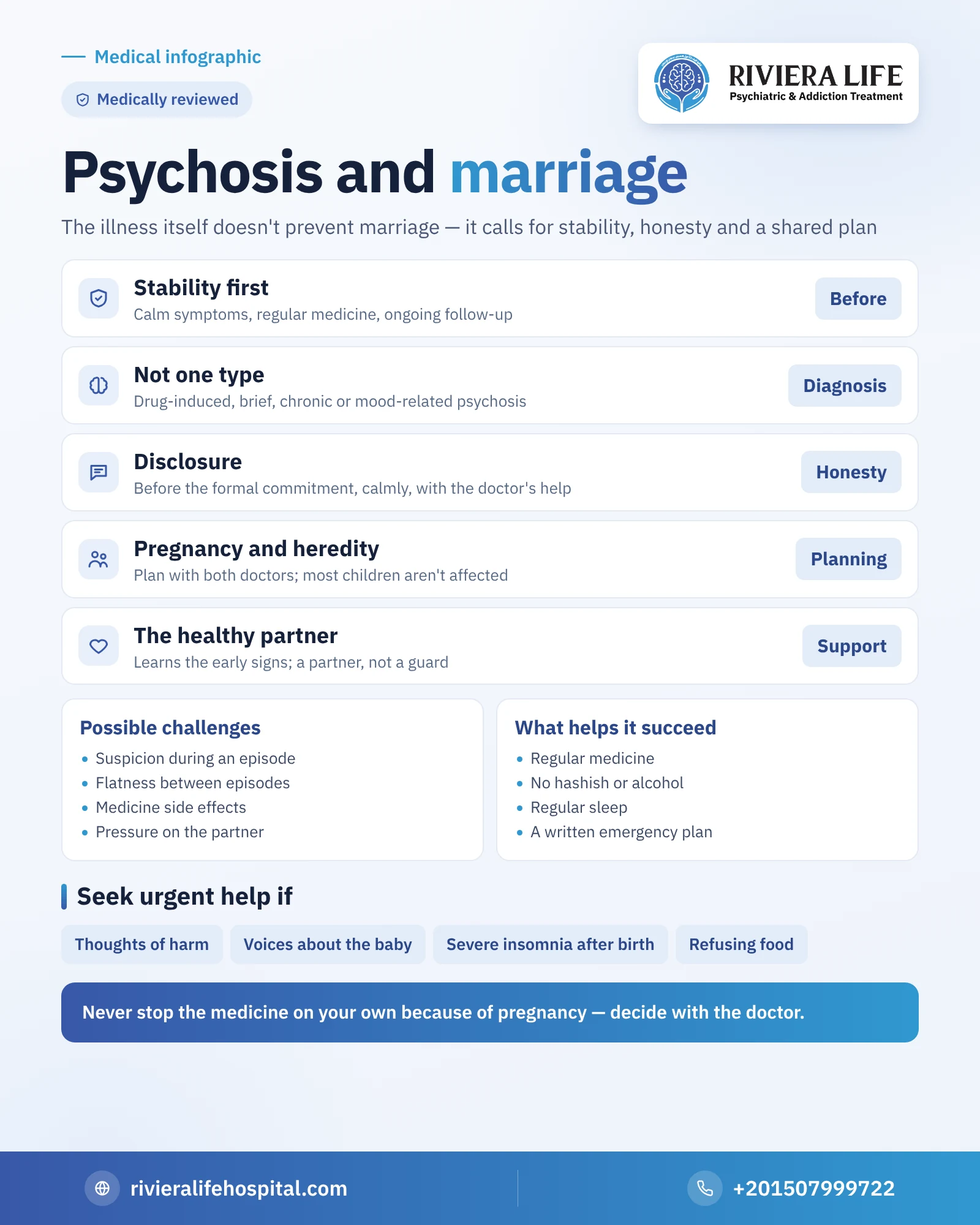
Psychosis and marriage aren’t opposites; the illness in itself doesn’t prevent commitment, but it makes the decision more in need of planning and frankness. Many who have been through a psychotic episode marry and live a stable family life, provided the illness is under treatment and follow-up and both parties know what awaits them.
The picture changes with the diagnosis: a single episode caused by a drug differs from a chronic disorder such as schizophrenia. Here we cover when the time is right, what is said to the other party and when, how episodes affect married life, what about pregnancy, children and heredity, and how the healthy husband or wife acts. The article doesn’t replace consulting the treating doctor who knows the case.
Psychosis and marriage: can the patient marry?
Yes in many cases. The more important question isn’t “is the illness present?” but “what is its state now?”. Doctors prefer a sufficient period of stability in which symptoms are calm, the medicine regular and follow-up continuous, and for the patient to be able to take care of himself and carry out his daily responsibilities. This period differs from case to case, and the doctor determines it according to the course of the illness, not by a fixed calendar of years.
Psychosis isn’t one type
The word psychosis describes symptoms, and behind it are multiple causes that change the picture completely:
- An episode caused by a drug: it may end on stopping the substance, and the risk is linked to repeated use. This is the subject of drug-induced psychosis.
- A brief psychotic episode: following severe stress or childbirth, which may not recur.
- A chronic or recurrent disorder: such as schizophrenia, schizoaffective disorder or delusional disorder, which needs long follow-up. For details on schizophrenia, see schizophrenia and marriage.
- Psychosis accompanying a mood disorder: such as mania or severe depression, which has its own treatment plan.
So the answer can’t be generalized. Someone who went through a single episode because of a substance and stopped it is in a different position from someone whose episodes recur.
Questions the doctor answers before the decision
- What exactly is the diagnosis, and is there a chance the episode will recur?
- How long has the condition been stable, and is it improving or declining?
- Is the medicine regular, and what are its side effects on married life?
- Is there current or past substance use that raises the risk?
- Is the patient working or studying and managing his daily life?
- What are his early signs, and who in the family will know them?
Is the other party told? And when?
This is one of the hardest and most important questions. Ethically and practically, it is best for the partner to know about the illness before the formal commitment, because hiding it builds the marriage on a fragile foundation, and it may explode at the first episode with the pain turning into a feeling of being deceived. It can be done calmly and with the doctor’s help: explaining what the illness means, its current state, the treatment and what is expected of its future, and giving the other party time for questions and thought. Many accept when they see the stability of the condition and the clarity of the plan, and some withdraw, which is their right. The patient isn’t to be blamed for his frankness. Among the wrong ideas that obstruct this dialogue are those we discuss in myths about mental illness.
How does psychosis affect married life?
Challenges are expected, but not inevitable. Among the most common:
- Symptoms during an episode: suspicion of the partner, accusations of infidelity or distance, which are symptoms of an illness, not a personal position.
- Symptoms between episodes: lack of enthusiasm, withdrawal and flatness, which the partner may interpret as coldness toward them.
- Side effects of medication: such as drowsiness, weight gain and weakened sexual desire or performance, which are discussed with the doctor as they may be treated or the medicine changed.
- Pressure on the partner: the weight of responsibility and fear of the next episode.
- Money and work: stopping work during episodes, or treatment costs.
And marriage often protects the patient himself when it provides him with a routine and a partner who notices the early signs.
What does the healthy partner do?
- Learns what psychosis is from the doctor and reliable sources, and attends family sessions.
- Knows the early warning signs and agrees with the partner on a written plan, the subject of psychosis relapse.
- Deals with symptoms as illness, not insult, following the guidance in how to deal with a psychosis patient.
- Protects themselves with rest time, support and someone to talk to.
- Doesn’t turn into a harsh monitor of the medicine, but a partner who reminds gently.
Pregnancy, children and heredity
Heredity is part of the picture but not all of it. An increased risk to children exists with some psychotic disorders, but the vast majority of children aren’t affected, and the outcome is influenced by environment, sleep, stress and drugs. You can read hereditary mental illnesses for more details. Pregnancy needs advance planning with the psychiatrist and gynecologist, because some medicines are re-evaluated during pregnancy and breastfeeding, and because the period after childbirth carries a higher risk of symptoms returning. The medicine isn’t stopped on one’s own because of pregnancy, as stopping suddenly may raise the risk of an episode, and the decision is always with the doctor.
Seek urgent help immediately if you see
Call an ambulance on 123 or go to the nearest emergency department, especially after childbirth.
- Thoughts of harming oneself, the baby or the partner
- Voices ordering harm, or delusions about the baby
- Severe insomnia, agitation or sudden confusion after childbirth
- Refusing food and water
Intimacy and medication
Many married people taking antipsychotics complain of weakened desire, difficulty with erection or delayed response, some of which is linked to raised prolactin. The problem isn’t a reason for silence or for stopping the medicine on one’s own. Tell your doctor frankly, as he may adjust the plan, change the medicine or treat the cause. On the other side, desire may be affected by emotional flatness or accompanying depression, and this too is treated. Both partners talking gently about this point protects the marriage from misunderstanding, so the partner doesn’t interpret it as rejection.
The role of both families
The two families affect the success of this marriage more than many think. A supportive family asks, learns and respects the couple’s privacy, while an interfering one pressures, hints and accuses. It helps for both families to attend an explanation session with the doctor, to agree on who calls the doctor when signs of an episode appear, and for the illness not to become a pressure card in every disagreement. Reducing criticism and shouting at home also lowers the risk of relapse, because high emotion is one of the factors linked to the return of symptoms.
What increases the chances of the marriage succeeding?
- A stable condition, regular medicine and follow-up before and after the commitment.
- Complete frankness and realistic expectations from both sides.
- Staying away from hashish, alcohol and stimulants.
- Regular sleep and a relatively calm life, especially in the first year.
- Two supportive, not interfering, families.
- A written emergency plan both partners know.
And if the illness appears after marriage?
The first episode may appear after marriage. Then both partners need a doctor more than they need blame. Improvement is possible in many cases, and the best the partner can do is to stay close, learn and be patient without turning into a nurse without limits. And if the cause of the first episode was substance use, treating it is a condition for the stability of the home.
How can Riviera Life help you?
At Riviera Life, psychiatry and addiction consultants assess the patient’s condition and answer questions about marriage and pregnancy frankly, explain to both partners the nature of the illness and the treatment plan, and offer a family program, aftercare and complete confidentiality. The first consultation is free, and you can contact us around the clock on +201507999722.
More from our psychosis guide
Questions many people ask
No, many marry and settle down, but it is best for the condition to be stable, the medicine regular and follow-up ongoing, and for the partner to know about the illness.
Yes, disclosure is preferable before the formal commitment, calmly, and the doctor can help explain; hiding it shakes trust at the first episode.
The risk rises slightly with some disorders, but most children aren't affected, and environment, sleep and drugs influence the outcome.
Pregnancy needs planning with the psychiatrist and the gynecologist, and the medicine isn't stopped on one's own, because stopping suddenly may raise the risk of an episode.
Some may weaken desire or performance; the problem is discussed with the doctor who may adjust the plan, and the medicine isn't stopped without consulting him.